2025-11-11 14:19


Securities Times reporter Huang Yulin
Following the inversion of deposit interest rates and the trend of low long-term interest rates, some small and medium-sized banks have started to remove long-term fixed-term deposit products in order to further adjust their debt structure.
Recently, the Rural Bank of Inner Mongolia Bank in Tuyou Banner issued an announcement on the adjustment of the bank's deposit interest rate through the official WeChat official account. The bank stated that, taking into account the interest rate levels of interbank institutions, starting from November 5, 2025, the interest rate for fixed RMB deposits will be adjusted, and five-year fixed deposit and withdrawal fixed deposits will be cancelled.
First bank cancels five-year fixed deposits
According to Securities Times reporters, Tuyouqi Mengyin Rural Bank is the first commercial bank in the industry to cancel its five-year fixed deposit product. Industry insiders say that this move is a direct transmission of downward pressure on bank interest rates on the product side.
Not only did it remove long-term limited deposit products, but Tuyouqi Mengyin Rural Bank also simultaneously lowered deposit interest rates - the one-year fixed deposit annualized interest rate was lowered by 5 basis points from 1.50% to 1.45%, the two-year fixed deposit annualized interest rate was lowered by 5 basis points from 1.60% to 1.55%, and the three-year fixed deposit annualized interest rate was lowered by 10 basis points to 1.85%, with the largest decrease.
Wang Pengbo, a senior analyst in the financial industry at Broadcom Consulting, pointed out that after the downward trend of the loan market quoted interest rate (LPR), the loan yield decreases. Against this backdrop, small and medium-sized banks often face greater pressure to adjust their asset liability structure in order to stabilize their net interest margin. Previously, more than 10 small and medium-sized banks, including Pingyang Pufa Rural Bank, Songxian Xingfu Rural Bank, Shantou Wanhai Rural Commercial Bank, and Kunming Guandu Shanghai Rural Commercial Rural Bank, announced last month that they would lower their deposit interest rates, with the highest reduction reaching 80 basis points.
The above adjustment measures of small and medium-sized banks have become a microcosm of the industry. Securities Times reporters found that although five-year fixed deposit products are on sale, their interest rate attractiveness is not as strong as before, after combing through the official websites of state-owned banks, major joint-stock banks, and city commercial banks. Lou Feipeng, a researcher at Postal Savings Bank of China, said that under the pressure of interest rate differentials, banks are generally unwilling to accept deposits with longer maturities. Due to multiple considerations of cost control and debt structure management, they tend to lower interest rates or compress long-term supply, and even cause interest rate inversion.
The trace of five-year large denomination certificates of deposit is difficult to find
In addition to five-year fixed deposit products, under the control of debt costs, large denomination certificates of deposit, which were once a "weapon" for attracting deposits, have even undergone adjustments earlier. Securities Times reporters found on the official websites of state-owned banks and multiple joint-stock banks that five-year large denomination certificates of deposit are nowhere to be found, and due to the overall downward trend in interest rates, the interest rates for newly issued certificates of deposit are lower than those for previous periods.
According to the introduction of China Bank's mobile banking, the bank currently sells large denomination certificates of deposit with maturities ranging from one month to five years. Although it has not been marked for delisting, there is no display of five-year large denomination certificate products in the product list. The annualized interest rate of the remaining large denomination certificates of deposit ranges from 0.9% to 1.55%. A lobby manager told Securities Times reporters that the sale of five-year large denomination deposit certificates has been suspended for a long time, and they have not yet received any notice of the next sale.
In China Merchants Bank's mobile banking, Securities Times reporters saw that the minimum selling price for large denomination certificates of deposit is 200000 yuan, but there are no three-year or five-year certificates of deposit. The longest term is two years, with an annualized interest rate of 1.40%, which is the same as the annualized interest rate for one-year certificates of deposit. In the transfer section, there are a small number of three-year large denomination certificates of deposit with annualized interest rates ranging from 1.41% to 1.5%, which are higher than the interest rates of products for sale.
For the transfer service of large denomination certificates of deposit, according to China Merchants Bank, the transferee (i.e. the buyer) can receive higher interest income than the on sale large denomination certificates of deposit; The transferor (i.e. the seller) previously purchased a large deposit certificate and urgently needs money. The transfer can prevent them from losing too much income and allow the closed funds to be realized in advance.
Long term limited deposit products may face adjustments
Will more banks follow up and adjust their long-term deposit products in the future? Several industry insiders have stated that the current net interest margin of banks still has a downward trend, and commercial banks do need to control their debt costs. It is not ruled out that more long-term deposit products will be included in the adjustment scope.
Dong Ximiao, Chief Researcher of China Merchants Association and Deputy Director of Shanghai Finance and Development Laboratory, stated that according to the recently released third quarter reports of listed banks, the net interest margin of listed banks continues to decline. The main reason for the decrease in net interest margin is that banks have increased their efforts to reduce fees and benefits to the real economy, and LPR has decreased multiple times. In the future, while promoting a stable and moderate reduction in the overall financing cost of society, the net interest margin of banks may continue to decrease, but the decline may slow down.
In this situation, lowering deposit interest rates and reducing debt costs have become common choices for commercial banks. However, due to differences in market competition, customer positioning, and debt structure, the pace and magnitude of adjusting deposit interest rates also vary among different banks. Dong Ximiao said that in the future, commercial banks will continue to lower deposit interest rates to further reduce capital costs and alleviate the pressure of narrowing interest spreads.
The current loan yield is declining, and if banks continue to absorb five-year fixed deposit products, they will not be able to cover the debt costs paid with interest income on the loan side, which is unsustainable. "Wang Pengbo told Securities Times reporters that the continued pressure on banks' net interest margins has forced banks to adjust their high cost deposit product series, and in the future, some banks may follow suit and remove long-term deposit products.
Wang Pengbo believes that for depositors, when there are limited options for long-term deposit products and diversified asset allocation is required, they must carefully evaluate their risk tolerance, actively grasp necessary financial knowledge, and balance risk and return. At the same time, one can purchase wealth management products from legitimate channels and be wary of various illegal fundraising and fraud schemes.
Source: Securities Times

ST Qingyue fined 172 million yuan for suspected fraudulent issuance and illegal letter disclosure
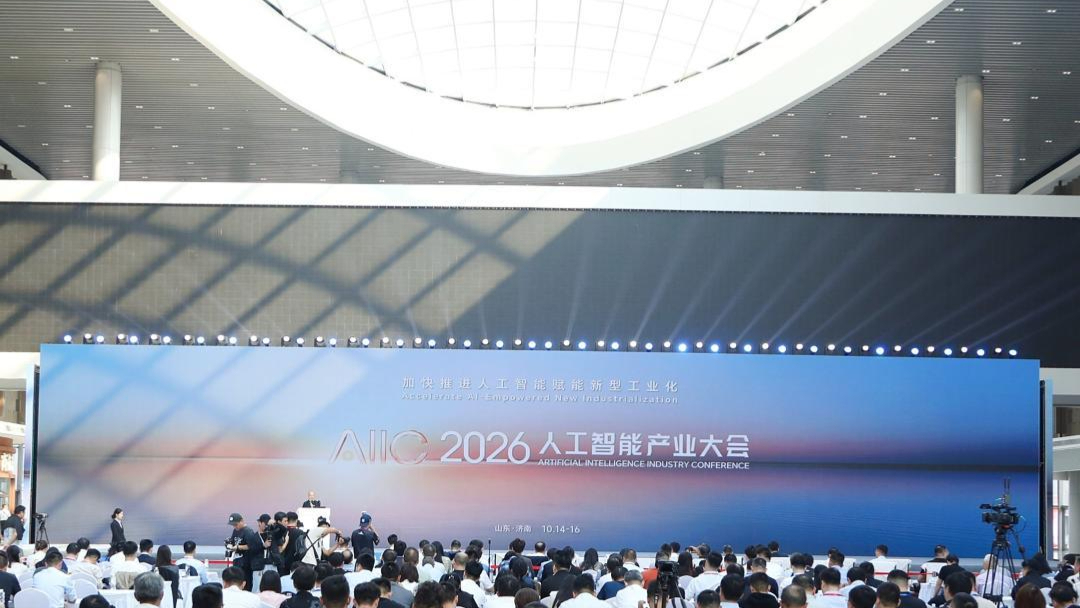
Focusing on "Artificial Intelligence Empowering New Industrialization", the 2026 Artificial Intelligence Industry Conference opens in Jinan

Can Traveler 7 take care of both commuting on weekdays and mountain trips on weekends? This time, the all-new Jetour Traveler 7 will focus on its "Keyo" # Smart Beauty Travel Champion Box # Kecheng Keyo Keyo Travel # 7 Series Square Box New Benchmark # New Traveler 7 Renewal Surprise Price Starting from 125900 yuan