2025-11-11 14:19


A property with a market valuation of about 2 million yuan was recently sold on a third-party auction platform for 1.5 million yuan. The buyer did not purchase it from an ordinary landlord, but directly completed the transaction with the bank.
What he purchased was not an ordinary second-hand house, but a recently added "bank direct supply house". Recently, several large banks including Agricultural Bank of China, Construction Bank, and Bank of Communications, as well as some small and medium-sized banks, have sold a large number of properties directly through third-party platforms such as Alibaba Asset Management and JD.com. Some banks have sold over a thousand properties.
Li Yujia, Chief Researcher of Guangdong Housing Policy Research Center, said in an interview with Interface News that the recent attention to banks' "direct sales of real estate" is mainly due to the sudden increase in scale, especially small and medium-sized banks, especially rural commercial banks; Secondly, banks have begun to place equal emphasis on the transition from "To B" to "To B and To C".
"The reason for this change is that, on the one hand, banks have begun to attach importance to the disposal of creditor's rights; on the other hand, in the case of Internet plus penetration, it has become an inevitable trend to directly target the C end. ?Li Yujia told Interface News reporters.
The number of directly supplied houses by banks has increased
According to data from asset platforms such as Alibaba and JD.com, multiple banks such as Agricultural Bank of China and Construction Bank are listing properties in bulk, with some properties priced 25% lower than market prices; There are over 25000 listed targets in the Sichuan Rural Credit System, and Jilin Bank has sold over 2000 properties.
The most attractive feature of bank subsidized housing is undoubtedly its price advantage. A 125 square meter mortgaged property in Chengguan District, Lanzhou City, auctioned by Lanzhou Rural Commercial Bank at the end of September, was sold for 1.51 million yuan. And the listing price of intermediaries for the same apartment type in the community is between 1.8 million and 2.2 million yuan; The starting price for residential properties of Qiqihar Rural Commercial Bank is 99000 yuan; The Guangdong Yunfu Rural Commercial Bank is about to start shooting commercial and residential properties, with a starting price of 80000 yuan.
The so-called 'bank direct supply housing' is essentially a product of the disposal of non-performing loans by banks. When a corporate or individual borrower is unable to repay the loan, the bank retrieves the property as collateral through judicial procedures, completes debt stripping to obtain clear property rights, and then sells or rents it out directly as a landlord.
It is understood that these properties mainly come from two sources:
On the one hand, the use of assets to offset debts after failed judicial auctions is an important channel. The real estate and land listed by a certain joint-stock bank in Anning City, Yunnan Province, underwent a judicial auction but ultimately failed to sell. The bank acquired the property rights with a debt repayment amount of 130 million yuan and is now disposing of them at a discounted starting price of 42 million yuan.
On the other hand, banks also proactively acquire real estate through judicial procedures. Lanzhou Rural Commercial Bank holds more than 200 residential properties in Yucai Yipin Community, Fushun New Area, due to the developer Zhifeng Real Estate's outstanding debt of 294 million yuan. The court ruled to execute a total of 460 million yuan, and the bank sold them to the public after completing the transfer of ownership based on compulsory execution documents.
Li Yujia stated in an interview with Interface News that the banks that sell real estate directly are mostly small and medium-sized banks and rural credit cooperatives. This is mainly due to the tightening of financing for developers in the past when the real estate market was on the rise, especially for some real estate developers with weaker qualifications and non-standard operations, who had to bypass high cost shadow finance such as trusts. However, the investment income temptation of real estate is relatively high, and some small and medium-sized banks with greater operational autonomy and aggressive business have issued loans to these developers.
What is the difference between foreclosed houses and foreclosed houses?
Compared with traditional foreclosed houses, bank subsidized houses have significant advantages in terms of clarity of property rights.
Several banking professionals have pointed out to Interface News reporters that the clear property rights of directly supplied houses by banks and the direct counterparties of transactions are banks, effectively avoiding potential risks such as private lending and long-term leases that may exist in foreclosed houses.
A person from the Special Assets Department of a certain city commercial bank told Interface News reporters, "Bank direct supply of housing is equivalent to the bank filtering out risks for homebuyers. Banks will complete the debt and credit divestment in advance, and the legal risks of purchasing such properties are much lower than those of traditional foreclosed houses
Li Yujia told Interface News reporters that the "direct sale of real estate" by banks is essentially not much different from foreclosed properties, but the transaction risk is relatively small, which is conducive to accelerating asset disposal. With the increase in performance evaluation and asset disposal efforts of banks, coupled with the downturn in real estate, the risk exposure of some real estate on the balance sheet has increased. Banks may directly connect with the C-end to dispose of assets, which may increase. Therefore, in the future, the banking sector may become an important channel for housing supply.
The biggest difference between the two is risk controllability; The manager of a real estate agency in Guangzhou told Interface News reporters, "Previously, a customer bought a foreclosed house and found out after the transaction that there was a 20-year long-term lease, which made it impossible to move in. However, before the listing of a bank subsidized house, three rounds of property rights verification will be conducted, and issues such as implicit leases and secondary mortgages will be removed in advance
The pricing mechanism is also completely different. Legal auction houses rely on bidding, and sometimes the more they are auctioned, the more expensive they become, while bank direct supply houses have a more stable pricing; The store manager of the aforementioned intermediary company told Interface News reporters.
Will there be disputes over property rights? The direct sale of real estate by banks means using property as collateral for debt, and the property rights have already been transferred to the bank's name. As a result, the problem of property defects is eliminated, which has a positive impact on promoting asset transactions. However, due to the fact that debtors may be using the property, such as renting it out or having elderly people living in their homes, and even other debt disputes, there is some uncertainty about whether it can be cleared in a timely manner, "Li Yujia told Interface News reporters.
Rising pressure on non-performing assets
Behind the accelerated disposal of these properties by banks is the rising pressure of non-performing assets.
According to a research report by Open Source Securities, the 2025 interim report shows an overall increase in the non-performing loan ratio of listed banks, with some banks experiencing an increase of over 20 basis points. However, due to sufficient mortgage collateral and the significant reduction in interest rates, the repayment pressure on residents has been greatly alleviated, reducing the probability of default for mortgage customers. Therefore, the absolute level of non-performing mortgage rate is still the lowest among all types of retail loans, and its risk is still within a controllable range.
Liu Chengxiang, Chief Analyst of Open Source Securities Bank, believes that currently banks tend to retain non-performing loans on balance sheet rather than disposing of them off balance sheet, which has led to the accumulation of non-performing loans and an increase in the non-performing loan ratio.
The post loan management personnel of a certain city commercial bank told Interface News reporters, "In the past, the disposal cycle of non-performing real estate was as long as 2-3 years. Now, through the direct sales model, it can be realized within six months, and some even faster
A real estate analyst who cannot be named pointed out to Interface News reporters that the incident of "bank direct supply of housing" has attracted attention and is a routine year-end asset revitalization action of banks. Therefore, it can be understood from the perspective of the bank's operation to withdraw funds.
Li Yujia told Interface News reporters that it is difficult to find bulk B-end buyers and even C-end customers on traditional asset disposal platforms. For example, in the third quarter of this year, the clearance rate (transaction volume/number of listed auction items) of foreclosed houses on asset disposal platforms was only 28.5%. The "direct sale of real estate" by banks has always existed. In the past, large-scale real estate was often processed in batches through various asset disposal platforms through B-end, while small-scale properties were often sold through real estate intermediaries in the secondary market.
The above analysts pointed out that it is a normal phenomenon for home buyers to actively purchase houses, including paying attention to "bank direct supply houses", in housing consumption. Of course, from the perspective of housing consumption, it is necessary to do sufficient research and learn more about the transaction situation of such properties. Only in this situation can there be a real opportunity to catch up.
Source: Interface News

ST Qingyue fined 172 million yuan for suspected fraudulent issuance and illegal letter disclosure
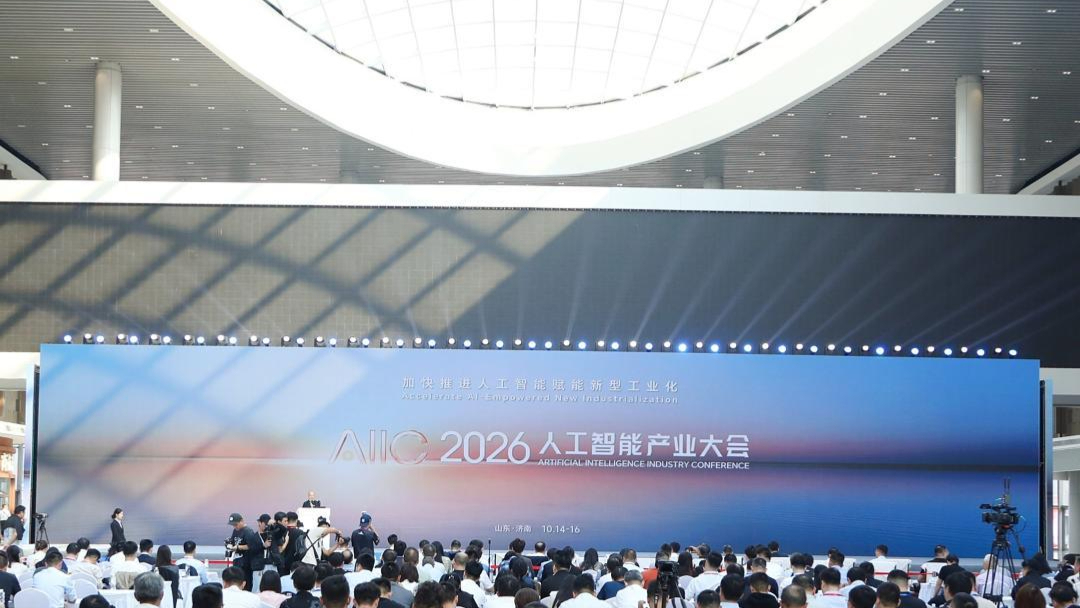
Focusing on "Artificial Intelligence Empowering New Industrialization", the 2026 Artificial Intelligence Industry Conference opens in Jinan

Can Traveler 7 take care of both commuting on weekdays and mountain trips on weekends? This time, the all-new Jetour Traveler 7 will focus on its "Keyo" # Smart Beauty Travel Champion Box # Kecheng Keyo Keyo Travel # 7 Series Square Box New Benchmark # New Traveler 7 Renewal Surprise Price Starting from 125900 yuan