2026-11-29 18:59

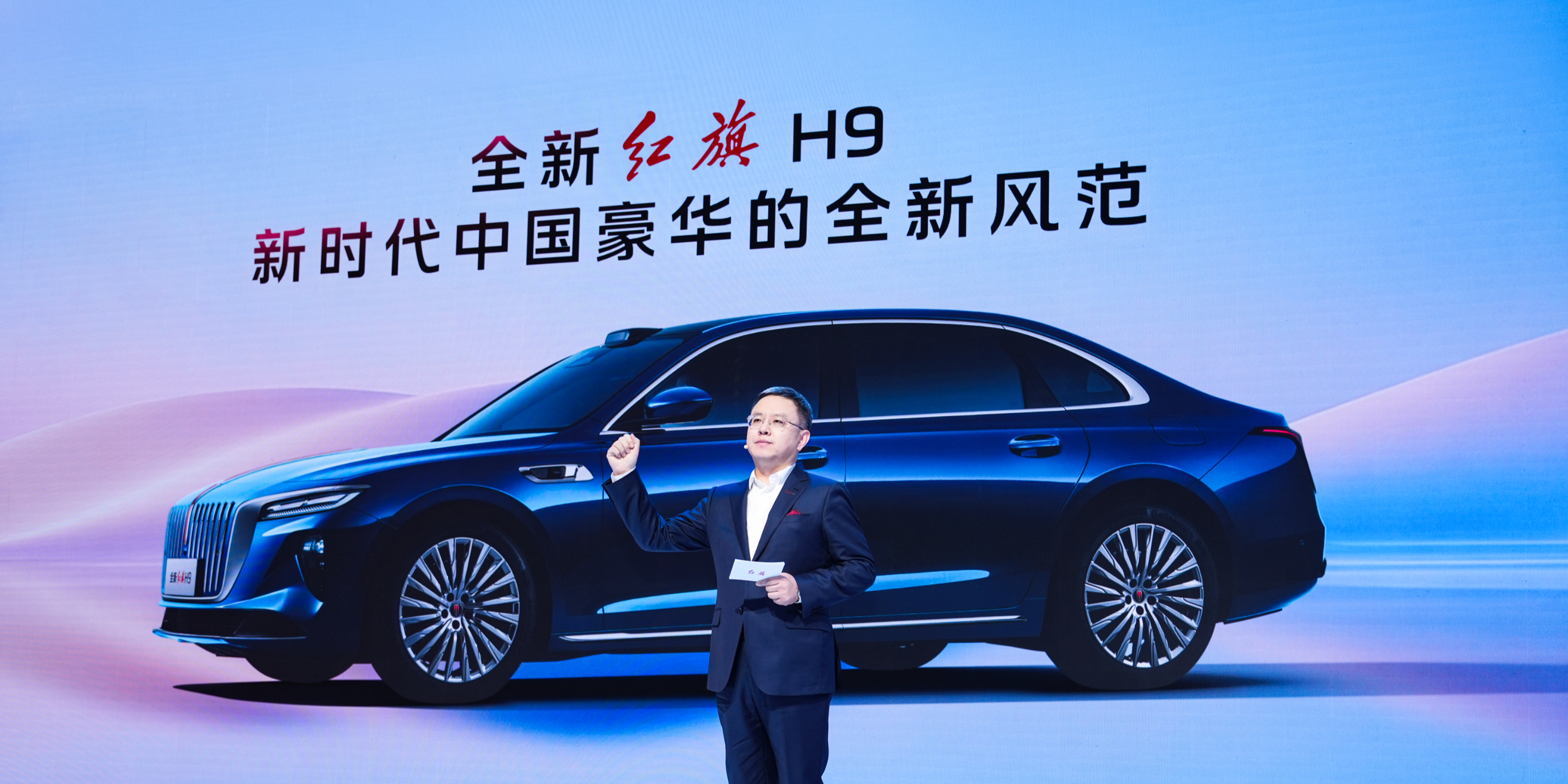
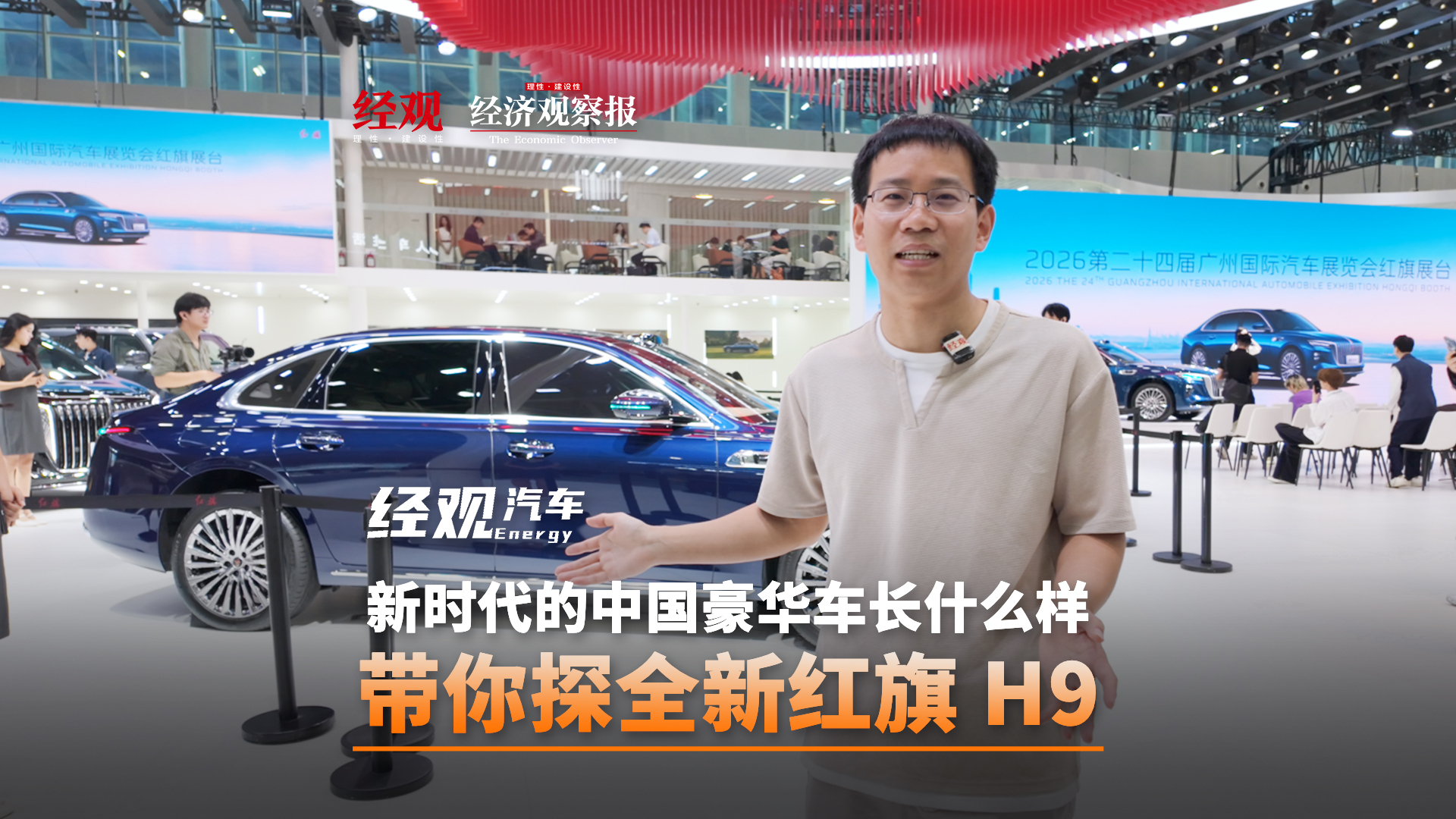
On November 27th, the first day of the 2026 Guangzhou Auto Show, the all-new Hongqi H9 was officially launched, with four models priced between 329800 yuan and 419800 yuan. This price range is no longer a position that needs to be explained in the Chinese luxury car market in 2026. The high-end main battlefield of 300000 to 600000 yuan, German mid to large luxury cars repeatedly test the bottom line after terminal discounts, while Chinese brand's new energy flagship has piled up high-voltage platforms, urban navigation, and intelligent cabins to unprecedented density. The buyers of the all-new H9 will not give up their inquiries about commuting costs, energy efficiency, and software experience just because of the word 'red flag', nor will they forgive the clumsiness of a 5.2 meter long executive sedan on narrow city roads just because of a large screen.
In the past few years, the mainstream narrative for Chinese brands to enter this price range has been configuration density: using more screens, larger batteries, and longer configuration tables to prove that they are worth the price. The signal released by the all-new H9 is different. It is equipped with the HarmonyOS cockpit, Huawei Qiankun ADS 5 advanced intelligent driving, closed air suspension, and bidirectional 16 ° rear wheel steering as standard across the entire range, while also placing greater emphasis on ensuring that each configuration can withstand daily validation by specific groups of people.
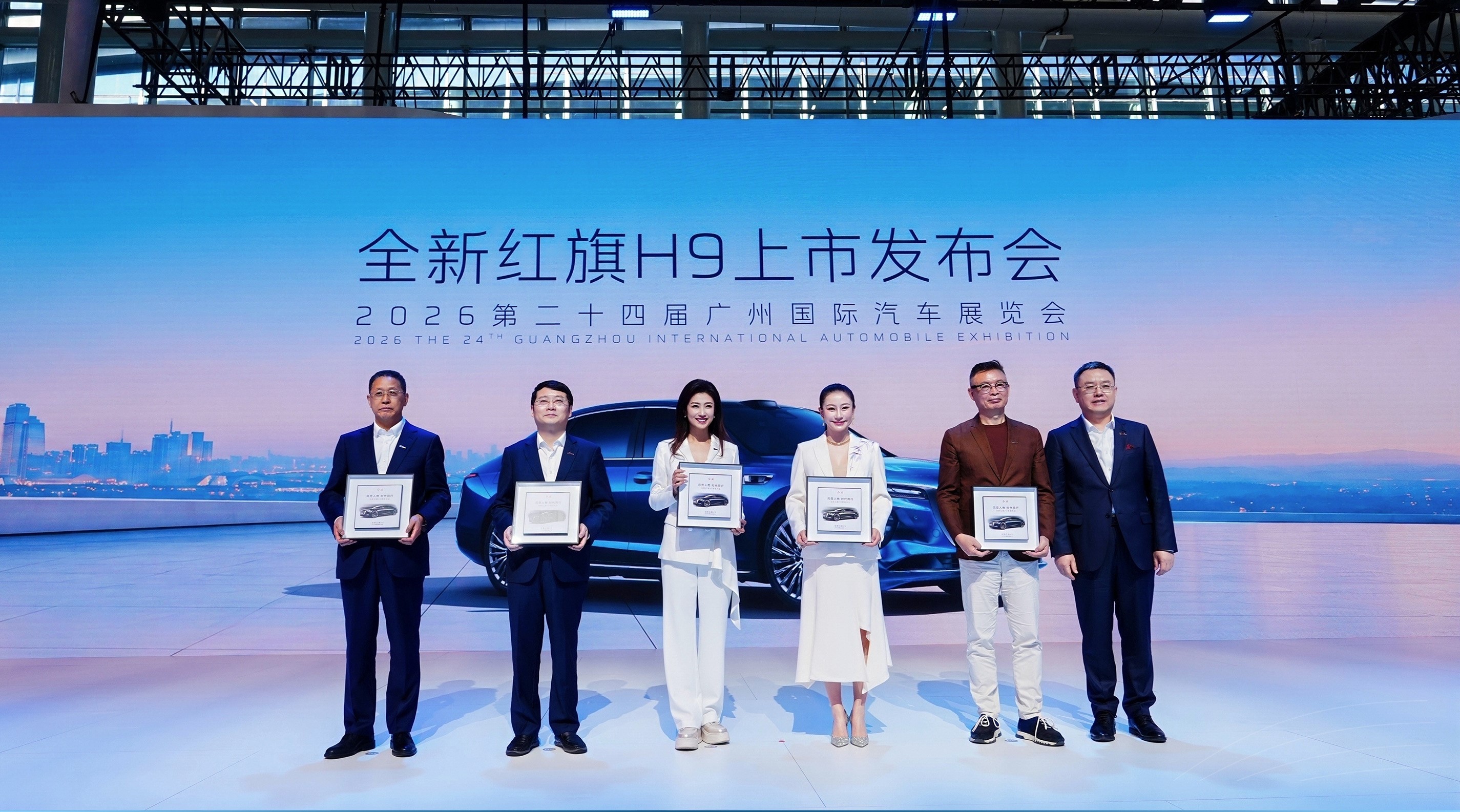
At the press conference, four representatives of the first batch of car owners, Lan Yu, Chun Ni, Mai Jia, and Guan Qingyou, took the stage to speak. Putting them together, the significance of this lineup lies not in the cross-border traffic accumulation, but in forming a verification chain from being seen, used, and trusted.
The True Testimony of Four Scene Witnesses
Lanyu verifies whether cultural symbols can be transformed into recognizable brand assets. She is the fifth generation descendant of Su embroidery and the first Chinese designer to bring Su embroidery to Paris haute couture week. The problem she faces every day is precisely how Eastern aesthetics transforms from elements to language, from tribute to pricing power. Her judgment that a car doesn't stand out is based on a natural sensitivity of design practitioners to symbol efficiency: a pattern or a surface that cannot be recognized in the first place and can't withstand long-term interaction is commercially invalid.
The weight of the wheat family falls on the word 'reliable'. A writer who constructs a narrative with rigorous logic, the cautious standards for safety and mechanical quality do not come from the book numbers of zero to one hundred acceleration, but from whether the vehicle posture is stable at critical moments and whether the long-distance journey gives people a sense of confidence.
From Guan Qingyou's perspective, we directly approach the cost of using intelligent configurations: for someone whose schedule is filled with meetings and business trips, the standard for judging whether a set of intelligent driving and cockpit is good or not is very simple - is it sharing the burden for me or making me learn an additional set of operations. A judgment he has repeatedly mentioned in recent years precisely serves as a footnote here: the focus of consumption is shifting from "commodity consumption" to "experiential consumption", and consumers are increasingly concerned about the comprehensive feelings behind the product, rather than simply owning it. If the intelligence of a flagship sedan cannot make high-frequency users feel comfortable, it is a negative asset within the framework of experiential consumption.
But the dimensions verified by these three can still be partially covered by third-party evaluations, parameter tables, and short-term test drives. Chunni's verification is a more difficult to quantify area. Her job determines that the time in the car is not a "road from A to B" for her, but a buffer zone between preparation before interviews and high-intensity conversations, as well as a transitional space from chatting with others to expressing herself on stage.
She is used to driving by herself, and the cockpit is often like her home. This means that her perception of the value of a car is completely different from that of a passenger who occasionally sits in the back seat: what she values is whether her attention can be maintained and her emotions can be sustained every day and every section of the road. A person who relies on language accuracy and attention to make a living has much higher requirements for the safety, privacy, and smoothness of the car than ordinary users who rate the cabin as a comfort configuration list.
'Delivery' is a measurable cost of use
Chunni's sharing at the press conference, if only listened to as a set of warm details, would waste its explanation of the pricing logic of a flagship sedan. She described several scenarios: driving for a long distance without feeling sore or stiff in the back, the tense nerves can be relaxed after the road noise and wind noise are eliminated, customers can speak quietly in the back seat, parents sit in the fresh air without any odor, children are half lying down and resting in the back seat, and the electric suction door is gently closed without waking up the sleeping person. These details combined are not about having too many configurations, but about whether a car has solved the invisible troubles on the configuration table for users in advance.
Firstly, the car needs to be quiet enough for people to speak and think properly. Chunni often does the final proofreading before interviews in the car, or needs to take a break after a high-intensity conversation. The value of quietness lies not in how low the decibel level is, but in allowing a person who spends a lot of time to not have to spend extra energy fighting against noise.
If a car makes people too tired to speak when they get to a place, this loss will not be written on any configuration sheet, but it happens every day. For users like Chunni, quietness is not a matter of comfort, but rather an infrastructure that protects attention, the cost of eating.
Secondly, what the rear seats really need to do is to allow passengers to have dignity, freedom, and privacy without having to fight for it. Chunni often sees clients and reviews articles in the car before events; Holiday pick-up and drop off of friends, taking care of the elderly and children; Customers need to be dignified and comfortable, friends need to be comfortable, parents need fresh and odorless air, and children need to lie down and rest.
Can a flagship sedan provide a default answer to the question of 'whose time is more worth protecting' without the need for passengers to actively request it? A few centimeters of legroom in the back seat is more indicative of the problem. The adjustable seats, controllable privacy, and one click disconnection of the internet, power, and microphone make it a mobile space that doesn't require much effort to switch states.
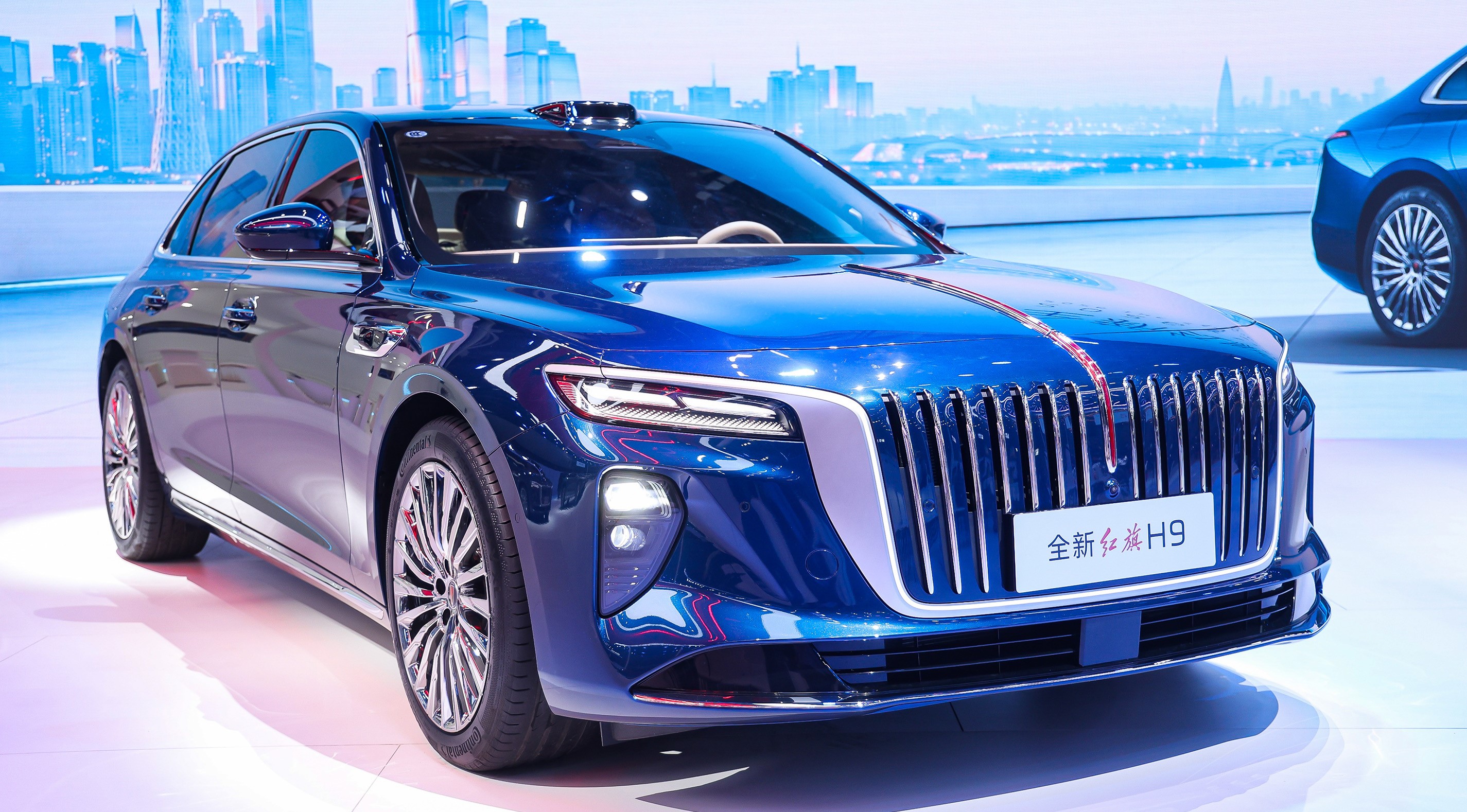
The ultimate challenge for executive sedans is not how big the back seats are, but whether the people sitting in the back seats should worry extra about the design flaws of the car. Chunni's judgment is worth listening to because she checks this matter with her real itinerary every day.
Finally, the high-end feel of Eastern details is not something to show off at first glance, but rather something that can be understood without explanation and becomes more and more convenient with use. Intelligent fragrance makes the interior space of the car like a study room lit with fragrance. The ambient light can evoke the feeling of morning light, bonfire, and moonlight, and the electric suction door uses gentle suction instead of the sound of falling doors. These features may be easily written as "having warmth" in their dissemination, but from an asset perspective, they provide a familiar and reassuring feeling to someone who relies on "being remembered and trusted" for a living, without needing to explain, but accumulating more and more with each use.
Users like Chunni actually have a very restrained preference for recognition: they don't want to show off in a flashy way, what they want is the accuracy of "those who understand will naturally understand". The all-new H9 makes cultural symbols an integral part of the user experience, rather than decorations that require additional cognitive costs to understand. This is a crucial step for Oriental Luxury to move from storytelling to true pricing: turning culture into useful features and making features default options in daily decision-making without hesitation.
Another industry change worth noting is that the cabin logic of the all-new H9 is shifting from taking care of the rear seats to taking care of the entire vehicle. More and more buyers at this price point are accustomed to driving on their own, and the rear seats are still important, but the sitting posture, feel, and frequency of use of the car's infotainment system and assisted driving are increasing.
Chunni's habit of driving her own car wherever she goes happens to be riding on this change. Her affirmation of the cockpit is not about praising a particular configuration, but rather confirming a trend: the cockpit of flagship sedans is shifting from a "space for receiving guests" to a "space for drivers to recover their energy". If a car can reduce the energy consumption of drivers and the effort of passengers at the same time, its pricing will no longer be supported solely by the size of the rear seats, but will have a more practical anchor: using it every day and using it frequently will indicate its value.
The Other Side of 9-Series Matrix and Pricing Power
If Chunni's experience is just an accidental performance of a car, then it is just an isolated case. The quietness, privacy, and intelligent response of the all-new H9 cockpit are the result of the entire flagship car series working together to dilute costs and share technology.
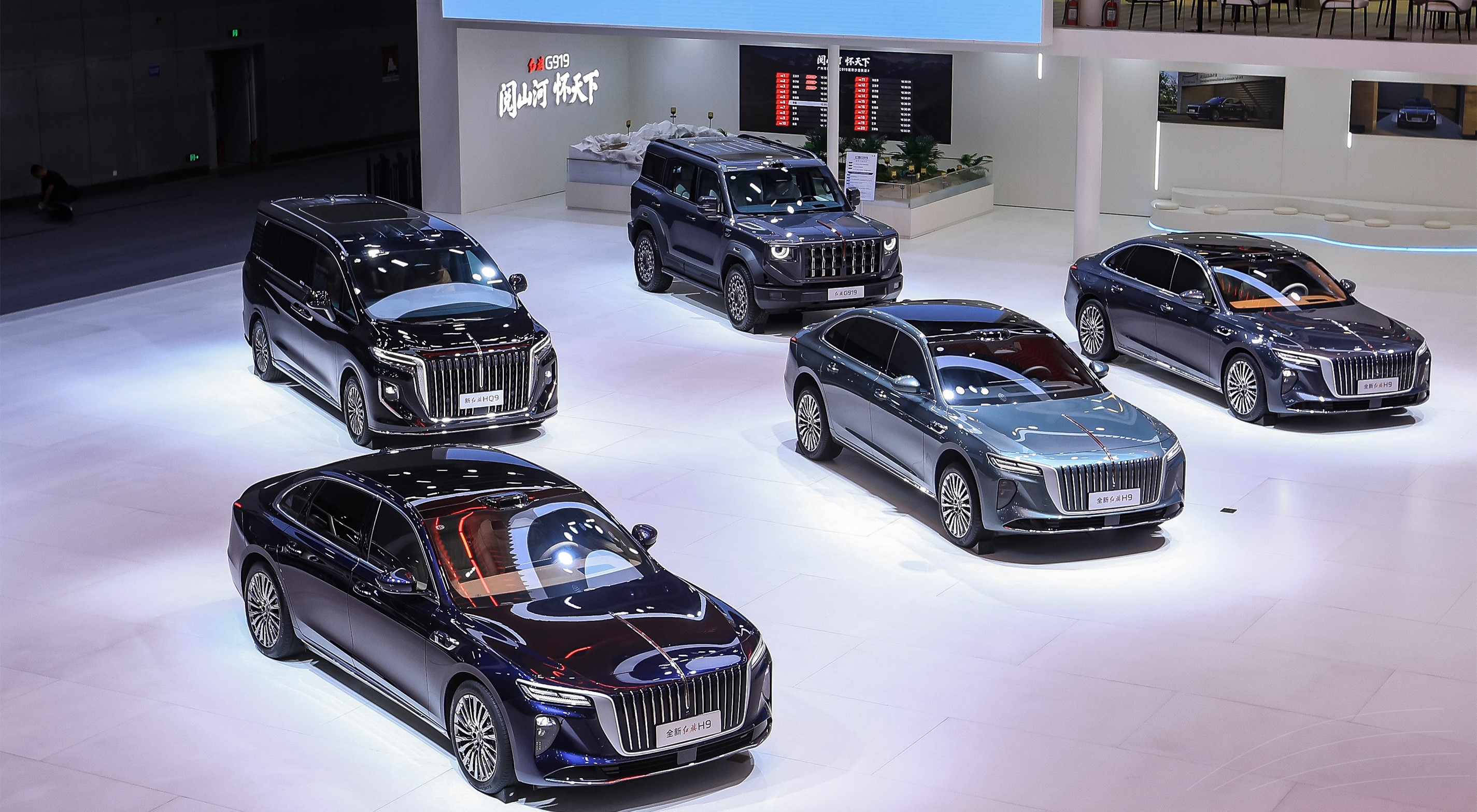
With the launch of the all-new H9, Hongqi has completed the full range of new energy transformation for the 9 Series flagship within a year. The new H9, four motor luxury off-road SUV Hongqi G919, and full field view new energy MPV Hongqi HQ9 together form the 9 Series new energy flagship matrix, covering three areas: executive luxury sedans, hardcore off-road SUVs, and high-end luxury MPVs.
At the just concluded 2026 APEC meeting in Shenzhen, the Red Flag Ambassador Fleet, consisting of multiple new energy vehicle models such as the all-new H9, completed its travel guarantee task as the official designated vehicle, and the Red Flag New Energy Vehicle officially entered the Ambassador Fleet as a result. This indicates that the reliability of the entire system is not just a brand slogan, but a delivery record that has been actually tested by public events.
The sense of comfort that Chunni felt in the cockpit was the result of the entire flagship family working together to support the platform, supply chain, and intelligent driving ecosystem, ultimately landing on a single car.
Equally noteworthy is the synchronized launch of the new H9 with a commitment to price protection and preservation: within six months of its launch, if the official price reduction or cash discount is increased, users will be fully compensated for the price difference; Within 3 years of purchasing a new Red Flag brand car, customers can enjoy a maximum of 10% discount on resale value. In a new energy luxury car market where prices are frequently adjusted and the residual value of used cars is generally uncertain, the essence of these two commitments is that brands bear a portion of the uncertainty of whether users will lose money after buying.
It responds to the question that buyers like Chunni are most concerned about: whether a car is worth long-term use depends not only on what it gives today, but also on whether it is willing to stay in the same brand in three years. The significance of maintaining value is not in promotion, but in extending the issue of "value" from the price on the day of launch to the entire usage cycle.
The all-new Hongqi H9 was launched at the Guangzhou Auto Show, and the real highlight is not who it can compete with in a certain parameter. The pricing range of 329800 to 419800 yuan, coupled with a value proposition anchored in usage density rather than configuration density, points to a more straightforward problem: when a group of the least patient people are willing to stay in the cabin for a while longer and feel that this time has not been wasted, the price of a flagship sedan truly finds its anchor point. Chunni gave her answer, and Lan Yu, Mai Jia, and Guan Qingyou each verified another link in this chain. The 9-series matrix and insurance commitment provide organizational and institutional support that prevents this answer from staying at the individual case level.