Economic Observer Follow
2026-11-28 10:29

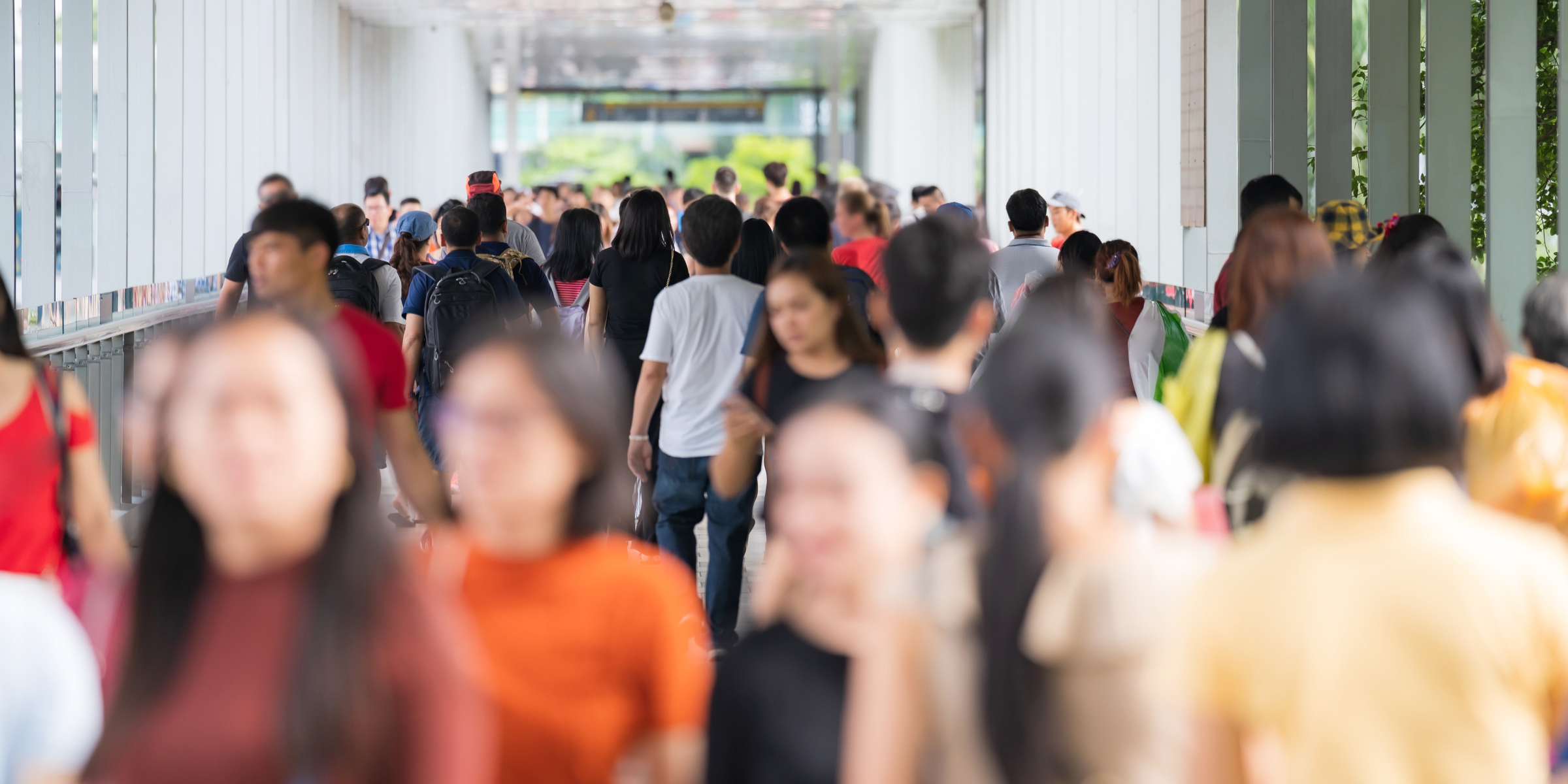
Have you ever noticed that at intersections you often walk at, you have to jog to get through when the lights are green? This is the current situation at many intersections in Chinese cities, where the timing of green lights is set at the limit of walking speed. Even this timing needs to be discounted.
On the night of June 16, 2024, at the intersection of Xinqiong Road and Fangxing South Street in Xinjin District, Chengdu, Zhai Jianshe, who had a fourth degree disability in his legs, walked onto a 34 meter long pedestrian crossing after the green light came on. The green light at the intersection lasted only 12 seconds, and halfway through, the traffic light turned red. He had to accelerate and rush, but was hit by a straight motorcycle and died despite rescue efforts. After the incident, the family of the deceased filed a complaint on 12345, and the green light was changed from 12 seconds to 28 seconds.
The determination of responsibility in this case was full of twists and turns: first, the motorcycle driver was found to be primarily responsible, but the driver was dissatisfied. After a retrial and second instance, both parties were equally held responsible. But both parties are dissatisfied with the verdict, and the motorcycle owner is preparing to appeal.
The reason why this case has received widespread attention is that the controversy over "short timing, no lighting, and no safety island" has not been taken seriously - although the court did not hold the traffic management, municipal and other departments responsible due to insufficient evidence, the problems exposed are still worth considering.
Why can't a green light accommodate slow-moving people?
According to a series of current national standards, the duration of a green light is approximately equal to the width of the pedestrian crossing divided by the pedestrian's walking speed, with the walking speed taken as the value of a healthy adult: some are set at 1.0 meters per second, while others are set at 1.2 meters per second, and this is not a mandatory requirement. Even if calculated at 1.0 meters per second, it is already strict for the elderly - their walking speed is generally less than 0.8 meters per second, and disabled people are even slower. According to this calculation, on a 34 meter long road, the elderly should receive a green light for more than 42 seconds.
In reality, the execution is generally tight: many cities assume that "fast walkers" are standard pedestrians, and mechanical execution is tightly timed. A quick search reveals that there are numerous complaints about "not enough green lights to go", and traffic police in various regions have almost yearly statements of investigation and rectification in response to comments from netizens and suggestions from the National People's Congress.
In July 2022, the green light at the intersection of Dongxing East Road in Dongkeng Town, Dongguan was only 13 seconds, making it difficult for an elderly citizen's mother to pass through at once; After transferring to 12345, the traffic management department conducted on-site testing and adjusted the timing to 18 seconds.
In December 2023, the green light at the intersection of Longmen Avenue and Binhe South Road in Luoyang was only 9 seconds. After citizens reported it on the "People's Voice" website in Luoyang, the traffic management department observed on site and delayed the east-west distribution to 30 seconds.
In January 2026, Hu Qinyong, a member of the Wuhan Municipal Committee of the Chinese People's Political Consultative Conference and deputy chairman of the Wuhan Municipal Committee of the Zhigong Party, suggested that the timing of intersections around hospitals, schools, and nursing homes should be based on "width ÷ 0.8 meters/second+10 seconds of safety redundancy" to allow elderly people to cross the street calmly.
There are countless similar examples, and the tragedy of Zhai Jianshe is just an extreme case. Under the principle of "vehicle based", pedestrian timing can be as little as possible; This case is more of a discount and then a discount - even if it is adjusted to 28 seconds later, it is still not easy to walk across the road.
Why compress the green light timing for pedestrians? The person in charge of the Traffic Police Detachment of Luoyang Public Security Bureau in the above case gave a straightforward answer: their work goal is to maximize road traffic efficiency and alleviate traffic congestion, so a minimum pedestrian passage time has been set at frequently congested intersections.
It can be seen that the "minimum pedestrian travel time" is not an accidental omission, but a management concept: roads are positioned as channels to ensure vehicle traffic, efficiency is centered on vehicles, pedestrians are just interference items in traffic flow, and timing is treated as a zero sum game - one more second for pedestrians, one less second for vehicles.
This algorithm sounds reasonable, but it cannot withstand scrutiny because according to this reasoning, pedestrian time is the least valuable. This involves a fundamental issue in urban transportation: who defines the efficiency of vehicles and pedestrians? Whose time is more valuable? If we consider the human scale, the priority of timing should have been reversed. Because every driver is also a pedestrian, compressing pedestrian travel time is neglecting all citizens.
Danish urban designer Jan Gael once raised the banner of a "pedestrian city", advocating that cities must count pedestrians like they count traffic flow. In his view, the streets belong first and foremost to the pedestrians, and vehicles are guests rather than owners; Building streets that are car friendly will result in more traffic flow, and those that are people friendly will lead to more urban life.
Returning to this case, we must firmly emphasize that the timing of green lights should be based on the walking speed of slow-moving individuals such as the elderly and disabled. Efficiency and safety cannot be achieved simultaneously, and of course, human safety should be taken as the bottom line. Correcting such a loophole is not difficult - just extending it by a few seconds and setting up a safety island.
In addition to adjusting the duration of a batch of green lights and setting up a batch of safety islands, what we should adjust more is the management philosophy behind them. To answer the question 'For whom is the city built?' is it for the traffic passing through the city, or for the people living on both sides of the street? By examining this, we will find that there are still many blind spots in our management inertia that are not "people-oriented". When the green light is timed for one second more, our humanism increases a bit, and a city's attitude towards slow-moving pedestrians is written in the seconds at the end of the zebra crossing.


 Subscribe