2026-11-27 09:45

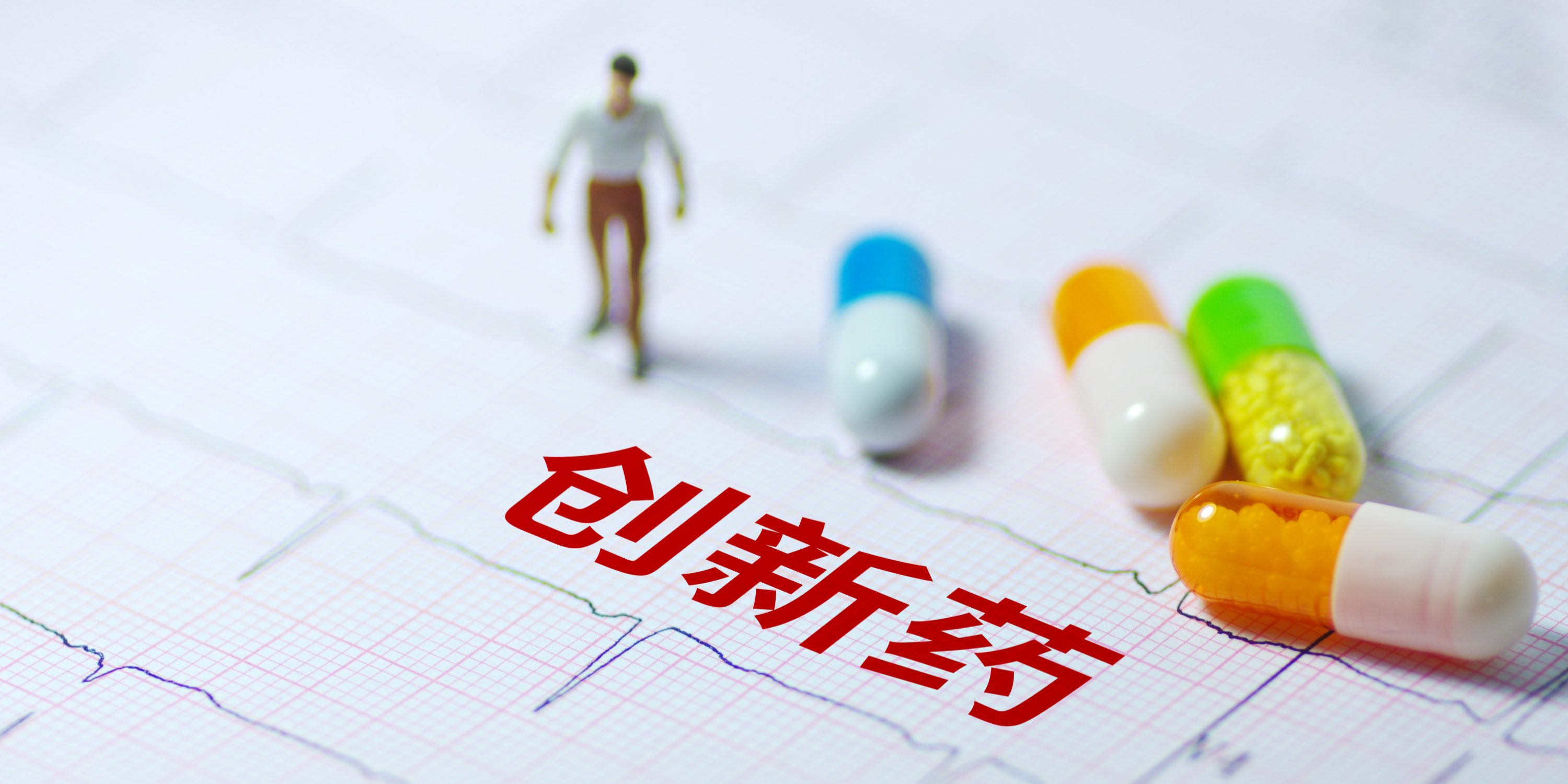
The CAR-T anti-cancer drug Rui Ke Lun Sai injection, which was once priced at 1.29 million yuan per vial, has attracted public attention due to its first inclusion in the national basic medical insurance catalog. The payment standard for this product after being included in medical insurance is 288600 yuan, a decrease of over 77%, and will be implemented from January 1, 2027.
At the same time, in 2026, the medical insurance catalog will be adjusted, with 107 new drugs added, including 51 Class 1 innovative drugs, reaching a historic high in quantity.
However, being included in the medical insurance catalog does not mean being in a hospital pharmacy. The patient cannot buy medicine in the hospital with a prescription, but the doctor can prescribe it but cannot match it. But this' last mile 'obstruction is actually a clich é d topic.
What have been the bottlenecks in the implementation of innovative drugs for many years?
As early as the National People's Congress and Chinese People's Political Consultative Conference in 2023, Wu Fan, a member of the National Committee of the Chinese People's Political Consultative Conference and Vice Dean of Shanghai Medical College at Fudan University, submitted a proposal on the implementation of the "last mile" of smooth national drug negotiations. In November 2026, the four departments jointly issued the "Notice on Further Improving the Safe and Reasonable Allocation and Use of Innovative Drugs", which clarifies that Class 1 new drugs in the two catalogs are not included in performance monitoring indicators such as the increase in average drug costs per outpatient and inpatient visit. For cases where innovative drugs are used reasonably but are not suitable for payment according to disease standards, hospitals are supported to apply for "special cases".
But after sorting out the bottlenecks over the years, it can be found that the root of the problem has not been truly touched.
The first layer of blockage is in the capacity dilemma of "only entering but not exiting". In the past, the capacity of hospital drug catalogs was limited, and the speed of national drug expansion continued to accelerate. The introduction of new drugs meant that old drugs had to be squeezed out, and the resistance and administrative costs of clearance were much higher than those of introduction. In 2026, four departments have announced the clear cancellation of quantity restrictions on product specifications, and the policy level "capacity ceiling" is being dismantled.
However, as a physical space, the optimization of management and inventory in hospital pharmacies will not automatically disappear. The director of the pharmacy department of a hospital once said in an interview with First Financial, "The capacity of each medical insurance drug catalog is limited, and Guotan Pharmaceutical adds a large number of drugs every year. Not all of these drugs can enter the pharmacy of every hospital. Moreover, it is relatively easy for hospitals to introduce drugs into hospitals, but it is very difficult to clear them once they are introduced. Therefore, hospital pharmacies are also very cautious when introducing new drugs
The second layer of blockage is on the hospital's financial ledger. Since the complete cancellation of drug markups in public hospitals in 2017, selling drugs no longer generates revenue. Zhao Hong, a member of the National Committee of the Chinese People's Political Consultative Conference and chief physician of the Cancer Hospital of the Chinese Academy of Medical Sciences, believes that "under the zero markup policy for drugs, innovative drugs become a cost burden for hospitals as soon as they are admitted
Biological products require cold chain storage, medication monitoring, and dedicated management, each of which is increasing operational burden. In 2021, the National Healthcare Security Administration issued the "Three Year Action Plan for DRG/DIP Payment Reform", which made bundled payment by disease the mainstream. This means that a high priced innovative drug can easily cause the entire case cost to exceed the payment standard, and the excess will be absorbed by the hospital itself, affecting the enthusiasm of medical institutions to use the national drug. Until now, this judgment still holds true. When the financial logic of "losing one box with one box" has not changed, any procedural convenience is difficult to reverse the hospital's behavioral choices.
The judgment of Jin Chunlin, director of the Shanghai Health and Health Development Research Center, hits the nail on the head: the notification management is a positive incentive mechanism that cannot be blocked and is unwilling to push.
Can we bypass the checkpoint?
Faced with the delay in admission within the hospital, the policy level has promoted two "detours" paths.
One is the already established "dual channel" mechanism, which allows patients to purchase drugs at designated pharmacies with prescriptions and enjoy equal reimbursement treatment. More than a hundred hospitals in Beijing have opened dual channel services, and Hunan and other places have also included some high priced drugs in single line payment management.
The second is the "pre admission" system that the National Healthcare Security Administration will promote, which will compress the time difference between the publication of new drugs and their clinical availability through activities such as "face-to-face medical insurance".
The value of "dual channel" lies in the fact that for biological products with high cold chain requirements and long medication cycles, the specialized distribution of pharmacies is sometimes superior to hastily listed hospital pharmacies. But for tumor drugs and rare disease medications that require close monitoring of adverse reactions by doctors, completely relocating the medication scene to pharmacies means extending the medical safety chain and increasing the risk of breakage. So the dual channel solution is the problem of drug procurement path, not the clinical scenario problem of "where to treat".
The concept of "pre admission to the hospital" is more proactive, attempting to allow hospitals to hold pharmaceutical meetings, record systems, and connect with suppliers in advance during the gap period between the announcement of the medical insurance catalog and its official implementation. Once the effective drugs have been listed, doctors can prescribe them on the same day.
How far is it from 'policy loosening' to 'mechanism restructuring'
The policy combination for 2026 has been quite thorough, including unbinding quality regulations, exempting assessments, discussing exceptions, providing a dual channel backup, and pressuring through negotiated agreements. But upon closer examination, most measures still remain at the level of "eliminating obstacles" rather than "creating motivation".
The true direction of breaking the deadlock may require thinking beyond the framework of "whether or not to enter the hospital", and directly linking the allocation of innovative drugs with the compensation mechanism of hospitals. For example, in the DRG/DIP payment standard calculation, for Class 1 new drugs that have been confirmed to have significantly better clinical value than existing schemes, separate weight bonuses or transitional payment protection are given, rather than relying on post hoc special cases and individual declaration.
Another direction is to recognize the value of pharmaceutical services in innovative drug safety management, including cold chain management, medication monitoring, follow-up, and other links into chargeable items, so that hospitals can shift from "losing money with innovative drugs" to "managing innovative drugs with reasonable returns".
During the 14th Five Year Plan period, the cumulative expenditure of the medical insurance fund exceeded 13 trillion yuan. Currently, medical insurance drives negotiated drug sales of over 170 billion yuan annually, which is four times that of five years ago. The fund size is sufficient to support more refined payment design. The problem is not whether there is money, but how the money flows to hospitals. The current path of "letting hospitals cushion first and calculating at the end of the year" naturally suppresses the willingness to equip. If it is changed to 'if used well and managed properly, there will be reasonable compensation', the hospital's behavioral logic will change.
The entry of 51 Class 1 innovative drugs into medical insurance is a joint achievement of China's pharmaceutical innovation and medical insurance governance. The policy has been set up, and to make hospitals truly willing to "play the show", it is not necessary to loosen access restrictions, but to deeply adjust the payment mechanism from "plugging loopholes" to "opening the main door".
(The author of this article is a researcher at the Jingguan Research Institute)
Overseas contract manufacturing is restricted, who will take on orders for domestically produced chips?

Financial institutions prepare for a 'good start', marketing workshops become popular

Automobiles hit 'patent wall' while going abroad: BYD accused of appearance infringement, Ti7 temporarily banned from sale in 27 EU countries