Economic Observer Follow
2026-11-28 11:07


If you held 100000 yuan at the beginning of the year and invested it in one of the stocks, funds, or gold, and have held it until now, would it be a loss or a gain? Roughly estimated based on Wind data statistics, as of November 25th, this money may have a floating loss of 12000 yuan (based on the Shanghai Composite Index), 16000 yuan (ordinary stock funds), and 22000 yuan respectively; If you purchase "stable and low wave" bank wealth management, you will also experience a return drawdown or even losses in the past month.
You will find that the investment market since 2026 is indeed extraordinary. Not only do stocks, funds, and commodity investments reveal risks everywhere, but low-risk bank wealth management and gold, which used to serve as asset safety cushions in storms, are also beginning to devour capital. Mainstream major investments have repeatedly failed, and many investors dare not open investment software, no longer fantasizing about lucrative returns. Keeping their capital has become a luxury.
The once stable and safe haven investments seem to have failed, with the only one outperforming being fixed deposits. The current listing interest rate for one-year deposits in large banks is 0.95%. However, if the deposit reaches 10000 yuan, the highest interest rate for one-year deposits in some large banks can reach 1.15%. If investors buy a 100000 yuan one-year fixed deposit product in early January, equivalent to November 25th, they can earn a profit of about 1033 yuan.
In the past decade or so, "deposit relocation" has always been a one-way narrative: funds flow from savings to bank wealth management, and then to funds, stocks, and real estate. Everyone is learning how to embrace risks and pursue higher returns. But since 2026, as the risk index of various financial assets increases, many people, after suffering one round after another of real losses, have re evaluated investment returns and begun to return to low interest bank deposits.
Deposit products are popular
In late November, at a Postal Savings Bank branch, there were seven or eight people waiting to process deposit transactions at the number machine. Among them were elderly people who were accustomed to saving, as well as "post-90s" Tian Zhenyuan who rushed from his workplace during lunch break.
The latest deposit interest rate notice is displayed in the branch hall, with a three-year lump sum deposit and withdrawal rate of 1.55%, which is far lower than the level of around 2.6% four years ago.
On the desk of the branch wealth manager was a registration book, and depositing over 100000 yuan would earn peanut oil and rice. Tian Zhenyuan decisively bought it.
Bank branches are willing to give gifts usually because interest rates are already difficult to raise. On November 20th, the State Administration of Financial Supervision and Administration released the main regulatory indicators for the banking and insurance industry in the third quarter of 2026, which showed that the net interest margin of commercial banks remained unchanged at 1.41% compared to the end of the second quarter.
From the data, paying less interest is one of the important reasons for the stabilization of bank interest spreads. Previously, securities institutions estimated that the fixed deposits with a maturity of one year or more (excluding one year) this year amounted to approximately 50 trillion yuan, which is about 10 trillion yuan more than the previous year. Among them, the maturity amounts for two and three years were both over 20 trillion yuan. After the money matures, it will be re priced at the actual execution interest rate of around 1.2% to 1.8% for the current period, and the bank's interest payment cost will decrease accordingly.
The interest payment costs saved by banks are reflected in the deposit products purchased by each individual.
Tian Zhenyuan still remembers that four years ago, he deposited the same amount of funds at the same Postal Savings Bank branch. In November 2022, the listing interest rate for three-year fixed deposit products was 2.6%, with a maturity interest of 7800 yuan. Now, the interest has decreased by 3150 yuan. At that time, Tian Zhenyuan believed that deposits were competing with the elderly for products, but now it seems that this is the last time they have caught up with high interest rates.
However, what really made Tian Zhenyuan decide to buy a fixed deposit product was his experience of testing the waters of Bitcoin investment. In January of this year, Tian Zhenyuan received a bonus of 300000 yuan, and then transferred 100000 yuan to his cryptocurrency account. At that time, the price of Bitcoin was hovering around 86000 US dollars. Afterwards, the price of Bitcoin fell, and after the Spring Festival, only about 70000 yuan remained of the 100000 yuan.
For the next six months, the price of Bitcoin fluctuated between $60000 and $70000. In early November, before the US midterm elections, Bitcoin rebounded to around $77000. Around November 10th, he cleared his Bitcoin position at a price of $73000, but only managed to retrieve $84000 in the end.
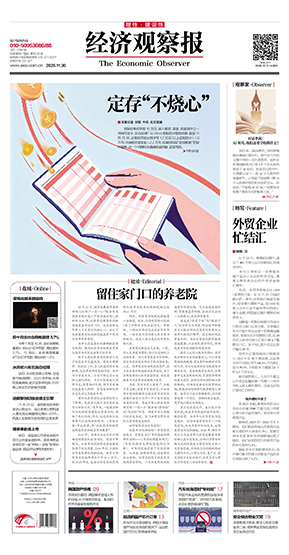
Nowadays, although the interest rate of fixed deposits is getting lower and lower, Tian Zhenyuan can no longer tolerate a loss of one penny. He thinks that it's better to put money in fixed deposits wherever it goes, as only deposits are "not burning".
He is not the only one who moved money back from risky assets to fixed deposits.
The "Report on the Implementation of China's Monetary Policy in the Third Quarter of 2026" recently released by the People's Bank of China (hereinafter referred to as the "Report") shows that as of the end of the third quarter of 2026, the balance of various RMB deposits was 34.94 trillion yuan, a year-on-year increase of 7.5% and an increase of 20.8 trillion yuan from the beginning of the year.
Stocks and funds have not stabilized
He Chun, 35, is an Internet product manager in Beijing. At the beginning of 2020, he invested 500000 yuan in the stock market. The investment principle was: if you don't make money, don't sell, and if you make money, continue to invest all of it in the stock market. Except for the volatile A-share market in 2023, where he incurred losses, he can earn over 100000 yuan in stock investments almost every year. Relying on continuous profit rolling, his stock market funds have accumulated to about 1 million yuan.
But this year, his account has incurred losses. He Chun's two stock accounts were like riding a roller coaster: as of November 25th, not only had the initial floating profit of 120000 yuan completely cleared, but the 1 million yuan principal had also lost 117400 yuan.
He Chun's combination of two stock accounts matches a medicine fund, a Baijiu fund, and 3-5 individual shares. The investment in individual shares is biased towards traditional industries such as chemical industry and household appliances. Two funds continue to decline, all supported by individual stock market trends. The most optimistic time for the market was at the end of August this year. At that time, his account had a floating profit of over 20%, but he did not take profits and left. This is also a key turning point for the significant drawdown of his account earnings.
Since September, a stock held by He Chun has continued to adjust and decline. He cleared his holdings of other profitable stocks, used funds to replenish his holdings of this stock, and repeatedly "T" (buy low and sell high within the day) diluted costs. He initially held 30000 shares and continuously increased his holdings to 80000 shares, reducing the holding cost from 10 yuan/share to 7.46 yuan/share. I originally planned to turn the market around by continuing to buy low, but I couldn't wait for the market to recover.
In October, the market continued to weaken, and the price of this stock continued to plummet, almost halving from the beginning of the year. On November 25th, it dropped to around 4.30 yuan per share. At the same time, the medicine fund and Baijiu fund held by He Chun also failed to improve, with a decline of 15% during the year.
Under the accumulation of multiple withdrawals, He Chun's account income rapidly shrank, and the stable profit turned into a real loss of principal. Anxious, he can only patiently wait and prepare for long-term shareholding.
He Chun is used to distributing funds in half, half of which is invested in the stock market game, and the other half is put in the bank to buy stable financial products. He is ready to allocate funds from financial products to the stock market at any time to seize market opportunities. In addition, he also left himself a safety net. In early 2024, when the gold price was low, he bought a 50 gram gold bracelet at a cost of around 760 yuan/gram. He said, "I am a person without a sense of security. Even if I have investment problems, there is still a gold bracelet that can replace my stutter
From the perspective of the stock market situation, the Shanghai Composite Index opened at 3986 points at the beginning of this year, surged to a stage high of 4258 points in January, and then fluctuated downwards, falling below the 3500 point mark by late November. As of November 25th, the Shanghai Composite Index closed at 3476.47 points, a decline of over 12.41% for the year, and the ChiNext Index fell 31.83%; The Hang Seng Index has fallen 14.30% year to date, while the Hang Seng Technology Index has fallen 38.76% year to date.
Equity assets are fluctuating, and fund investments are also under pressure. According to Wind data, as of November 25th, the average return rate of ordinary stock funds was -16.08%, and the average return rate of equity mixed funds was -18.09%.
Several interviewees mentioned to reporters that they dare not open stock trading software recently, hoping to leave with less losses when the market recovers. An investor who resigned from stock trading in mid-2025 has yet to recoup his investment, with a loss of over 200000 yuan on his 1 million yuan principal. He lamented that he had "lost a lot". Another investor, who bought a fund and lost over a million yuan, bluntly stated that he was already "mentally tired". Young investors who originally had expectations for investment have also begun to adjust their expectations, no longer clinging to high returns, but instead calculating how to hold onto their remaining capital.
Gold that retains its value has become a risky asset
In 2026, when stocks fall, real estate prices do not rise, and one-year deposit interest rates are less than 1%, gold seems to be the only major asset class that can still tell the story of "preserving value".
Zhang Lin is an office worker from Northeast China who prefers investing in gold and hopes to change his current work and life status through investment. However, this year, he almost relied on his work income to make up for the losses in gold investments. Zhang Linku joked that he was a little further away from wealth and freedom.
In the past month, Zhang Lin has been looking at the income column of his gold account from time to time, and his work has been somewhat absent-minded. Since November 10th, international gold prices have accelerated their decline, dropping from around $4147 per ounce to around $3537 per ounce on November 20th. On the afternoon of November 25th, Zhang Lin's gold account suffered a loss of 6191.32 yuan, with a holding income of -185457.97 yuan and a holding weight of 614.22 grams. The average cost was 1056.50 yuan.
Zhang Lin admitted that he never expected gold, as a safe haven asset, to undergo a major transformation in 2026.
In recent years, due to its relative value preservation and safe haven properties, gold has become one of the most tempting assets. In October 2022, the international gold price reached 1620 US dollars per ounce, which was a temporary bottom point. Since then, the international gold price has fluctuated and risen. In January 2026, it rose by over 5300 US dollars per ounce, reaching a historic high. However, afterwards, the gold price entered a period of sustained adjustment. After the outbreak of geopolitical conflicts in the Middle East, gold, as a highly liquid asset, was the first to bear the brunt. At the end of March, the international gold price fell to $4669 per ounce. Zhang Lin judged this as a temporary low point and added gold reserves and 10 grams of physical gold, with an average cost of about 1100 yuan/gram.
Unexpectedly, the international gold price fluctuated downwards after a brief rise, once approaching $4000 per ounce; Although it rebounded to around $4440 per ounce in July and August, it has since turned downwards again and has since retreated to $3556 per ounce as of November 26th.
During this process, almost every time the international gold price dropped by 2 to 3 percentage points, Zhang Lin would increase his gold holdings and accumulate gold. But recently, the accelerated decline in gold prices has almost made Zhang Lin lose confidence.
Zhang Lin noticed that UBS strategists stated in a recent research report that gold may face unfavorable factors in the first quarter of 2027 due to the strengthening of US labor market data and higher than expected inflation, which have increased market expectations for further interest rate hikes by the Federal Reserve. The report suggests that the key technical support level for gold is at $3500 per ounce, but it is expected that this downward trend will not continue until the end of 2027.
The losses are still ongoing, but Zhang Lin is still unwilling to sell all of his accumulated gold. But his "bullets" and confidence gradually bottomed out, and he decided not to replenish his gold reserves in the future.
R2 low-risk financial management is also unstable
Zheng Yan, who lives in the northwest, often regrets in the first half of this year that she put most of her money in bank deposits and didn't have enough money to invest in stocks. Since the second half of the year, the stock market has been volatile, with a loss of 50000 yuan on her investment of 200000 yuan in stocks. What makes her even more frustrated is that the stable financial management she purchased is not a daily guaranteed profit.
At the beginning of this year, Zheng Yan applied for a three-year, 600000 yuan fixed deposit at Lanzhou Bank. The bank offered an annual interest rate of 1.9%, while the one-year interest rate at the branch was 1.65%.
In September of this year, she sold her idle property at a discount, gave up on stock holdings, and used 300000 yuan to purchase multiple R2 level (medium low risk) wealth management products sold by banks, all of which are short-term wealth management products ranging from 7 to 28 days. The reference returns displayed at the time of purchase were all over 3%. Zheng Yan believes that R2 level wealth management products mainly allocate fixed income assets such as bonds, with low risk and stable returns. Her financial income ledger shows that the financial income in September was 562.59 yuan, and in October it was 561.14 yuan. Based on this, the annualized yield of her financial product is about 2.24%.
Under normal circumstances, Zheng Yan's wealth management products will display earnings information every working day. In November, Zheng Yan found that her wealth management had not yielded any returns for several days, and some wealth management products had experienced a decline in net asset value. Zheng Yan has decided to redeem the product after it expires on November 17th.
On November 25th, the annualized returns of the two wealth management products she had purchased in the past month were -0.32% and -0.19%, respectively.
Zheng Yanqing luckily ran fast and left with positive earnings. Multiple investors have expressed on social media that their recently subscribed R2 level closed-end wealth management products have experienced a significant pullback.
According to Puyi Standard Data, as of November 25th, the average annualized return rate of open-ended wealth management in the entire market over the past month was -1.56%, while the average annualized return rate of fixed income was -1.59%. According to a research report released by Open Source Securities on November 24th, the overall net asset turnover rate of wealth management products has risen to 10.59% (usually 5% is the warning line), an increase of more than 5 percentage points compared to the previous period, and the highest value since the "redemption wave" at the end of 2022; The net breaking rate of "fixed income+" products is 11.14%, and the net breaking rate of pure fixed income products is 8.59%.
From the perspective of the bond market, as of November 25, the yield of one-year treasury bond was about 1.18%, three-year 1.23%, 10-year 1.59%, 20-year 2.04% and 30-year 2.06%. The yield of AAA rated medium to high-grade credit bonds with a term of 3 to 5 years is approximately 1.68% to 1.78%. After deducting 20% interest tax, the yield is approximately 1.34% to 1.42%. After deducting management and custody fees, the net coupon yield is generally lower than 1.2%.
While waiting for the bond market to recover, Zheng Yan has not yet found a better yielding wealth management product. She said, "Buying stocks results in losses, but buying wealth management does not yield returns. It's better to save money, at least not deduct money." However, she also found that it is difficult to find high interest rates of "1.9% for three-year term and 1.65% for one-year term" in the current market. She only regrets that she should have taken advantage of the limited time event held by the bank branch and deposited all the money for buying stocks into a three-year lump sum deposit and withdrawal. The annualized interest rate is 1.9%, and this 200000 yuan can generate an interest of 11400 yuan upon maturity.
On November 27th, the executive meeting of the State Council pointed out that the capital market is closely related to the overall economic development. We need to continuously improve the mechanism for stabilizing the capital market, implement stock policies, plan and introduce incremental policies, and promote the stable and healthy development of the capital market.
The A-share market rebounded strongly, with the Shanghai Composite Index rising 3.73% to close at 3606.49 points; The Shenzhen Component Index rose 7.24% to close at 10814.02 points; The ChiNext Index rose 11.61% to close at 2443.96 points; The Sci Tech Innovation 50 Index rose 15.07% to close at 1346.25 points; The market transaction volume has reached 2 trillion yuan.
After the market closed that day, Zheng Yan looked at several of her holdings that were losing 20% to 40% and felt that her confidence had returned.
Low interest fixed deposits are not an ideal remedy for wealth, and their returns are difficult to beat inflation. He Chun, Zhang Lin, and Zheng Yan all understand this, and venture capital such as the stock market and funds are still seen as important channels for them to achieve wealth appreciation. This path is not a shortcut, it requires maintaining reasonable expectations and risk awareness, as well as having enough patience to navigate through market fluctuations and wait for value to be realized.
(At the request of the interviewee, He Chun and Zhang Lin are given pseudonyms)


 Subscribe