Economic Observer Follow
2026-11-27 17:14

My account finally has a red one
Brothers, I think I can do it again
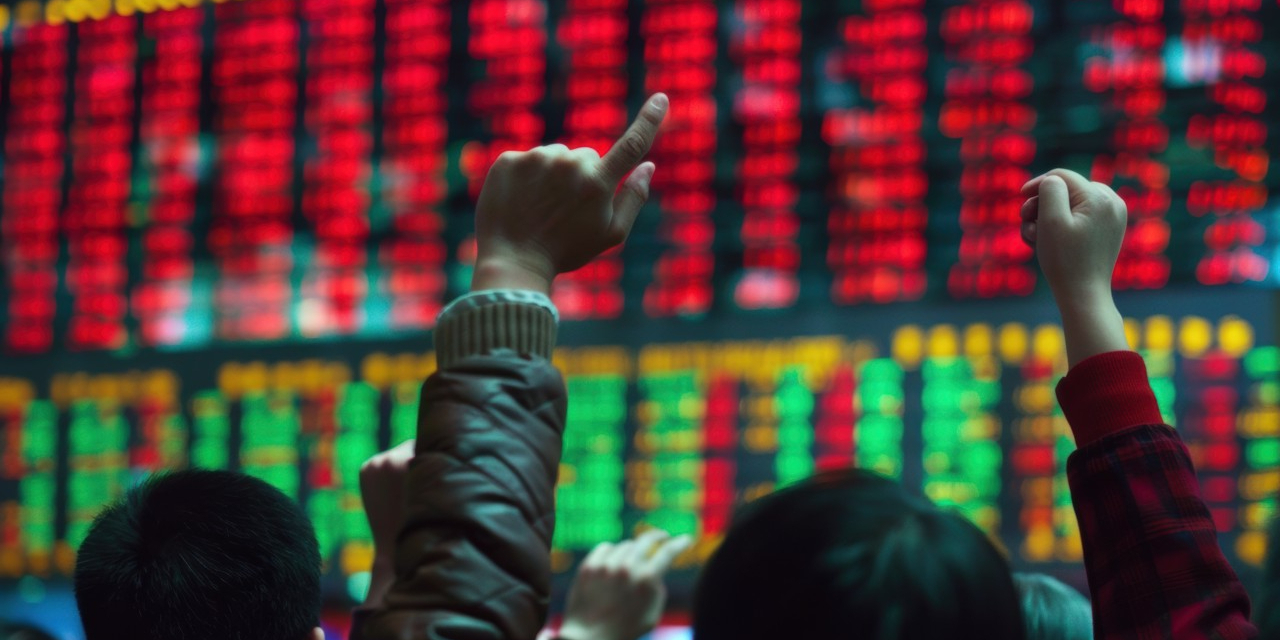
On November 27th, A-shares experienced a long-awaited strong rebound, and investors shared their joy on social media.
The A-share market rebounded rapidly in the afternoon, and the Shanghai Composite Index returned above 3600 points. As of the close, the Shanghai Composite Index rose 3.73%, the ChiNext Index rose 11.61%, the Science and Technology Innovation Index rose over 14%, the Science and Technology Innovation 50 Index rose over 15%, the Beijing Stock Exchange 50 Index rose over 13%, and the Shenzhen Component Index rose 7.24%. The market transaction volume has returned to 2 trillion yuan, an increase of 682.4 billion yuan compared to the previous trading day. On the market, over 5300 individual stocks rose, over 400 stocks hit the limit up, and only 181 stocks fell.
The strong driving force for the rise of A-shares comes from clear signals released by policy makers.
The State Council Executive Meeting (hereinafter referred to as the "Meeting") held on November 27th studied the continuous deepening of the comprehensive reform of capital market investment and financing. The meeting clearly pointed out that the capital market is related to the overall economic development. We must adhere to a goal oriented and problem oriented approach, focus on both countercyclical regulation and reform, continuously improve the mechanism for stabilizing the capital market, implement stock policies, plan and introduce incremental policies, and promote the stable and healthy development of the capital market. To promote listed companies to increase their dividend repurchase efforts, strengthen the role of the "national team" in stabilizing the market, further optimize the "leveling fund" function of Central Huijin Company, and provide sufficient liquidity guarantee.
Fangzheng Securities believes that it is rare for a heavyweight statement to be made during this session of the National People's Congress, pointing out that the capital market is related to the overall economic development. The latest deployment has been made to enhance the internal stability of the stock market, reflecting the high attention of regulatory authorities to the stable and healthy development of the capital market.
Chen Guo, Deputy Director and Chief Strategy Officer of Dongfang Wealth Securities Research Institute, told reporters, "The stabilizing signal released by the National Standing Committee meeting is very strong. It was issued in the morning and afternoon, directly raising the 'national team+sufficient liquidity'=strong policy bottom
The 'national team' stabilizes the market
Yang Delong, Chief Economist of Qianhai Open Source Fund, said that during a sluggish market trend, the successive introduction of heavy policies undoubtedly greatly reversed the downward trend of the market and boosted investor confidence.
The regulatory authorities have also identified key follow-up tasks, including share repurchases and the entry of medium - and long-term funds into the market. The meeting emphasized the need to improve policies that support and guide the entry of medium and long-term funds such as insurance, enterprise annuities, and social security funds into the market, and continuously strengthen the strength of medium and long-term investment. Strengthen the prevention and response to input risks. We need to enhance the endogenous driving force for high-quality development of the capital market through deepening reforms and accelerate the development of multi-level capital markets. We must strengthen the full chain supervision of the capital market in accordance with the law, resolutely investigate and punish financial fraud, illegal reduction of holdings and other behaviors, and effectively protect the legitimate rights and interests of investors.
The "Report of the State Council on Financial Work" released on November 5th has proposed to "support Central Huijin Corporation in playing the role of a quasi leveling fund".
China CITIC Securities believes that "supporting Central Huijin Corporation to play a role as a quasi stabilization fund" emphasizes the role of entities with financial strength and long-term investment attributes in stabilizing expectations and improving supply and demand when the market experiences irrational fluctuations, and together with tools such as swap facilitation, repurchase, increase holdings, and refinancing, forms a stable market policy combination.
Recently, the A-share market has continued to decline, and regulatory authorities have successively introduced heavyweight policies.
On the evening of November 22nd, the A-share market welcomed the "three arrows" to stabilize the market: first, the financing margin ratio was lowered. The Shanghai, Shenzhen, and North stock exchanges lowered the minimum financing margin ratio from 100% to 80%, which will be implemented from November 30th; Secondly, the Shanghai and Shenzhen stock exchanges have launched a new batch of fee reduction measures, with an expected increase of 2.758 billion yuan in profits. The overall fee reduction amount this year will exceed 4.6 billion yuan; Thirdly, the market making mechanism has made new progress, and the Shenzhen Stock Exchange has publicly solicited opinions on the detailed rules for market making business of ChiNext stocks.
According to a study by Caixin Securities, since 2024, with the gradual improvement of market stabilization mechanisms, the strengthening of countercyclical regulation, and the continuous functioning of "stabilization funds" such as Central Huijin, negative market feedback has been effectively blocked during periods of overseas input risks such as "equivalent tariffs" and the US Iran conflict, while enhancing market resilience and continuously improving market infrastructure, the bottom line of preventing systemic risks has been maintained.
The technology sector rebounded first
From the perspective of sectors, the technology sector has received strong funding support today. Semiconductor, software, computing hardware, communication equipment and other related stocks surged during the trading session.
As of the close, the chip industry chain has exploded, with Quanzhu Shares (603030. SH) trading on the 7th board in 9 days, while Sanjia Technology (600520. SH), Dashengda (603687. SH), Xuanji Information, and others have hit the daily limit up; Huawei's industrial chain is strengthening, with multiple stocks including Huasheng Tiancheng (600410. SH), Hanxin Technology (920092. BJ), and Tianyuan Dike (300047. SZ) hitting the daily limit up; The concept of computing hardware rebounded, with New Yisheng (300502. SZ), Changyingtong (688143. SH), and Yuanjie Technology (688498. SH) hitting the limit up by 20CM, while Dongshan Precision (002348. SZ), Cambridge Technology (603083. SH), and Huamao Technology (603306. SH) hitting the limit up; Robot Kelai Electromechanical (603960. Sh) has 6 connected boards, and Ningbo Dongli (002164. SZ) has 4 boards in 5 days.
From the perspective of ETFs (Exchange Traded Open Ended Index Funds), Wind data shows that as of the close on November 27th, the Sci Tech Chip ETF Huabao (589190. SH) led the way up 20.09%, the Sci Tech Information ETF Jiashi (588100. SH) rose 20.07%, and the Sci Tech Enhancement ETF Huabao (589280. SH) rose 20.06%; In contrast, Bank ETF Boshi (159253. SZ) led the decline by 1.97%, Bank AH Preferred ETF CMB (517900. SH) fell by 1.73%, and Bank ETF Southern (512700. SH) fell by 1.62%.
Previously, technology stocks experienced a fierce pullback. According to Wind data, as of November 26th, the Shenwan Semiconductor Index has fallen 34.05% in the past three months and 42.60% in the past six months, while the CSI TMT (Technology, Media, and Communication) Index has fallen 26.47% and 33.64% respectively during the same period; The Sci Tech Innovation 50 Index experienced a maximum drawdown of 25.26% between November 12th and 26th.
At the individual stock level, the stock price of New Yisheng has experienced a maximum drawdown of 75% since its June peak, while the stock prices of Zhongji Xuchuang (300308. SZ) and Tianfu Communication (300394. SZ) have both experienced a maximum drawdown of approximately 73%.
Meng Lei, China stock strategy analyst at UBS Securities, stated that the global technology narrative, including the commercial monetization progress of artificial intelligence (AI) and the marginal changes in the growth rate of related capital expenditures in 2027-2028, has a profound impact on the A-share technology sector and the overall market. In fact, indices with a high proportion of technology weight in global stock markets generally show a similar trend in the medium term. If the development of artificial intelligence falls short of expectations next year, it will weaken the two major growth engines of "investment" and "wealth effect" in the United States.
In terms of industry preferences, Meng Lei stated that tactically, he is optimistic about industries that benefit from China's independent and controllable technology and have seen a significant decline in valuation, Chinese export and overseas enterprises with global competitiveness, and some defensive sectors with stable business models and high dividends.
Securities firms shout: 'The most pessimistic moment has passed'
In 2026, A-shares will show an extreme trend of "rising first and then falling": in the first half of the year, the technology growth sector will drive the market to rise comprehensively; In the second half of the year, the technology sector concentrated on clearing, and major indices generally gave up their gains for the year.
As of November 27th, the Shanghai Composite Index fell 9.13% this year, the Shenzhen Component Index fell 20.04%, and the ChiNext Index fell 23.70%. Many investors have already given up all the floating profits accumulated in the first half of the year and turned from gains to losses.
Chen Guo believes that the market is likely to view this meeting as an important policy bottom for A-shares, and the most pessimistic moment of worrying about negative feedback from funds has passed. After a rapid boost in sentiment, the market's future direction will depend more on fundamentals, with key macro factors including the pace and intensity of the Federal Reserve's interest rate hikes, progress in the AI industry and the global AI narrative, and the strength of domestic demand policies.
However, Chen Guo also reminded that stabilizing the market does not mean "rigid conversion" and "risk-free investment", and the stable and healthy development of the capital market does not mean going from panic to excitement. After the market returns to normal, investors should choose appropriate targets and timing based on rational investment, value investment, and medium-term investment. With the concerted efforts of all parties, they are confident in the stable and healthy development of the A-share market in the medium term.
Fangzheng Securities believes that the long-term positive trend of the A-share market has not changed. The five positive factors of the macroeconomic trend towards a new and better direction, the recovery of corporate profits, the bottom zone of stock valuation, significant enhancement of shareholder returns, and the continuous promotion of institutional reforms determine that the value of China's capital market allocation will continue to be highlighted.


 Subscribe