2026-11-27 13:18

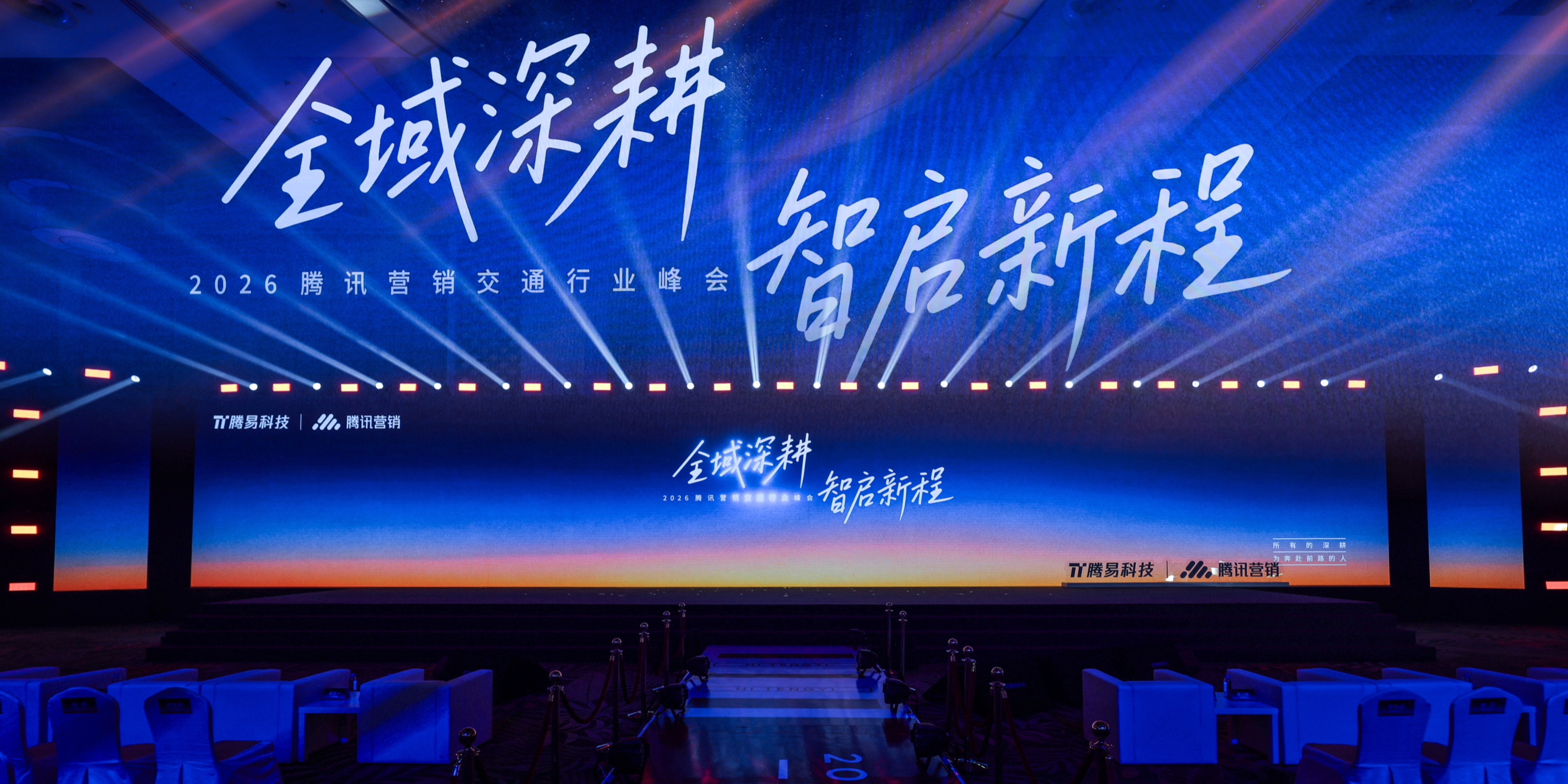
On November 26th, the 2026 Tencent Marketing and Transportation Industry Summit with the theme of "Global Deep Cultivation of Intelligence and New Journey" was held in Guangzhou. This summit is hosted by Tengyi Technology, with special support from Tencent Marketing. Representatives from automobile manufacturers, dealers, and ecological partners exchanged ideas on topics such as brand building, content marketing, user insights, and AI technology applications, jointly exploring the practical path of transforming automobile marketing from single point advertising to global operation.
In her opening speech, Luan Na, Vice President of Tencent, combined her experience in influencer marketing and content heating, factory and store live streaming, and lead management over the past year, and proposed a development strategy for automotive marketing that supports brand, management, and insights.
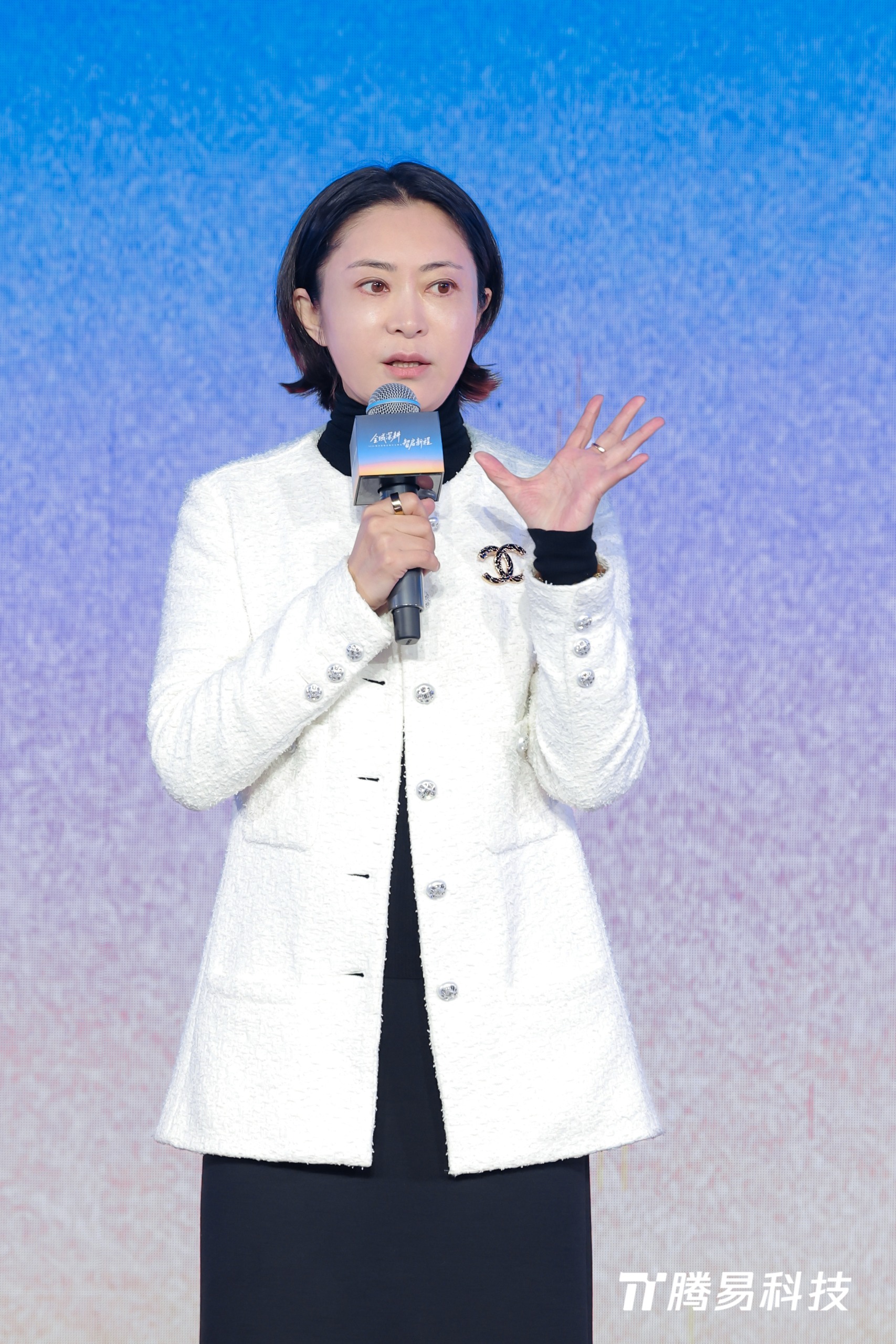
In Luan Na's opinion, the more competitive the market environment, the more important the brand value cannot be ignored. As a bulk consumer product with a long decision-making cycle, brand values and user trust are important factors affecting consumer decisions. With the change in content consumption patterns, brands not only need to rely on high-quality IP to convey value concepts, but also need to establish user trust through the real experiences and word-of-mouth sharing of influencers.
Business opportunities need to be cultivated, "Luan Na pointed out. Through continuous interaction and communication, gradually convert user interests into purchase intentions. With the help of enterprise WeChat, factory store live streaming and other tools, brands can establish continuous contact in the user decision-making process.
At the same time, Tencent uses the data construction of Ruyi to analyze the decision-making process of users from exposure, interest cultivation to car purchase from a global perspective, and feeds the insights back to brand building and user management. In Luan Na's view, brand, management, and insights are not independent marketing processes, but an organic closed loop that supports and optimizes each other.
The more intense the competition, the deeper the brand cultivation. "Jin Tai, Senior Vice President of Tengyi Technology, pointed out in the theme sharing titled" Seeing Changes, Knowing Causes, Reconstructing Integration, Vertical and Horizontal "that product homogenization, intensified market competition, high price vehicle market growth, and accelerated intelligence are changing the marketing environment of automotive brands. How to establish differentiated cognition before consumers make purchasing decisions has become a problem that brand marketing needs to solve.
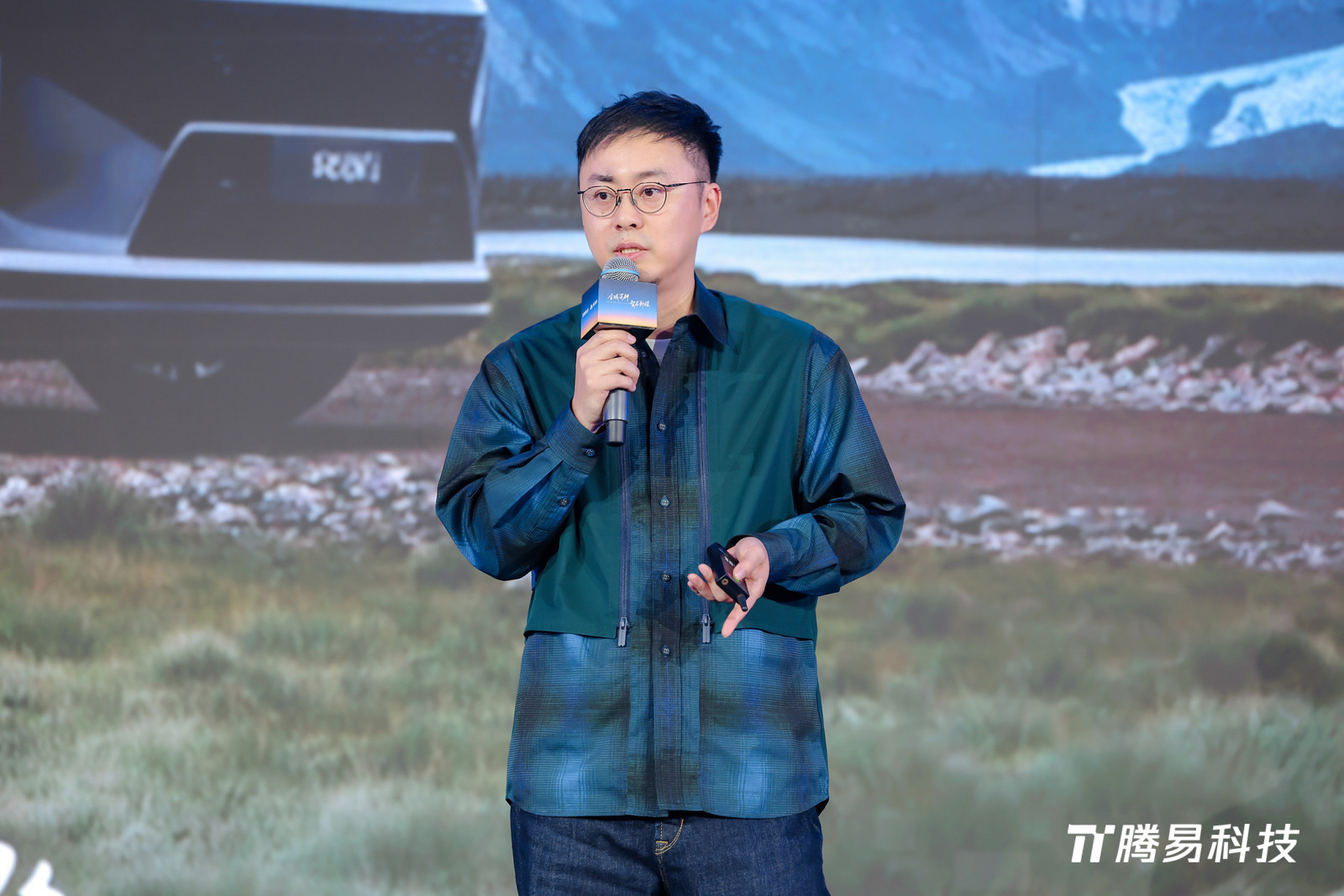
Based on the marketing practice of the past year, Jin Tai proposed that automotive marketing needs to achieve three major transformations: shifting from single point IP delivery to deep cultivation of comprehensive content inside and outside the program, shifting from single expert cooperation to mind oriented expert matrix operation, and shifting from relatively independent resource delivery to full chain collaboration of exposure, seeding, and conversion.
Taking content IP cooperation as an example, brands are no longer limited to the dissemination cycle of a single program, but extend the dissemination value of high-quality content through long and short content linkage, expert interpretation, and hotspot reception; Expert marketing has also shifted from focusing on fan base and cooperative pricing to conducting matrix operations around brand awareness.
Based on the three main business pillars of content, influencers, and resource deployment, Tengyi Technology is supported by AI technology to build a LEAD FAST marketing system. Through pre investment insights, strategy combinations, and post investment effect evaluations, a closed loop of marketing decisions and effect verification is formed, and a "One Road Series" marketing solution covering seven major marketing needs such as new car launches, brand awareness, and cross-border cooperation is launched.
How to convert the accumulated user interests of a brand into effective in store visits, test drives, and even real transactions? Mao Dan, Vice President of Tengyi Technology, extended his focus from front-end brand marketing to back-end lead management in the theme sharing titled "Seeing Domain Knowledge and Efficiency: Reshaping the Way to Growth".
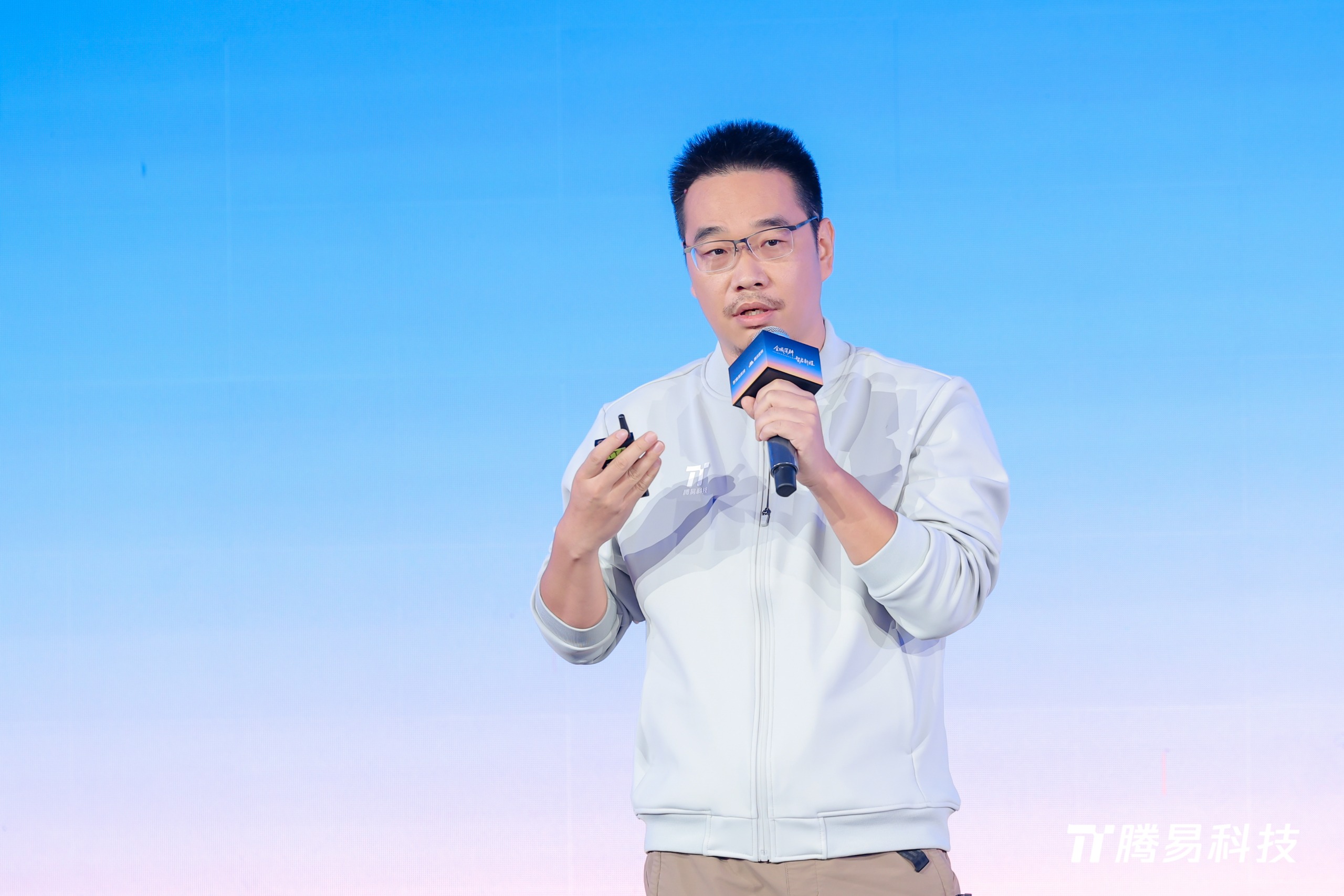
In response to the three major practical problems of "unclear transactions", "inability to wait for demand", and "inability to retain relationships" in automotive marketing, Mao Dan proposed a clue management strategy centered on "accurate investment, strong acceptance, and deep penetration".
In terms of precise targeting, Tengyi Technology improves the post lead data through management files, AI assisted customer acquisition, transaction data verification, and AIM+intelligent targeting, and feeds back the business results to the front-end targeting strategy. In terms of user engagement, AI assisted user screening, direct communication through enterprise WeChat, and linkage between forms and enterprise WeChat are used to shorten the distance between user needs and store services.
According to Mao Dan, in relevant marketing practices, through AI driven front-end communication and enterprise WeChat customer service links for user screening, the effectiveness of relevant leads has increased from about 50% to 70%, and the cost of retaining funds has decreased by about 20%.
Facing 2027, Tengyi Technology will further explore the matrix style collaboration between brand official accounts, regional accounts, and store accounts, accumulate user awareness through short videos, undertake user needs through live broadcasts, and explore the human-machine collaboration between WorkBuddy and store sales consultants to improve customer communication and lead follow-up efficiency.
Both brand building and lead management rely on a deep understanding of user needs. Han Jiajun, the head of marketing and transportation industry planning at Tencent, pointed out in a themed sharing titled "Understanding the Small Things and Redefining Insights" that valuable user insights should not be limited to basic tags such as age, gender, and city, but need to understand the reasons behind consumers' different car purchase choices through crowd comparison and behavioral details.
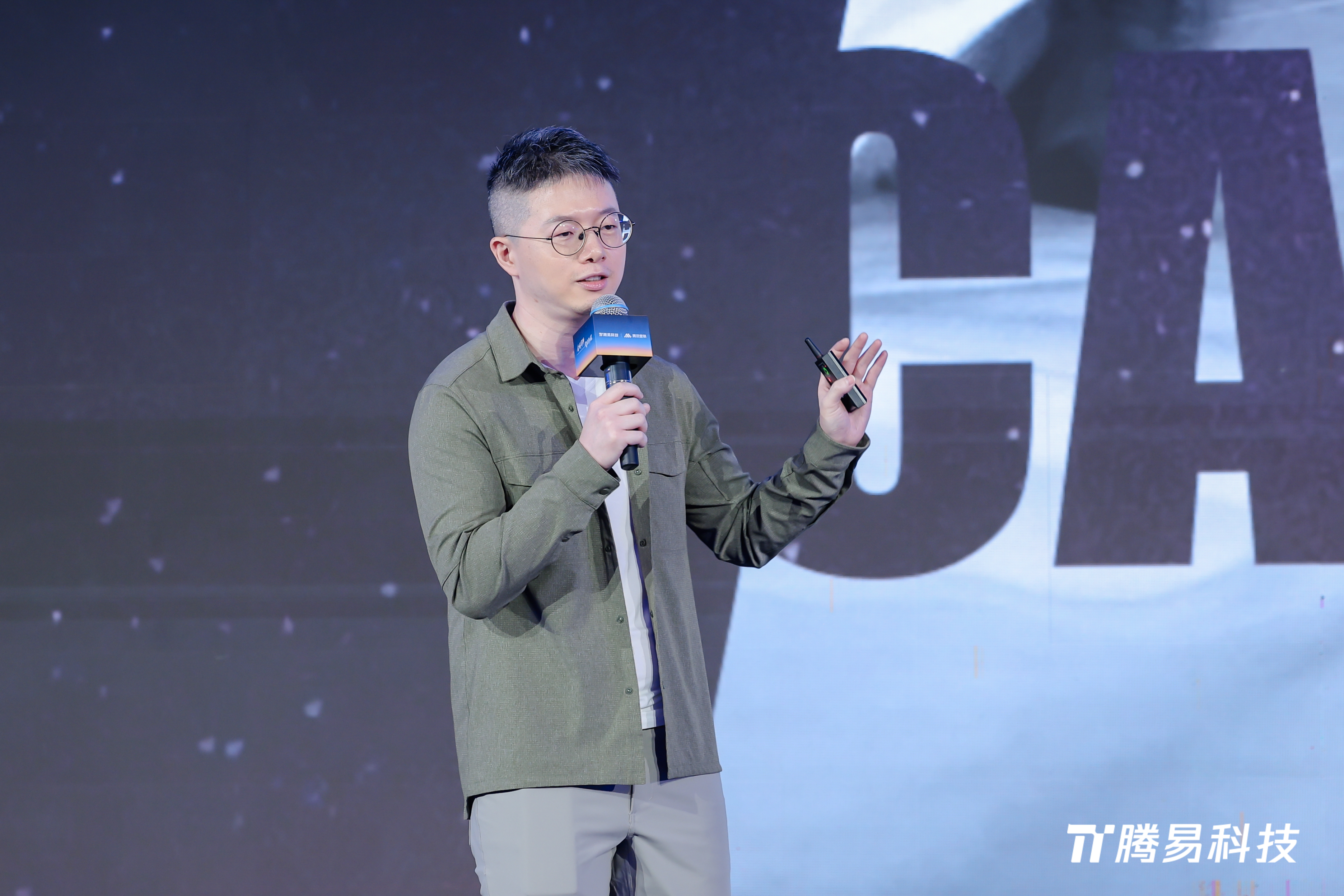
Taking the user analysis of a certain large SUV model as an example, Han Jiajun analyzed the differences in product demand and brand awareness among different consumer groups from dimensions such as lifestyle, interest preferences, content consumption, and cross industry brand preferences by comparing the actual car buyers and their intentions after test driving, providing a basis for marketing strategy formulation.
In terms of brand mindset analysis, Han Jiajun believes that what a brand conveys to consumers and what consumers truly understand and identify with are two different levels of issues. The measurement of marketing effectiveness not only needs to focus on the reach scale, but also on the actual recognition of users towards the brand and product value.
How to transform insights into executable marketing strategies? Han Jiajun combined WorkBuddy and LEAD FAST marketing systems to showcase the AI assisted solution creation process from customer demand input, audience insight analysis, to marketing solution matching, content strategy formulation, and effectiveness indicator setting. He stated that AI and the professional judgment of marketers are not substitutes, but complement each other, achieving efficient reuse of marketing methods and practical experience through human-machine collaboration.
How can high-quality content surpass a single dissemination cycle and become an integral part of a brand's long-term operation? In the roundtable dialogue on "Content as Anchor, Sound Reaching Far: Decoding the Long term Value of Content for Automotive Marketing", Tencent News expert and Chief Program Manager He Runfeng served as the host, and discussed with Zhang Lei, Vice General Manager of Tencent Marketing Solutions Department, Wang Wei, Vice President of Tencent Online Video, Chen Xiaoqing, Deputy Editor in Chief of Tencent Video and Head of Daolai Documentary Laboratory, Li Lun, Deputy Editor in Chief of Tencent Video and Director of "Thirteen Invitations", Cheng Jinwen, Deputy General Manager of Yijing Automotive Brand, and Ran Xiaoqiang, Head of Audi China Brand Management and Communication.
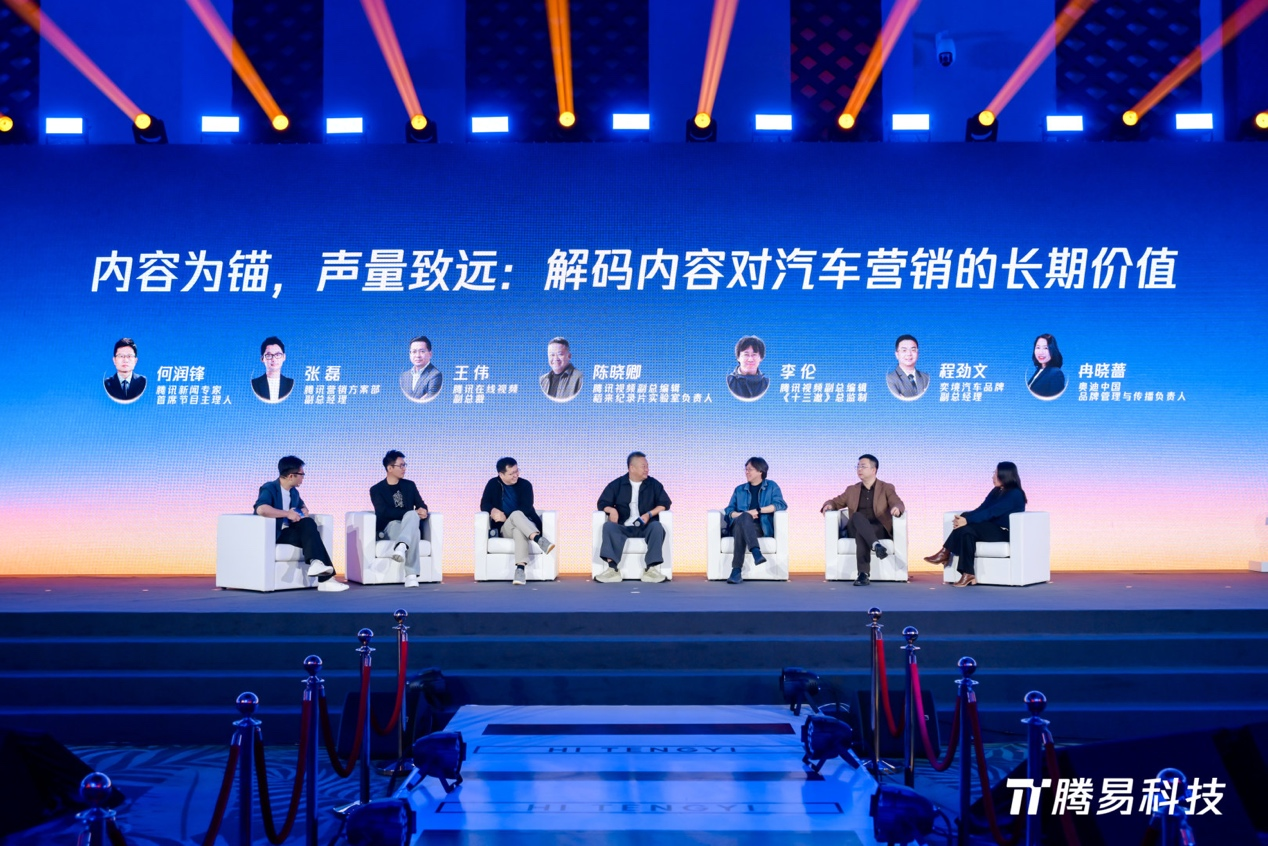
He Runfeng believes that content is no longer just a medium of dissemination, but a channel for brands to establish value resonance with users. Brands should respect the rules of content and communicate in real life expressions. Wang Wei proposed that by extending the IP operation cycle, exploring core content assets, and deepening the co creation between brands and content providers, the long-term value of high-quality content can be further expanded. At the level of content creation. Zhang Lei shared how to rely on data integration, user path restoration, and diverse content ecology to provide brands with richer choices of influencers and content. Chen Xiaoqing shared her thoughts on exploring lifestyle, regional culture, and other directions together with automotive brands and content creators around the changes in content and user relationships. Li Lun pointed out through brand cooperation practice that the cooperation between content and brand should not be limited to the presentation of commercial information, but should be based on the alignment of value concepts and rational communication with users. Cheng Jinwen believes that long-term marketing and short-term marketing have different roles and should not be measured using the same set of indicators. Brands need to accumulate user assets through long-term content management, and then use effect marketing to drive demand conversion. Ran Xiaoqiang proposed that brands should be good at extracting key moments with communication potential from high-quality content, and further extend the value of content through expert interpretation, scenario based product experience, and user independent creation.
Whether marketing methods can truly create value ultimately needs to be tested by frontline management. In the roundtable dialogue on "Product Empowerment, Effective Growth: Seeing the Real Value of Marketing Implementation", Qin Qin, the Operations Director of Tengyi Technology, served as the host, Yuan Zhenfeng, the General Manager of GAC Trumpchi Panyu Changjia Welcome Store, Yang Xiao, the Director of Enterprise WeChat Automotive Manufacturing Industry, Zhang Xiaoze, the customer acquisition expert of Wuling brand, and Luo Huasi, the head of Tengyi Technology Factory Store Communication, discussed topics such as lead reception, user relationship maintenance, and collaboration between short videos and live broadcasts.
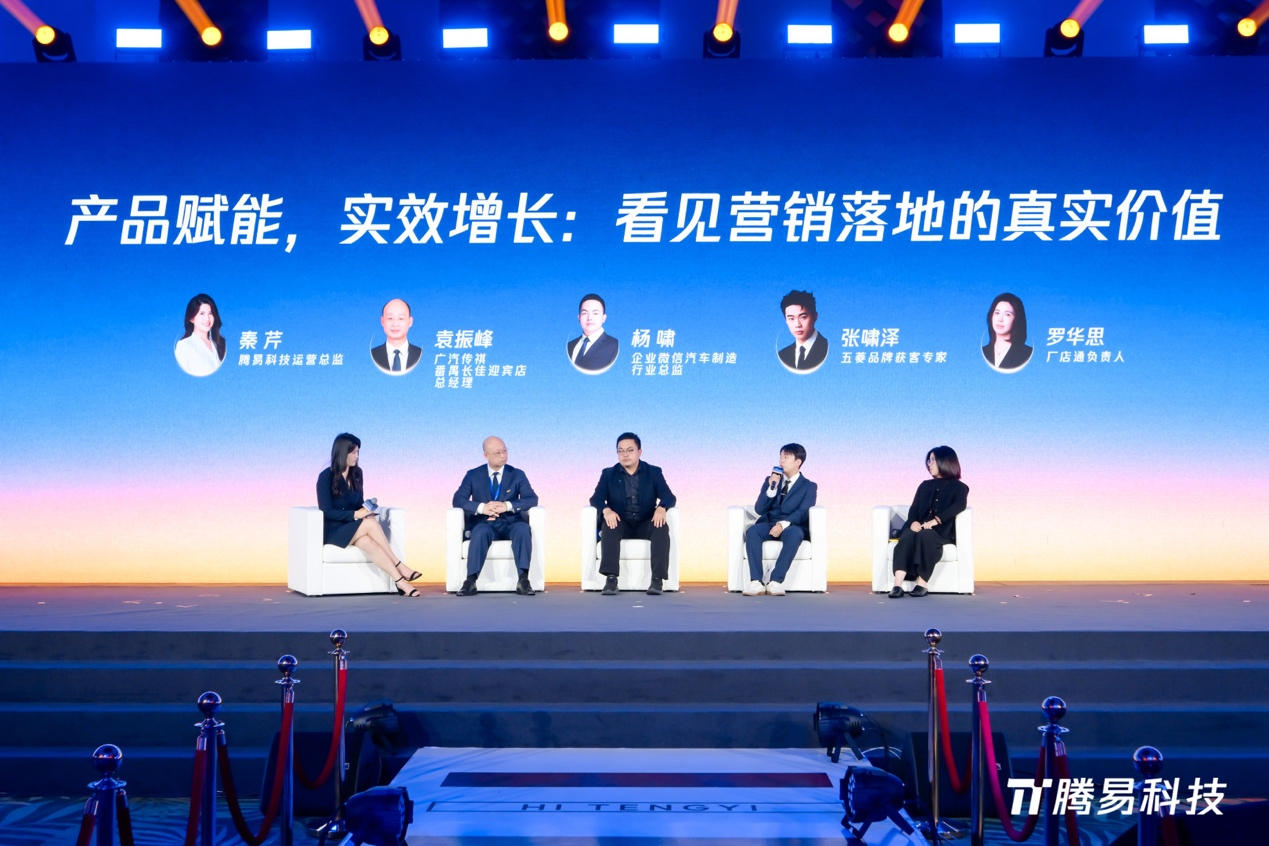
Qin Qin proposed that automobile marketing is shifting from one-time customer acquisition to full cycle user operation, relying on digital tools to connect the complete chain from content seeding, lead circulation, private domain operation to store conversion. Starting from store management, Yuan Zhenfeng shared his closed-loop experience of obtaining leads, responding promptly, grading customers, and inviting them to the store. He advocated for continuous communication with unsold customers, seeding content, and timely reactivation of demand. Yang Xiao pointed out that the transformation of consumer communication habits is driving the value enhancement of online interaction. Enterprise WeChat will explore the full chain support from marketing customer acquisition to user operation and service maintenance, and combine session archiving to help car companies implement AI applications. Zhang Xiaoze shares his ideas on combining short video seeding with live streaming conversion, based on the practice of video accounts. Through the "short lead straight" link, efficiently convert content interests into traceable real clues. Luohuasi shares the upgrade of its factory store communication products and services: on the product side, it improves location-based lead flow, instant communication, and session archiving links; Build a three-tier account matrix for brand, region, and store on the service side, empowering brands and distributors with live streaming support and operational support.
At the same time, the summit also commended excellent practices in the field of automotive marketing. Four major awards were presented on-site, namely the "Tengyi Global Management Award," "Tengyi Netrong Navigation Award," "Tengyi Digital Intelligence Far Navigation Award," and "Tengyi Matrix Navigation Award," focusing on practical achievements in areas such as global user management, content value innovation, data and intelligent marketing applications, and multi position matrix collaboration, showcasing the diverse explorations of automotive brands and ecological partners in marketing model innovation.
Faced with increasingly fierce market competition and constantly changing consumer decision-making paths, how to continuously accumulate brand value, improve user operational efficiency, and truly transform AI technology into practical business capabilities remains a common question that the automotive industry needs to answer for the future. This summit integrates marketing strategies, technological applications, and frontline business practices, presenting a rich exploration of the transformation of automotive marketing from single point advertising to comprehensive management. It also provides new ideas and references for the industry's long-term growth in the next stage.