2026-11-25 18:27

The Global SME Finance Forum 2026, jointly organized by the World Bank Group and the Global Fintech Network (GFTN), will be held in Singapore from November 18th to 20th. Policymakers, financial institutions, and technology leaders from over 80 countries and regions gathered to explore how to enable small and medium-sized enterprises to truly access and utilize financial resources.
China's first and globally leading digital bank, WeBank, was invited to attend the main forum. The assistant president of WeBank attended the forum and gave a speech, systematically sharing the digital practices of the "WeBank Small Micro Model" in the past decade and introducing the latest exploration of upgrading the generative AI driven model.
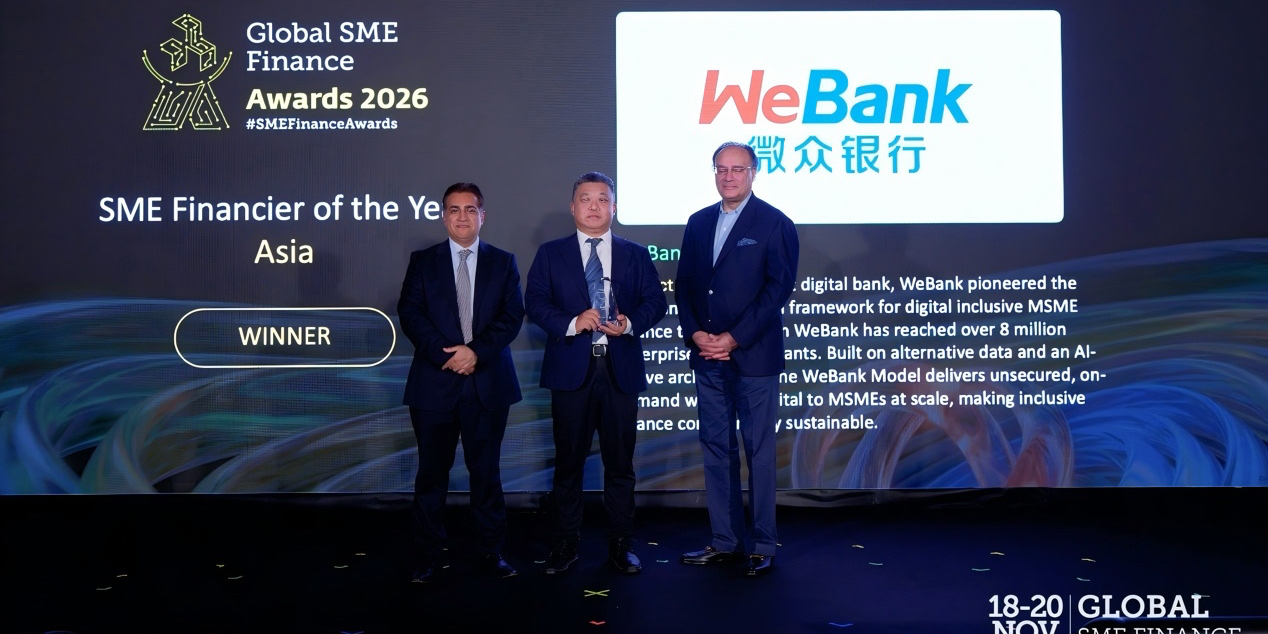
At the same time, the forum announced the Global SME Finance Awards 2026, and WeBank was awarded the "SME Financier of the Year" in the Asian region, becoming the only institution in Asia to receive this award this year. This is the third time that WeBank has won this award, following its first win in 2023 and becoming the first institution to win in 2024. The "WeBank Small and Micro Model" continues to gain international recognition.
WeBank Public: Answering Global Issues in Digital Small and Micro Finance with the "WeBank Small and Micro Model"
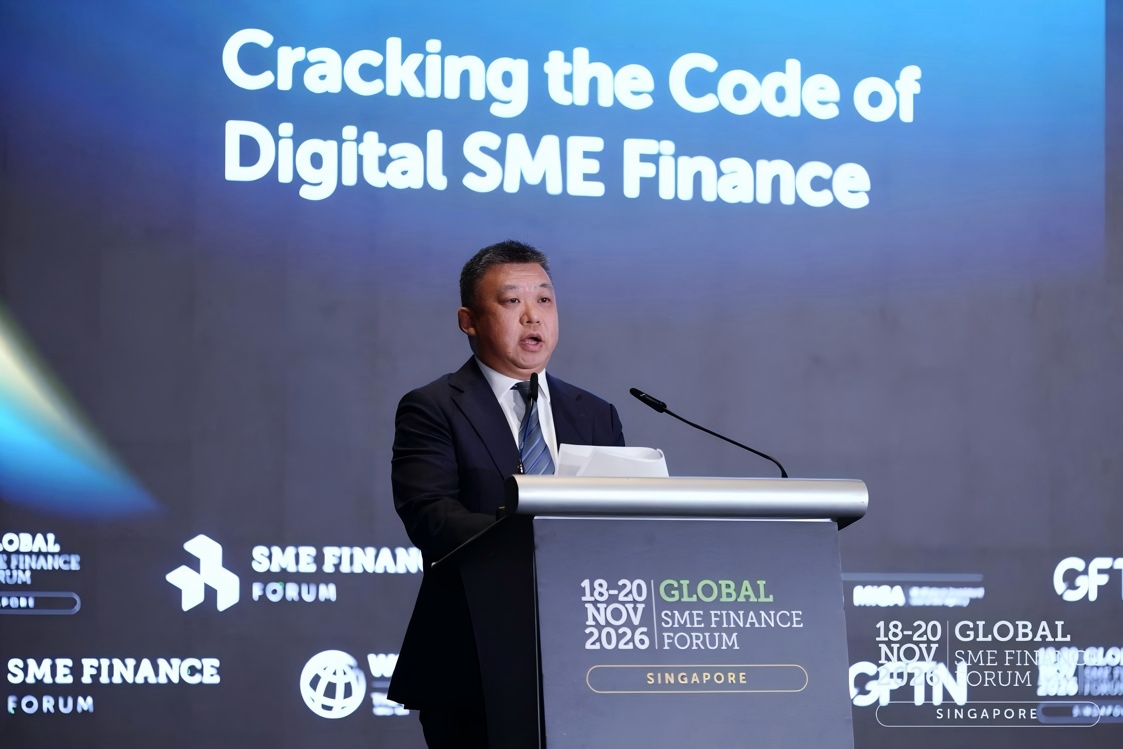
At the main forum, the assistant president of WeBank gave a speech titled "Decoding Digital Finance for Small and Medium sized Enterprises". He approaches from a global perspective and believes that the difficulty of financing for small and medium-sized enterprises is a common development economics issue facing the world. According to data from the International Finance Corporation (IFC), small and medium-sized enterprises account for over 90% of the global enterprise population, contributing about half of GDP and 70% of employment. However, in emerging markets, the financing gap is approximately $5.7 trillion, and if informal enterprises are included, the gap can reach as high as $8 trillion. In October of this year, the World Bank Group released its strategy for small and medium-sized enterprises, which identified "visibility, connectivity, empowerment, and financial security" as key support areas. How to make the real operations of small and medium-sized enterprises visible and their credit recognized is becoming an important exploration direction for global digital inclusive finance.
From the perspective of banks, the public sector summarizes this structural gap as a dual constraint of "not daring to lend" and "unwilling to lend": on the one hand, insufficient information disclosure and lack of collateral for small and medium-sized enterprises make it difficult for banks to accurately calculate risks and price them; On the other hand, service costs do not match individual income. A loan of 300000 yuan requires the same due diligence, approval, and post loan management as a corporate loan of 30 million yuan, but operating costs do not decrease proportionally with the amount.The difficulty of small and micro credit is clear: it is not a price issue, but an information issue. Since prices cannot be used to expand coverage, there is only one way left - to reduce unit service costs.
In recent years, this structural problem has met the conditions for breaking through in China. According to public reports, the "micro, small, and micro model" was born and formed in China's mature policies and digital infrastructure: inclusive finance has risen to a national strategy; Mechanisms such as "bank tax interaction" have accelerated the sharing of government data, providing sufficient business information for enterprise credit evaluation; Mobile Internet and artificial intelligence make low-cost customer acquisition and automated risk control possible; The scale of approximately 60 million enterprises in China provides ample space for the continuous testing and improvement of the model.
Micro group small micro mode ": enables risk control and cost reduction
Regarding the two core issues of risk and cost, the public summarizes the solution of the "micro group small micro model" into two sentences: "Digitization enables risk control, and scaling enables cost reduction
On the risk side, WeBank combines data, models, and credit professional methods: leading the overall business layout from the asset portfolio level to evaluating the enterprise's operation and repayment ability at the individual level, and continuously calibrating the model judgment through sample research and expert experience. On the cost side, expanding service reach through online customer acquisition and user management costs less than one tenth of the same amount as the offline customer manager model; Relying on independently developed distributed core systems, the entire process of loan application and disbursement is achieved through systematic circulation and automated approval, and the expansion of service scale no longer relies on a proportional increase in personnel.
Since the launch of China's first online unsecured enterprise working capital loan product "Weiye Loan" in 2017, WeBank has attracted nearly 9 million applications from enterprises and provided credit services to over 2.3 million small and medium-sized enterprises. The cumulative credit amount has exceeded 2 trillion yuan, and the non-performing loan ratio has remained at a relatively low level in the industry. In the complex and ever-changing economic environment of the past decade, it has achieved a parallel of scale and commercial sustainability.
From digital native to AI native, continue to contribute experience to the financial development of global small and medium-sized enterprises
Facing the new opportunities brought by cutting-edge technologies such as AI, the public introduction of WeBank relies on digitization and AI to achieve large-scale automated risk decision-making and online operations. In the future, it will deepen its understanding of enterprises and improve its knowledge system in three directions; The second is to enhance the compatibility between credit and services, making the credit limit, term, repayment arrangement more in line with the operation of the enterprise; The third is to strengthen continuous management and feedback, connect pre loan analysis with post loan performance, and improve service capabilities under clear business boundaries and manual supervision.
The AI practice sharing of WeBank has been extended to multiple segments of this forum. Wang Yasheng, Assistant General Manager of the Digital Finance Development Department and AI Architecture Expert at WeBank, and guests from financial technology companies Tala, GrabFin, and digital bank Maya Bank held an in-depth discussion on "Digital SME Credit: What is Needed for Scaling".
On November 19th, WeBank also organized a themed workshop on "The Application of Artificial Intelligence in Small and Medium sized Finance: From Practice to Challenges" at the forum. Wan Lei, Vice President of WeBank's Enterprise and Institutional Business Group, shared WeBank's AI process and specific cases, and had in-depth exchanges with guests from GoTyme Bank in the Philippines, DBS in Singapore, ANExt Bank in the UK, Revolut in the UK, and Mashreq Bank in the UAE on the application, practice, and challenges of AI in small and micro finance. The workshop provided a platform for peers from various countries to continue sharing experiences and jointly explore the landing of digital small and micro enterprise finance.
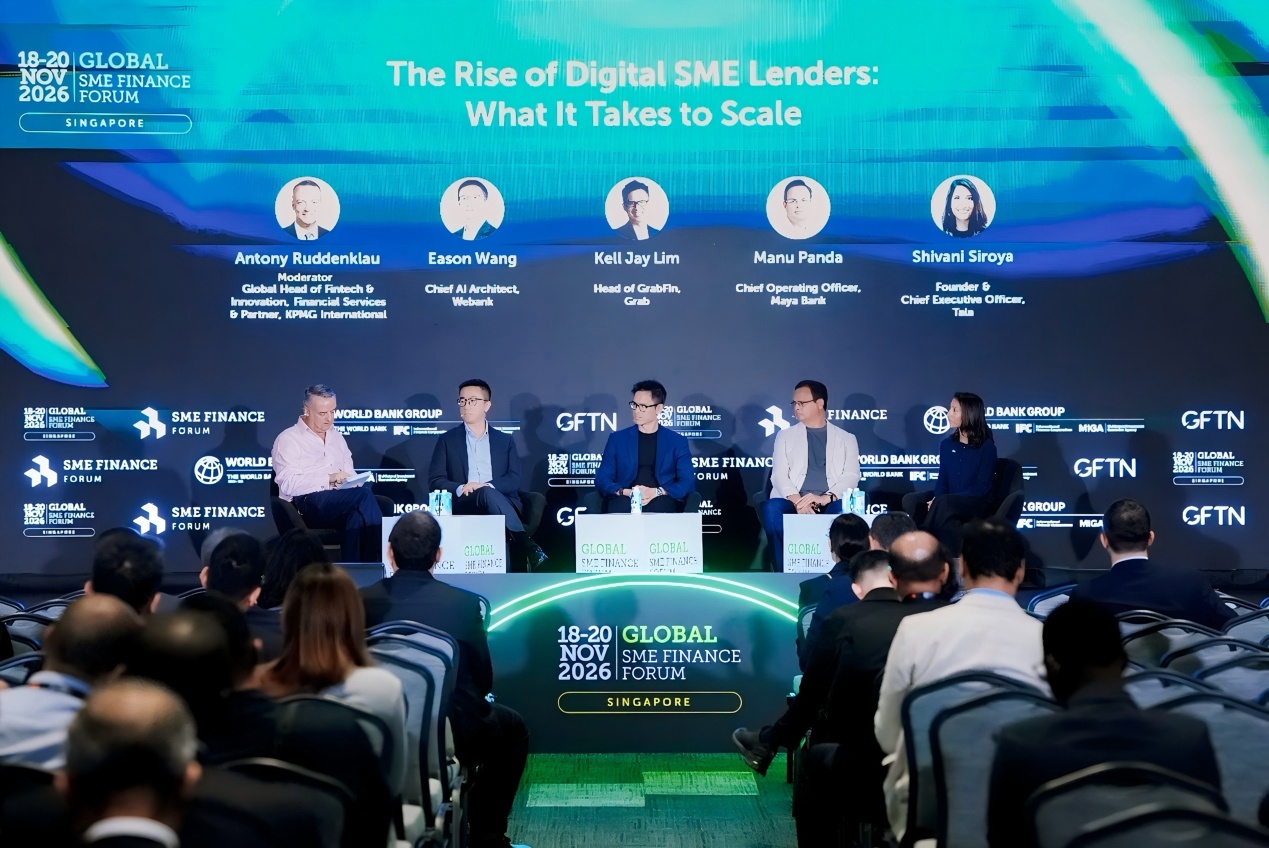
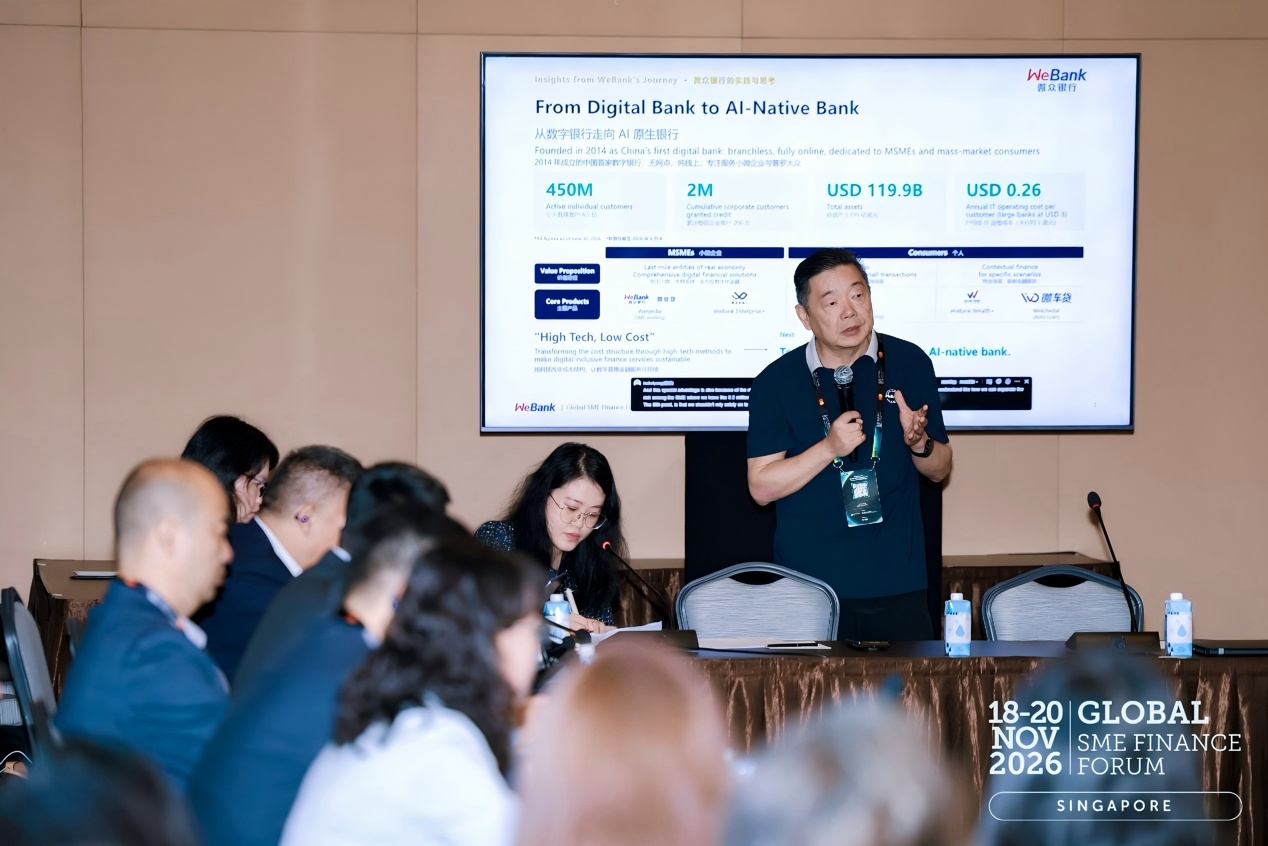
Three awards have been won in the Asian region, and the "micro group small micro model" continues to gain international recognition
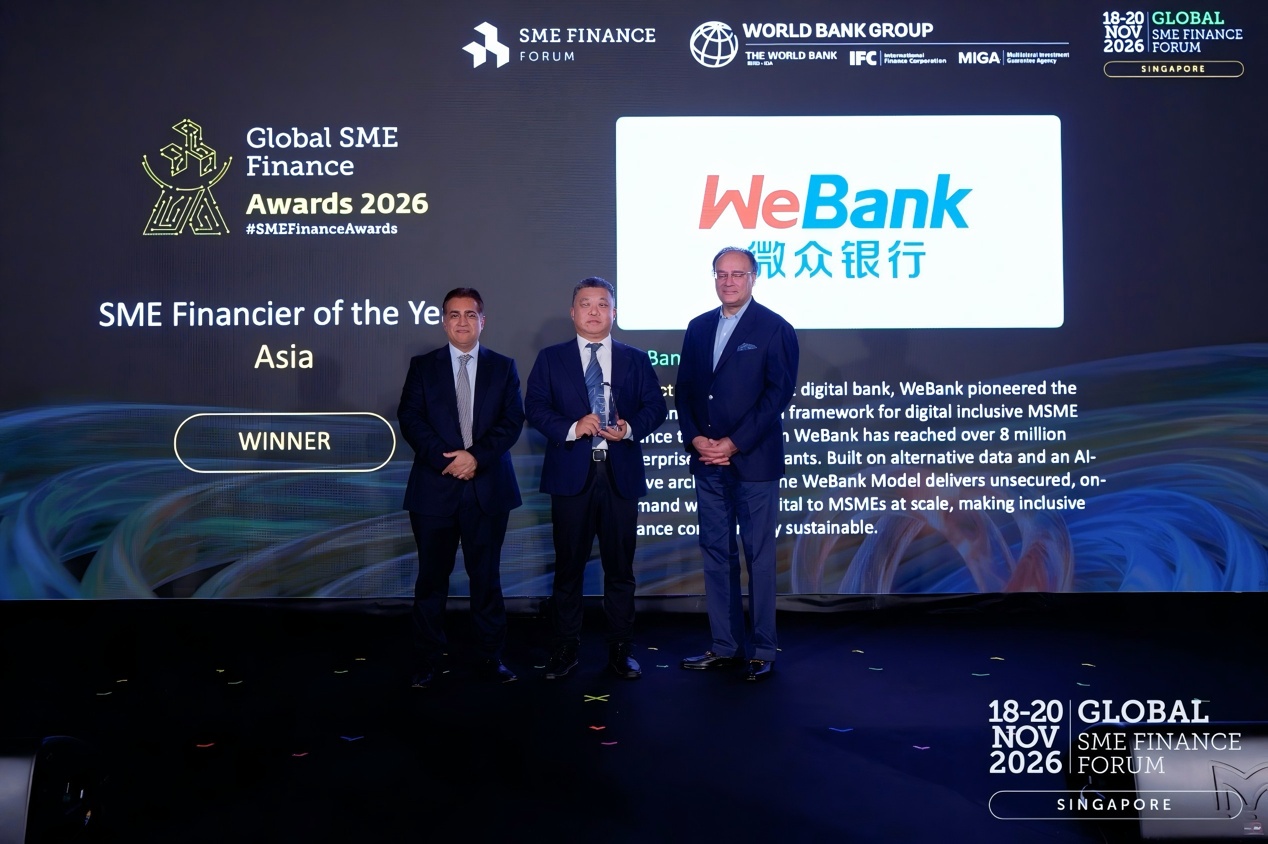
The Global SME Finance Award, hosted by the Global SME Finance Forum managed by the World Bank Group, is one of the most authoritative selections in the field of small and micro finance worldwide. It is reported that the "Best Small and Medium sized Enterprise Financial Institution of the Year" award aims to recognize financial institutions that provide outstanding support and demonstrate market leadership for small and medium-sized enterprises in their respective regions. It is selected by 107 judges and industry experts from around the world based on their service coverage, innovation, practical effectiveness, and scalability.
The organizer wrote in the reason for the award that as China's first digital bank, WeBank has attracted nearly 9 million small and medium-sized enterprises to apply through its digital "WeBank Small and Micro Model", forming a framework driven by full digitization and AI native technology, enabling inclusive finance to achieve commercial sustainability while providing large-scale services.
According to the four dimensions examined by the awards, the "micro group small micro model" has its own verification: in terms of service coverage, online outreach and private domain operation have enabled financing services to reach a large number of enterprises that are difficult to cover by traditional credit models; In terms of innovation, the combination of data, models, and credit professional methods has reshaped the risk assessment and operational methods of small and micro credit; In terms of actual effectiveness, the risk performance and commercial sustainability spanning nearly a decade of business cycles have verified the maturity of the micro and micro model; In terms of scalability, this model combines credit professional methods, data technology, and scalable services, and can also provide valuable experience for different markets.
Qamar Saleem, Global Head of the World Bank Group SME Finance Forum, commented, "The 'Micro and Micro Model' provides valuable insights on how to leverage digitalization and continuous technological innovation to help financial institutions expand and improve financial services for SMEs. Over the past decade, WeBank's approach has demonstrated the potential of technology driven models to reach SMEs on a large scale and continue to evolve iteratively according to their needs. The SME Finance Forum looks forward to working with WeBank to explore how such experiences can contribute to wider learning, replication, and innovation in various markets; financial institutions, technology service providers, and other parties will also work together to bridge the global financing gap for SMEs. ''
As stated in the public speech, "The global value of the 'micro group small micro model' lies in combining credit professional methods, data technology, and scaled services to provide valuable experience for different markets." Specific applications still need to be explored and verified according to local data foundations, institutional environments, and enterprise characteristics. "We hope that China's practice can provide a valuable reference for the development of inclusive small and micro finance worldwide.