2026-11-24 17:50

The inheritance and innovation of traditional Chinese medicine are entering a new stage of placing greater emphasis on technological support and evidence accumulation. The "15th Five Year Plan for the Revitalization and Development of Traditional Chinese Medicine" lists strengthening basic research and classic inheritance of traditional Chinese medicine, and improving the technological innovation capability of traditional Chinese medicine as key tasks. It proposes to strengthen the digitization and application of original theories of traditional Chinese medicine classics, and makes arrangements for the protection of traditional Chinese medicine resources, authentic production of medicinal materials, and quality traceability of traditional Chinese medicine.
These deployments point to a common topic: how can Chinese health wisdom be integrated into contemporary people's lives through modern research, standardized production, and clear and credible expression? Chinese herbal medicine technology is an important path connecting Eastern wisdom with modern health needs.
This issue is also related to the daily choices of the public. Faced with traditional Chinese medicine health products, consumers not only care about "what ingredients are used", but also want to know where the ingredients come from, what the formula is based on, whether the research evidence is sufficient, and how the production quality is guaranteed. To integrate traditional health wisdom into modern life, it is necessary to establish a visible and clear scientific and quality chain beyond cultural inheritance.

Recently, Xinhua News Agency's "See" column and Yanggu Health launched a traceability journey around traditional Chinese medicine technology, with ginseng raw material traceability as the first stop of the year. They visited the Jingyu planting base, research and development laboratory, and production line in Jilin, presenting the practice of traditional Chinese medicine technology from raw materials to products.
Inheriting the wisdom of Eastern health preservation and responding to modern health needs with traditional Chinese medicine technology
Chinese health culture has accumulated rich theoretical and practical experience, but the records in ancient books and the long-term compatibility experience cannot be simply equated with the efficacy basis of modern products. Why do classic prescriptions use a certain combination of medicinal herbs? What pathways may different components exert their effects through? How can traditional compatibility adapt to modern lifestyles?
Yanggu Health is trying to answer these questions using the concept of "Chinese herbal medicine technology", combining Eastern health wisdom with modern scientific methods. As a health food brand that relies on traditional Chinese medicine technology and focuses on fundamental health care, Yanggu Health integrates this direction into all aspects of raw materials, prescriptions, research and development, and production. It transforms the familiar Chinese health care concept into products that can be traced, researched, and continuously tested.
There are so many ancient formulas, where do you start looking for them? Yanggu Jian utilizes artificial intelligence technology to establish a database of ancient Chinese prescriptions. Through a scientific formula selection model, it analyzes the usage and combination patterns of medicinal herbs in over 84000 classic prescriptions. After layers of screening, 26 core formulas are finally identified, providing direction for future research.
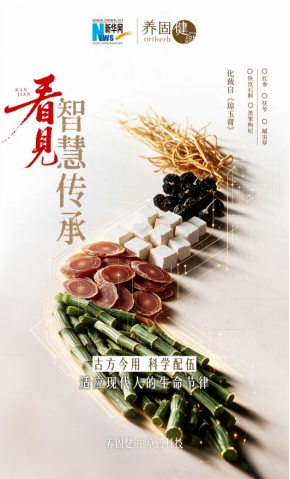
Digital tools have improved the efficiency of discovering effective clues from ancient books, but whether a prescription can truly respond to contemporary health needs still needs to be continuously verified through scientific experiments.
Taking Fu Huo Yin as an example, the purpose of research and development is not to simply copy ancient formulas, but to explore a more suitable aging path for modern people's living conditions and physical laws based on classic formulas. Combining nourishing and strengthening with the contemporary lifestyle rhythm, the ancient formula of "Qiongyu Gao" has been modified and edited. Ginseng has been changed to red ginseng, and Cordyceps militaris and black fruit wolfberry have been added, along with Dendrobium officinale, Poria cocos, and Rehmannia glutinosa, to achieve the simultaneous supplementation of essence, qi, and blood. While retaining the classic nourishing ideas, the formula is more suitable for the health needs of modern people.
If the traditional Chinese medicine concept of essence, qi, and blood is integrated with modern cell biology theory, can its value in nourishing be further amplified? Relying on a large number of scientific research experiments, Yanggu Health has found a new answer to the aging of herbs. The R&D team built a multidimensional database and used AI algorithms to screen highly adaptable candidates from dozens of factors. Then, through extensive cell experiments, various combinations were verified layer by layer and repeatedly verified. Finally, PQQ, astaxanthin, and apple polyphenols were selected to form the "Golden Triangle" functional factor system. The three act on key nodes such as cellular energy supply, antioxidant, DNA damage, etc., complementing and synergistically enhancing the herbal formula.
From the adjustment of ancient formulas to the screening and experimentation of modern functional ingredients, this gradually advancing research path has enabled classic health preservation ideas to no longer be limited to ancient book records, but to be tested by modern scientific methods and transformed into product solutions that are more suitable for contemporary needs.
Tracing back a ginseng plant, seeing the standards behind the 'authentic' appearance
The quality of a ginseng plant depends first on where it grows and also on how the growth process is managed. The Xinhua News Agency's "Seeing" program team visited the ginseng planting base in Jingyu County, Baishan City, Jilin Province. The base is located in the golden growth zone of ginseng at 42 ° N and 126 ° E, with high altitude, long sunshine, and fertile black soil, providing suitable natural conditions for ginseng growth and nurturing the local long-standing tradition of ginseng planting. But for modern health products, the advantage of origin alone is not enough. Whether the seed source is consistent, whether the agricultural operations are standardized, whether the harvesting period can be verified, and whether quality issues can be traced are all important factors that determine the quality of raw materials.
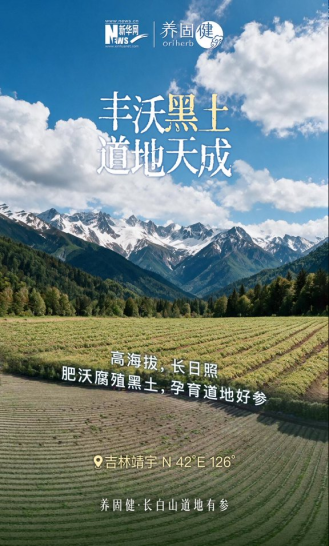
In the base, the growth of a ginseng plant goes through many specific management processes. There are corresponding requirements for how to carry out land rotation, soil cultivation, when to shade and adjust the light for ginseng, how to inspect the field, when to harvest, and how to inspect after harvesting. Yanggu Health integrates the "seven unifications" management throughout the ginseng planting process, including unified base planning, unified varieties, unified production materials, unified planting management, unified harvesting and processing, unified packaging and storage, and unified technical services.
According to the company's introduction, in 2011, Yanggu Jian pioneered the "Chinese herbal medicine planting management model". After 14 years of persistence and innovation, it has implanted the modern management concept of "unified management throughout the process+traceability throughout the process" into traditional agriculture, and has always adhered to the "seven unifications" standardized management, making authentic gifts traceable and verifiable. At present, this model is not only used for ginseng, but also covers other Chinese herbal raw material bases.
For health products that rely on natural ingredients, maintaining stable quality continuously tests the management ability that runs through the source. It can be seen from the practice of health maintenance that this model is solving a difficult problem in the planting of raw materials: how to keep the quality of ginseng in different plots, years and batches as stable as possible, even if the origin is the same? With unified management requirements, the planting process has a basis for comparison and improvement.
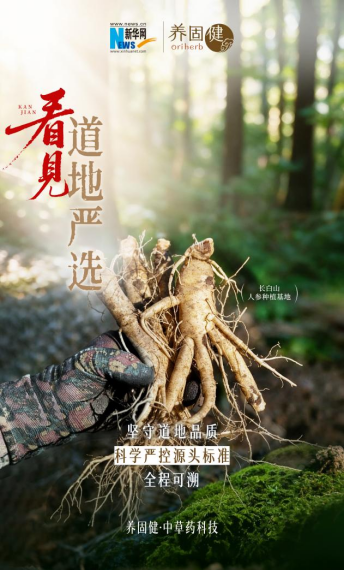
In addition, through the "Tianyan Traceability Management System", planting personnel upload agricultural operation information, and the base records environmental data and key production nodes. In this way, the source, cultivation, harvesting and other information of raw materials no longer rely solely on post event descriptions, but gradually form a traceable "growth record". Quality management also has the opportunity to extend from finished product inspection to risk identification and prevention during the planting process.
For consumers, "authentic" should not just be two words on the packaging. It should include both suitable origin and variety, as well as standardized planting methods, objective testing results, and complete traceability information. This observation from the source of ginseng aims to present these previously difficult to see links.
Entering the laboratory to search for scientific explanations of the effects of traditional Chinese medicine
When good raw materials enter the laboratory, new questions arise: which components are worth studying? How to mix different ingredients? What process does it go through after oral administration?
From the planting base to the laboratory, ginseng is no longer just a tasteless raw material, but has also become an important entry point for the study of herbal aging in nourishing and strengthening health. Focusing on healthy aging, Yanggu Health combines the theory of traditional Chinese medicine holistic care with modern aging research, forming a "grass root prolongs aging" technical path: based on the theory of "balancing yin and yang, regulating organs" in traditional Chinese medicine, understanding holistic care from the aspects of kidney, liver, spleen, essence, qi and blood, while integrating modern research on aging related signs, conducting research at different levels from cells, tissues, organs to systems.
In addition, Yanggu Jian has been deeply involved in the research of polysaccharides for more than 30 years, and has been focusing on a core proposition - compound polysaccharides from Chinese herbal medicine. Polysaccharides are widely present in various Chinese herbal medicines, but polysaccharides from different sources have differences in structure, composition, and activity. In the past, natural polysaccharides were considered difficult to directly cross the intestinal barrier due to their high molecular weight. Whether oral polysaccharides can enter the bloodstream and through what pathways they are absorbed have become fundamental issues of long-term concern in this field.
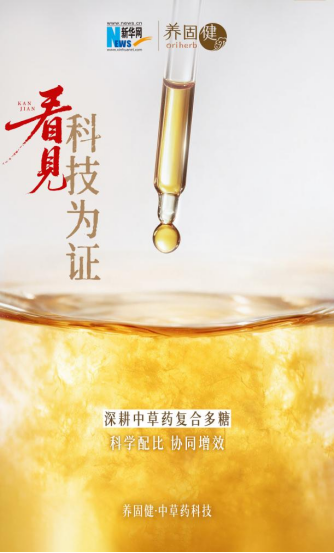
Ding Kan, of the Chinese Academy of Sciences Shanghai Institute of Materia Medica, has been conducting research on the absorption mechanism of natural polysaccharides with his team since 2009. After 16 years of exploration, the team discovered through experiments that some natural polysaccharides with specific structures can cross the intestinal barrier; There has been breakthrough evidence in animal experiments that oral administration of polysaccharides can enter the bloodstream as quickly as 15 minutes, triggering protective cellular responses in the body. In 2026, relevant achievements will be published in the international academic journal Nature Communications.
This study provides new experimental evidence for explaining how some natural polysaccharides are ingested by the human body, and also promotes further exploration of the molecular mechanisms of polysaccharides in traditional Chinese medicine from empirical understanding. The foundation of Zengjian Oral Liquid lies in the continuous research of traditional Chinese medicine compound polysaccharide technology for nourishing and strengthening health. The company also uses randomized controlled trials (RCTs) to conduct human studies, in order to standardize research design and verify the actual effects of the product with scientific data.
From technological breakthroughs to evidence-based efficacy data, Yanggu Health provides consumers with a reassuring answer through traditional Chinese medicine technology.
Connecting research and production to ensure quality can withstand continuous inspection
The research results from the laboratory to consumers must also undergo testing by production and quality management. A positive result from an experiment is not the same as a product being able to maintain stable quality over the long term.
It is understood that Yanggu Health has production bases in Xinhui, Guangdong and Yingkou, Liaoning, and both product testing centers have been accredited by the China National Accreditation Service for Conformity Assessment. Entering the "transparent factory", robotic arms complete material handling, automated equipment undertakes filling, boxing, and testing work, and production materials are accurately distributed according to the process. Automated production not only improves efficiency, but also reduces the errors that may be caused by manual operations, making the key links of product production more stable, clear, and controllable.
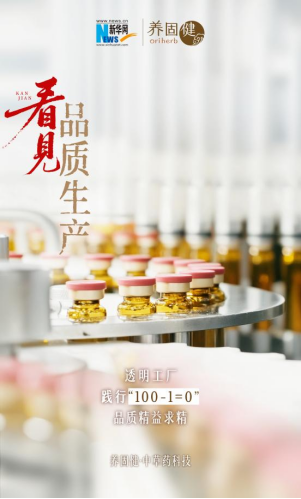
Transparency is also reflected in the recording and traceability of the entire production process. The MES production management system and LIMS quality management system work together to record information such as raw materials, process parameters, inspection results, and product batches, and timely capture parameter changes during the production process, establishing a complete "growth file" for each batch of products. Yanggu Health integrates the quality management concept of "100-1=0" throughout the production and testing process, relying on equipment, standards, and data to carry out full chain quality management, promoting the stable transformation of scientific research achievements into products, and ensuring product safety and quality assurance in every aspect of production.
The significance of this traceability is not just about finding a good ginseng plant. In the field, standardized planting and digital recording allow for the traceability of raw materials; In the laboratory, compatibility and composition research seek scientific explanations for traditional experience; On the production line, quality control transforms research results into products with stable quality, which enter consumers' daily lives. This chain that runs through the source, research and development, and manufacturing also provides a more specific observation path for the public to understand "Chinese herbal medicine technology" than the brand concept.
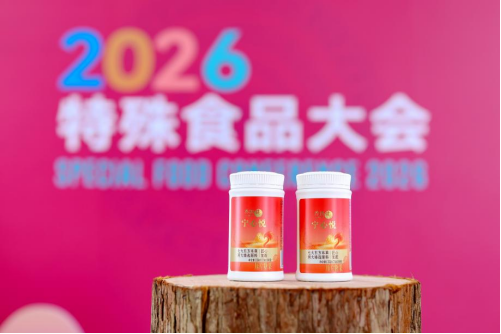
With the continuous deepening of research on traditional Chinese medicine technology, the modern transformation of classic prescriptions for nourishing and strengthening health has been further expanded to the field of heart health, and new stages of progress have been made. At the 2026 Special Food Conference, Ningxin Yue's new products were launched with shock. It is reported that Yanggu Jian selected Baoyuan Tang and Jiajian Fumai Tang from 1509 ancient formulas, and adjusted the formula based on them. After a series of experiments and research, the relevant formulas have shown positive performance in supplementing the overdrawn heart force at the root, reducing the pumping load of the heart, nourishing and repairing myocardial cells, and restoring heart vitality, providing new research basis for the modern application of traditional heart nourishing wisdom.
The value of traditional Chinese medicine technology lies in its foundation in Eastern health wisdom, supported by modern scientific methods, constantly raising questions and accumulating evidence in inheritance, and ensuring that the quality of raw materials and products can withstand inspection. Only by preserving the cultural roots, traceable sources, debatable scientific evidence, and controllable production processes of herbal wisdom can it respond more robustly to the health needs of modern people.
Starting from tracing the origin of ginseng, Yanggu Health and Xinhua News Agency's "Seeing" take consumers along the path of a raw material and see the complete process of Chinese herbal medicine technology from the field to the laboratory, and then to the production line. Yanggu Health will implement the national deployment into specific practice, with the direction of "smart inheritance, authentic raw materials, core technology, and high-quality production", and continue to explore the modern transformation of herbal wisdom. These practices provide reference for the industry to promote standardized management of raw materials, scientific research, and quality improvement.
Only when local raw materials can withstand traceability, traditional wisdom can withstand scientific inquiry, and product quality can withstand daily inspection, can Chinese health preservation move towards the future with a more solid foundation.