2026-11-09 19:23

Shen Jianyuan/Wen
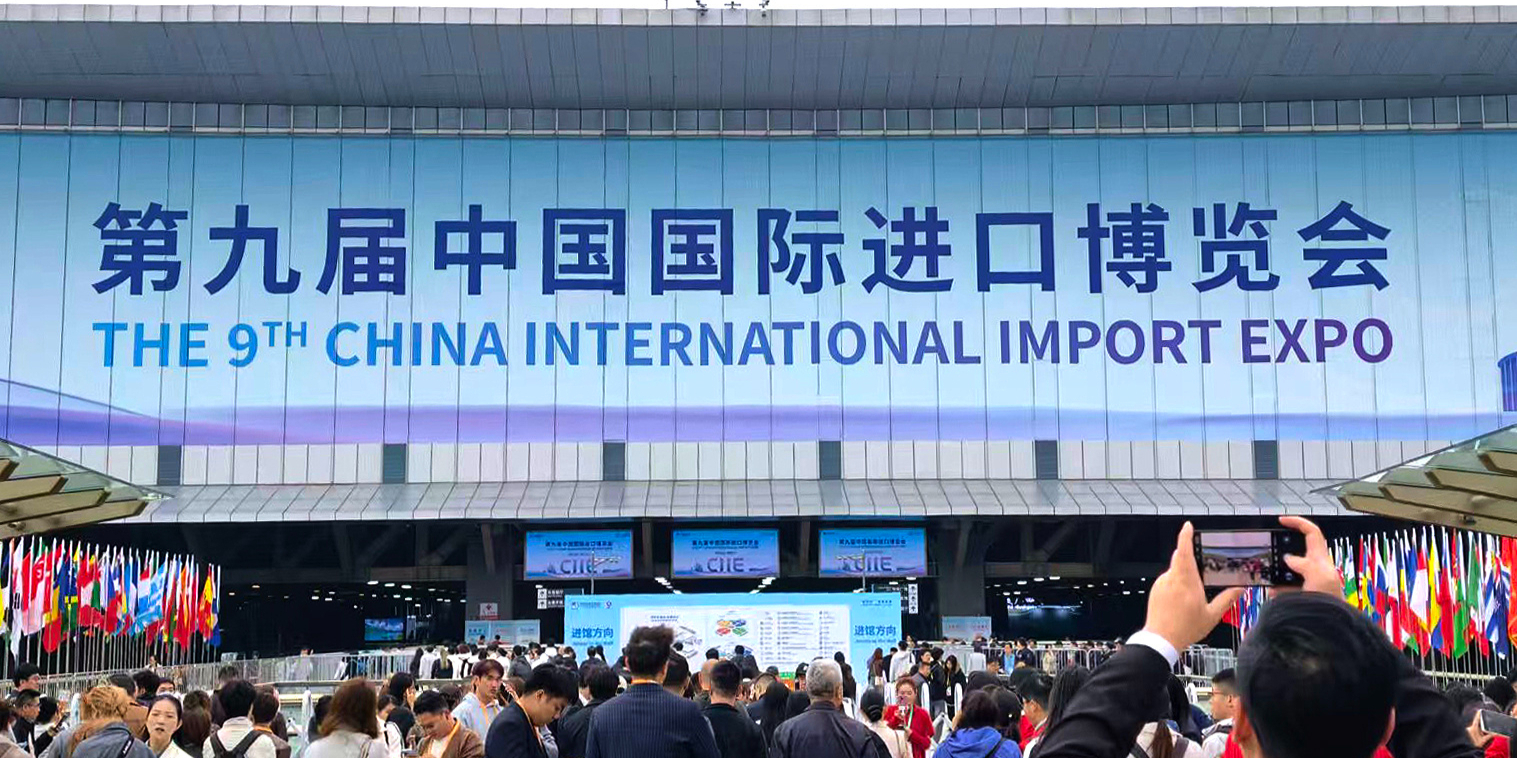
During the 9th China International Import Expo (CIIE) from November 5th to 10th, a total of 162 countries, regions, and international organizations participated, with 4142 overseas enterprises exhibiting. For the first time, the number of participating companies in the Fortune Global 500 and industry leaders has exceeded 300, including many century old enterprises. Some of them have come as promised for nine consecutive years, while others are exhibiting for the first time this year. But without exception, all of them have achieved development by serving the Chinese market with solutions, technologies, and products, and by accumulating innovation in their operations in China. They firmly believe that the technology and experience validated in China will become their source of competitiveness in the global market.
Defining Global Competitiveness at the Speed of China
During this year's CIIE, the 9th edition of "All in One" Panasonic released a new regional strategy for China, establishing three major business areas in China: AI infrastructure, advanced manufacturing, and healthy intelligent living spaces.
As a century old manufacturing enterprise, Panasonic has accumulated profound underlying manufacturing technology. Rooted in China for 48 years, it has hardware systems and control algorithms for surface mount machines, welding machines, and various automation supporting equipment, covering multiple industries such as electronics, automotive, and shipbuilding. In response to the strong market demand in the AI era, Panasonic is accelerating its capacity expansion and plans to double the global production capacity of high-performance multi-layer substrate material MEGTRON by 2030. The total investment in the two major production bases in Guangzhou and Suzhou is about 2.2 billion yuan. Among them, the first phase of Suzhou Electronic Materials New Factory will officially start mass production in December; On October 30th, Panasonic announced further investment in the construction of the second phase factory, which is expected to start production in August 2028.
In an interview, Nan Jian, the representative director, president, and CEO of Panasonic Corporation, said, "Looking back to 1978, at the proposal of Vice Premier Deng Xiaoping, Mr. Konosuke Matsushita, the founder of Panasonic, promised to help China's modernization construction. It is precisely because of the founder's original promise that Panasonic now has 43000 employees in China, who are tirelessly honing their abilities every day to achieve this goal. Today, China has risen to the forefront of the world and has the world's leading industrial infrastructure. We need to continue to improve the positioning and competitiveness of our various businesses in the Chinese market. I believe that the competitiveness polished by China's perfect industrial infrastructure will form global competitiveness
In the view of Nanjian Xionggui, "the Chinese market is not only a training ground, but also a practical battlefield." He believes that Panasonic has two major advantages, one of which is the competitiveness tempered in the Chinese market. Another advantage is the manufacturing technology accumulated by Panasonic over the years. If these two are well integrated, Panasonic will showcase its skills in the global market competition. ”Panasonic hopes that, rooted in China for 48 years, the "New Strategy for the Chinese Region" will help Panasonic integrate into the new cycle of Chinese social development with over a century of technological accumulation and localized innovation strength.
Siemens Healthineers, also known as a "full-time student" at the CIIE, has showcased over 200 innovative products and solutions at the expo, of which approximately 85% have been approved for listing in China and about 60% have achieved local production. Photon counting CT is one of the representatives of this "overflow effect". From its global debut in 2021, to approval for market launch, and then to the launch of domestic products, Siemens' development trajectory in China has witnessed global innovation continuously moving from the CIIE booth to clinical practice in China. After the construction of the Shenzhen high-end medical equipment R&D and manufacturing base in 2025, the second phase of the Wuxi R&D and manufacturing base will be laid in July 2026, with a total investment of over 100 million yuan. This will further strengthen the local supply capacity of core components for high-end medical equipment, serve China, and radiate the global supply chain.
Wang Hao, president of Siemens Healthcare Greater China and member of the global leadership committee, believes that "from the centralized appearance of global innovation achievements, to more and more cutting-edge technologies entering China and serving the clinic, to the deepening of the local R&D, manufacturing and open innovation ecology, Siemens Healthcare is continuing to promote the opening and coordination of global innovation and local innovation, and transforming the first results of the Expo into local solutions that can be landed and replicated." At this Expo, Siemens Healthcare made its debut with nearly 20 innovative products and cutting-edge disease solutions. Including the world's first photon counting CT guided PCI (percutaneous coronary intervention) solution launched in China, as well as the new generation PET/MR system BIOGRAPH One; The world's first Halcyon Evolve intelligent circular radiotherapy platform, as well as the brand new domestically produced photon counting CT NAEOTOM AlphaPrime and so on.
For multinational corporations, China is not only the world's second largest market and one of the most important supply chain bases, but also an important research and development base. Relying on the development opportunities in China, multinational enterprises are injecting technological momentum into China's industrial upgrading through close integration of local research and application scenarios.
During this year's CIIE, Schneider Electric released a series of innovative products independently developed by China. Having been rooted in China for 39 years, Schneider Electric has established five major research and development centers and an AI innovation laboratory. As Chinese industries face challenges of transformation and upgrading. Schneider Electric adheres to the "China Center" strategy and strengthens its research and development capabilities in China. In 2026, the Key Power China Center Thermal Management Solution Innovation Laboratory will settle in Shanghai. With local research and development capabilities, Schneider Electric will continuously launch innovative products and services to meet the needs of the Chinese market, such as the new generation Altivar developed in China ™ The ATV610QC universal frequency converter is designed to meet the needs of Chinese enterprises for lightweight, robust, and localized drive control products.
In 2026, Schneider Electric will continue to strengthen its supply chain capabilities: the Beijing Yizhuang Park will complete its expansion and be awarded the title of "Sustainable Lighthouse Factory"; The completion and operation of Wuxi New Industrial Park has further enhanced Schneider Electric's production capacity in China; In addition, Schneider Electric has reached an agreement with Zengcheng District in Guangzhou to invest in the construction of Guangzhou Green Intelligent Industrial Park in the future.
The 9th "All in attendance Students" not only strive to transform the exhibits of the CIIE into commodities, but also take practical actions to transform exhibitors into investors. With the upgrading and high-end development of industries, as well as the large-scale application of innovative technologies, it is inseparable from the collaborative promotion of the upstream and downstream of the industrial chain and customer partners. By rooting themselves in China and continuously promoting innovation that originates from China and serves the world, century old multinational corporations are deeply integrating into the Chinese industrial ecosystem.
Cargill, a 160 year old agricultural and food company, has also participated in the exhibition for nine consecutive years. At the first eight CIIE, Cargill has signed cooperation intention agreements worth over 33 billion US dollars and successfully promoted numerous innovative achievements to the Chinese market. This year, Cargill will continue to deepen its industry win-win network in the Chinese market through the CIIE platform, and plans to sign multiple strategic procurement and important cooperation agreements with industry partners in fields such as grains, beef, animal nutrition, and beauty care. Among them, Cargill once again collaborates with the China Development Research Foundation to conduct research on regenerative agriculture aimed at carbon neutrality goals; Meanwhile, Cargill will collaborate with China Agricultural University on a three-year renewable agriculture practice and soil improvement project, which is expected to cover approximately 200000 acres of land.
China has always been an important market for Cargill and an important driving force for innovation in the agricultural and food industry, "said Guan Huili, President of Cargill China." Participating in the CIIE for nine consecutive years has witnessed Cargill's deepening cooperation and common growth with the Chinese market. We believe that global professional capabilities can only be better transformed into solutions that serve the market by closely integrating with local needs and practices. Faced with the continuous development needs of China's agricultural and food industry, Cargill will continue to drive industry collaboration and value creation with innovation
As a "giant" with a business history of over 200 years in the century old enterprise, Swire Group has entered the Chinese market for 160 years this year. This year, Swire Group has participated in the CIIE for the third consecutive year. Swire Coca Cola, a subsidiary of Coca Cola, is the fifth largest bottling partner of Coca Cola worldwide. Starting from 2023, Swire Coca Cola will continue to fulfill its commitment of investing over 12 billion yuan in China over the next decade. Currently, new factories in Zhengzhou, Kunshan, and Guangzhou have opened one after another, and the new factory in Hainan will also be put into operation by the end of next year. During the exhibition, Swire Coca Cola released its new ten-year strategy for the Chinese market.
Jiang Yida, Chairman of Swire China, stressed that "as a century old multinational enterprise deeply rooted in the Chinese market, Swire has always been developing in China with a long-term vision. The 160th anniversary of Swire in China is not only an important milestone for the common growth of Swire and China, but also a new starting point for the continuous deepening of the local market. Swire will transform the century's accumulation into a lasting force for joint creation, connect the needs of industrial upgrading with diversified businesses, rely on local innovation, uphold openness and cooperation, and share development opportunities with partners from all walks of life."
Integrating global technological accumulation into localized innovation
Translating long-term opportunities into specific business choices not only opens up new growth opportunities for multinational corporations in China, but also enables the validation of feasible innovative models in the Chinese market, serving as a reference for other global markets.
Rockwell, founded in 1903, participated in the CIIE for six consecutive years. Since entering China in 1988, Rockwell Automation has witnessed the transformation and upgrading of China's manufacturing industry, and has also accumulated rich practical experience through cooperation with local partners. Facing the needs of Chinese enterprises going global and operating globally, Rockwell relies on its digital and AI capabilities to connect data and business from different production bases, and provides full lifecycle services covering research and development, delivery, and operation and maintenance, supporting Chinese enterprises' overseas deployment and continuous operation, and promoting the synergy between Chinese manufacturing practices and global resources.
The CIIE enables global technology and services to better meet local needs, and also provides opportunities for the exchange and sharing of effective experiences verified in China, "said Shi An, President of Rockwell Automation (China) Co., Ltd." By continuously connecting industry partners with global resources, the CIIE also provides more possibilities for the connection between Chinese manufacturing practices and global resource networks. Rockwell Automation looks forward to combining the experience accumulated in local practices with global technology and service capabilities, helping Chinese enterprises go global, supporting enterprises to expand single point practices to multiple parts of the world, extending cooperation results to a wider range of industrial scenarios and overseas markets, promoting value integration between upstream and downstream of the industrial chain, different regions, and ecological partners, and achieving global optimization
Integrating global technological accumulation into localized innovation not only brings products and services closer to market demand, but also helps multinational enterprises promote technologies validated in China to the global market.
As a coating company with a long history of over 200 years, AkzoNobel, which participated in the exhibition for the first time, unveiled three globally first and one Chinese first paint and coating solution, and established strategic partnerships with more than ten Chinese companies including Xuge China. This time, AkzoNobel launches RELEST tailored specifically for the Chinese wind turbine blade market in China ® WIND Ultra water-based topcoat responds to the strong demand in China as the world's largest wind power market.
From the world's largest integrated green hydrogen ammonia project, the Songyuan Hydrogen Energy Industrial Park, to the world's first million kilowatt offshore photovoltaic project, Guohua Shandong Dongying HG14, to the first domestically produced large cruise ship "Aida Modu" and the first domestically produced large aircraft C919. In recent years, AkzoNobel has continued to deepen its localization strategy. In 2024, the company will invest approximately 14 million euros to upgrade the automation production line at its Suzhou factory, and achieve a doubling of ship and protective coating production capacity by 2025. In 2025, the company will continue to invest in the renovation of the Tianjin factory production line, with a focus on enhancing the production capacity of international paint and protective coatings. This year, Chartek ® The fire-resistant product series has successfully achieved mass production, and our research and development, manufacturing, and delivery capabilities in China have reached a new level. Yin Tao, President of Akzo Nobel China and Managing Director of Decorative Paint China and North Asia, said: "China is the core market of Akzo Nobel's global strategy, and also the key engine for innovation and growth of enterprises. We are gathering high-quality global resources, relying on local innovation strength, and actively embracing opportunities for urban renewal and industrial upgrading in China."
This year marks Ericsson's ninth year participating in the CIIE. It is also the 150th anniversary of the establishment of Ericsson Group. As an important partner in the development of China's communication industry, Ericsson has been fully involved in the evolution and transformation of mobile communication networks from 1G to 5G. During the exhibition, Ericsson brought a series of new terminals and cross industry applications, including smart glasses, robotic dogs, AR scenarios, warehouse drones, and Toyota intelligent driving assistance technologies. The focus was on how the 5G-A network provides strong uplink, low latency, edge computing power support for new applications such as AI.
Ericsson relies on its own technological advantages to fully support the network construction and business development of Chinese operators. At present, Ericsson has cooperated with enterprises in the fields of chips, applications, etc. in the 6G field. Zhang Yongtao, Deputy General Manager of Ericsson China Technology Department, believes that "open cooperation is one of the key tasks in the standardization and customization of the mobile communication industry, and the Chinese industrial ecology is crucial. The close connection with the global mobile communication industry is Ericsson's advantage, and relying on our participation in the global industry development, we have also begun to explore the introduction path of 6G. We maintain close communication and collaboration with domestic operators, equipment manufacturers, terminal and chip companies, and continue to conduct testing in areas such as AI and immersive communication. ”
Openness is not attitude, but action. For Procter&Gamble, which is about to embark on an important historical milestone of 190 years, the CIIE is also an important bridge connecting the global centenary aspirations with China's creations.
This year is Procter&Gamble's eighth exhibition, with the goal of empowering the construction of a "future consumer goods company" through digital intelligence, showcasing nearly a hundred cutting-edge innovative achievements. The AI driven one-stop MUSE platform from consumer insights to brand implementation allows consumers' voices to directly reach every business decision. The Connected Home Research (CHR) smart home capabilities showcased this time extend consumer research from laboratories and interview rooms to real-life scenarios; The development of humanoid robots and adaptive robotic arms is also continuously enhancing Procter&Gamble's research and testing capabilities.
Xu Min, Chairman and CEO of Procter&Gamble Greater China and member of Procter&Gamble's Global Management Committee, stated that since entering China in 1988, Procter&Gamble has always adhered to the concept of "designing for China, making decisions in China, and innovating at the speed of China", continuously achieving breakthroughs in innovation across all categories. But she hopes that Procter&Gamble can become an eco-friendly company in China that collaborates with multiple parties to achieve mutual benefits. The future consumer goods company must be an open and innovative ecological company. In the future, the ability of a company does not depend on its own capabilities, but on how many capabilities it can connect. Procter&Gamble needs to work together with upstream and downstream partners to create an open ecosystem that can connect various forces and better serve Chinese consumers, "she said.
The journey of a century old multinational enterprise in China has never been about moving forward alone, but about integrating century old accumulation into localized innovation in the Chinese market, working hand in hand with partners. Looking towards the future, they will continue to be embedded in China's modern development process and move towards a new historical stage together with it.