2026-11-07 20:44

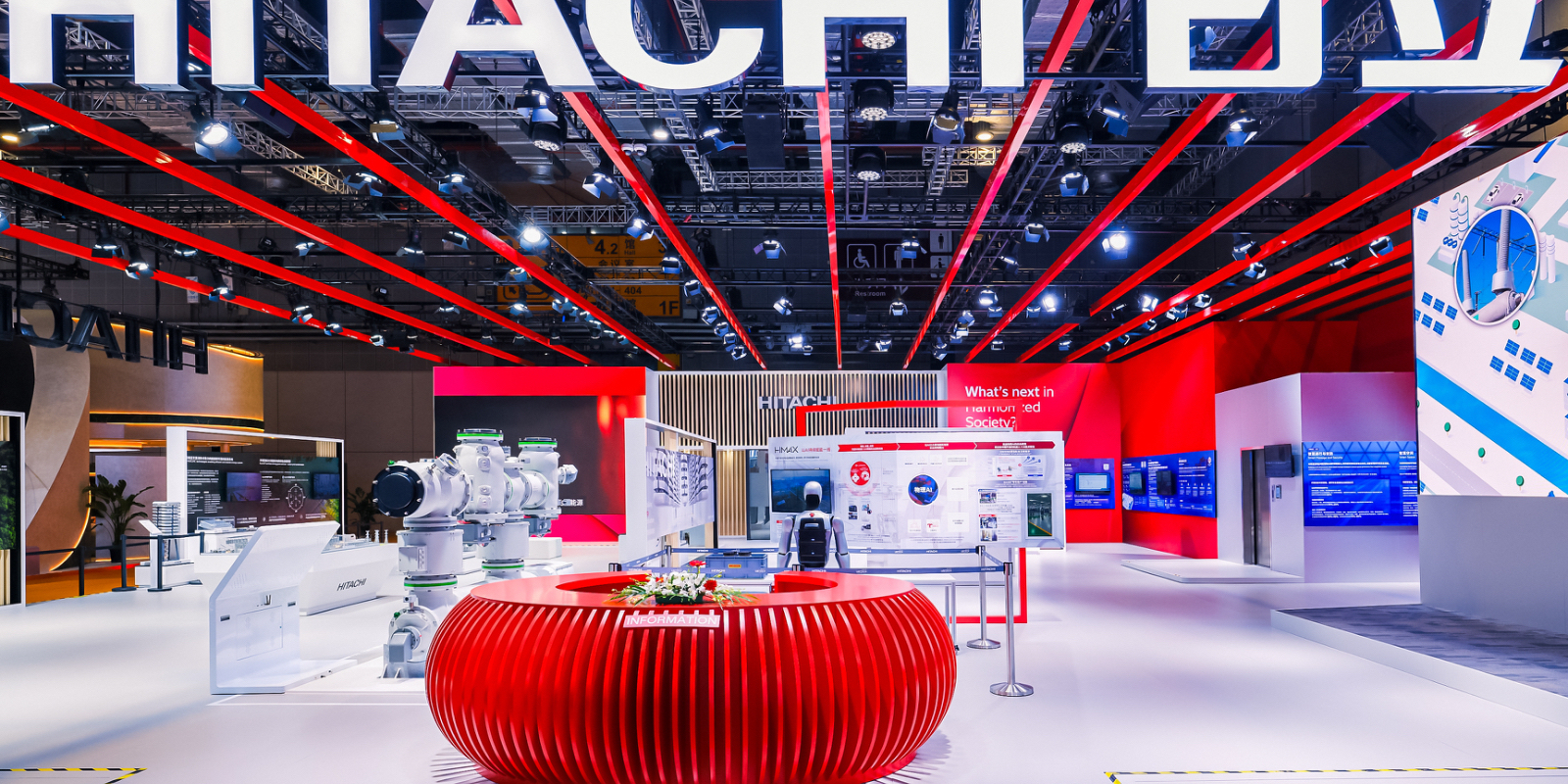
As a "full-time student" of the CIIE, during this year's CIIE, Hitachi Group joined hands with various group companies in China to showcase numerous products and solutions that provide new value for China in the form of "One Hitachi". Among them, its subsidiary Hitachi Energy showcased the world's first 300 kV sulfur hexafluoride free gas insulated switchgear to the outside world.
On November 6th, at the CIIE, Zhao Yongzhan, Global Executive Vice President and North Asia Regional Head of Hitachi Energy, was interviewed by three media outlets, including the Economic Observer. Zhao Yongzhan has been working in the electrical industry for nearly 30 years. After joining Hitachi Energy in July 2024, he faced an unprecedented market situation: global transformer supply continued to be tight, delivery cycles were generally delayed for several years, and the electricity demand for AI (artificial intelligence) data centers was adding new variables.
Before the opening of the 9th CIIE, Hitachi Energy's remarkable additional investment has attracted much attention. In August of this year, Hitachi Energy announced an investment of approximately $300 million in Hefei to build a new intelligent manufacturing base for power transformers and expand component production capacity. This investment comes in part from Hitachi Energy's $9 billion global investment plan announced three years ago, and is also one of Hitachi Energy's largest single capacity expansion projects in China to date.
He repeatedly mentioned a judgment in the interview: this round of transformer demand growth is not a short-term fluctuation. The combination of energy transformation, industrial electrification, and computing infrastructure has pushed transformers from traditional grid equipment to a wider range of industrial and digital scenarios. Under the high growth of industry demand, the demand characteristics of company customers are also changing.
Multiple factors driving transformer supply shortage
Economic Observer: In the past two years, the global demand for transformers has been increasing. Has the explosion of AI computing power changed the nature of demand?
Zhao Yongzhan:The trend of high growth in demand for transformers is still accelerating. The global energy transition is the underlying driving force, and the AI computing power center is a new increment overlaid on top of it.
The demand for power equipment in data centers has several characteristics: individual loads are increasing, from tens of megawatts in the past to gigawatts; The construction speed requirement is extremely high, and operators hope to complete and put into operation within two to three years, while building a new transformer factory often takes four to five years; Moreover, customers' requirements for standardization and cross regional replication capabilities far exceed those of traditional utility projects.
We have observed that more and more customers are hoping to lock in production capacity for the next two to five years in advance, replacing the past single bidding with long-term agreements and strategic partnerships. For the company, this means that investment decisions can be more forward-looking, but at the same time, it also requires us to plan production capacity earlier and more accurately.
Economic Observer: What are the differences in demand between data center customers and traditional grid customers?
Zhao Yongzhan:Traditional power grid customers focus on the reliability and technical parameters of the entire lifecycle when buying equipment. Data center customers are concerned about speed. The faster it is built, the earlier the return on investment in computing power will be generated. So they demand equipment standardization, predictable delivery, and the ability to quickly replicate in multiple regions.
Another change is that many data center operators have core capabilities in computing power and data services, and power generation, transformation, and operation and maintenance are new topics for them. This has given rise to the demand for a comprehensive solution, not just a transformer, but a complete set of capabilities from power generation to transformation to entering the computer room.
In this context, Hitachi Energy has collaborated with power generation companies and gas turbine companies overseas to provide a packaged solution from energy production to power supply for large data center clusters. In China, the power grid has strong coverage capabilities, and the applicability of this model is relatively limited. However, in areas or specific industries where the power grid is difficult to cover, such as heavy chemical enterprises that require "island" self generation, the logic is the same.
Economic Observer: In August of this year, Hitachi Energy announced a $300 million investment in Hefei to expand production. Which specific areas will it invest in?
Zhao Yongzhan:300 million US dollars are concentrated in Hefei, but divided into two parts. About 50 million US dollars will be invested in the existing factory in Hefei to enhance the manufacturing capability of transformer components, including higher voltage level bushings and core main components. The remaining 250 million US dollars will be allocated to a new location in Hefei to build a brand new power transformer manufacturing base.
The new base is complementary to the company's previous component business in Hefei. The Hefei Component Center has been established for about 30 years and is one of the most complete transformer component bases in Hitachi Energy's global product categories, where bushings and tap changers are produced. The new factory produces complete power transformers, targeting the Chinese market and also serving overseas customers. When the two are combined, Hefei's position in Hitachi Energy's global transformer value chain will significantly increase.
Economic Observer: Does Hitachi Energy also have expansion plans in other bases in China?
Zhao Yongzhan:In recent years, our investment expansion has been sustainable. The company has been continuously investing in production line upgrades, product validation, and efficiency improvement at its bases in Xiamen, Beijing, Xi'an, Suqian, and other regions. At present, the overall production capacity can meet market demand. In the future, the company will focus more on exploring potential and collaborating with partners to meet order demands.
For example, the Beijing factory has invested in research and development this year, mainly targeting the ultra-high voltage and high-voltage direct current markets. The expansion of production in Suqian is underway. The nature of Hefei Transformer Factory is different, it is a large power transformer base built from scratch on a green space. The positioning of each base is different, some focus on components, some focus on complete machines, and some undertake research and development functions, together forming the complete layout of the company's more than ten large manufacturing bases in China.
Economic Observer: How long may the situation of transformer supply shortage last?
Zhao Yongzhan:All industries have cycles, and no industry is always in short supply. By investing in building factories and expanding production capacity, we can always solve the supply problem within a certain period of time. This is a normal industry curve.
There are just a few differences in this supply and demand cycle. Firstly, the driving force on the demand side is a combination of three long-term factors - energy transition, electrification, and computing power center - acting simultaneously, rather than a short-term rebound driven by a single factor.
Secondly, capacity building is not just a matter of 'being able to produce a few transformers', it is more challenging than capacity itself. For example, transformers for offshore wind power need to be installed in towers that are hundreds of meters high, with high vibration, high salt spray, and high delay, which require extremely strict equipment requirements; The manufacturing of rectifier transformers for hydrogen energy is very difficult; Data centers require standardization and rapid replication. These abilities cannot be built in a day or two, they require long-term technical accumulation, talent investment, and research and development investment.
From these perspectives, the relief of this round of supply tension will be slower than a simple cyclical rebound, and the advantages of China's base in efficiency and capacity building will continue to be reflected in this process.
Overall, I anticipate that the demand for transformers in the market will continue to grow rapidly for a long time to come. However, my clients appear more optimistic than I had anticipated.
How Hitachi Energy Adapts to New Changes
Economic Observer: Hitachi Energy has been fully participating in the exhibition for nine years. From the first edition to now, what industry changes have you observed at the CIIE?
Zhao Yongzhan:The changes are very clear. In the early years, the exhibition booths at the CIIE mainly showcased physical assets, with relatively little digital content. Later on, everyone was talking about digitization. Nowadays, AI is increasingly empowering power equipment and management systems. This is a constantly evolving process.
For us, the greatest value of the CIIE is not only product launches, but also the ability to see the latest developments in the entire industry chain. For example, to what extent upstream suppliers, downstream customers, and competitors are using AI, and in which direction they are going in the future, there can be a centralized observation in this situation.
Another benefit is the partnership. Almost every year, we sign strategic cooperation agreements and purchase intention letters with major Chinese enterprises, including state-owned enterprises and private enterprises. At the same time, we will also use this platform to release new products, such as the world's first 300 kV sulfur hexafluoride free GIS exhibited this year. The 550 kV sulfur hexafluoride free GIS showcased by the company at the CIIE last year has now been used in substations in Wuhan to serve the power grid, and the 420 kV environmentally friendly tank circuit breaker in Gansu has also been applied in the power grid. The exhibits at the CIIE are being transformed into engineering practices, and this conversion speed is very convincing.
Economic Observer: At the exhibition booth of Hitachi Group (parent company of Hitachi Energy), in addition to power grid equipment, there are also products in the fields of hydrogen energy and rail transit. What different requirements do these new scenarios have for transformers?
Zhao Yongzhan:Hydrogen energy is a rapidly developing industry, and the hydrogen production process requires a large number of rectifier transformers, making manufacturing difficult and challenging. We have provided such solutions for multiple hydrogen energy projects internationally, and this time there is a physical display at the CIIE booth.
In the field of rail transit, we are showcasing a small model of the new generation dry-type traction transformer. High speed rail has extremely high requirements for safety and reliability. Traditional oil immersed equipment has the risk of leakage and may also cause other safety issues in case of failure, while dry-type transformers have no liquid medium and higher safety, which is an important technical direction for the railway industry.
These products may seem like niche markets, but they represent the trend of electrification penetrating into more industries. Transformers are no longer just a link in the power grid, but are entering completely different scenarios such as transportation, chemical industry, hydrogen production, etc., each with different requirements for equipment.
Economic Observer: Hitachi Energy is advancing a large-scale expansion plan globally. What are the differences in competitiveness among manufacturing bases in different regions?
Zhao Yongzhan:The cost structure varies from country to country, including significant differences in land costs, factory construction costs, labor costs, energy usage costs, and more.
However, in terms of manufacturing environment, China remains the most competitive base location. The overall production efficiency of Chinese factories is very high, with a fast construction cycle. The speed from project approval to completion and production is outstanding in global comparisons.
For an investor, the earlier production capacity is formed, the earlier they begin to recoup their investment, which is the core of China's competitiveness. So we continue to invest in Hefei, Suqian, and Beijing not because other markets are not important, but because China's manufacturing efficiency and construction speed play an irreplaceable role in the global supply chain.
Economic Observer: Hitachi Energy has a large export business in China. What impact will changes in the trade environment have on the company's exports?
Zhao Yongzhan:The risk of trade environment is the norm. There are various risks involved in international trade at any time, including geopolitics, tariff changes, and logistics channels, all of which are part of risk management. Hitachi Energy's advantage lies in its global presence, with operations and networks in over 100 countries, and long-term accumulation of local market standards and customer demands. If there is a disturbance in a certain market, we can allocate supply from other bases. There are contingency plans for transportation routes and arrangements for business terms. This is not a problem for any particular market, but rather a global governance system in operation.
Economic Observer: Hitachi Energy has extensive cooperation with Chinese EPC companies (engaged in engineering general contracting) overseas. Is this cooperation model also upgrading in new scenarios such as data centers and new energy?
Zhao Yongzhan:Chinese EPC enterprises have a strong ability to acquire projects overseas, especially along the "the Belt and Road", the Middle East, Southeast Asia and Africa. Hitachi Energy's role is to complement their weaknesses: understanding of local power grid standards, understanding of customer needs, and certainty of equipment supply. Currently, Hitachi Energy has collaborated with over 400 Chinese companies on more than 1000 projects, covering over 100 countries.
The new change lies in the type of project. In the past, there were more power plants and transmission projects, but now the demand for data centers, energy storage, and green hydrogen is growing rapidly.
For example, Chinese companies have built many data centers in Southeast Asia and Malaysia, but when the local power grid cannot provide sufficient electricity supply, they need to build their own substations or even generate their own electricity. This brings together the capabilities of both parties - they are responsible for project general contracting and customer relations, while we are responsible for the design and core equipment of the power system.
Next month, we will have an EPC customer event in Hainan, which will bring together Chinese general contractors, banks, and export insurance agencies to connect the chain of funds, equipment, and delivery. In domestic hub cities, building data centers does not require buying high-voltage equipment, but if Chinese companies build data centers overseas, they often have to build their own substations, which is a new demand difference and also a space for cooperation.


 Subscribe