2026-10-11 08:39

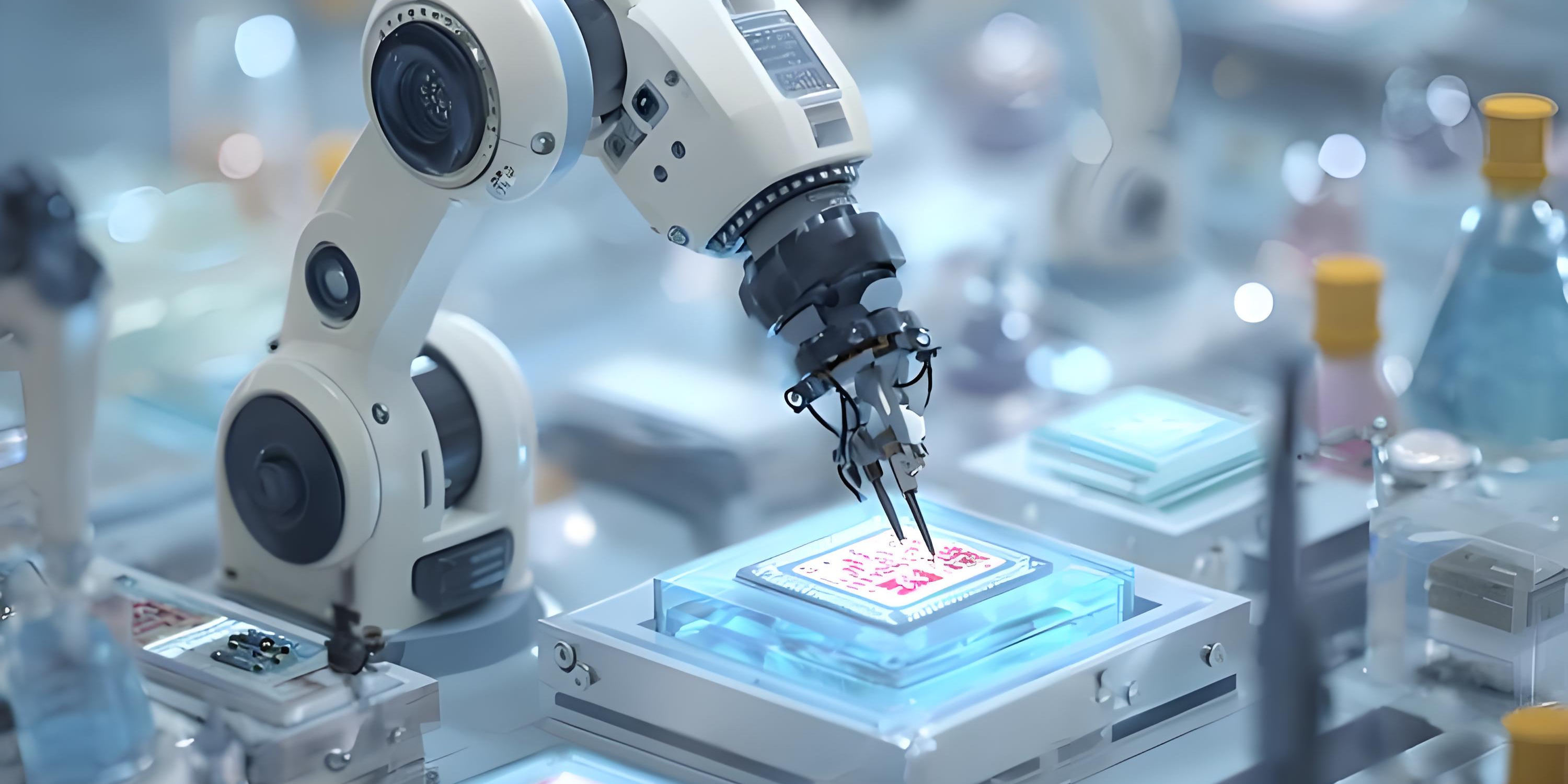
Recently, reporters visited the Inspur Artificial Intelligence Factory located in Jinan. There are no roaring machinery, no splashing welding flowers, and no spinning gears here, but a new revolution in the artificial intelligence industry is unfolding.
Unlike traditional factories, the "raw materials" here are big data, and the processing equipment is servers. When massive amounts of raw data enter the eleven major production units, after 75 processes and 180 sets of tools, the final products produced are Hai Ruo Da models and various intelligent agents that can penetrate thousands of industries.
Many people are curious about how a large model is "produced"? In the past, there was a saying in the industry that 'big models rely on burning money, accumulating computing power, and accumulating data'.
Xiao Xue, Chief Engineer of Inspur Group and Chairman of Inspur Cloud, introduced that in order to adapt to the dispersed, miniaturized, and customized needs of multiple industries for artificial intelligence scenarios, Inspur focuses on vertical fields and has built artificial intelligence factories, transforming the development of large models and intelligent agents from a "manual workshop" mode to a "modern industrial" mode, achieving intensive and efficient mass production of regional, industry, and enterprise level artificial intelligence applications.
In an artificial intelligence factory, the starting point is the data workshop, which is equivalent to the raw material workshop of the AI factory. The raw business data collected from customer enterprises cannot be directly fed into the large model.
The head of the factory, Zhang Min, gave an example of the corrosion prevention model project at Jingbo Petrochemical. Initially, the company provided over 50000 pieces of raw data on equipment operation, of which less than 5% were data on abnormal corrosion scenarios. If trained directly, the large model can only recognize high-frequency scenarios and ignore rare faults.
According to traditional methods, to fill such data gaps, it is necessary to organize dozens of annotators to spend several months manually supplementing. Zhang Min stated that Inspur engineers only took less than two weeks to match 100000 pieces of general data in the same scenario from the publicly available dataset of the petrochemical industry deposited in the factory. Then, through model augmentation technology, they automatically generated over 400000 simulated data with balanced coverage of various corrosion scenarios, ultimately producing 580000 evenly distributed training samples.
Then enter the annotation stage (adding labels to the raw data and converting it into AI recognizable data). Previously, data annotation relied heavily on manual annotation, often taking two to three months; With the help of 11 processes in the data workshop and 60 sets of AI tools, the entire labeling cycle has been compressed to within two weeks.
Step two, after the "raw materials" are ready, the data enters the "model workshop" for training. The industrial big model is a standardized industrial intelligence capability that transforms the experience of master craftsmen and engineers into sedimentable, reusable, and real-time callable capabilities.
Zhang Min stated that industry models are rarely pre trained from scratch. Engineers will select the base based on business characteristics, debug parameters such as learning rate and training batch, and "teach" industry knowledge to the large model.
Training cannot be successful in one go. For example, in the case of Jingbo Petrochemical, the model transformed the experience of petrochemical engineers on implicit corrosion into computable judgment logic, and the accuracy of the first round of training was only 70%; The system will automatically backtrack, either by replacing the base model or re optimizing the dataset; Through multiple iterations, the accuracy of the model was ultimately improved to over 90%. This is also the most computationally intensive step in manufacturing large models.
After the model training is completed, it will enter the evaluation center to participate in the "graduation exam". The evaluation center simulates massive business scenarios and automates model testing from multiple dimensions including business effectiveness, performance, functionality, and security. Only when all test items meet the standards, the model is allowed to be 'released'.
The integration workshop is the final level. Engineers will replicate the client's real server and hardware environment, deploy the trained model, simulate the client's real business pressure, run a complete set of business processes, solve the pain point of "disconnection between training environment and real production environment", and truly achieve out of the box usability.
This is the artificial intelligence factory built by Inspur Cloud - a manual workshop model that upgrades the research and development of large models from the past "a few people manually coding and grinding products in three to five months" to a standardized and batch AI industrial assembly line, achieving large-scale production of large models.
Zhang Min stated that Inspur Cloud positions the Hai Ruo Big Model as an industry big model. In order to further accelerate the intelligent transformation and development of Shandong Province's industrial and manufacturing industries, and solve the dilemma of "cognition, execution, and security" fragmentation and implementation difficulties faced in the process of industrial AI landing, the Hai Ruo Da model has formed three major capability accumulations: "multi industry specific model, cross industry embodied intelligence, and industry wide security guarantee", which can provide users with "industry understanding, executable, and safer" industrial AI capabilities, reduce customer integration costs and landing risks.
After receiving customer orders at the Inspur AI factory, the Hai Ruo big model acts as the overall scheduling brain, scheduling dozens of "digital employees" to automatically assign tasks and flow through various links such as the data workshop, model workshop, evaluation center, and integration workshop. The entire assembly line has come down, and industry models and intelligent agents that used to take 90 days to deliver can now be completed in an average of 20 days, resulting in a 75% increase in production efficiency.
At present, four industry-specific models have been developed: the Hairuo Government Specific Model, the Hairuo Petrochemical Specific Model, the Hairuo Tailored Intelligent Comprehensive Training Field, and the Hairuo Safety Shooting Range.
From 'big data' to 'big models', it only generates an' AI brain '. If customers need more than just a large model, but an intelligent agent that can truly 'get things done', the integration workshop can directly connect the large model with various business tools and industry knowledge bases, encapsulating them into 'digital employees' who can automatically execute tasks.
As of August 2026, this factory, together with industrial clients, has built more than 20 tightly coupled industrial clusters, helping on chain enterprises reduce production costs by 30% and improve efficiency by more than 60%. It has formed practical experience in industries such as petrochemicals, steel, salt chemicals, manufacturing, and healthcare, completed more than 300 model trainings, implemented nearly a thousand intelligent agents, and achieved large-scale intensive production of artificial intelligence.
Shandong, where Inspur Group is located, is a major industrial province in China with a complete range of industries, rich application scenarios, and a solid industrial foundation. At present, the province is promoting the comprehensive and deep empowerment of the manufacturing industry with artificial intelligence, achieving a leap from "Shandong Manufacturing" to "Shandong Intelligent Manufacturing". This provides the Inspur Sea as a large model with both abundant soil for growth and opportunities to leverage its own advantages, as well as broad market development prospects.
With the further development of the word element economy, by the end of 2025, Inspur Cloud will upgrade its artificial intelligence factory to a Hai Ruo word element factory by combining industry-specific models with cutting-edge deployment engineer models. The head of the factory, Zhang Min, stated that the factory is exploring the shortest path for high-value keyword output, deeply integrating business knowledge and workflow to build industry-specific models, achieving rapid adaptation and efficient deployment across industries, and effectively reducing the cost of using specialized domain keywords for enterprises.


 Subscribe