2026-08-11 17:22


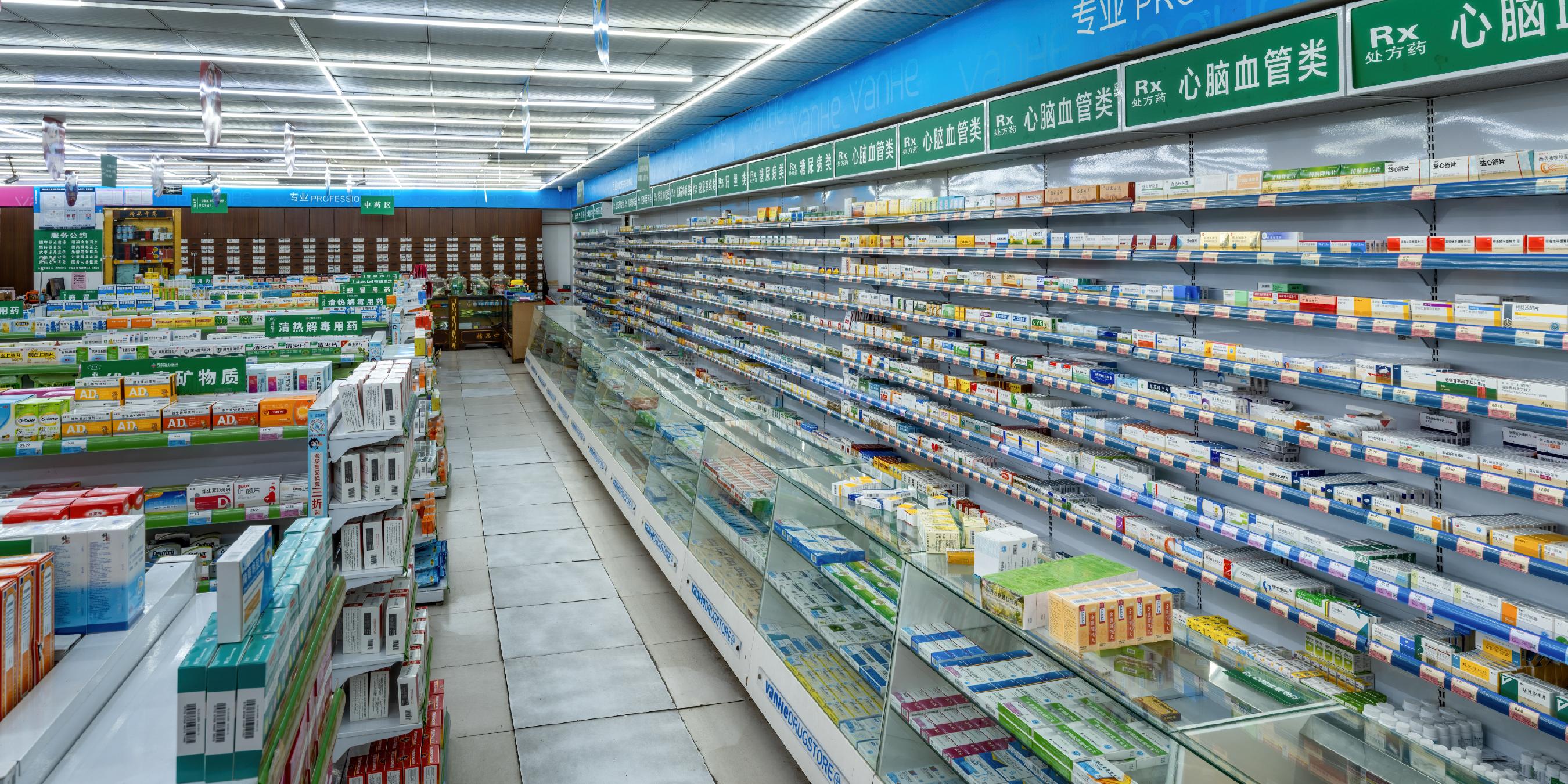
The chain drugstores densely distributed along the street are ushering in a round of centralized adjustment.
According to the summary of the 2025 annual report of ordinary people, the net decrease of pharmacies in China by 2025 is 22000, and the industry has entered an accelerated phase of clearance.
Currently, the normalization of medical insurance fund supervision, the increase in compliance costs for pharmacies, the continuous compression of drug purchase and sales price differences through centralized drug procurement, and the clustering of commercial district stores have led to homogenization and internal competition ..... While the external environment continues to tighten, internal conflicts within pharmacies have also erupted: the imbalance of store management concepts and internal competition within store networks .....
The industry's more than ten years of "horse racing and enclosure" style expansion may not be sustainable.
1、 The tide of 'horse racing enclosure' recedes: net increase in stores and slowdown in single store efficiency
The 2025 annual report data of three national top chain pharmacies, Da Shen Lin, Lao Min, and Yifeng Pharmacy, shows that the industry has entered a new stage: the competitive logic of the industry has shifted from "competition in store quantity" to "stock game of single store efficiency".
According to annual report data, as of the end of 2025, the volume of all three exceeded 14000. In 2025, Da Shen Lin will add 1741 new stores throughout the year, but at the same time proactively shut down 536 inefficient direct operated stores; Yifeng Pharmacy also added 694 new stores and closed 547; The People's Pharmacy added 875 new stores and closed 1177 stores throughout the year.
However, although the "subtraction" of shutting down inefficient stores has maintained the bottom line of single store profitability, it has not been able to reverse the overall weak growth trend. The revenue growth rates of Da Shen Lin, Lao Min, and Yifeng Pharmacy stores have all shown a downward trend. From a single store perspective, in 2025, Da Shen Lin will decrease by 3.3% compared to 2024, and by 11.19% compared to 2023; Yifeng Pharmacy increased by 0.55% compared to 2024, but decreased by 3.4% compared to 2023; The number of ordinary people increased by 1.5% compared to 2024, but decreased by 10.49% compared to 2023.
Closing down loss making stores can only stop the bleeding and is difficult to become a new way to generate revenue. The pharmacy industry is entering a transformation cycle of 'if you don't advance, you'll fall behind. If you start, you won't make a profit, and if you close, you'll feel heartbroken'.
2、 Double squeeze: coexistence of declining profit growth and stock internalization
When the scale dividend of extensive store expansion in the industry fades, the operational difficulties of chain pharmacies are also reflected in the decreasing profit growth rate and low price competition.
On the one hand, the growth rate of profits has declined. According to data from 2025, the profit growth rate of Dachanlin has decreased from 10.17% in 2024 to 8.48%; The profit growth rate of Yifeng Pharmacy decreased from 9.60% to 6.14%; The profit growth rate of ordinary pharmacies has also dropped from 9.21% to 5.67%.
On the other hand, in order to retain core chronic disease customers and compete for daily individual customers, pharmacies have started a price war. In 2024, Chongqing Xinhu Pharmacy took the lead in setting off low price competition, pricing multiple commonly used drugs at extremely low levels, only slightly increasing prices on the basis of factory prices, breaking the original local price system. Faced with the pressure of customer loss, peripheral chains can only passively follow the trend and reduce prices, add discounts on full discounts, buy medicine gifts and other drainage activities to provide a bottom line. At the same time, some drug manufacturers have taken certain measures to deal with Xinhu Pharmacy, even resorting to "cutting off supply".
An industry observer told Guangzhou Daily, "If the 'cut-off' of Xinhu by manufacturers becomes common, the integrity of the pharmacy's drug categories will not be guaranteed, and the low-priced drug sales model may become unsustainable
It is worth noting that the competition within pharmacies is not limited to a single category, but rather a competition across all categories and models. The vast majority of stores have similar product selection and category layouts, lacking exclusive products, ultimately leading to a resurgence of low price competition in the non pharmaceutical market.
Explore the reasons behind these difficulties:
Firstly, the imbalance of business philosophy has led enterprises to gradually deviate from the essence of commerce in actual operations, resulting in a misalignment of the relationship between customers, employees, and products.
Specifically, although many pharmacy stores post slogans of "customer first", their operational focus is on promotional activities rather than customers' real health needs; Claiming to be 'employee oriented' but lacking effective incentive mechanisms and low salary benefits, leading to the continuous loss of outstanding talents; Claiming to prioritize quality, but placing excessive emphasis on high gross profit margins when selecting products, placing product efficacy and safety in secondary positions, can easily lead to a profit crisis.
Secondly, excessive encryption of the store network has led to internal competition. The top chain stores are densely distributed in the regional market, and different stores under the same group compete with each other for existing customer flow. The radiation radius and floor area efficiency of individual stores continue to decline, and the scale effect decreases.
Thirdly, the comprehensive expansion of centralized procurement will continue to compress the price difference between drug purchase and sales. In 2025, the national centralized purchase will add 15 varieties, covering mainstream chronic diseases such as cancer, hypertension and diabetes. The "three entry" policy of centralized purchase of drugs will be implemented nationwide. Designated retail pharmacies can sell centralized purchase of drugs at the price of centralized purchase of selected drugs plus no more than 15%, and encourage sales at the price not higher than the selected price.
In the past, pharmacies relied on chronic disease prescription drugs to obtain stable gross profits. After the implementation of centralized procurement, the terminal prices of similar drugs have significantly decreased, and the profit foundation of traditional prescription drugs has been continuously weakened.
The traditional path of relying solely on scale expansion and low-priced customer acquisition is no longer feasible. Chain pharmacies must break free from the quagmire of homogeneous competition, reconstruct their product structure, and create differentiated advantages, shifting from "competing on quantity and price" to "competing on operation and quality".
3、 Overseas Market Mirror: Reshaping the Growth Curve of Pharmacies through Healthy Consumption
When domestic pharmacies are struggling with price differentials, Japan's Matsumoto Kiyoshi Welcia, Chemist Warehouse and other overseas pharmaceutical retail leaders in Australia have achieved high growth through the model of "drug drainage and healthy consumption profitability", providing a reference for the transformation of the domestic industry.
Matsumoto Kiyoshi and Welcia from Japan have established a differentiated profit structure: prescription drugs and basic drugs maintain the basic customer flow of their stores, while high gross profit health consumer products and self owned functional products contribute the main profits. The industry as a whole has a stronger ability to resist policy fluctuations.
Chemist Warehouse, a large pharmacy chain in Australia, has also adopted this path, vigorously developing exclusive agents and its own nutrition brands, with sales of health and skincare products accounting for 70% of total revenue.
However, most retail pharmacies in China still adhere to traditional business logic, with a focus on therapeutic prescription drugs and general drugs on their shelves. At present, residents' health concepts are undergoing significant changes, and the market space for nutritional diets, home health equipment, and health service products is expected to open up.
For chain pharmacies deeply trapped in profit pressure, this undeveloped health consumption track is an important "anchor point" for breaking the profit contradiction.
4、 Industry breakthrough: With compliance as the foundation, operate the healthy consumption track with precision
Faced with the dual pressure of internal and external factors, China's chain pharmacies need to transform their development logic, abandon disorderly scale competition, and build a new business system of "layered operation and single store quality improvement".
(1) Single store efficiency improvement: dual drive of professional consumption
Abandoning the extensive model of unified category and operation for all stores, and positioning according to store location stratification:
Hospital side store: Focusing on professional pharmaceutical services, deeply cultivating chronic disease filing, medication follow-up, postoperative rehabilitation guidance, strengthening the professional value of pharmacists, and stabilizing the outflow of prescription customers from the hospital.
Community store: Establish an independent health consumption zone, significantly expanding the categories of nutritional supplements, health foods, and household testing equipment.
For example, Hong Kong Longfeng Group had a revenue of HKD 2.035 billion in the first eight months of the 2026 fiscal year, with a year-on-year increase of 85.8% in net profit. The core growth drivers came from high gross profit consumer categories such as beauty and functional health products, with a gross profit margin of 54.6% for health products and about 33% for beauty products, higher than the average level of mainland chain pharmacies.
(2) Product restructuring: Rebuilding profit pillars with "healthy consumer goods"
The key to solving the dilemma lies not in reducing costs, but in restructuring the product structure.
In addition to the traditional price difference between sales and purchases, pharmacies need to find new profit pillars in the "non pharmaceutical" sector. However, the current attempts of top pharmacies in non pharmaceutical categories are generally stuck in a "take it for yourself" approach - simply introducing health products, medical equipment, and daily chemical products, competing with supermarkets and e-commerce platforms for homogenization, and ultimately relying on price wars to grab limited demand.
Domestic top chains have a procurement volume of billions and a nationwide channel network. They can consider establishing their own health consumer product brands - from functional health products and traditional Chinese medicine health food, to home medical equipment and beauty and personal care, all of which can be built through OEM or cooperation with research and development institutions to create an exclusive product matrix and achieve differentiated operations.
The essence of differentiated products is to shift pricing power from "market price" back to "brand premium". When pharmacies have exclusive products that consumers are interested in, price wars are not a necessary option.
(3) Service upgrade: shifting from "drug trading" to "health management"
The endpoint of a price war is zero profit, while the endpoint of professional services is customer stickiness.
At present, there is still great room for development in the diversification of products and services in Chinese pharmacies. According to the 2025 annual report of the general public, the proportion of non pharmaceutical sales in Japan's pharmaceutical industry reached 67.3% in 2022, while CVS pharmacies in the United States achieved 70.5% in healthcare benefits and medical service revenue in 2025, while non pharmaceutical sales in Chinese pharmacies only accounted for 18.7%.
Therefore, increasing the content of health services can be one of the ways for pharmacies to increase profits. Compared to e-commerce platforms and supermarkets, pharmacies have the advantage of "face-to-face" health service scenarios - pharmacist consultation, chronic disease management, health testing, and medication guidance. These services cannot be replaced by online, which is precisely the reason why consumers are willing to pay a premium for "offline pharmacies".
Enterprises should systematically enhance their pharmaceutical service capabilities: establish long-term health records for chronic disease patients, provide value-added services such as regular follow-up, medication reminders, and indicator monitoring; Set up a health testing area in the store, providing free tests for blood pressure, blood sugar, uric acid, etc., to drive consumption frequency with service frequency. When pharmacies become indispensable health partners for community residents, the increase in foot traffic and average customer value is a natural result.
Conclusion
The normalization of centralized procurement and the tightening of medical insurance supervision are the long-term policy directions of the pharmaceutical circulation industry. The traditional pharmacy model that relies on the price difference between drug purchase and sales to survive has reached its ceiling. The path of top chain pharmacies relying on scale expansion to cover up their profit shortcomings in the past is difficult to continue, and the industry reshuffle is accelerating. Chain pharmacies that can withstand industry pressure cycles in the future may not necessarily be the enterprises with the largest number of stores, but the enterprises with the highest single store operational efficiency and the deepest barriers to health consumption differentiation will have the greatest opportunities.