Economic Observer Follow
2026-05-17 11:41


Economic Observer reporter Wang Yajie
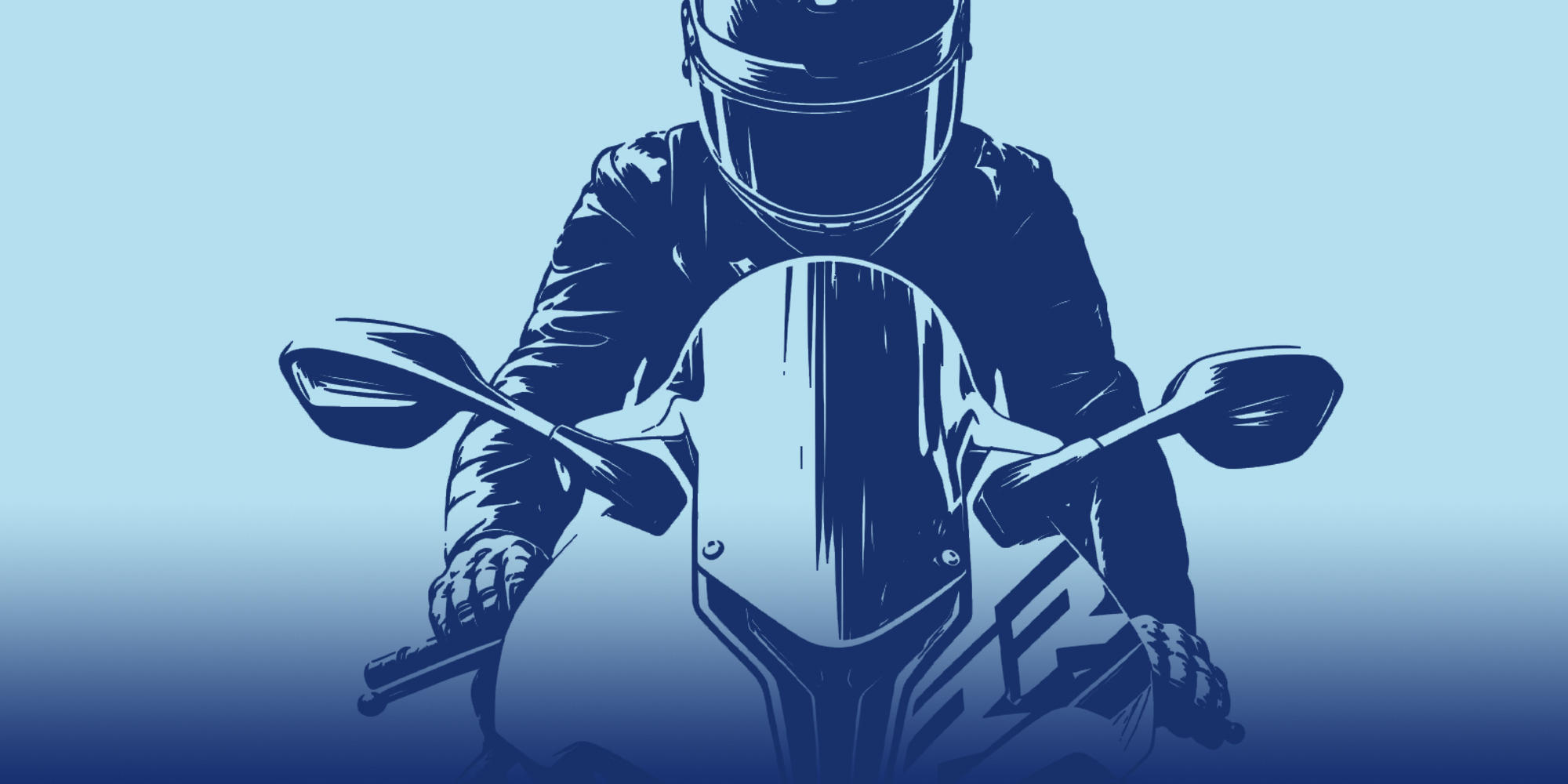
Li Daokui pushed out his motorcycle from the parking space in the underground garage - the blue and white BMW S1000RR, with a small M logo on the body representing BMW's high-performance M power. Ignite, the sound of the engine bounces back and forth between the cement walls of the basement, evenly and steadily. He tilted his head and listened for a moment, his voice sounding like the drumbeat of an army, 'Fierce, but not stunned'.
He is the founding dean of the Su Shimin Academy at Tsinghua University and a member of the National Committee of the Chinese People's Political Consultative Conference. But in another circle, he is known as the 'economics professor riding a liter imitation race'. His idol is his 63 year old peer Michael Jordan, not because he can score, but because Jordan is "fierce but not stunned", super agile, sliding rod, silky dodging, smooth landing, winning without injury.
The "liter imitation race" he rides refers to a civilian motorcycle with a displacement level of 1000 and a appearance similar to professional racing cars, a fast and precise road machine.
Li Daokui does not pursue extreme excitement when it comes to riding a motorcycle, but rather a sustainable passion. He enjoys "drilling through cracks" in the city to find his way, and enjoys the pleasure of "breaking rules" and reform and innovation. He not only rides like this himself, but also teaches like this. On May 2nd, in a caf ? near Tsinghua University, he was halfway through a conversation with a journalist. He picked up the journalist's motorcycle helmet and used a teacup as a car model to review the route where the journalist was last rear ended. He tried to use this method to tell a rider that riding a motorcycle is like studying, it requires reviewing and changing the process.
He is using an economist's toolbox to find a way out for an industry that has been constrained by policy restrictions for many years. In April 2026, Li Daokui spoke out intensively. On platforms such as WeChat Video, Today's Headlines, and Phoenix Net, he repeatedly tells the same story: China's motorcycle industry is a high-quality industry that is severely undervalued, and unreasonable policies have long restricted its development space and consumption potential. He proposed a complete "loosening" plan, suggesting the cancellation of the 13 year mandatory scrapping, graded management of driver's licenses, and a shift from "controlling cars" to "controlling people". He said that lifting the ban and restrictions on motorcycles can unleash trillions of consumption potential.
The Economics of a Car
During her time studying and working in the United States, Li Daokui learned how to ride a motorcycle, and her first one was the Honda CRB900RR. After returning to China in 2004, in order to adapt to the road conditions in Beijing and relearn, his first domestic car returned to a small displacement (150 displacement) Honda.
His second motorcycle is the BMW F800R street bike, parallel twin cylinder, 800 displacement, original from Berlin, Germany. At that time, he waited for a full 10 months from payment to receiving the car, because the car was taken offline from the German factory, shipped by sea, cleared customs, and then transported to Beijing, which was a long cycle. Years ago, he bought it from a BMW 4S dealership on the east side of Beijing. Now, that store is no longer there and this car has been transferred to Thailand for production.
You see, this is the change of the times, "he said without much emotion, more like stating an economic fact that when the circulation channels of an industry are shrinking, it indicates that the industry itself is being squeezed.
He started riding a large displacement motorcycle from the beginning, returned to a small displacement in the middle, and gradually upgraded. This is not an ordinary motorcycle enthusiast's' upgrade route '. His logic is simple: seek truth from facts, and gradually upgrade areas with complex road conditions.
Nowadays, several motorcycles are parked in his garage: BMW S1000RR, Kawasaki Z900, BMW Electric CE04, etc. Every car has a story, and every car also has an economic footnote.
He installed a trunk on both the BMW S1000RR and Kawasaki Z900. One is a public upgrade imitation race, and the other is a high displacement street car. In the motorcycle community, few people would install a trunk for these two types of cars. Imitation races pursue speed and appearance, and sometimes the trunk is considered a "mismatched" modification. But Li Daokui doesn't think so.
I'm a pragmatic person, "he said." I have to ride them to commute, I can't even fit a helmet and a bag
He told reporters that there is another more important reason for him to pack a motorcycle trunk: when he goes to various conferences, the trunk can hold a suit jacket and conference materials. When he arrived at the venue, he took off his cycling suit and put on a suit, instantly completing the transition from a rider to an economist.
He insists on commuting by motorcycle not only because of his passion, but also because motorcycles have an irreplaceable efficiency in Beijing city. Drill holes, detour, and leave congested traffic behind. In his words, driving a car is like "getting stuck on the road", riding a motorcycle is like "finding a route". During the conversation, he repeatedly returned to this theme: commuting is not a compromise, it is his optimal solution after weighing time cost, road adaptability, and sense of freedom.
He also installed windshields on the S1000RR and Kawasaki Z900. This is a practical modification that reduces wind resistance when riding and reduces the risk of catching a cold in winter, "he said.
Li Daokui likes the sound of the engine, not the sound of the exhaust. The sound of exhaust is meant for others to hear, "he said," the sound of the engine is meant for oneself. "From the initial Honda race to the current BMW S1000RR, he has been searching for that even, steady, and powerful rhythm.
He lit the fire one by one for the reporter to listen to. Kawasaki Z900, he described as a "little lamb", smooth, obedient, and easy to handle. This car was just acquired by me during this year's Spring Festival. Despite the existence of the mandatory scrapping policy in 2013, he is still willing to pay for his beloved car. For someone who has already calculated that '13 years is 39000 kilometers', this is not impulsive consumption, but an expression of disagreement with this system through practical actions.
BMW electric CE04, he said, 'This car can enter campuses.'. Tsinghua University does not allow motorcycles, but electric vehicles are allowed. So he bought an electric motorcycle. If we can't solve the policy, let's first solve our own travel, "he said.
Trillion Logic Breakers
The motorcycle industry in China started in the 1950s, with military and official vehicles being the main focus in the early days. After the reform and opening up, the civilian motorcycle market rapidly expanded. By the mid to late 1990s, the annual production of motorcycles in China had exceeded 10 million units, making it the world's largest motorcycle producer. However, with the surge in ownership, the traffic pressure and security issues in some cities have gradually become prominent. Since Beijing took the lead in "restricting motorcycles" in 1985, major cities across the country have followed suit, and the scope of the ban on motorcycles has continued to expand. In 2004, the implementation of the Road Traffic Safety Law of the People's Republic of China officially established the legal framework for the management of motorcycles as motor vehicles, and the "prohibition and restriction" policy has not changed. In 2013, the mandatory 13 year scrapping system for motorcycles was introduced, which was considered by the industry to have further affected the public's expectations for motorcycle consumption.
In this context, Li Daokui referred to the motorcycle industry as a "severely undervalued high-quality industry".
Real needs will not disappear due to bans, they will only seek alternatives. "This is the economic common sense he repeatedly emphasized in his WeChat video account. He explained that the demand mismatch caused by the ban and restriction on motorcycles implemented in some cities across the country has forced electric bicycles to undertake some practical travel scenarios that should have been undertaken by motorcycles. The new national standard electric bicycle has a speed limit of 25 kilometers per hour, and many consumers modify and speed up it for convenience. Consumers have demand, but if merchants do not cooperate with the modification, they cannot sell. Ultimately, it resulted in widespread violations and also undermined the seriousness and credibility of the policy.
His core argument is that lifting restrictions on motorcycles is not just a welfare measure to make motorcycle enthusiasts happy, but also an industrial policy with macroeconomic value. The lifting of restrictions on motorcycles can not only divert demand, but also activate the motorcycle industry and motorcycle tourism consumption, and is expected to increase the trillion yuan consumption potential. "This is the calculation he proposed at the end of 2025. In April 2026, he further refined this data: domestic sales of fuel motorcycles reached 5.14 million units, still declining year-on-year; The industry's capacity utilization rate is less than 40%.At the same time, export sales account for 60%, and the average export price has doubled compared to ten years ago.
We can create motorcycles that win world championships, but it's difficult for them to run freely in the domestic market, "said Li Daokui. On April 2, 2026, Zhang Xueqi won the championship at the WSBK (World Super Motorcycle Championship) Portugal station. In a video released on the same day, Li Daokui said that even today, more than 100 cities in China still have restrictions on motorcycles. The motorcycle industry not only involves the manufacturing industry itself, but also drives a series of related industries such as parts production, motorcycle travel, and sports events. If relaxed, it can increase consumption by one trillion yuan per year.
One trillion yuan is not a small number. Li Daokui's estimation of this data comprehensively considers vehicle sales, parts, cycling equipment, motorcycle consumption, event economy, and even the modification market. If we include the release of the high-end market, the number will be even larger.
The 'high-end market' he referred to is exactly the part of the mandatory scrapping policy in 2013. According to current regulations, motorcycles must be forcibly scrapped after 13 years of use. Li Daokui said, "A well maintained motorcycle is often in good condition after 13 years, just like a car that is forced to be scrapped after only 10000 kilometers of driving
This will not only discourage consumers from purchasing, but also inhibit the development of the high-end market. A motorcycle that costs tens of thousands of yuan must be scrapped after 13 years of use, making it difficult for consumers to get rid of. The vast majority of the domestic high-end motorcycle market is occupied by imported brands. If the policy of scrapping for 13 years is cancelled, domestic enterprises will have more motivation to develop high-end car models.
The cancellation of the 13 year mandatory scrapping policy is the most conditional and feasible measure at the national level, and it can be implemented quickly without any cost, "he said. Not spending money and still being able to drive consumption sounds like a sure bet.
But why hasn't it been pushed for so long?
In Li Daokui's opinion, setting a 13 year scrapping period for motorcycles in 2013 has its historical rationality. But over a decade has passed, both the manufacturing level and emission technology have greatly improved, and the conditions for cancellation have long been ripe.
As a member of the National Committee of the Chinese People's Political Consultative Conference, Li Daokui has submitted proposals in multiple years. In 2018, he suggested incorporating two wheelers into unified management and granting road rights through driver's licenses and license plate classification, replacing the "one size fits all" ban; In 2022, he submitted a proposal on reforming the compulsory scrapping system for motorcycles based on their service life through market-oriented and green methods. For the first time, in the form of a formal proposal, it was suggested to abolish compulsory scrapping and establish an annual inspection system for ultra long service vehicles.
Li Daokui recalled that although the relevant proposals received "very understanding and very supportive" feedback from the relevant departments, there were two major obstacles to their implementation: first, the cancellation of the 13 year scrapping system involved coordination among multiple departments, and the discussion process was also hindered by related issues, such as a department's question of whether agricultural machinery should also be abolished from mandatory scrapping for 13 years; The second issue is the conflict between different policies, such as the promotion of the cancellation of the 13 year scrapping system, which coincided with the brewing of the "trade in" policy. Some voices believe that "accelerating depreciation" and "canceling scrapping" are conflicting policy directions, resulting in the "postponement of reforms that have consensus in all aspects".
Li Daokui believes that shifting from "scrapping based on age" to "scrapping based on vehicle condition" not only saves social resources but also respects the property rights of car owners.
In her communication with reporters, Li Daokui repeatedly mentioned Li Bin, former executive vice president of the China Motorcycle Association, who has been calling for reform of the ban and restriction policies for more than a decade. In May 2025, Li Bin passed away due to a sudden heart attack at the young age of 65. In a public article, Li Daokui wrote, "Mr. Li Bin is only one or two years older than me, and we are of the same age. His untimely death deeply saddens me, and to some extent, it is also the result of his years of hard work and advocacy for the industry
The 2026 Beijing Motorcycle Expo has been postponed, and Li Bin was originally one of the important leaders in this matter. After Li Bin left, Li Daokui was continuing the matter. He contacted several leading domestic motorcycle companies, hoping to gather these scattered forces together and do something for this industry.
He once asked several motorcycle manufacturers if they were aware of the zero tariff clause for motorcycles in the RCEP agreement (Regional Comprehensive Economic Partnership Agreement, which includes a trade clause for gradually implementing zero tariffs on motorcycle related products). "They all said they were not aware. I followed up and asked if they had participated in the relevant discussions, and the answer they received was' no, '" he said. He has attended several member conferences and industry summit forums of the China Motorcycle Association, had conversations with the head of Great Wall Soul Motorcycle, and is well aware of the capital story of Zhang Xueji: "Zhejiang Venture Capital invested in Zhang Xueji, and the investment manager in charge of the project is a motorcycle player who can understand the true value of the industry
The term 'property rights' is actually an important framework introduced by Li Daokui in the discussion of motorcycle policies. He not only called for 'let's ride bikes' from the perspective of knights, but also argued from the perspective of economists that there needs to be more sufficient public interest reasons for the forced scrapping of private property. When the manufacturing level and emission technology have significantly improved, the scrapping system based solely on age lacks a legal basis.
Rule makers who allow 'breaking rules'
Cycling in the city is like a guerrilla team, "Li Daokui said with bright eyes. He described himself as a 'rabbit', crawling around in the traffic and flexibly searching for his own route.
Li Daokui said he enjoys the feeling of being a "guerrilla", the freedom to find routes in the cracks of the city, and the pleasure of "breaking rules".
What he said about 'breaking the rules' is using flexibility to combat rigidity. The policy of banning and restricting motorcycles is an outdated rule, and he uses economic arguments to break it; Urban traffic congestion is an outdated order, and he uses "drilling holes" to break it; The 13 year scrapping system is outdated, and he calls for breaking it with 'scrapping according to vehicle condition'.
The reporter talked to him about his experience of being rear ended while waiting at a red light. Li Daokui immediately regained her energy. He glanced at the table and picked up a teacup. Look, this is you, "he pushed the teacup to the middle of the table. The car behind is chasing you, "he pushed the teacup, simulating the condition of the car at that time, and began to help the reporter review:" Why were you chased? Did it stop at the end of the traffic flow? If you are between the two cars in front, the probability of being rear ended will significantly decrease.
Why did you get stuck in another car? Someone would make things difficult for you? Sometimes it's not just because of others. After reviewing, you will find that you also have problems. "When he said this sentence, his tone was not heavy, but he was very sure. He believes that riding a motorcycle is related to work, socializing, and academic pursuits. In every dilemma, one should not only blame the external environment, but also look back at one's own position and choices.
This happens to be his methodology for making policy recommendations.
He doesn't curse 'the ban and restrictions on motorcycles are unreasonable', but rather thinks about why this policy was introduced in the first place, what conditions have changed now, and how to make the policy adapt to the current situation. In his own words, don't be someone who stands on the roadside cursing, be someone who draws blueprints.
At the end of April this year, he specifically recorded two videos to respond to doubts and systematically explained the management plan after the relaxation. There are three core principles: strict access management based on driver's license classification, precise governance of road violations through technological means, and a shift from scrapping based on age to scrapping based on vehicle condition.
He specifically mentioned Zhang Xueji's motorcycle, 'I would rather lose sales than let a novice motorcycle driver with less than a year of driving experience buy the 820RR with a 0-100km/h acceleration of only 2.81 seconds. Reporting illegal sales will be rewarded with a prize of 5000 yuan.'. ?This is self-restraint that the industry is already doing. He used this case to respond to concerns about "chaos if left unchecked": the industry itself has the drive for self-discipline, and the role of policies is not to impose a one size fits all ban, but to establish rules that reward those who follow the rules.
Letting go is not about letting go, let alone letting go, "he said." It's about going from the simple and rough way of "controlling the car" in the past to the meticulous and refined way of "controlling the people
A loud and steady drumbeat
I am 63 years old. I must keep exercising, otherwise my physical fitness cannot keep up with cycling, "said Li Daokui.
He used to play basketball, but now he is swimming and practicing butterfly with great care. Butterfly swimming requires the highest level of core strength among all swimming strokes, and swimmers need to have the explosive power to pull their entire body out of the water. Just like him lying on S1000RR, supporting his upper body with his waist and abdomen core, and then unscrewing the accelerator. Two postures, the same upright posture.
His idol is Jordan of the same age because Jordan rarely gets injured. I'm not pursuing scoring, I'm pursuing continuous presence. "This is Li Daokui's life strategy. He calculated that if he only rides 3000 kilometers per year, he will scrap 39000 kilometers in 13 years. A well maintained motorcycle is often in its prime at 39000 kilometers. He calculated this math problem for over a decade.
On May 2nd, Li Daokui was wearing a warm cycling suit. With a height of 179 centimeters, he still has a tall and symmetrical figure. Afterwards, he was going swimming. Before leaving, he saw a sudden change in weather and it started raining. He handed the reporter a cycling suit and said, "This suit is windproof and rainproof. Put it on
Before that, halfway through the conversation, he suddenly stood up and said, 'Go take a look at your car.'. He followed the reporter to the roadside outside and found the motorcycle parked there. He walked up to the front of the car, stepped on it, and tried the angle of the handlebar. At first glance, he noticed the brakes and then asked if the rearview mirror was original and if the LCD screen could be replaced with a better one.
He also noticed the phone holder on the journalist's car and found that it could be charged wirelessly. He nodded and said, "This is good. In those few minutes, he was more like a seasoned knight helping his friends inspect their cars.
As soon as the reporter lit the fire, he turned his ears and listened, saying, "This sound sounds a bit like a Harley." That was a coordinate saved in his hearing library, a person who was used to hearing the drum sound of a liter imitation racing engine squatting on the roadside listening to the ignition sound of a 450 displacement cruising motorcycle (a low seated motorcycle suitable for long-distance riding).
He also suggested to the reporter how to modify a suitable imitation racing car. In his view, modification is not simply changing parts, but a process of constantly breaking rules, trying new things, and facing new challenges.
Since last year until now, he has posted dozens of videos about motorcycles. Someone asked him why a Tsinghua professor always talks about motorcycles. He answered in the video, "Motorcycles have never been a burden on urban transportation, but one of the independent choices for diversified travel for ordinary people. It is also one of the ways for ordinary people to call for freedom, and it is a new growth point to enhance consumption and drive industry
But on the day of the meeting, amidst the drumming of motorcycles in the underground garage, he gave a more simple answer than in the video. When it comes to industry issues, he said, you need to first know what you want. Once you understand this, the sound of the engine will tell you the answer. What you want "is direction, and" engine sound "is power. For him, riding a motorcycle is like studying or making policies, it's all about finding his inner drum first, and then letting the rhythm push him forward.
He turned off the accelerator, and the BMW S1000RR let out a deep roar, fierce but not stunned. The drumbeat is uniform and the rhythm is stable. He drove out of the basement to the sound of drums.


 WeChat registration or login


 Subscribe