Economic Observer Follow
2026-04-23 15:34


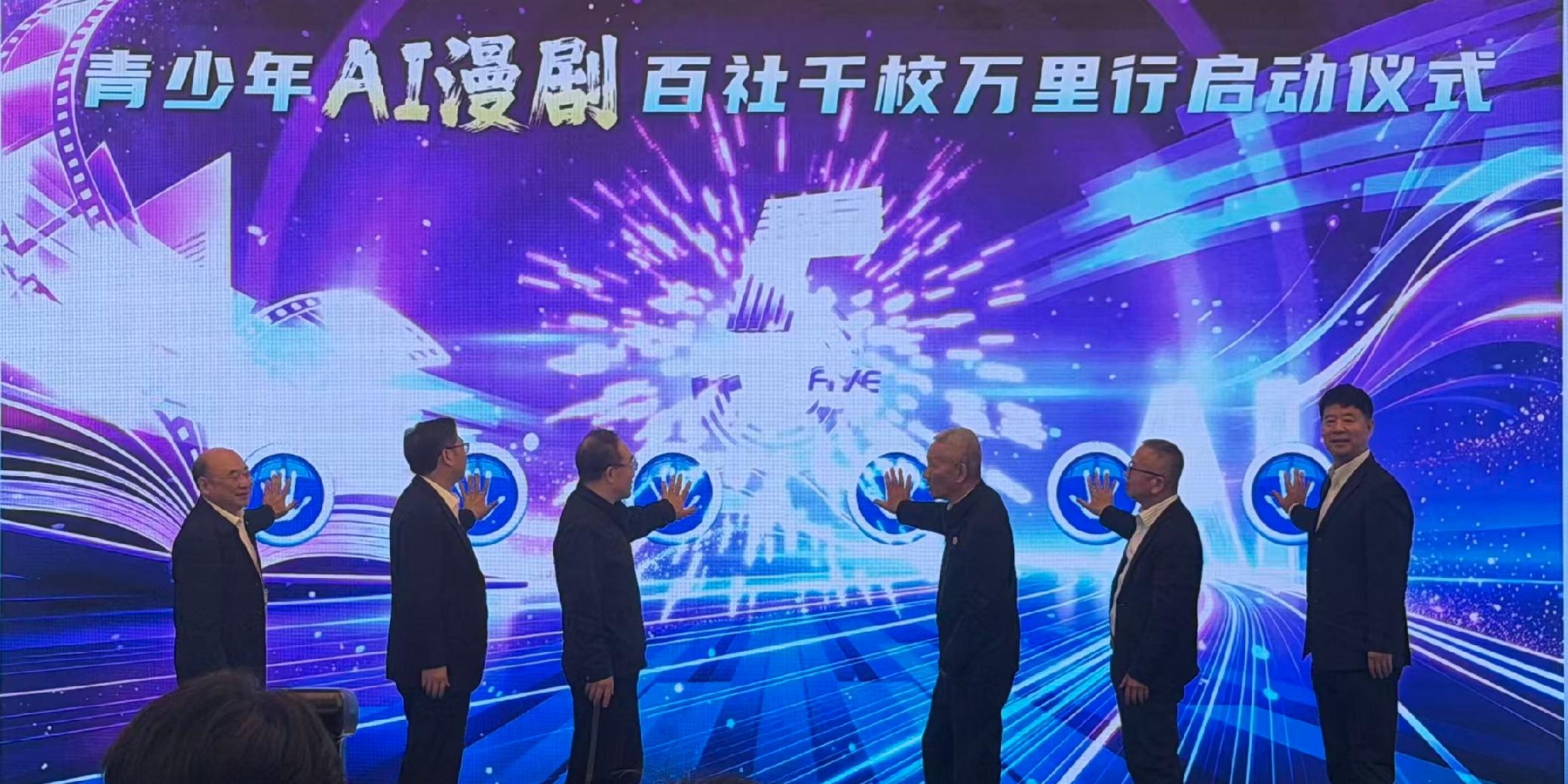
Economic Observer reporter Song Fuli On April 22nd, the "Youth Reading Innovation and Development Conference in the AI Era" was held in Nanchang, and the "2026 Hundred Societies, Thousand Schools, and Ten Thousand Miles (Jiangxi Station) Reading Promotion Action" was also launched at the same time. The purpose of this conference is to gather various forces such as government, publishing, education, and technology to jointly explore innovative paths and development directions for youth reading in the AI era, and promote the precise supply of reading resources and the comprehensive improvement of reading abilities. The conference is guided by the China Publishing Association and Jiangxi Publishing Group, jointly organized by the National Reading Working Committee of the China Publishing Association and the 21st Century Publishing Group Co., Ltd., with the theme of "Reading AI and Enjoying the Future".
In his speech, Wu Shulin, Chairman of the China Publishing Association, mentioned that this conference, as an important part of the "Hundred Societies, Thousand Schools, and Ten Thousand Miles Tour" series of activities, gathers multiple forces to jointly explore innovative paths for youth reading in the AI era. It is timely and of great significance. He stated that in the context of the rapid penetration of artificial intelligence and the widespread use of digital media, young people's reading is facing a series of prominent problems that urgently need to be solved, mainly manifested as: the deep challenge of technological alienation in improving reading literacy, structural shortcomings in content supply quality, and difficulty in adapting reading guidance systems to the practical needs of intelligent transformation. In the face of new situations and tasks, he hopes that all sectors can work together to tackle challenges from four aspects: first, adhere to value guidance and build a solid foundation for young people's reading; Secondly, strengthen technology towards goodness and optimize the reading experience for young people; Thirdly, focus on key groups and address the reading shortcomings of young people; Fourth, improve the collaborative mechanism and unite the reading efforts of young people; Fifth, strengthen scientific research and introduce the world's best reading methods to more young people.
Nie Zhenning, former president of China Publishing Group and director of the National Reading Working Committee, delivered a keynote speech titled "Youth Reading: Success or Failure with AI, Expectations for AI". He emphasized that although artificial intelligence appears to facilitate reading for teenagers, it actually causes deep and serious damage to their reading ability. Many real-life cases have already sounded the alarm: it destroys reading focus, weakens independent thinking, and dissolves text perception. At the same time, algorithm recommendations trap children in information cocoons, causing them to lose their ability to choose books independently. AI speed reading and memorization functions also make reading an ineffective browsing experience where they forget what they have read. We must be vigilant against the erosion of AI on the reading ability of teenagers, guide them to return to immersive and autonomous deep reading, and safeguard their reading literacy and cognitive growth.
As an innovative exploration of the deep integration of traditional reading and digital reading, the "Youth AI Comic Drama Hundred Societies, Thousand Schools, and Ten Thousand Miles Tour" was officially launched at the conference. The activity is jointly initiated by the National Reading Working Committee of the China Publishing Association and the China Soong Ching Ling Youth Science and Technology Cultural Exchange Center. It aims to solicit AI animated dramas with reading themes for young people across the country, advocating and helping them deepen their reading, boldly create, and express their personalities in the AI era.
Professor Wu Yunfang from the School of Computer Science at Peking University presented the research and simulation experiments conducted by the school on "AI and Reading", which found that under existing technological conditions, AI can assist young people in reading more scientifically and efficiently, but it is still "impossible to replace human reading". AI can quickly solve basic level knowledge, but it is difficult to replace our perception of the deep meaning of the article, nor can it replace our resonance with the author's soul. ?
Min Rong, the editor in chief of 21st Century Publishing Group, introduced the company's exploration of using AI technology to restructure the entire content production and supply chain. She believes that AI will not change the essence of publishing, but will change the way production is carried out. The healthy ecology of youth reading requires the joint participation, co construction, sharing, and collaborative promotion of publishing, education, family, and society.
Professor Cui Bo, Dean of the School of Publishing at Zhejiang University of Media and Communications, pointed out in his speech that the seemingly convenient "one click generation of summaries, automatic sorting of logic, and provision of standard interpretations" function of AI may actually cause readers to experience temporal breaks, experiential connections, embodied cognitive dissolution, and loss of subject construction, among other reading losses. She emphasized that reading cannot be represented, and growth must be experienced firsthand.
Chen Yuanyuan, Deputy Secretary of the Party Committee of Foreign Language Teaching and Research Press, expressed the publisher's humanistic commitment in her speech: "Book publishing and reading promotion are ultimately the protection and companionship of life growth. What we follow is the law of human development, not the logic of algorithm push
Jian Yue, Vice President of Zebra Children's Research Institute, also mentioned that the structural challenge of children's reading is the increasing "quantity" of reading but the lack of a transformation path for "quality". He shared the institute's innovative practices in AI driven children's reading from the perspectives of language ability, thinking, aesthetic and cultural literacy, as well as the internal drive and cultural identity of lifelong reading.


 WeChat registration or login


 Subscribe