


2026-01-12 18:11


The CES (International Consumer Electronics Show) held in Las Vegas every January is regarded as a barometer of the global technology industry. When 2026 arrives as scheduled, Nvidia founder Huang Renxun announced in his CES keynote speech that the era of physical AI is coming, and artificial intelligence is trying to move beyond dialogue boxes - from generating text and images to interacting with the real world.
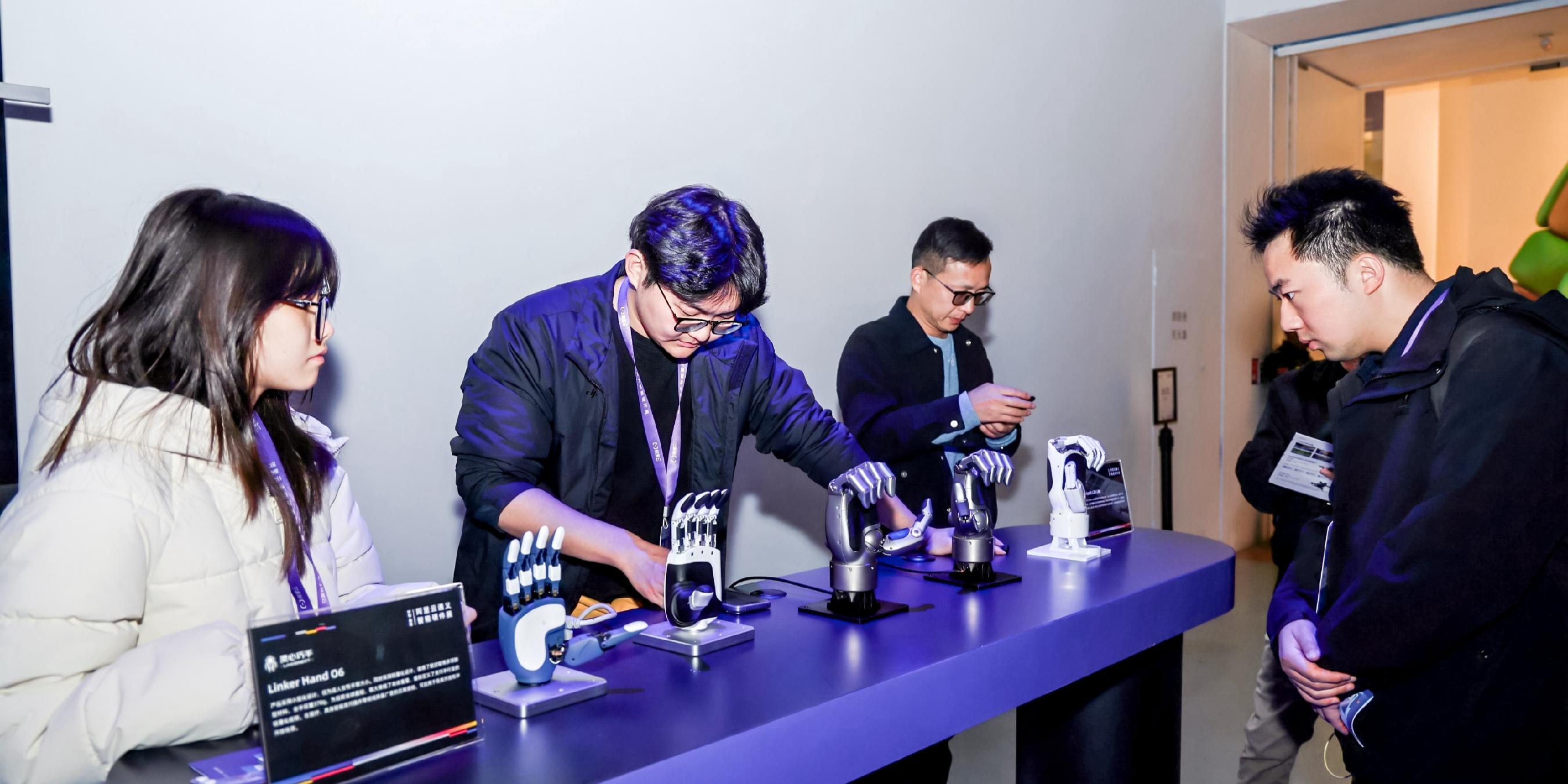
A butterfly flaps its wings on the other side of the ocean, and the trend of technology has swept across Shenzhen Bay. From January 8th to 11th, the Alibaba Cloud Tongyi Intelligent Hardware Exhibition was held here.
There is no grand concept packaging, and both inside and outside the exhibition hall are mostly products that have already been put into mass production. AI smartphones, glasses, headphones, companion toys, robots, and even pet supplies, totaling 76 categories, over 200 brands, and thousands of hardware devices gathered by the bay.
Among the exhibitors are top manufacturers such as Honor and OPPO, as well as innovative enterprises from Nanshan in Shenzhen and Hangzhou in Zhejiang, and small and medium-sized hardware merchants from Huaqiangbei and Yiwu Mall. Unlike previous consumer electronics exhibitions, the differences displayed by these manufacturers are not mainly reflected in hardware parameters, but rather focus on showcasing their respective breakthroughs in AI survival forms.
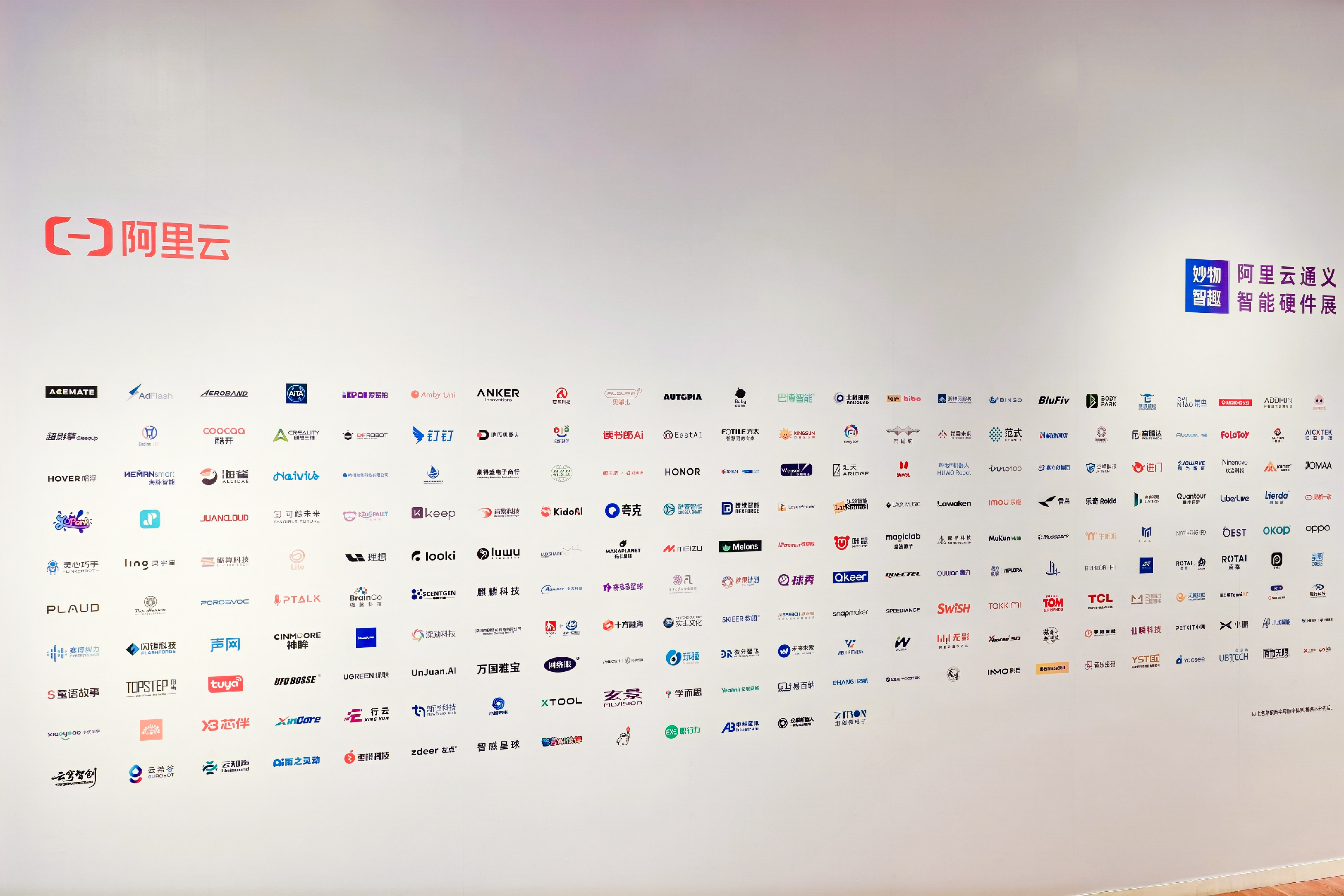
Breaking free from the shackles of mobile apps, AI has been able to take over the steering wheel, act as the eyes of the blind, adjust the lights on children's desks... These hardware products representing Chinese manufacturing are moving towards intelligence, and behind them cannot do without the "intelligent brain" - Qianwen Big Model, which has penetrated into more than 1500 entities with different forms, turning "physical AI" from logical deduction into reality.
The greatest imagination of AI is not mobile phone screens, but changing the physical world. ?Alibaba Group CEO Wu Yongming once uttered this sentence at the 2024 Yunqi Conference. At that time, people's attention was still focused on the chatbot dialogue box. Today, two years later, when global technology giants are trying to define the next generation technology paradigm of AI at CES, Alibaba Cloud, together with hardware manufacturers on the front line of technological application innovation in China, is discussing technology implementation around power consumption, latency, and cost. They are pushing for AI to be embedded in products in a more practical way to truly change physical reality.
Hardware Breakthrough: AI is Redefining It
In the past decade, China's hardware industry, from mobile phones and home appliances to various smart terminal consumer electronics, has relied on supply chain advantages to quickly follow global technological trends. CES is like a global conference showcasing cutting-edge technologies, focusing on concept demonstrations and trend predictions. China's massive hardware supply chain manufacturers are enthusiastic about releasing prototype machines that have not yet been mass-produced, telling a grand narrative about the future.
But at the Alibaba Cloud Tongyi Intelligent Hardware Exhibition in Shenzhen, whether it's big name manufacturers or emerging brands like Nothing and Yingshi, what they bring is not just PPTs that cost hundreds of millions of dollars or empty talk with a sense of the future, but more practical hardware products that integrate or affect people's lives, work and other scenarios. You can even truly feel the speed of Chinese intelligent manufacturing with "morning design, afternoon sampling, next day mass production, and one week of going global" here.
In the Huaqiangbei Special Zone, Yangzhisheng Electronic Trading Co., Ltd. in Futian District, Shenzhen, which started from a stall, has developed an AI translator that can directly go global to the Latin American market in just one week; There is also a Logitech blood pressure watch launched by Shenzhen Xinrui Technology. After integrating with the Qianwen model, it no longer just records heart rate and blood oxygen coldly, but can automatically generate a health weekly report and provide adjustment suggestions based on the user's weekly data.
Based on the model capability of Qianwen, in addition to innovative development of applications in ubiquitous scenarios, there are also many innovative organizations building AI efficiency engines around high-frequency scenarios. YoooTek from Nanjing, as a cutting-edge technology consumer brand, has launched its self-developed AI hardware - AI ONE, which is magnetic and supports 60 second voice shorthand. It can not only capture users' "sudden inspiration", but also sort out information clippings and determine transaction priorities.
We are more optimistic about the stickiness in fragmented scenarios, "said Xu Dong, General Manager of Alibaba Cloud's Tongyi Large Model Business. He believes that the opportunities for AI hardware currently lie not in being large and comprehensive, but in the neglected fragmented needs. He was deeply impressed by the AI hardware mentioned above. People only need to speak to this hardware, and the model will automatically transform the numerous and chaotic information into a structured one. For some people who need to organize notifications and other detailed pain points, it can form a strong barrier.
Xu Dong believes that intelligent hardware with such deep insights is the first step in the evolution of physical AI. Stunning scenes such as the "Listening Bear" that can accompany children for long conversations, as well as various intelligent hardware solutions in the exhibition area that do not require an APP and can directly communicate with models through headphones and glasses, also appear in the "Yiwu Small Mall Special Zone".
Once upon a time, the labels of Yiwu Mall were "white label" and "flat replacement". Nowadays, big models allow hardware merchants here to have a powerful "soul" on the basis of "low price": from smart glasses, homework machines to AI fragrance mixers, these vertical products can also occupy a certain survival space in the fine sewing market ignored by giants by integrating with Qianwen big models.
The fundamental purpose of manufacturers behind these innovative products is to embed model capabilities into more specific life or work scenarios.
In fact, the most fundamental change is happening behind the scenes. Qianwen has launched a multimodal interaction development kit for AI hardware. Even a hardware vendor who cannot write code can integrate speech recognition, dialogue, and multimodal understanding into devices through drag and drop interfaces, pre-set agents, and tools.
In addition to lowering the development threshold for AI hardware innovation, Xu Dong mentioned a change in billing methods that is more concerned by hardware manufacturers and developers behind the scenes, "changing billing based on Tokens to billing based on hardware terminal licenses. ?After all, the lifeline of hardware entrepreneurs is whether the cost is controllable, which also determines whether their innovative hardware products can be mass-produced and sold.
Bottom level logic: Let everything have a 'brain'
In the past year, the narrative of global AI competition has almost revolved around model parameters, computing power scale, and benchmark testing. But in places like Shenzhen where the Chinese manufacturing supply chain is dense, people are discussing more about another set of issues:
Can the end side run? Can the delay be reduced to seconds? Can the power consumption be further reduced? Can modules, chips, and models work together?
It is worth noting that at the Tongyi Intelligent Hardware Exhibition in Shenzhen, Qianwen's model matrix did not appear in the "strongest" posture, but existed in the "easiest to use" way.
For headphones or glasses that are power sensitive and require millisecond level response, small-sized models can independently perform intent recognition on the end side; And when faced with complex task decomposition, it is handed over to the cloud based large model for processing. The flexibility of this "end cloud integration" allows everyone from a few yuan smart water bottle to a few hundred thousand yuan pure electric sedan to find their own "brain".
Xu Dong revealed in an interview that Alibaba is productizing customized services. They even delve into hardware details, such as collaborating with module solution providers to optimize the agility of AI interruptions during conversations between two people. This deep cultivation of industry details has enabled Alibaba to build differentiation barriers in the fiercely competitive model track.
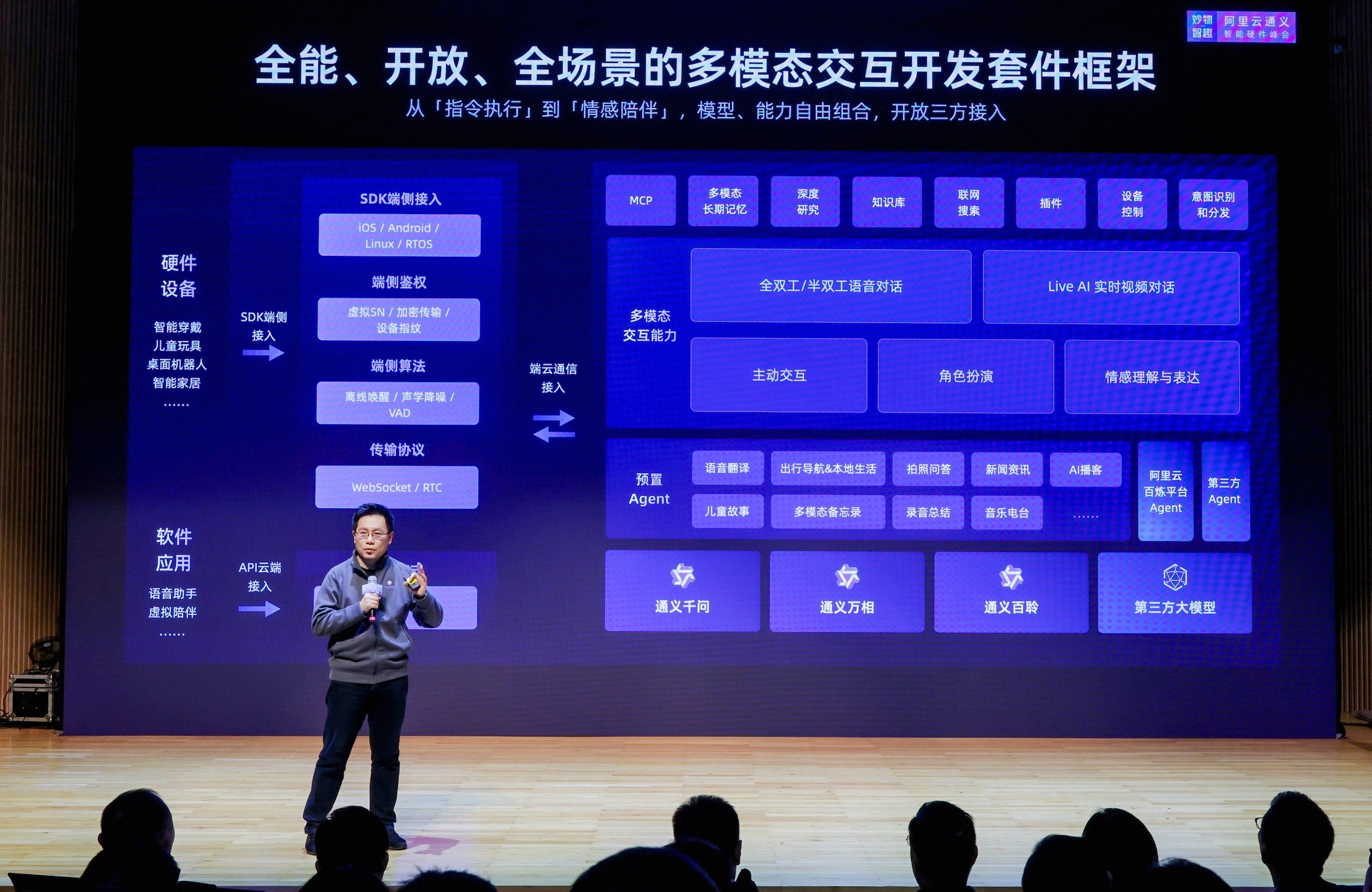
The most crucial aspect is the active compatibility with chip ecosystems, from ARM, RISC-V to MIPS, Qianwen's multimodal kit has been adapted to over 30 mainstream chip platforms. Under the combination of multiple capabilities, hardware manufacturers on site have compared Qianwen to the "Android of the AI era".
Vendors who always follow the technology trend to carry out application innovation lament that Android has helped them solve the problem of "anyone can do mobile phones" in the era of mobile Internet, but today, in the wave of generative AI, they have benefited from the support of the model capability of Qianwen, and realized "anyone can do AI hardware".
Hugging Face data shows that Qianwen has become the most widely adopted open-source model among developers worldwide. This "comprehensive open source" strategy directly changes the focus of innovation - in addition to top manufacturers, more and more innovative organizations, entrepreneurial teams, and even individual developers can break through barriers and stand on the advantage of China's hardware innovation in manufacturing.
As can be seen, from the intelligent cockpit parked on the lawn outside the exhibition hall to the intelligent camera that understands the ball inside the exhibition hall, the tentacles of the large model have extended to more complex interactive scenes such as cars and sports.
In the automotive field, BYD Tengshi has implemented the "AI Wallpaper" function through Tongyi Wanxiang, which can automatically generate the background of the car according to instructions; Zero Run Car uses cloud based calling of large models, enabling the voice assistant "Little Zero" to have the ability to provide second level feedback for travel planning and text creation.
The BodyPark ATOM exhibited by Chengdu Feiche Technology is based on the Tongyi Qianwen VL model, which achieves multimodal perception. It can not only "see" the user's movement posture, but also provide real-time correction and review to the user like a real coach; The Shootz Q1 brought by Hunan Qiuxiu Sports utilizes the visual model of Tongyi Qianwen to achieve basketball trajectory tracking and exciting editing, turning AI into a "digital director" with visual understanding and motion logic.
Xu Dong takes the example of some new energy vehicle companies using the visual ability of models to recognize and understand user intentions. Users no longer need to use wake-up words, and can directly issue commands with just a glance at the in car gimbal. In his view, this is a typical epitome of AI taking over the physical world and changing the logic of interaction.
"In the past, the Internet solved the problem of connectivity, while generative AI improved the productivity of the whole world. ?Xu Dong has his understanding of the future of AI moving towards the physical world, which not only means more devices connected to the internet, but also a deeper change: productivity transformation.
A hardware based on the Tongyi Qianwen multimodal model that can "see" the environment in real time and describe it to visually impaired users in language; In the industrial field, large models are replacing traditional CV quality inspection solutions that were highly customized and almost impossible to migrate in the past; In the home, AI devices are beginning to take on the roles of memory, organization, and companionship, rather than just performing "on" and "off" operations.
All of these confirm Wu Yongming's previous judgment that AI is changing the physical world, and during this period, Qianwen is the "Android of the AI era", driving a "awakening of all things" in the hardware industry.
Made in China: A testing ground for physical AI
From Huaqiangbei's electronic products to the world's leading intelligent cockpit, AI big models are no longer unattainable technological wonders. They are just like electricity and water, integrated into innovative hardware products.
Why do hardware vendors collectively choose Qianwen? In addition to "adaptability," "we hope to make developers make money," Xu Dong said. This universal logic is driving the rapid expansion of China's AI hardware ecosystem, and even in some niche fields, Shenzhen's innovation density has surpassed Silicon Valley.
Shenzhen, China has always had extremely realistic demands, extremely low trial and error costs, and an industrial chain willing to be dismantled and restructured. When Alibaba opens up the modeling capabilities of Tongyi Qianwen and releases them like cloud services, hardware innovation participants here will not be confused about whether this is the future. What they care about is how to land faster? Can the product be sold and how long can it be sold? When will the next generation be released?
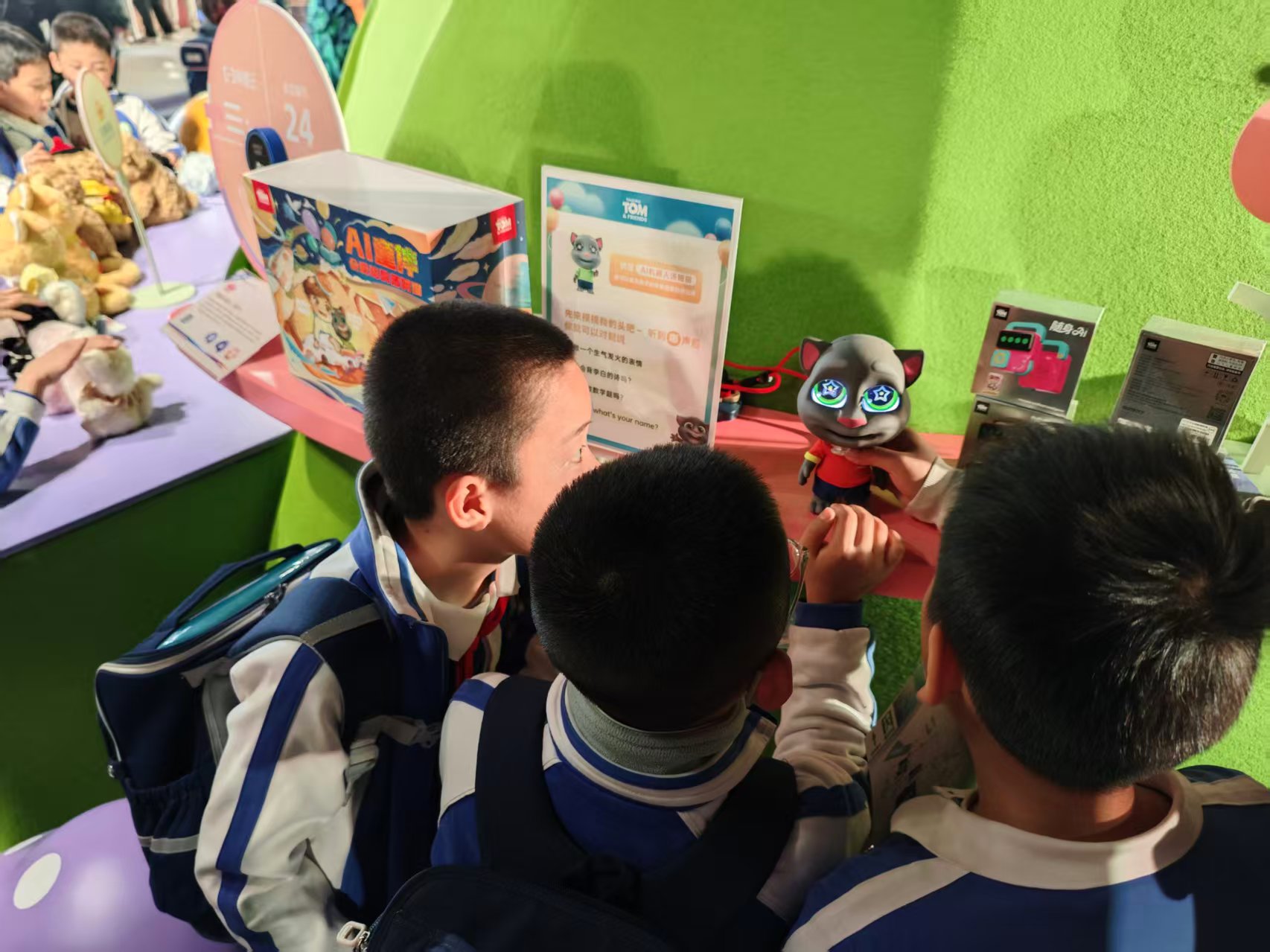
Some people compare Shenzhen to a "cyber jungle", where the emerging intelligent hardware is also seen as the prelude to the era of physical AI. When AI steps out of the phone screen, every object in the physical world is being redefined by the model. From the crowds surging at the Shenzhen Intelligent Hardware Exhibition, from the embodied intelligence and AI toy booths that children and adults will stop to experience, to the innovative AI hardware forms, a path towards the physical world is gradually becoming clear.
In the long run, the AI transformation of the physical world is not a hardware stacking competition, but an ultimate game of "who is the digital base". When Alibaba Cloud brings the Yiqianwen big model, like the Android system, it penetrates into small AI pins and even pure electric cars worth hundreds of thousands of yuan, allowing China's huge supply chain system to be the first to complete the implantation of the "smart brain", inspiring China's AI hardware to achieve restructuring on the global industrial map.
Two years ago, people were still discussing whether AI would replace humans; Two years later, at this smart hardware exhibition in Shenzhen, we saw another answer: AI is changing and even enhancing everything. Chinese developers have already achieved a leap from adaptation to mass production of AI applications in a very short period of time with the open source ecosystem of Qianwen.
While Silicon Valley is still debating the philosophical definition of AGI, Chinese manufacturing has already achieved a leap in the new era of AI under the combination of "big models+strong hardware+deep scenarios". In fact, Wu Yongming and Huang Renxun's judgment on "physical AI" reveals the same future: the second half of AI is not in the mobile phone screen, but in the tangible physical world.
An imaginable future is that, with the support of models such as Qianwen, AI is no longer a plaything locked in the screen of a mobile phone. It has quietly integrated into thousands of daily necessities such as glasses, headphones, cars, fitness equipment, toys, learning machines, etc., and interacts freely with you, me, and others in the physical world.
Subsidy policy shifts, car market sales decline for three consecutive months

HSBC reports that gold prices may hit the $5000 mark in the first half of the year, with market expectations that silver prices will continue to rise

How can Herm ? s in the mobile phone case industry make young people rush to buy it?


 WeChat registration or login


