


2026-01-12 17:37


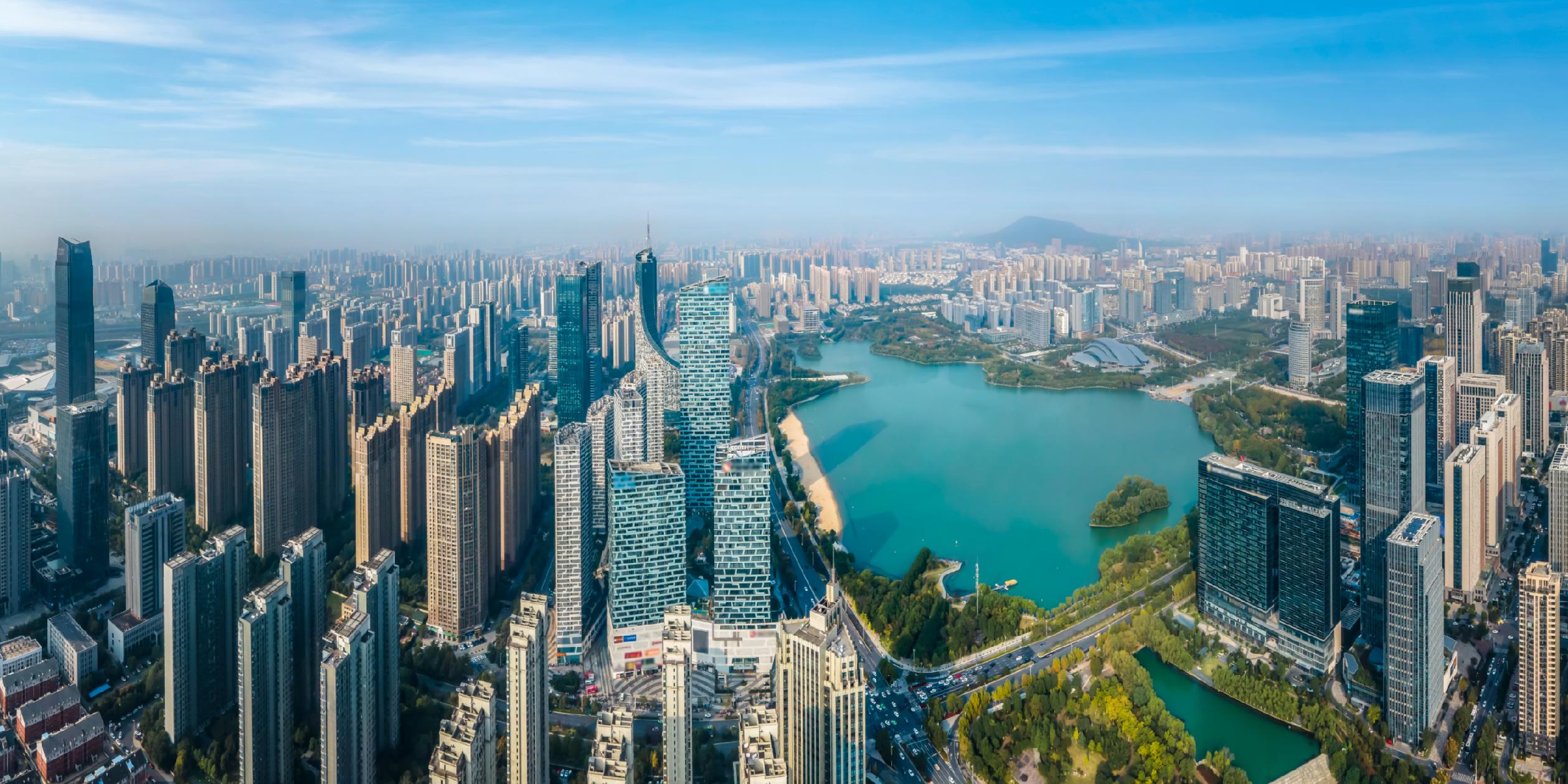
The geographical pattern of China's consumer market is undergoing a migration. The driving force of consumption growth and the battlefield of brand competition are accelerating from traditional first tier cities to broader emerging urban areas.
This trend is clearly visible in the data. On January 5, 2026, Hema and Zhuoshi Consulting released the "2025 Report on the Consumption Power of 'Box District Housing' in 100 Cities", which showed that the 'Box District Housing Index' in Shijiazhuang was as high as 171, while Xuzhou and Linyi reached 141 and 127 respectively, both far exceeding the national average of key cities (100). This index is calculated based on three indicators: daily average orders, transaction prices, and foot traffic of Hema offline stores. This means that the growth drivers of China's consumer market and the home ground of brand competition are shifting from traditional first tier cities to broader emerging urban areas.
Coincidentally, other retail brands have also keenly captured this trend. Xixifu Bookstore has opened multiple stores in emerging cities such as Yangzhou and Yibin; Meanwhile, outdoor brands such as Salomon and trendy toy brand Pop Mart, known as one of the "middle-class three piece sets", have also entered more emerging markets. The choices and performances of these brands jointly confirm that a silent and profound consumer geography migration is unfolding. The consumption base of emerging cities is being reshaped, and they are no longer passive market bearers, but active providers of quality living. Behind this change is the inevitable result of the industrial transition in emerging cities.
Industrial Transition
Consumer vitality is not a passive source of water, its fundamental driving force lies in industrial upgrading, which directly brings about urban transformation and reshaping of the consumption base. Some emerging cities have embarked on an upgrading path from traditional industrial cities to modern industrial clusters, accumulating solid purchasing power for consumption explosion.
Taking Yibin as an example, in recent years, it has become one of the regions in China with the most complete power battery industry chain and the strongest supporting cooperation capabilities. In 2023 and 2024, the output value of power batteries in Yibin will both exceed 100 billion yuan, becoming the second 100 billion level industry after Baijiu, and pushing the city's total economic output to exceed 400 billion yuan. By 2024, the production of power batteries in Yibin City will account for over 16% of the national total and 10% of the global total. Move your gaze back to Hefei, Anhui in the east. From January to October 2025, the production of new energy vehicles in Hefei will reach 1.097 million units, ranking first in the country. At present, Hefei has gathered six complete vehicle enterprises including Jianghuai, BYD, and NIO, as well as more than 600 core component enterprises such as Guoxuan High tech and Zhongchuang Chuanghang, becoming one of the regions with the largest scale, most concentrated brands, and most complete industrial chain in the national new energy vehicle industry.
The transformation of industries has directly brought about changes in people and upgrading of cities. Benefiting from this, emerging cities represented by Yibin and Hefei have ushered in new vitality, which is most directly reflected in the return of talents and the increase in residents' income. Industrial upgrading has given rise to new demographic profiles - engineers returning to their hometowns for employment, and locally grown technical managers. They have considerable disposable income, and the pressure of living such as mortgage and commuting is much lower than that of the same salary group in first tier cities, forming a unique advantage of "having money and leisure", which constitutes the endogenous driving force for consumption explosion.
Macro data confirms this trend. According to the statistical data of Beike Finance in the New Beijing News, as of December 15, 2025, a total of 314 non first tier cities (referring to prefecture level administrative regions, including cities, regions, autonomous prefectures, and leagues) in China have released their economic growth data for the first three quarters of 2025. Among them, the GDP growth rate of 175 cities exceeded that of the whole country, accounting for 55.7%. Looking at the city level, 65.2% of third tier cities have a GDP growth rate higher than the national average, while in fourth tier cities, this indicator is 60.7%.
This advantage is directly projected onto consumer behavior. The demand of consumers in emerging cities has shifted from meeting basic needs to defining quality of life, and their requirements for product texture, design aesthetics, and unique experiences are synchronized with those of first tier cities; And due to less life pressure, the consumer mentality is more calm and willing to invest.
Awaken Consumption
When the consumption potential of emerging cities is accumulated, its release becomes inevitable, and the key lies in whether it can build a consumption scene that accurately matches demand.
In today's world where information barriers have been broken down, consumers in third - and fourth tier cities have already been deeply exposed to global trends, and their consumption concepts are rapidly evolving towards quality and personalization. However, traditional department stores and hypermarkets in many cities have lagged behind in terms of format combination, brand hierarchy, and consumer experience, making it difficult to meet the new expectations of a composite type. This gap between supply and demand provides an opportunity for brands such as Hema, which possess high-quality supply and scene reshaping capabilities, to enter emerging markets.
In recent years, international brands such as L'Oreal and Lululemon have been accelerating the opening of stores in emerging cities; Starbucks stores have covered multiple county-level cities such as Zhangjiagang and Changshu. In the mid to high end retail sector, Hema Fresh will enter 40 new cities by 2025, including Linyi, Luoyang, Yibin, and others.
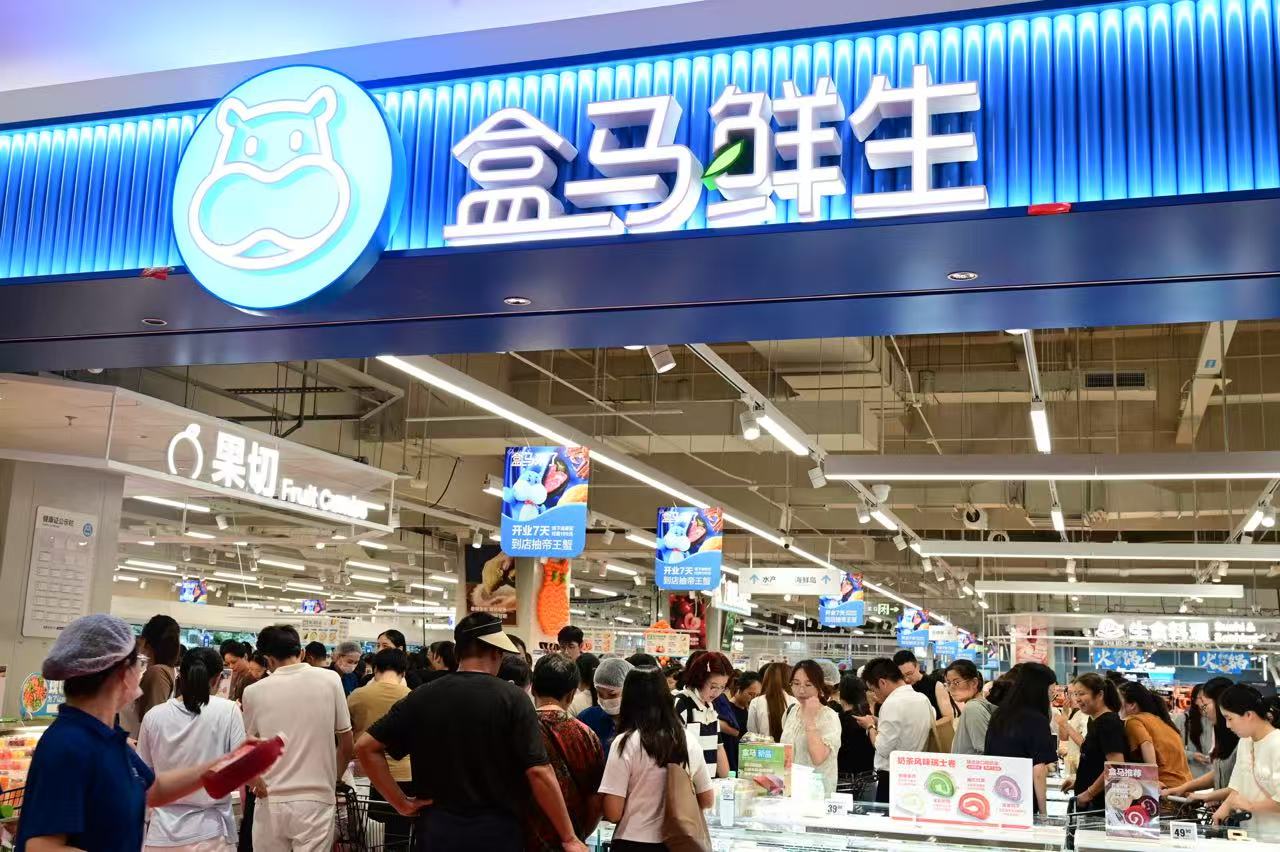
Hema brings not only new products such as king crab and organic camellia oil to the city, but also a completely new consumer solution. Its core lies in reconstructing the consumption scenario, transforming supermarkets from simple shopping places to destinations that integrate dining, experience, and social activities, and supporting the real-time demand for "30 minute delivery" with a store warehouse integrated network.
This plan has been fully validated by the market. In the past two years, almost all cities where Hema has recently entered have seen a scene of being fully booked upon opening. On the day of the opening of the first store in Dongying, the sales of baking products reached 400000 yuan; The first store in Zhongshan sold 105 king crabs; At 9pm, there are still consumers queuing up to pay at the Linyi store. Data shows that the opening of Hema Tangshan's first store has driven a year-on-year increase of 101% in customer flow and 122% in sales in the commercial district; After the introduction of Hema at Shijiazhuang Letai Center, the daily average foot traffic of the store remained stable at 30000 people on weekends, and the foot traffic was still strong at 8:30 pm every night. In recent years, the Le Tai Center has also introduced trendy brands such as LEGO and Pop Mart. Based on the customer flow brought by these newly introduced brands, a new consumption ecology that combines high-frequency demand, emotional value, and social attributes has been built, further amplifying the consumption vitality of the business district.
Nowadays, in many emerging cities, "after work and shopping at the mall, having hotpot and buying some fresh food at Hema, then going to Pop Mart to draw a blind box, or going to Lego to buy building blocks" has become the new norm. The mall remains active after 21:00, and the overall closing time has been postponed as a result, which indirectly confirms the strong demand of local residents for quality consumption.
Geographic Migration
The above phenomenon is not isolated, it is a vivid microcosm of the geographical migration of Chinese consumption, clearly indicating that the growth momentum is undergoing a substantial shift from traditional first tier cities to emerging cities. If the industrial leap laid the foundation for the economy and population, then the scene innovation of brands such as Hema provides a key carrier for the release of consumer potential.
At the end of 2024, The Economist magazine proposed an interesting observation of Chinese cities, stating that "second - and third tier cities are rising and becoming the new stars of China's future cities." The "return home" of young people not only brings the driving force of economic construction, but also promotes the rapid flow of lifestyles between cities in an era of highly flat information.
The consumer trend is spreading comprehensively. The pursuit of quality life by emerging market consumers has entered the stage of daily release. In the future, retail brands that can maintain competitiveness in high tier cities and successfully expand into the global market are expected to become the biggest winners. In emerging cities, they not only provide high-quality goods, but also stimulate local consumption vitality and drive the upgrading of the retail industry. This benign expansion and competition will ultimately benefit both cities and consumers.
Hong Yong, an associate researcher at the Research Institute of the Ministry of Commerce, believes that in some non first tier cities with significant net population inflows and a high proportion of service and emerging industries, the coverage density and consumption activity of Hema have rapidly increased, indicating that consumption potential depends more on "effective population" and "structural purchasing power" rather than administrative hierarchy itself. This change means that promoting consumption is no longer just about stimulating the total amount, but through new retail infrastructure to enhance regional consumption carrying capacity and spatial balance. This type of experience is worth summarizing and promoting on a larger scale.
From young people queuing up in emerging city malls to try on lululemon, to the increasingly common imported fruits on family dining tables in third - and fourth tier cities; From the busy real-time retail delivery after 9 pm at night, to the long queues in shopping malls for blind boxes, these specific and vivid consumption scenes are pieced together in a dispersed yet complementary way, creating a new picture of the vitality and restructuring of the Chinese consumer market.
Subsidy policy shifts, car market sales decline for three consecutive months
HSBC reports that gold prices may hit the $5000 mark in the first half of the year, with market expectations that silver prices will continue to rise

How can Herm ? s in the mobile phone case industry make young people rush to buy it?


 WeChat registration or login


