2026-01-12 10:44


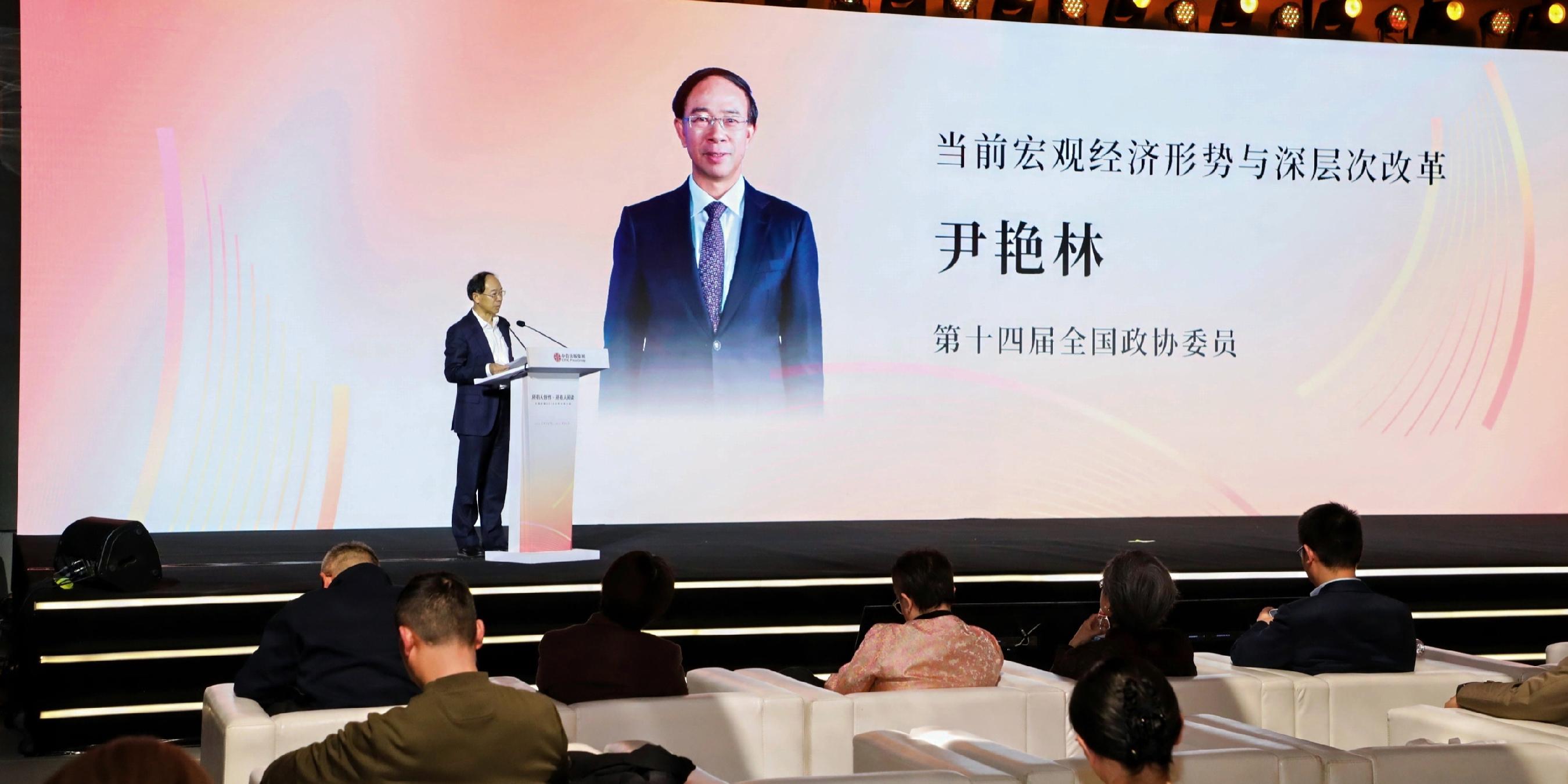
On January 6th, the CITIC Publishing 2026 Partner Conference was grandly held in Beijing. The conference, themed "Everyone creates, everyone reads", brings together renowned writers, scholars, industry partners, and media representatives to explore the transformation and innovation of the publishing industry in the era of AI.
Yin Yanlin, a member of the National Committee of the Chinese People's Political Consultative Conference and author of "Deep level Reform", as the representative of good book authors for 2025, brought a thematic sharing on "Current Macroeconomic Situation and Deep level Reform", which deeply analyzed the current macroeconomic situation and policy orientation.
The following content is a guest sharing record for the benefit of readers.
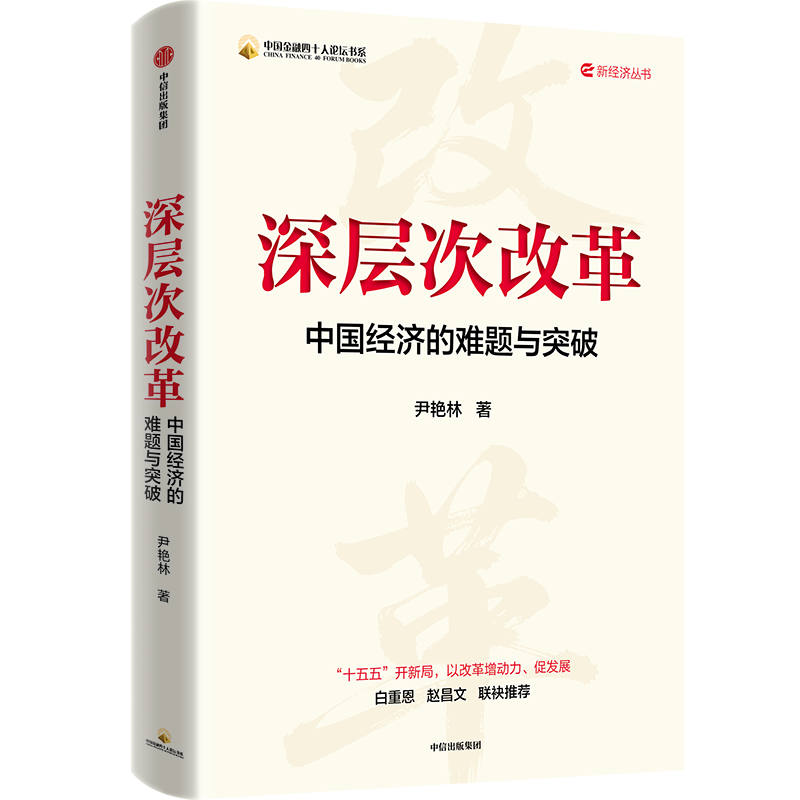
In June of this year, with the strong support of CITIC Press, my new book "Deep Reform" was successfully published. Therefore, today I want to focus on?The current economic situation and deep-seated reforms?On this topic, I would like to share some personal observations and thoughts with everyone.
At the Central Economic Work Conference held in December last year, General Secretary Xi Jinping delivered an important speech, comprehensively summarizing the economic work in 2025 and making arrangements for this year's tasks. Currently, the whole country is deeply implementing the spirit of the conference. Taking this opportunity, I would like to share my understanding of the current economic situation for your reference.
Overall, 2025 will be an extraordinary year. Especially under external pressure, China's economy is pushing forward and developing towards a new and better direction. The GDP growth in the first three quarters was 5.2%, an increase of 0.4 percentage points compared to the same period last year. The annual economic growth rate is expected to reach around 5%, and the total economic output is expected to reach 140 trillion yuan. Such achievements are hard won. At the same time, overall prices and employment remain stable, foreign exchange reserves remain stable at over 3.3 trillion US dollars, and the RMB exchange rate remains basically stable.
The industrial structure is also continuously optimizing, and new quality productivity is steadily growing. Emerging industries such as artificial intelligence, biomedicine, and robotics are flourishing and ranking among the forefront internationally. The "two new" policies have achieved significant results, with sales of consumer goods driven by trade in from January to November exceeding 2.5 trillion yuan, including over 11.2 million cars and over 120 million household appliances. The investment in equipment renovation increased by 12.2%, driving the overall investment growth by 1.8 percentage points. The structure of foreign trade continues to upgrade, and the proportion of exports of mechanical and electrical products has exceeded 60%. The profitability of enterprises has also improved, with profits of industrial enterprises above designated size increasing by 1.9% from January to October.
It can be said that by 2025, the economic operation will be stable with progress, and the development goals will be achieved. The 14th Five Year Plan will come to a successful conclusion, laying a solid foundation for the start of the 15th Five Year Plan.
While acknowledging our achievements, we should also be aware of the problems that still exist in the current economic operation. The Central Economic Work Conference pointed out that there are still many old problems and new challenges in China's economic development, the impact of external environmental changes is deepening, the contradiction between strong domestic supply and weak demand is prominent, and there are many risks and hidden dangers in key areas.
At the phenomenological level, the following issues are worth paying attention to:
One is insufficient effective demand. In recent months, there has been a rare negative growth in investment, and overall consumption remains weak.
Secondly, the price level is running at a low level. Despite recent positive changes, the foundation for recovery is not yet solid. CPI has fluctuated around zero for two consecutive years, PPI has experienced negative growth for three consecutive years, and the GDP deflator has been negative for 10 consecutive quarters.
Thirdly, the difficulties faced by some enterprises have not been fundamentally alleviated. Although overall profits have increased, some industries still have low profitability, and the problem of overdue payments between enterprises has not yet eased.
The fourth is the pressure on employment and residents' income growth. The proposal for the 15th Five Year Plan explicitly mentions that there is a significant pressure on employment and residents' income growth, which is relatively rare in previous documents.
The fifth reason is that the growth rate of fiscal revenue and expenditure is relatively low, and some grassroots units are under greater pressure for the "three guarantees".
Overall, there is still significant downward pressure on the economy. Although these problems are mostly in the process of development and transformation, they can be solved through efforts. The supporting conditions and basic trends for the long-term improvement of China's economy have not changed, but the current downward pressure on the economy objectively exists.
Looking ahead to this year, the global economic growth momentum is still insufficient. The International Monetary Fund predicts that the world economic growth rate in 2026 will be about 3.1%, lower than the 3.2% in 2025. Combined with the impact of the Federal Reserve's interest rate cuts, the external environment remains highly uncertain.
To this end, the Central Economic Work Conference has explicitly proposed to implement more proactive macroeconomic policies, adhere to seeking progress while maintaining stability, improve quality and efficiency, increase efforts in countercyclical and cross cyclical adjustments, and enhance the effectiveness of macroeconomic governance. We should continue to implement more proactive fiscal policies, maintain necessary fiscal deficits, total debt and expenditure, continue to support the "dual" construction and "two new" work, appropriately increase the investment scale within the central budget, optimize the implementation of "dual" projects, optimize the management of the use of local government special bonds, better leverage the driving effect of government investment, and promote the stabilization of investment. Recently, the National Development and Reform Commission has issued a list of "dual" construction projects for early approval in 2026 and a central budget investment plan, totaling 295 billion yuan; Recently, a batch of major infrastructure projects with a total investment exceeding 400 billion yuan have been approved or approved.
Meanwhile, we must continue to implement a moderately loose monetary policy. Making the promotion of stable economic growth and reasonable price recovery an important consideration of monetary policy, flexibly and efficiently using various policy tools such as reserve requirement ratio cuts and interest rate cuts, maintaining sufficient liquidity, smoothing the transmission mechanism of monetary policy, and guiding financial institutions to increase support for key areas such as expanding domestic demand, technological innovation, and small and medium-sized enterprises. Compared with previous years, this year's monetary policy has placed greater emphasis on the goals of stable growth and price recovery, with significantly enhanced targeting.
The central government has also made a systematic deployment of the "Eight Adherences" for this year's economic work and proposed a series of specific measures. I believe that as long as we conscientiously implement the spirit of the Central Economic Work Conference, both investment and consumption growth rates are expected to rebound this year, and the economy will maintain stable growth.
Of course, the specific goals still need to be announced after the national "Two Sessions" are confirmed. From the current perspective, in order to achieve macroeconomic goals, in addition to continuing to increase macroeconomic policies, reform is also indispensable, which is exactly what I emphasize as' deep level reform '.
The Central Economic Work Conference pointed out that,We must adhere to the combination of policy support and reform and innovationFor example, in terms of expanding domestic demand and building a strong domestic market, society has widely paid attention to the formulation and implementation of the "Urban and Rural Residents' Income Increase Plan". This requires supporting efforts to promote income distribution reform, such as increasing subsidies for disadvantaged groups through fiscal transfer payments, improving basic pensions for urban and rural residents, optimizing individual income tax policies, reducing the highest marginal tax rate, and improving individual business taxation, in order to effectively increase residents' income. At the same time, we will deepen the income distribution reform of research institutes, universities, and state-owned enterprises, reasonably improve the treatment of scientific research personnel, and appropriately increase the salaries of public officials such as teachers and doctors to drive the growth of enterprise salaries.
For example, clearing unreasonable restrictions in the consumption sector is also a reform in itself, involving the optimization of government functional boundaries and management methods.
For example, the central government emphasizes the need to adhere to innovation driven development, accelerate the cultivation of new driving forces, and requires the formulation of integrated plans to promote the development of educational technology talents. This requires breaking down the talent mobility barriers between public institutions and enterprises, strengthening the position of enterprises as the main body of innovation, and promoting supporting reforms in professional title evaluation, project application, and fund allocation.
The vitality of the capital market cannot be enhanced without reform, including the construction of a technology finance system that is compatible with technological innovation.How commercial banks can better serve innovation, explore pilot projects such as investment loan linkage and bank asset investment companies, all of which touch on the deep level adjustment of the financial system. After all, the current Commercial Bank Law restricts banks from directly participating in investments, but the new situation requires the financial system to provide more effective support for innovation.
In addition, the central government has made arrangements for the construction of a unified large market, a new round of reform of state-owned assets and enterprises, the improvement of local tax systems, and the promotion of institutional opening up. These all involve deep-seated contradictions at the level of institutional mechanisms, which must be promoted through deep-seated reforms.
The Central Economic Work Conference emphasized the need to enhance the synergy between reform and policies, and promote sustained improvement in economic performance and market expectations. I believe that as long as we follow the central deployment, better play the role of a proactive government, increase macroeconomic policy adjustment efforts, and adhere to a balance between policy support and reform and innovation, we will definitely be able to promote stable economic growth in our country and achieve the goals set at the Central Economic Work Conference.


 WeChat registration or login