


2026-01-10 13:27



According to the State Administration for Market Regulation on January 9th, the Office of the State Council's Anti Monopoly and Anti Unfair Competition Commission recently conducted an investigation and evaluation of the market competition situation in the food delivery platform service industry in accordance with the Anti Monopoly Law of the People's Republic of China.
The relevant person in charge of the Office of the State Council's Anti Monopoly and Anti Unfair Competition Commission stated that in recent times, the food delivery platform service industry has faced prominent problems such as subsidies, price competition, and traffic control, squeezing the real economy and intensifying the industry's "internal competition", which has been strongly reflected by various sectors of society.
In order to promote the lawful and compliant operation of food delivery platforms, fair and orderly competition, and to form a market order of high quality, good price, and healthy competition, the Office of the State Council Anti Monopoly and Anti Unfair Competition Commission has decided to conduct an investigation and evaluation of the market competition situation in the service industry of foreign delivery platforms in accordance with the provisions of the Anti Monopoly Law of the People's Republic of China.
This is not the first time that regulatory authorities have taken action to crack down on the "internal competition" in the food delivery industry. Previously, relevant departments have held multiple talks with the companies involved, and the State Administration for Market Regulation issued the "Basic Requirements for Service Management of Food Delivery Platforms" at the end of 2025, which set the bottom line in terms of food safety, rider rights, and platform competition rules.
Since 2025, the three platforms of Taobao flash purchase, Meituan, and JD.com have been engaged in a subsidy war worth over 10 billion yuan for nearly half a year, and the industry competition has continued to escalate. The fierce competition has exposed many problems.
On April 10th, JD launched a subsidy of billions; On May 5th, Ele.me launched "zero yuan free order" on Taobao. On May 13th, the official publication of the State Administration for Market Regulation stated that in response to the prominent problems in the competition of the food delivery industry, it will hold talks with relevant departments with platform enterprises such as JD.com, Meituan, and Ele.me, requiring strict compliance with relevant laws and regulations, legal and standardized operation, fair and orderly competition, and jointly creating a good market environment.
However, regulatory interviews have not curbed the escalation of platform competition, and the subsidy war has become increasingly fierce. On July 2nd, Taobao announced an additional investment of 50 billion yuan in food delivery subsidies in collaboration with Ele.me; On July 8th, JD Waimai announced an additional investment of 10 billion yuan; On July 12th, the daily order volume of the entire platform reached 250 million orders. On July 18th, the State Administration for Market Regulation once again held talks with three platform enterprises, Ele.me, Meituan, and JD.com, demanding further regulation of promotional behavior, rational participation in competition, and promotion of standardized, healthy, and sustainable development of the catering service industry.
According to media investigations, at that time, a meal or milk tea with a normal dine in price of 20 yuan or 30 yuan only cost two or three yuan under the subsidy war of food delivery platforms, and there was even a phenomenon of "zero yuan purchase". In the short term, a low price strategy can indeed attract consumers. But in the long run, small and medium-sized businesses are forced into price wars, with profit margins compressed. Some can only maintain their operations by reducing the quality of ingredients, cutting down on portions, and ultimately damaging consumers' dining experience.
In addition, low price competition without technological and financial barriers can also create the effect of "bad money driving out good money" - high-quality businesses that focus on dish research and development, food safety, and service quality may be squeezed out of the market due to the inability to withstand low price pressure. The exclusive competition between platforms will also limit the business autonomy of merchants.
Associate Professor Ye Weiming from Peking University HSBC Business School previously said in an interview with the Securities Times, "Who exactly provides the subsidy? Is it from the platform? Or is it from the platform that requires merchants to provide it through layers of algorithmic mechanisms? If it is from the platform, then the platform relies on algorithmic power (such as dynamic pricing and traffic allocation rules) to transmit the subsidy pressure to merchants layer by layer, forming implicit cost sharing. For example, the platform requires merchants to participate in the 30% off 15% promotion, which appears to be a platform subsidy, but is actually achieved by compressing merchant gross profit (or even requiring merchants to pay for the difference out of their own pockets)." This directly points to the deep-seated problem of the subsidy cost transfer mechanism.
What is even more worrying is that merchants who have not participated in subsidies are also difficult to 'stay out'. Under the large-scale food delivery subsidies, these merchants are facing a significant "siphon effect" - their food delivery and dine in consumers are turning to participating merchants, causing these merchants to be caught in a dilemma of "less profit from participating in subsidies and less orders from not participating". Some merchants have to adjust their business strategies to adapt to the market competition pattern and eventually join the subsidy war.
According to a research team led by Zhang Jun, a senior professor of humanities and dean of the School of Economics at Fudan University, the complete daily transaction data of dine in and take out services from more than 40000 catering merchants across the country were analyzed. The results show that during the period of intensified competition since July 2025, the average daily total order volume of "takeaway plus dine in" for merchants has increased by 7%, but the average daily actual amount received by merchants has decreased by about 4%. Under the benchmark scenario of "unchanged profit margin for food delivery", it is estimated that during the period of intensified competition, the average total profit of merchants' food delivery and dine in services decreased by about 1.7%. After entering the period of intensified competition, the average decline expanded to 8.9%.
This food delivery war has had a severe impact on the ecology of platforms, the catering industry, and even consumers. Some even believe that the food delivery war is a long-term destruction of the ecology of foreign sales and the catering industry.
There are no winners in the food delivery subsidy war and price war. The operational losses of food delivery platforms have been clearly reflected in financial data: JD's operating profit margin in the second quarter of 2025 was negative 0.2%, a significant decline from 3.6% in the same period of 2024. JD.com attributed it to an increase in strategic investment in new businesses, including its food delivery business, in its financial report; Meituan's adjusted net profit for the second quarter of 2025 was RMB 1.49 billion, a decrease of 89% from RMB 13.6 billion in the same period of 2024. The company stated that it was mainly affected by industry competition; Alibaba launched large-scale subsidies in July, and its Q3 2025 financial report showed that the revenue from its instant retail business (generated by Taobao flash purchases and Ele.me App) was 22.9 billion yuan, a year-on-year increase of 60%. The company's adjusted EBITA (non GAAP financial indicator) decreased by 78% year-on-year to 9.073 billion yuan, mainly due to investments in instant retail, user experience, and technology.
On January 9th, regulatory authorities launched a special investigation into the "internal competition" of external sales, and all involved platforms responded:
Meituan stated on the same day that it firmly supports and will do its best to cooperate. Recently, irrational competition issues such as price competition, subsidy competition, and traffic control have become prominent in the food delivery market. Meituan has repeatedly called for the industry to return to rationality and firmly opposes "inward competition". Meituan will take this investigation as an opportunity to work with various platforms in the industry to jointly implement market entity responsibilities, participate fairly in market competition, and promote innovation and healthy development of the food delivery platform service industry.
Taobao Flash Shopping stated on the same day that it welcomes and will actively cooperate with the industry market competition investigation and evaluation work, strictly implement compliance responsibilities, continue to work together with merchants, ecological partners and other parties to provide more diversified and higher quality services, jointly maintain a fair and orderly market environment, and jointly promote the further prosperity and development of the food delivery service industry.
Taobao Flash Shopping also stated that it deeply understands that fair competition is the core principle of the market economy and the cornerstone of promoting continuous innovation and healthy development of the food delivery platform service industry. We always adhere to the principles of fairness, impartiality, and openness, strictly abide by relevant laws and regulations such as the Anti Monopoly Law and the Anti Unfair Competition Law in merchant management, price behavior, delivery rights protection, and consumer rights protection, and conduct business in accordance with the Basic Requirements for Delivery Platform Service Management.
JD Waimai stated on the same day that it firmly supports and welcomes this decision, and highly agrees with measures to combat internal competition, maintain fair market competition order, and protect the legitimate rights and interests of consumers, operators, and riders. As a new type of entity enterprise that integrates data and reality, we will firmly resist the vicious competition of internal competition in the industry. Through supply chain model innovation, we will vigorously promote the high-quality development of quality food delivery, better serve consumers, cooperative merchants, and riders, and promote innovation and healthy development of the food delivery platform service industry.
Industry observers point out that the food delivery market has entered a stage of stock competition, and the focus of platform competition is shifting from user subsidies to service ecosystem construction. Taobao Flash Shopping relies on Alibaba's ecological resources and strengthens the "instant retail" mentality through scenario based marketing such as the New Year's shopping festival; Meituan has consolidated its position as the gateway to local lifestyle services by leveraging the density of its delivery network and the depth of its merchant services. This regulatory intervention may accelerate the industry reshuffle, driving platforms from "traffic competition" to "value creation", ultimately achieving a win-win situation for consumers, merchants, delivery personnel, and platforms.
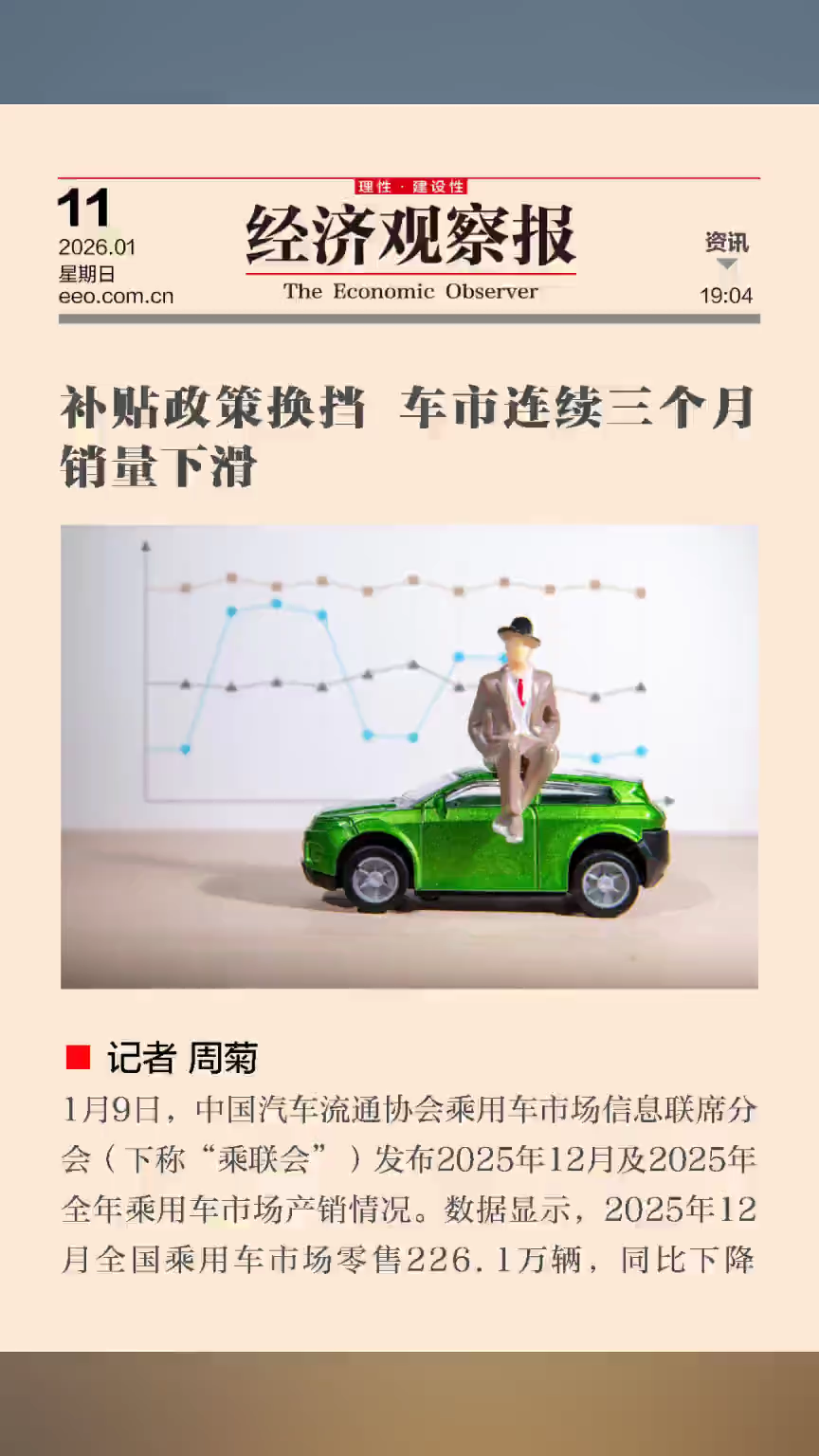
Subsidy policy shifts, car market sales decline for three consecutive months

HSBC reports that gold prices may hit the $5000 mark in the first half of the year, with market expectations that silver prices will continue to rise
How can Herm ? s in the mobile phone case industry make young people rush to buy it?


 WeChat registration or login


 Subscribe
