


2026-01-04 11:51



Former CEO of Evergrande Group, Xia Haijun, who was once known as the "Evergrande God of Wealth", "Evergrande's second in command", and "the new emperor of working people" for controlling huge amounts of money, has been trying to transfer assets for various reasons after the Evergrande explosion, especially his property worth up to HKD 60 billion in Hong Kong.
But on January 2nd, the Hong Kong Court of Appeal made a ruling on the appeal case of Evergrande Group and former CEO Xia Haijun's global Mariva injunction (a litigation preservation measure aimed at preventing the transfer of assets by freezing the defendant's assets and ensuring the execution of the judgment), once again rejecting Xia Haijun's application for leave to appeal against the original court's judgment in February 2025, and maintaining the ban on him transferring any assets worth up to HKD 60 billion within the Hong Kong jurisdiction out of Hong Kong and disposing of the proceeds from the sale of properties in Hong Kong's Parkson Hill.
This ban precisely targets high-value assets and prevents the possibility of asset transfer from the source. It is worth noting that the introduction of this ban was not accidental, and its direct trigger was Xia Haijun's abnormal asset disposal behavior.
In May 2024, following the sale of a Hong Kong mansion by Xu Jiayin, Xia Haijun also listed for sale a Hong Kong mansion under his name. On June 14, 2024, the liquidator discovered that Xia Haijun intended to sell a duplex villa located in Pak Ao Shan, Hong Kong, which he had purchased in 2019 for a transfer price of HKD 82 million. This transfer would result in a significant loss of HKD 78 million and the property would depreciate by nearly 50%.
According to reports, Xia Haijun purchased the property from New World Group in 2019, with a total price of approximately HKD 160 million including three parking spaces. This irrational loss selling behavior has aroused strong vigilance among liquidators to accelerate the transfer of assets and avoid subsequent accountability.
After realizing that Xu Jiayin, Xia Haijun and others were transferring capital by selling their properties, on June 24th, Evergrande Group filed an unilateral application with the Hong Kong Court of First Instance against Xia Haijun, requesting a global Mareva injunction and freezing his assets to prevent transfer.
In fact, the case can be traced back to July 2022, when Xia Haijun suddenly announced his resignation from Evergrande and has been meticulously transferring domestic assets ever since. In March 2024, Evergrande Group filed a lawsuit against former chairman of the board, Xu Jiayin, to preserve its right to claim compensation against Xu Jiayin, Xia Haijun, and others.
After hearing the application of Evergrande Group, the judge of the original court approved the injunction. The terms of the injunction include: restricting Xia Haijun from transferring any assets worth up to HKD 60 billion within the jurisdiction of Hong Kong out of Hong Kong, and disposing of or dealing with the proceeds generated from the sale of properties in Pak Ao Shan.
Afterwards, Xia Haijun, who was overseas, tried his best to request the Hong Kong court to revoke the injunction. On July 5, 2024, Xia Haijun issued a subpoena to the original court requesting the revocation of the injunction and presented several reasons. On October 2, 2024, the original court rejected the reasons put forward by Xia Haijun one by one.
On April 22, 2025, the judge of the original court once again rejected Xia Haijun's application for leave to appeal against the original judgment. On May 6, 2025, Xia Haijun turned to the appellate court to reapply for leave to appeal and adjusted the reasons. However, these reasons were subsequently rejected one by one by the appellate court.
The appellate court ultimately ruled that all of Xia Haijun's grounds for appeal had no reasonable prospect of success, rejected his application for leave to appeal, and issued instructions in accordance with the High Court Rules to prohibit any party from seeking reconsideration of the rejection decision through an "oral hearing".
With this ruling, the Hong Kong judicial authorities have rejected Xia Haijun's application to revoke the injunction four times, from the original court to the appellate court. Analysis suggests that the reason why Xia Haijun has repeatedly requested the revocation of the ban is because it has prevented the possibility of his asset transfer from the source, blocked his path to evade accountability, and also marked a substantial stage in the judicial process of holding executives accountable in the handling of Evergrande's debt crisis.
The rise of Xia Haijun is closely related to the rapid development of Evergrande Real Estate. Xia Haijun was born in Harbin in 1964. He graduated from Central South University and Jinan University with a Bachelor's degree in Metal Materials, a Master of Business Administration (MBA), and a PhD in Industrial Economics. Before joining Evergrande, he worked at CITIC Group in China.
After joining Evergrande in 2007, he served as Vice Chairman of the Board and President, and has always been regarded as Xu Jiayin's "right-hand man", fully responsible for the daily operation and capital market operation of Evergrande Group.
Xia Haijun is widely recognized in the industry as a master of capital operation. In 2008, Evergrande's attempt to go public in Hong Kong failed, with an annual revenue of only 2.5 billion yuan. However, under the leadership of Xia Haijun, Evergrande's revenue difficulties reversed, and in 2010, it exceeded 10 billion yuan, reaching 20.3 billion yuan.
In 2016, under the leadership of Xia Haijun, Evergrande Group's revenue reached 373.3 billion yuan. At that time, Evergrande Real Estate advocated the "three highs" model, namely high debt, high turnover, and high leverage. Xia Haijun, as the main executor and promoter, personally manipulated and witnessed the rapid "prosperity" of Evergrande Real Estate. In 2018, Evergrande's sales reached 551.3 billion yuan, ranking third after Country Garden and Vanke. Its revenue growth rate and net profit growth rate increased by 50% and 53% respectively year-on-year, ranking among the top in the industry.
However, behind the impressive data lies a multitude of crises. In March 2024, the administrative penalty decision of the China Securities Regulatory Commission clearly identified that Xia Haijun organized and arranged the preparation of false financial reports, resulting in Evergrande Real Estate's inflated profits of 40.722 billion yuan in 2019 and 51.289 billion yuan in 2020, and fraudulent issuance behavior in multiple corporate bond issuances. He was ultimately fined 15 million yuan and banned from the securities market for life. At that time, the wording used by the China Securities Regulatory Commission was' particularly heinous means and particularly serious circumstances', which was not a common expression.
On September 28, 2023, Xu Jiayin was taken compulsory measures in accordance with the law on suspicion of illegal activities, completely exposing the Evergrande issue. Before the incident at Evergrande, Xia Haijun had already resigned from the company and quietly withdrawn. His whereabouts have been a mystery since then. In 2024, some media reported that he had appeared in California, but there was no confirmation.
During his tenure at Evergrande, Xia Haijun earned an annual salary of approximately 200 million yuan. In 2017, Forbes released the "CEO Salary List of Chinese Listed Stocks in Hong Kong", and Xia Haijun ranked first with 270 million yuan, earning him the title of "Emperor of Jobs". He was responsible for overseeing the daily operations of Evergrande Real Estate.
In addition to the above-mentioned ban, Evergrande Group has also requested to recover the salary and bonus dividends of Xu Jiayin, Xia Haijun, Pan Darong and others from 2017 to 2020, estimated to be worth about 6 billion US dollars. From 2009 to 2022, Xia Haijun received a total salary of approximately 1.855 billion yuan.
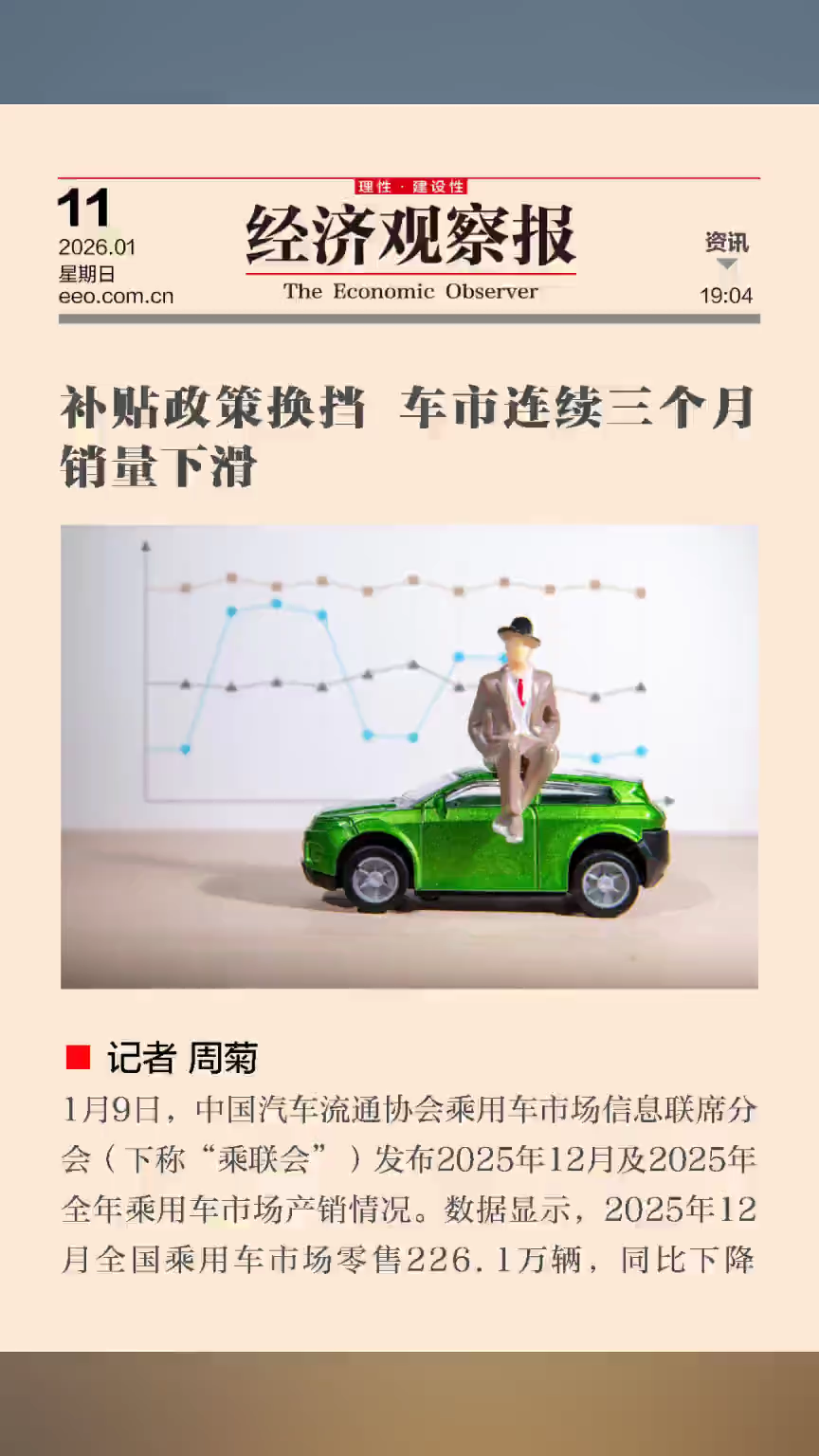
Subsidy policy shifts, car market sales decline for three consecutive months
HSBC reports that gold prices may hit the $5000 mark in the first half of the year, with market expectations that silver prices will continue to rise

How can Herm ? s in the mobile phone case industry make young people rush to buy it?


 WeChat registration or login


 Subscribe
