2026-11-10 20:21


On November 9th, Qianwen Office updated its version. Unlike other AI office products, Qianwen Office has introduced the concept of team agents, which directly addresses the pain points faced by enterprises when using AI tools.
Since the beginning of the year, the focus of AI office services has shifted from individuals to enterprises. Qianwen Office has been paying attention to the needs of enterprises for a long time, and this time it takes it a step further by allowing multiple agents to collaborate simultaneously at Qianwen Office. For users, this means they no longer have to go through chat records one by one. The digital employee "Little Q" can directly read into multiple DingTalk groups, documents, and tables, automatically consolidating scattered progress, to-do lists, and disagreements. Whoever confirms what and who still lacks information can be seen at a glance.
Industry insiders believe that the update of Qianwen Office is a differentiation of AI office. In the past half year, the industry has been focused on "AI helping individuals do better". Qianwen Office has pushed the competition to the next level, competing whether AI can enter the organizational collaboration site and catch the information flow between people and groups. Its value lies not in having an additional assistant who can write articles, but in elevating "personal efficiency" to "organizational efficiency", assigning repetitive tasks to agents, and leaving judgment and decision-making to humans.
The enterprise market is a larger market for AI office, but enterprise customers also have stricter requirements. Consumer grade AI can attract customers through stunning demos, while enterprise level agents need to consider three things: whether the context is truly connected to the business, whether the permissions are controllable, and whether the results are auditable.
Human to human agents are aligned
The most unexpected scene at the Qianwen Office 2.0 press conference on November 9th occurred in the second half. Talk show actor Wang Mian is serving as the client for Qianwen Office, and he has come up with an almost impossible idea: to create a cosmic level variety show that turns Earth's troubles into a cosmic joke.
Then, he didn't do anything and watched as the AI turned this idea into investment PPT, program list, stage design 3D scene, and automated scheduling. The conditions he gave were a budget of 20 million yuan, two S+and four A-level artists. In the demonstration, the agent breaks down the process into to-do lists and submits 12 pages of investment PPT, 22 program lists, and a 3D stage. Regarding the achievements of Qianwen Office, Wang Mian said that the demands are so unclear and the time is so short, achieving this is already very up to standard.
The special feature of this case is that Wang Mian did not write the solution using AI alone, but put people+people+digital employees into the same collaborative space. As a producer, Wang Mian brought product manager Wang Zhen and collaborators such as Shu Junliang and Kazik into the project. In the project group, the digital employee "Wang Mianfen Mian" is not Wang Mian's personal assistant, but a public member of the project, and anyone can @ it in the group. In this group, each person has a corresponding role arrangement, some are responsible for coordinating with artists, some are responsible for rehearsals, and ultimately multiple people work together with the agent in the same project to generate the results that Wang Mian wants.
If we follow the conventional industry process backwards, this output usually requires 8-12 full-time positions and 4-8 consecutive weeks; If the complete project proposal, platform meeting, and investment roadshow are included, it will take 10-15 people and 2-3 months. And Wang Mian and his digital staff "Wang Mianfen Mian" only took a few dozen minutes on site.
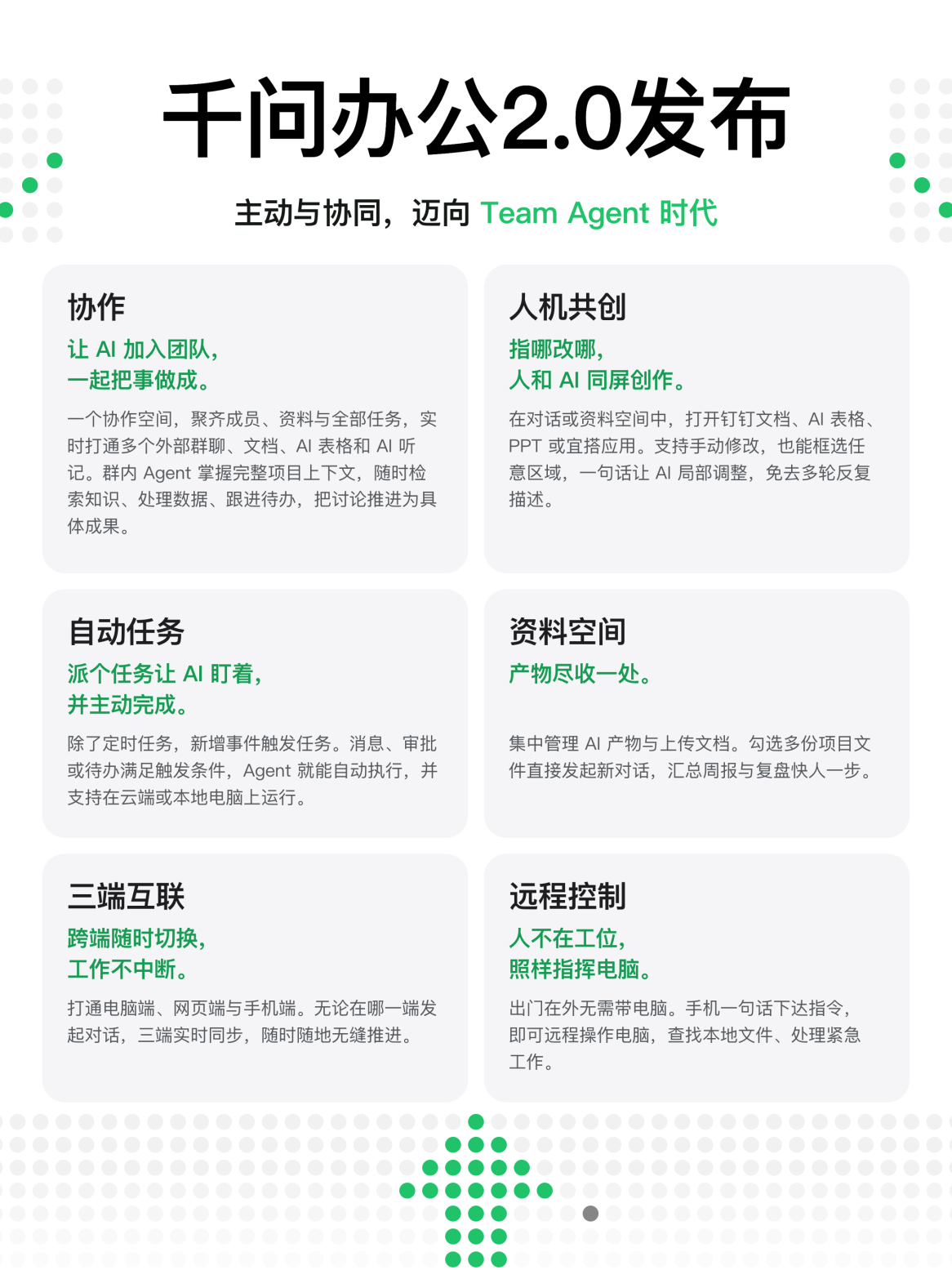
The core positioning of Qianwen Office 2.0 is "Team Agent", which solves the process of aligning people. Shu Junliang, Vice President of Qianwen Office, explained that in the past, everyone worked with their own AI, but people still had to align face-to-face, and organizational efficiency did not improve. Qianwen Office 2.0 has changed this logic, making AI a member of the team, where people and AI advance the same thing in the same space, and even AI and AI can have direct conversations.
Yintai also has a similar case. The group buying coupon business under Intime Department Store requires a coupon to go through the schedule, verification, production, and release process from submission to listing. Nearly 50 pieces of information including name, price, expiration date, applicable stores, materials, etc. These pieces of information are scattered across more than 60 groups. The daily task of the operation personnel is to search through chat records group by group, manually piecing together who has submitted, who has not submitted, and which table is missing one item, and then urging the next round of people. For this business alone, Intime has five operational personnel dedicated to it.
After testing the "collaboration" function of Qianwen Office 2.0 internally, Intime has associated over 60 store DingTalk groups and coupon AI tables into the same collaboration space. During testing, Qianwen Office can summarize the progress of each group, update tables, regularly check which coupons can be put on shelves and which materials have not been completed, and remind the corresponding responsible person.
This is what we mean, turning the context and digital employees mentioned in the past into tangible and easily accessible functions, "said Shu Junliang.
Why Qianwen Office
In addition to Team Agent, Qianwen Office has also launched several other core capabilities, including human-computer co creation, data space, automated tasks, and three terminal interconnection. The commonality of these functions is that they are all designed to address the pain points of enterprises.
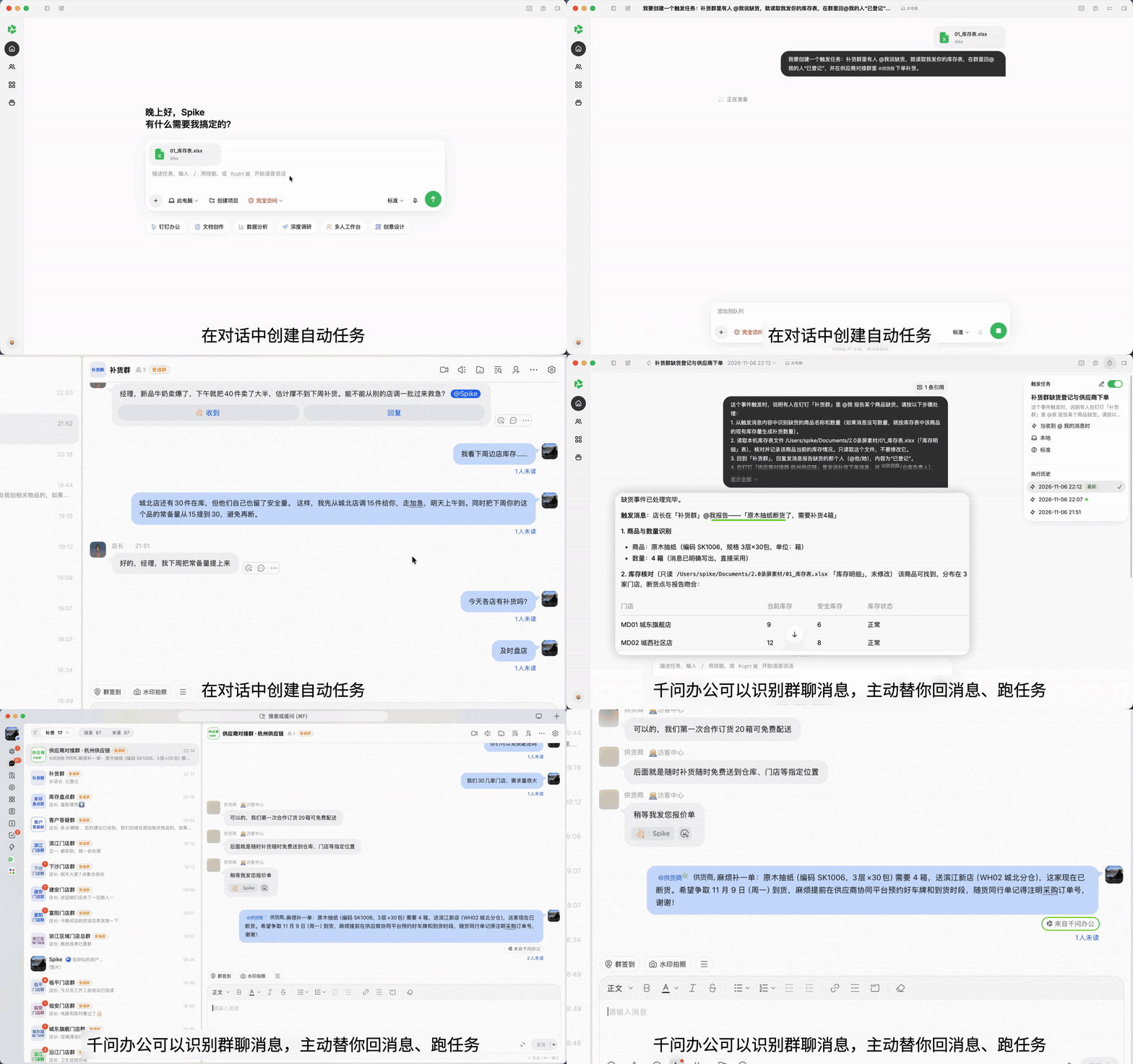
For example, automatic tasks allow agents to transition from being assigned by others to being initiated based on business events;
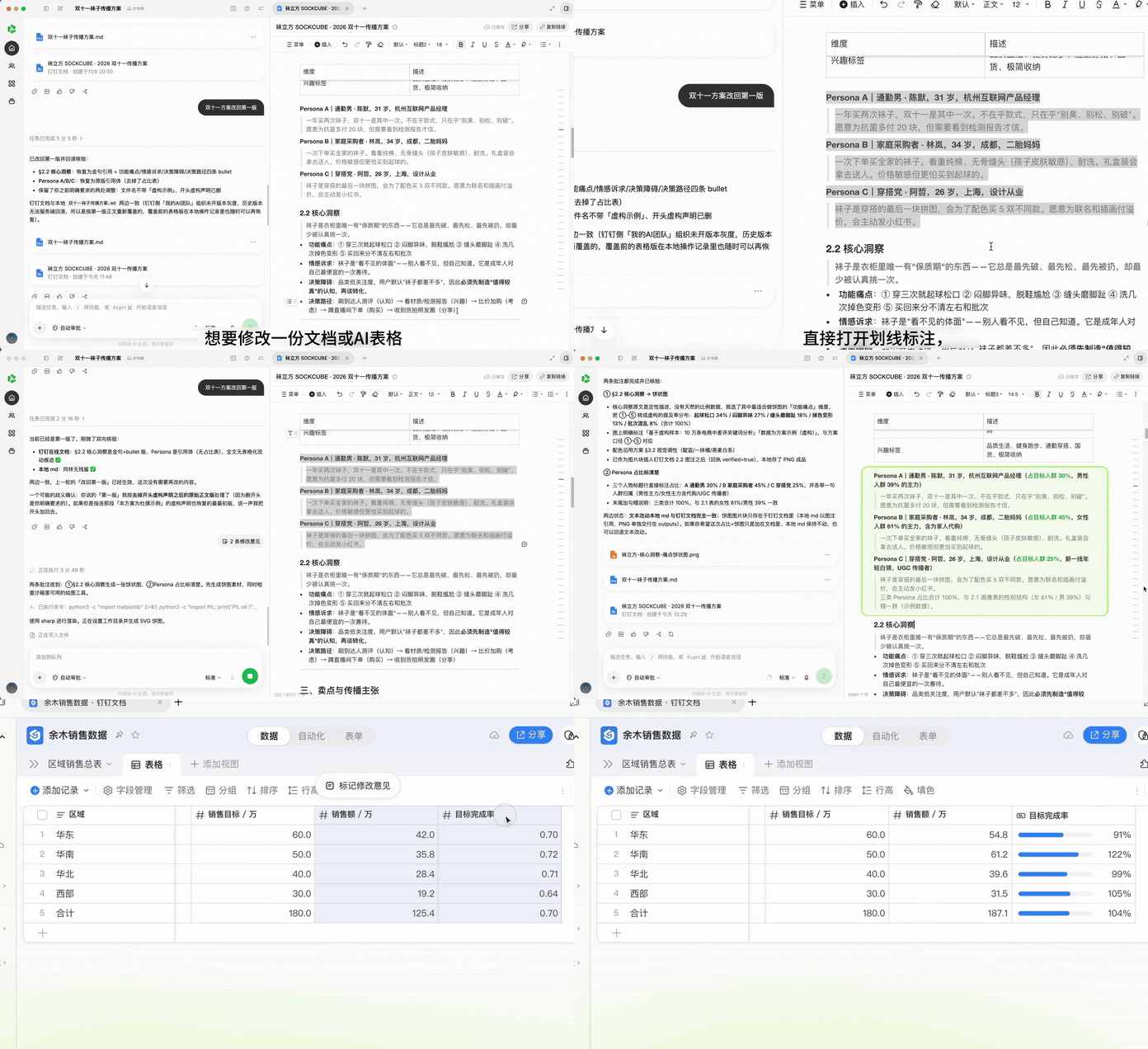
Human machine co creation makes the results themselves a common work interface;
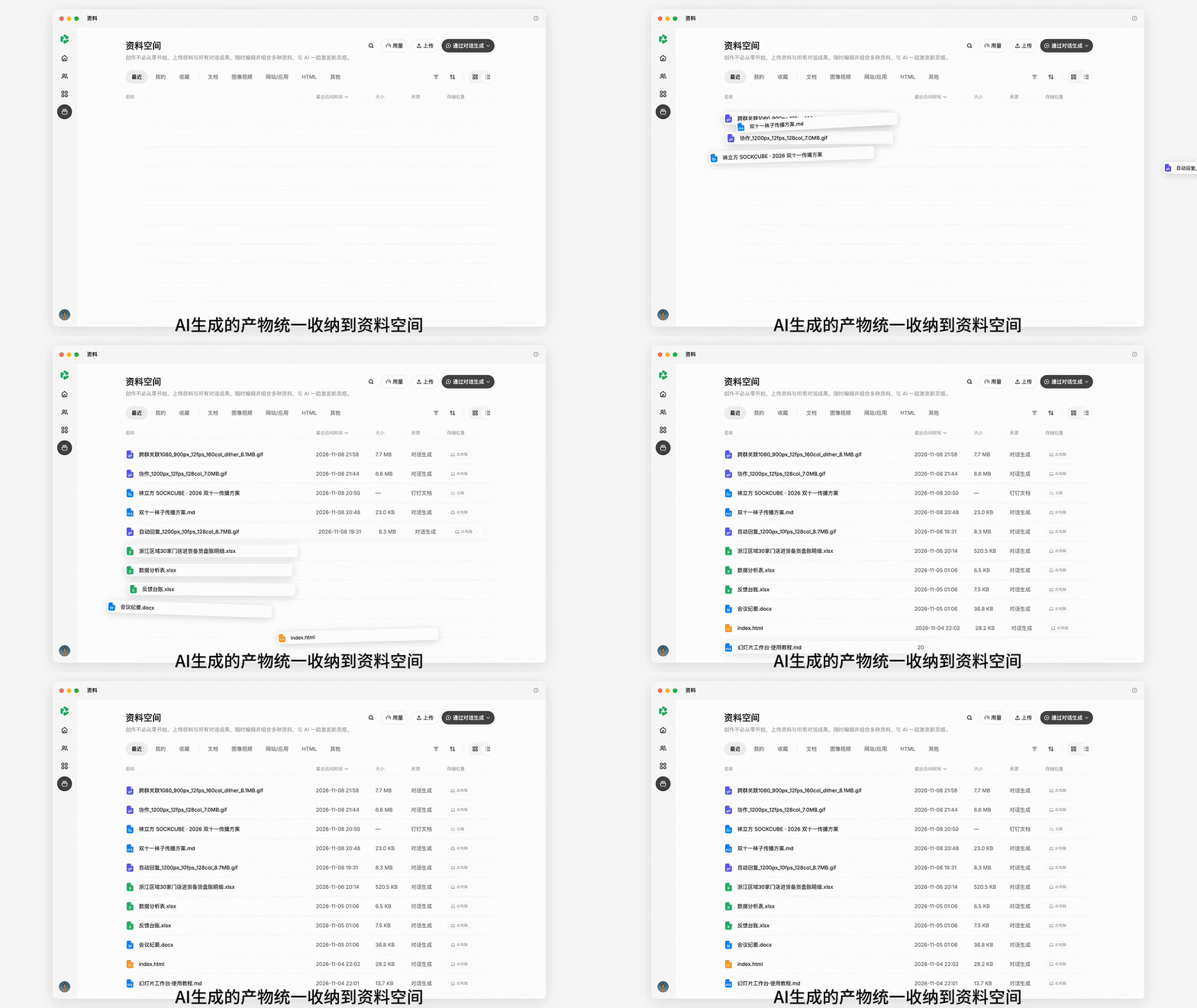
The data space allows the results of the previous task to move on to the next task; The integration of cloud computing and open customization capabilities allows agents to enter more businesses.
After these abilities are combined, Qianwen Office 2.0 forms a complete collaborative loop: events trigger tasks, and the cloud advances work first; Digital employees work around a common background, and the team captures judgments and confirmations; People and AI continuously modify the same outcome, data is reused, and professional business systems undertake subsequent operations.
In the form of "multiple people sharing project context with the same agent in the same collaborative space", other competitors on the market currently do not have similar functions. Tencent WorkBuddy and ByteDance are both increasing their focus on enterprise scenarios recently. The former connects Tencent Documents, Tencent Meeting, Tencent Cloud, and ima, while the latter is deeply integrated with Feishu; But in terms of multiple people and the same agent sharing a project context in the same space, we have not seen a second company release the same product yet.
The functions launched by Qianwen Office are related to the enterprise requirements received by the product team. Shu Junliang mentioned that Qianwen Office 2.0 was developed after continuous communication and co creation with many clients in the past few months. He himself has a deep understanding of the AI collaboration problems encountered in teams. Previously, AI office mainly focused on individuals working with their own AI. When work required team collaboration, people still needed to sit in the same meeting room and align themselves. He believes that this is very slow for internal collaboration within the enterprise.
What Qianwen Office wants to solve is to repeatedly align people with each other. Shu Junliang said that the ideal state of future enterprise collaboration is for employees' agents to collaborate more efficiently and even communicate directly, thereby improving organizational efficiency. Only by doing so can the operational efficiency of the enterprise be truly improved.
Qianwen Office can associate information sources such as DingTalk group chats, listening and recording, tables, and documents as collaborative contexts, supporting multiple sessions in parallel, as well as task management and assignment. Qianwen office product personnel said that it will soon support platforms such as Feishu, and mainstream applications can be associated with it.
The ability to quickly launch AI functions for enterprise collaboration is related to the genes of Qianwen Office. In August of this year, Qianwen Office launched for the first time and defined itself as an enterprise level agent product. The multiple functions launched afterwards are mainly focused on office capabilities. In September, the first industry multi person workbench was launched, and in the same month, the enterprise context was released at the Yunqi Conference. On October 14th, the e-commerce version of Agent was launched. An insider from Qianwen Office said that since its launch, Qianwen Office has understood that in order to create enterprise level products, the product form has evolved based on the real needs of the enterprise.
AI office enters the second half
In early 2026, the popularity of OpenClaw drove the rise of AI office. Compared to GPT conversational products, AI is no longer just about "asking a question and getting an answer", but a partner that can break down tasks, call tools, operate software, and ultimately deliver results.
Up to now, AI office has become a competitive place for Internet giants. Tencent WorkBuddy will be fully launched in March this year, and Alibaba Qianwen Office will start public testing in August; On August 25, ByteDance officially released the beanbag work. QuestMobile judged in its September report that the three legged structure of the office agent race is beginning to emerge.
In the first half of the year, AI office products were mainly targeted at individual C-end users, such as summarizing documents, organizing minutes, writing weekly reports, and making presentation PPTs. As the end of the year approaches, the trend of AI office is becoming more apparent. To capture enterprise users and solve their needs, Qianwen Office currently has greater ambitions in this regard.
On September 4th, Qianwen Office announced that its full month user base had exceeded 30 million, with more than half of its enterprise users. On November 9th, Qianwen Office incorporated the concept of Team Agent into version 2.0. Shu Junliang said that if all internal processes of the enterprise can be streamlined, the operational efficiency of the enterprise is expected to be significantly improved.
At the press conference, Digital Life Katzk mentioned that Qianwen Office has a very big goal, "actually surpassing all the collaborative office scenarios we have described in the past." If Qianwen Office can accomplish this, "it will become a top-level building.
From a business perspective, enterprises usually have stronger payment capabilities. The price tag for the personal end has been set very low, and most of them are still in the stage of attracting new customers and providing subsidies. But the office products on the enterprise side are all real expenses, and the unit price per customer on the enterprise side is relatively higher.
In the field of AI office, there are already some clear commercial data available overseas. Microsoft disclosed in July that the paid seats for M365 Copilot exceeded 30 million; Benchmark clients include NHS England (planned to cover 505000 healthcare and administrative staff) and KPMG (global expansion of 276000 employees). Salesforce disclosed that Agentforce's single product ARR reached $800 million (+169% year-on-year), with a cumulative transaction volume of 29000 since its launch. If the Data 360 consolidation caliber is included, the ARR exceeds $2.9 billion.
However, the personal efficiency of AI office products has been significantly improved, but the enterprise level value is still climbing. According to IDC data, over 60% of Chinese enterprises are still in the stage of understanding, evaluating, and piloting, while only 18% have incorporated intelligent agents into their core business processes. In McKinsey's global AI survey released in August this year, 80% of respondents said that AI has improved personal work efficiency, while only 37% said that AI has had a positive impact on companies' pre tax profits. In the future, whoever can truly solve the pain points of enterprises will truly win in this AI office war.