2026-11-09 20:27

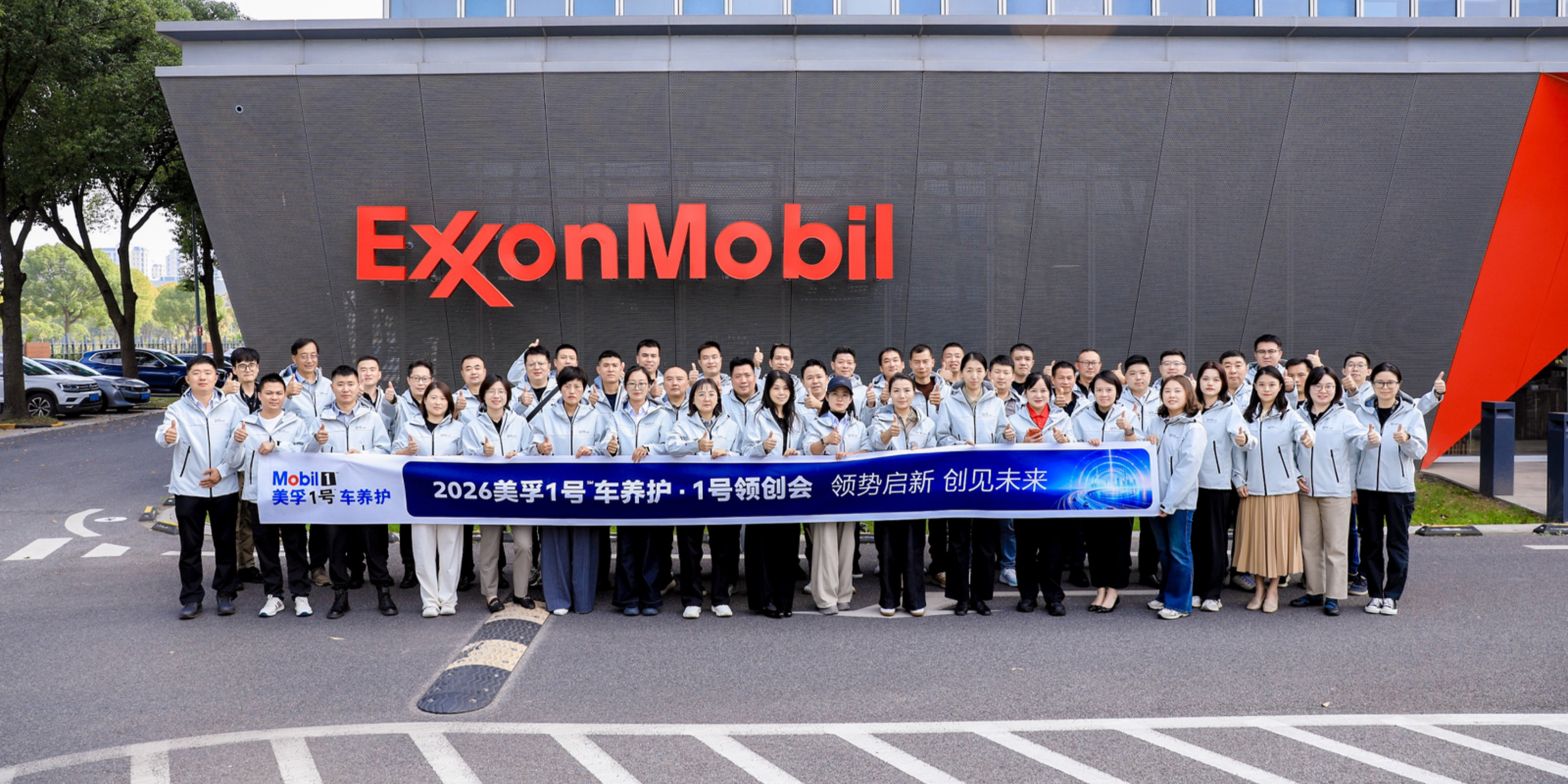
Recently, the maintenance of Mobil 1 vehicle has just concluded an event called the "No.1 Leading Innovation Conference". This is a customized training and in-depth communication activity for core franchisees, without any live broadcasts or grand strategies. The entire event focuses on one thing: empowering franchisees and enhancing store management capabilities through co creation and learning.
In the past few years, such closed door discussions on deep cultivation and operation may not have become an entry point for observing chain car maintenance brands. The industry tends to focus on franchisee conferences, new store numbers, and strategic press conferences, where there are more lively events.
But this year is different. The Chinese automotive aftermarket is entering a new stage of high-quality transformation, and this closed door training session focused on store management is actually more indicative than the investment conference: why does Mobil 1 car maintenance gather core franchisees to jointly study how to deepen and solidify store management?
The answer lies in the new development pattern of the aftermarket. With the steady increase in the penetration rate and ownership of new energy vehicles, the maintenance market for fuel vehicles has entered a period of structural reshaping, and the competitive logic of the industry has iterated accordingly. The market bids farewell to the era of high-speed increment and enters a new stage of intensive cultivation of stock and value priority.
The maintenance data of Mobil 1 provides a reference system. As of the end of the third quarter of this year.The revenue and number of visits to the active stores in the system are both better than the overall industry level. At the same time, the number of transactional users increased by 11.6% year-on-year, with 44% of high-end car models priced at 300000 yuan or more entering stores, and customer satisfaction reaching 98%Against the backdrop of overall industry pressure, this set of data presents a solid and robust development resilience.
Where does this development resilience come from? Understanding this closed door meeting cannot be simply seen as a franchisee training. It represents the key decision made by Mobil 1 vehicle maintenance during the industry transformation cycle: as the marginal returns of expanding the number of stores decrease, can resources be directed towards the "slow variable" of store operating capacity to better cross the cycle? This issue is more important than the activity itself. To answer it, we need to go back to the response system of Mobil 1 vehicle maintenance and see where it has put its efforts.
The aftermarket has changed, and the survival logic of stores has also changed
The automotive aftermarket in 2025 presents a glaring contrast. The total number of passenger cars in China exceeds 320 million, but the total output value of the maintenance industry is expected to slightly decline to 1.15 trillion yuan, a 4% decrease from 2024.
For an independent maintenance store, the question is no longer whether it can repair a few more cars this year than last year, but whether the store can still be accounted for under the combination of fewer car repairs, lower unit prices, and rigid costs.
In the past five years, the total number of aftermarket stores has shrunk from 590000 in 2020 to 400000 to 420000 in 2025, with a net decrease of approximately 170000; The chain rate increased from 16% to 29% to 34% during the same period, almost doubling. Numerically speaking, chain brands are taking over the space left by inventory stores.
However, the increase in chain rate does not automatically equate to the improvement of franchise store management capabilities. Even for stores that have already hung their chain signs, a considerable number have only completed the step of "listing" - changing their brand identity. However, their business model still follows the inertia of the past single store era: relying on natural traffic to wait for customers to come, relying on oil maintenance to support their flow, and lacking the ability to target management, data diagnosis, and actively acquire customers.
The "White Paper on the Development of Automotive Aftermarket Chain Enterprises (2025)" jointly released by the China Chain Store Association and Roland Berger judged that the increase in chain rate "has not automatically solved the deepest contradictions in the industry", and the tension between chain expansion and single store profitability is still intensifying. The industry direction needs to shift from scale expansion to efficiency improvement.
The brand headquarters has produced logos, supply chains, and traffic entry points, but how many brands truly have an executable and replicable business method, and can firmly promote its implementation, making it a daily action that stores do and continuously improve every day?There is no shortage of chain brands in the industry, what is lacking is a chain system that can truly integrate business capabilities into the daily operation of individual stores.
In the second year of the Star Alliance Plan, with multidimensional empowerment, what will the stores do
In June 2025, on the occasion of the fifth anniversary of brand renewal, Mobil 1 vehicle maintenance officially launched the "Star Alliance Plan" and announced the investment of special support funds,Focusing on the "re evolution" of the three core competencies of brand power, marketing power, and operational power.
If we only understand the Star Alliance plan as the headquarters increasing resource allocation, we have missed its true direction. At the franchisee conference in September 2025,The qualitative assessment of the Star Alliance Plan by Mobil 1 vehicle maintenance is "the core strategy to assist store development", and its goal is to transform macro strategies into tangible and executable actions for stores. In other words, the key to whether resources can generate value lies in the store's ability to convert resources into business results.
In the second year of the Star Alliance plan, the focus is shifting from "what the headquarters has given" to "what the stores have learned and what changes have occurred in the accounts".
Brand power is most likely to become a function word in the franchise system. The biggest fear of a franchise store is not the lack of brand, but the fact that the brand is only on the doorstep and not in the customers' decisions. The direction of empowering the brand power of Mobil 1 car maintenance is to transform the headquarters' brand investment into a reason for the stores to be "selected", so that the stores can have an additional set of trust assets to leverage in their daily operations.
In 2025, the maintenance officer of Mobil 1 announced that Fan Zhiyi would be appointed as the brand experience officer, and jointly signed and released the "Worry Free and Good Store Service Declaration" with selected stores across the country, breaking down the brand proposition into service commitments that consumers can verify. In September of the same year, celebrity technician "Fubao" joined the company with a personified image of a snow leopard, placing the abstract label of "professional" on a warm and recognizable symbol. This year, the store side is synchronously promoting the brand image 2.0 renewal and quarterly exhibition updates, making brand perception not only stay online, but also enter the consumer's in store path.
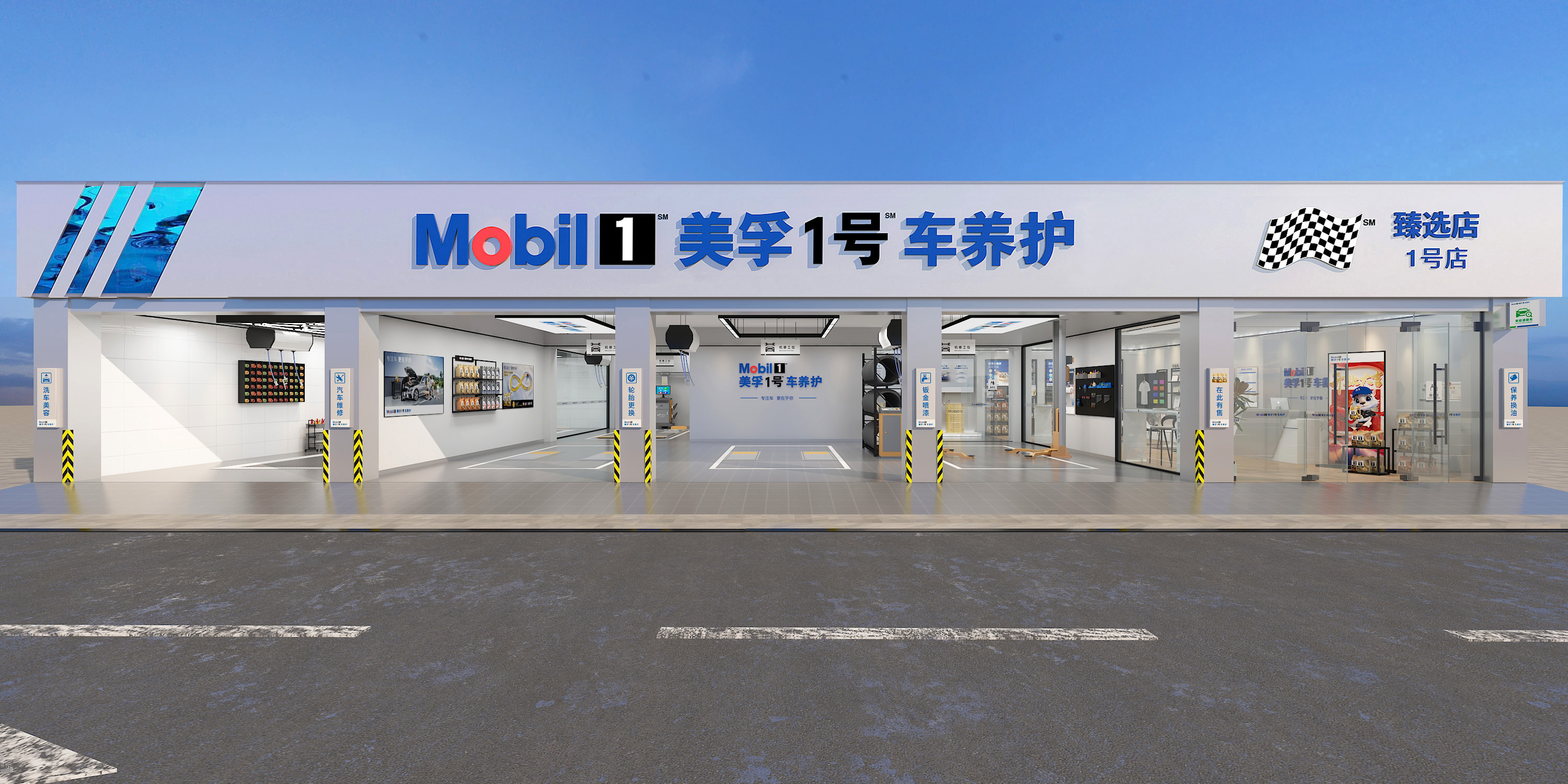
Marketing power is the most direct aspect of store experience in the Star Alliance plan. The framework set up by Mobil 1 Car Maintenance for stores is a full chain traffic solution of "public domain drainage, store domain conversion, and private domain customer lock", rather than just opening an account and posting a few videos on a certain platform.
On the public domain end, the headquarters provides unified support of "tools+training+traffic", while encouraging stores to create content based on localization needs and strive for local traffic. On the store side, the brand headquarters has successively launched standardized maintenance packages for vehicle systems such as air conditioning, brakes, cooling, engines, and transmissions, allowing stores to have executable product combinations in "what to sell", rather than just passively waiting for customer demands. On the private domain side, customized content tools are used to enhance the connection between stores and users for repeat purchases.
The Baodian on Wannian Road in Shangrao, Jiangxi is a typical case. This store has been in operation for over 20 years and chose to join at the end of 2024 for a direct reason: the industry is changing too quickly, and the original business model of a single store can no longer keep up with the development speed. After joining, the boss's wife immediately participated in the offline new media operation course organized by Mobil 1 Car Maintenance, which is also one of the key measures to empower marketing in the Star Alliance plan. In addition, the brand has also established online marketing running groups, regularly pushing copy and video templates, and providing real-time guidance from online operation experts within the groups. After continuous practice, one of the works in the store exceeded one million views, and a single video brought about a cumulative output value of about 150000 yuan.
The operational capability is the most important and least visible among the three lines of the Star Alliance plan. The core focus of Mobil 1 vehicle maintenance is twofold: an annual business plan and a business diagnostic tool.
As of the third quarter of 2026, the maintenance of Mobil 1 vehicle has achieved 100% in online stores, with annual business plans formulated, phased implementation actions and regular reviews; The utilization rate of store operation diagnostic tools has reached 93%. The diagnostic tool covers 9 modules of store operation, with over 350 response strategies and nearly a thousand improvement actions built-in, capable of generating strategy combinations for specific problems in different stores.
The review process of a store in Shandong can reflect how this tool operates at the individual store level. At the end of 2025, the operations consultant found during the business review that the project conversion ability of the store was weak. The problem was not that there was no customer flow, but that after entering the store, they only knew how to change the engine oil. Operations consultants use diagnostic tools to track the conversion of maintenance projects in both store and technician dimensions on a monthly basis, providing data and corresponding improvement strategies to store owners. After a series of adjustments, as of September 2026, the sales of brake oil, brake pads, antifreeze, spark plugs, chassis parts and other items in the store have increased by more than 50% year-on-year, driving a significant increase in the overall gross profit of the store.
The "No.1 Leading Innovation Conference" appeared in the second year of the Star Alliance Plan and is not an isolated brand event.
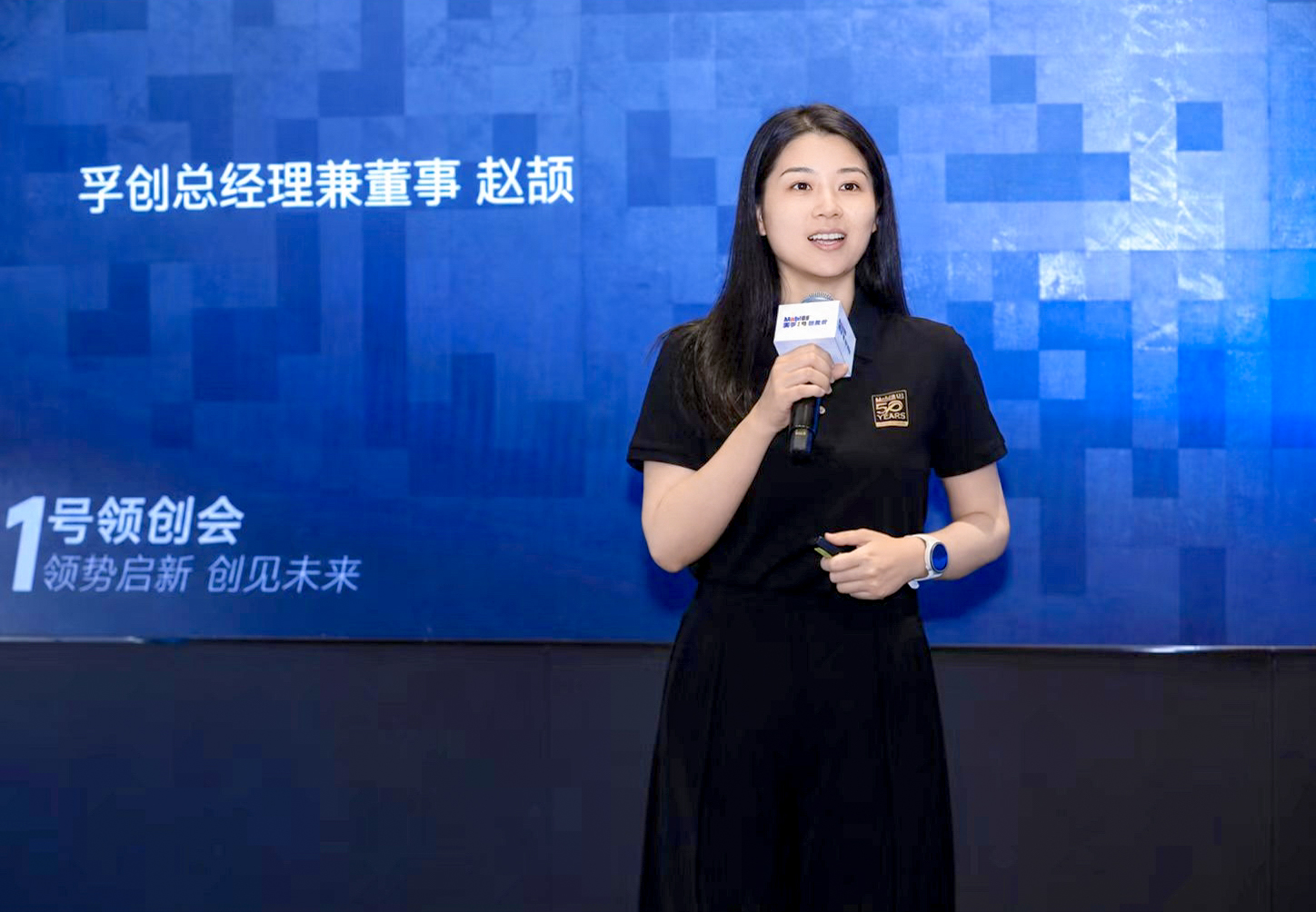
Leading innovation is not just about being one step ahead, but also about working together with partners to build a solid, broad, and long-term future, "said Zhao Jie, General Manager and Director of Shanghai Fuchuang Industrial Development Co., Ltd.
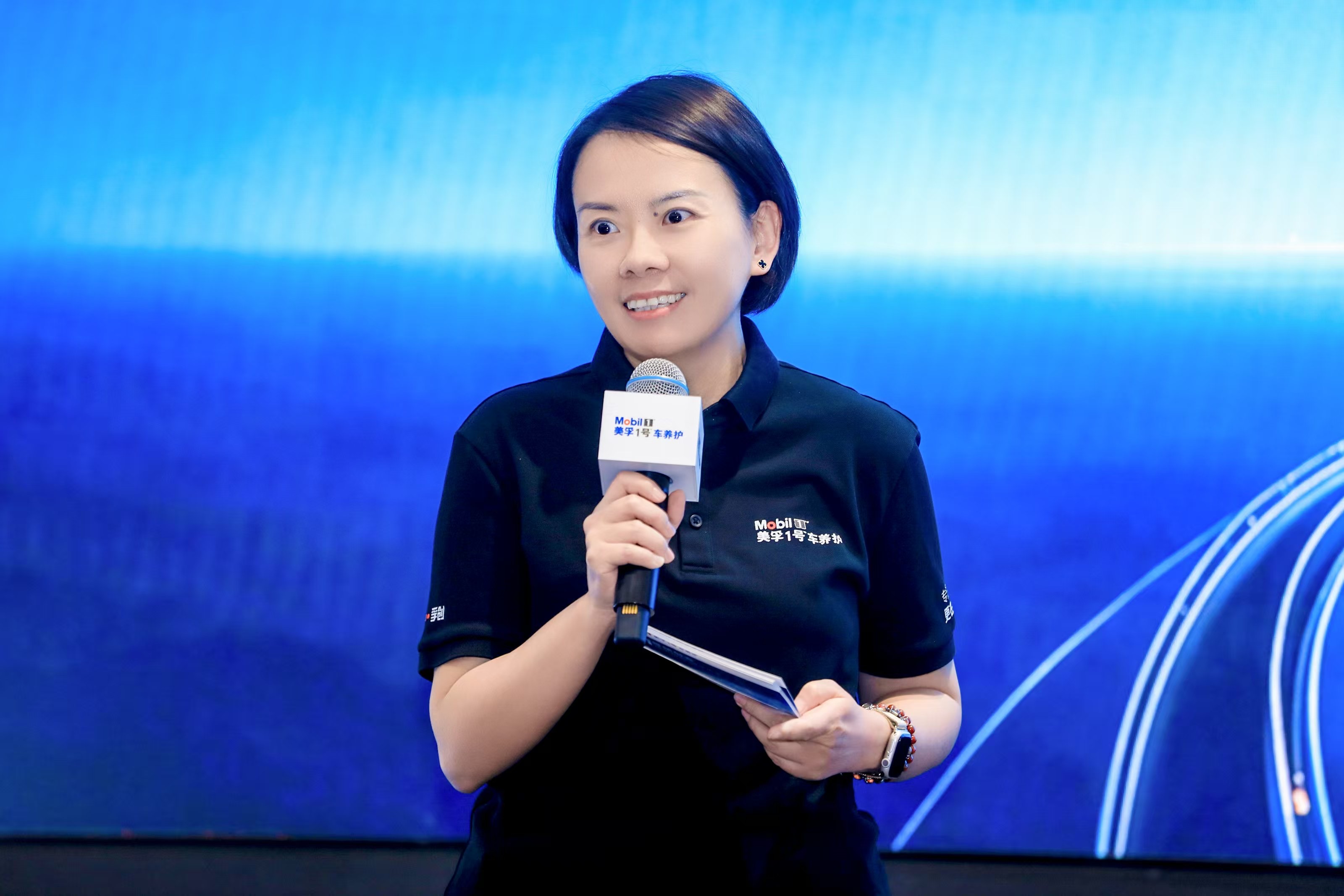
Wei Minjing, Executive Vice General Manager and General Manager of Consumer Business at Fuchuang, also made it clear about the positioning of the Leading Innovation Conference: on the one hand, listening to the real voice of terminals, gathering practical experience in stores, and incorporating frontline insights into brand strategic planning; On the other hand, through university training and visits to benchmark enterprises, franchisees can broaden their horizons and elevate their business models. Ultimately, the brand will consolidate frontline wisdom and research achievements into scalable and implementable business tools and empowerment solutions, achieving long-term win-win outcomes for both the brand and franchisees.
This means that the output of the Leading Innovation Association will flow back into the empowerment system of the Star Alliance Plan, and the real pain points discovered by the top stores in co creation will be transformed into optimization strategies to feed back the brand strategy; The practical methods of running stores have been developed into standardized modules that can be promoted to more stores, transforming "head experience" from individual cases into reusable business assets.
Professionalism does not rely on slogans, but on standards and training
Professional competence is the most easily written slogan in a chain maintenance system. Almost every brand claims to be "professional", but what truly distinguishes the system is the form in which professional abilities exist.The professional competence of Mobil 1 vehicle maintenance is developed from multiple dimensions including standards and training.
In March 2026, the group standard for "Electric Vehicle Fluid Replacement Operation Specification" was officially released. This is the first national group standard for electric vehicle fluid product services, managed by the China Association of Automobile Maintenance Industry, with Mobil 1 Vehicle Maintenance as the main drafting party.
The maintenance field of new energy vehicles has long lacked unified industry standards, and independent after-sales stores lack operational guidelines to follow when undertaking new energy maintenance projects. For a franchise store, the future "electric vehicle fluid replacement" is no longer a vague action that relies on the experience of a master to explore, but a service project with standards to follow, processes to track, and records to trace.
The standard defines what is right, but the standard itself does not enter the workshop on its own. Turning standards into actions in the hands of frontline technicians relies on training and testing, which is precisely the problem that the training system needs to solve.The training for the maintenance of Mobil 1 vehicle can be divided into two lines: one is training through competitions, and the other is daily training.
The "No.1 Selected Technician Competition", which has been held for seven consecutive years, carries the function of training through competition within the system. The 2026 finals concluded in Shanghai in July, with 20 technicians standing out from over a thousand participants nationwide. The base of over a thousand participants indicates that the coverage and participation of this competition within the system have a certain scale foundation.
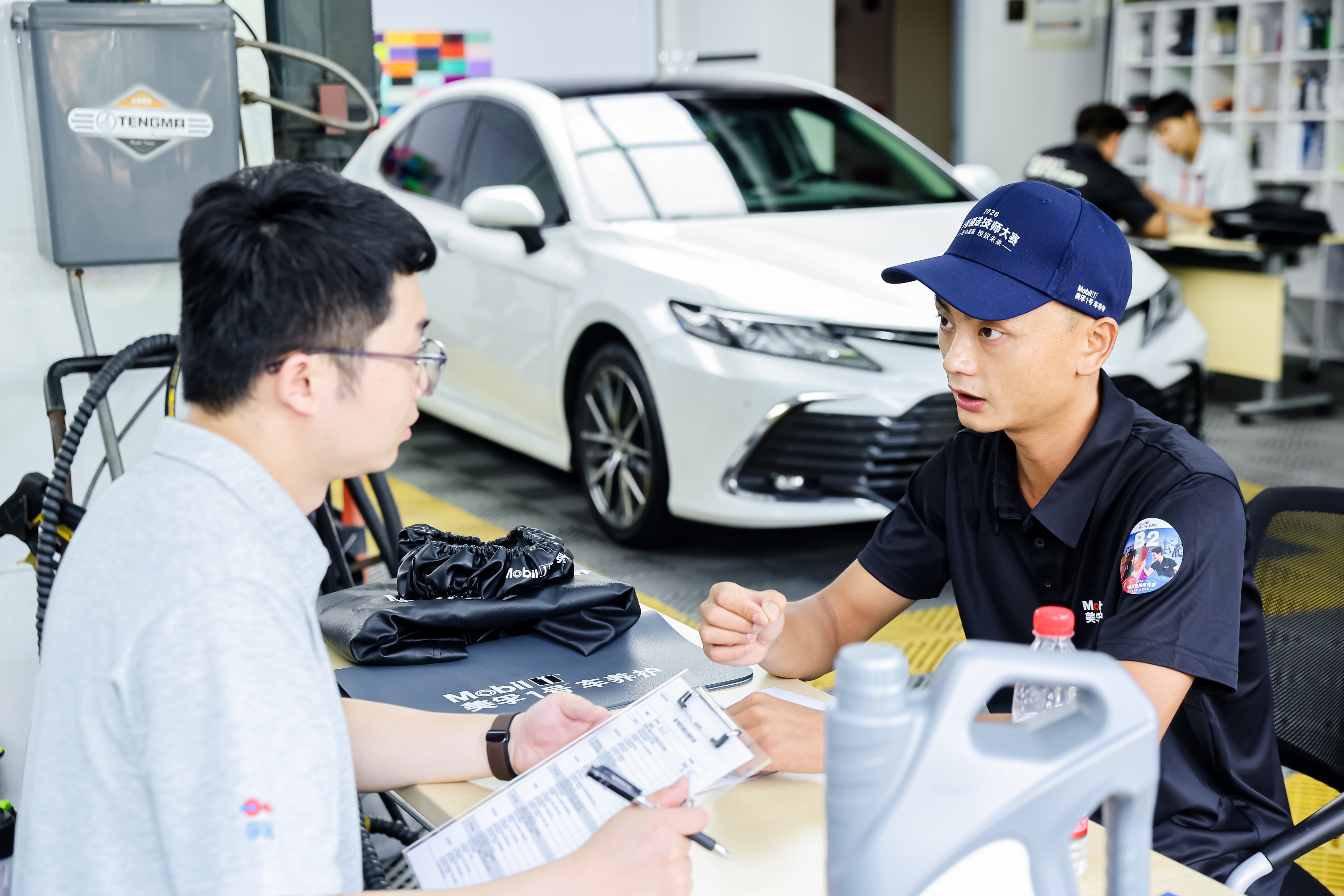
The competition system itself is also moving closer to real-life operational scenarios in stores: the offline skill track focuses on real maintenance scenarios, setting up six assessment modules including product knowledge, service processes, and fault diagnosis, and inviting previous champions to participate in proposition from the preliminary stage, making the exam questions closer to the actual needs of car owners; This year's competition has added an online traffic track for the first time, assessing three major modules: theory, short video production, and live streaming, to help terminal stores improve their digital operation level and reserve specialized talents. After the competition, the evaluation experts will focus on reviewing common issues and outputting optimization solutions, and returning the weaknesses in abilities exposed during the competition to the daily training and service processes.
Daily training covers more fundamental and sustained capacity building. Under the existing "1-5-4-4" talent training system (one training objective, five basic abilities, four job types, four training modes, and four level evaluation standards), Mobil 1 Vehicle Maintenance continues to enrich job specific skill training courses, offering 37 skill training courses in areas such as new energy and chassis, covering standardized training content such as products, services, and special projects.
In response to the capacity demands of the new energy era, the brand has established new energy training points in 13 cities across the country, relying on the school enterprise cooperation model, to facilitate technicians from various regions to participate in systematic training nearby. In addition, internal lecturers of the brand organization have obtained the qualification of new energy vehicle maintenance assessors from the China Association of Automobile Maintenance Industry, laying a professional foundation for independently conducting new energy capability training and level certification, and cultivating oil electric composite talents.
New energy and AI are stuck before the 'over guarantee trend'
When and how should a maintenance chain intervene in the era of new energy and AI, so as not to leave their stores with nothing in hand when changes come?The selection of Mobil 1 vehicle maintenance can be summarized as: front-end layout, system implementation, not chasing concepts, and rooted in stores.
By 2025, there will be approximately 3.5 million new energy vehicles that have been insured, and this number will increase to approximately 4.6 million by 2026. Combined with the early release of operating vehicles and early imported models, the insured scale will reach nearly 5 million by 2026, and the cumulative release of insured vehicles in the next three years is expected to exceed 10 million. Although the speed of incremental flow to independent after-sales is far from as fast as the numbers seem, the industry window has opened, and the real focus of competition is no longer waiting for traffic to naturally arrive, but whether the stores are ready to take on.
In terms of after-sales service for new energy vehicles, the strategic choice for Mobil 1 vehicle maintenance is very clear: prioritize the establishment of a service combination that can be undertaken at low cost and delivered in a standardized manner around "oil and electricity maintenance".
On the product side, relying on the accumulation of the Mobil brand and the independent product brand Fupei, we have completed the layout of the new energy core oil scene, laying the foundation for the implementation of new energy maintenance projects in our stores.
On the server side, we create professional testing services covering both oil and electricity systems, and customize maintenance packages for engines, air conditioning, braking, and cooling systems that take into account the characteristics of new energy vehicles. These "oil and electricity maintenance" projects happen to fall on the extension line of the existing supply chain and technological accumulation of Mobil 1 vehicle maintenance, and are also the high-frequency maintenance scenarios with the highest demand for new energy vehicles after they enter the store, relying most on standardized operating norms to ensure safety and quality.
The investment in the above products and services, combined with the continuous iteration of the new energy training system and supporting operational standards for Mobil 1 vehicle maintenance, together form a complete chain for stable delivery of oil, electricity, and maintenance services in the store.
Supported by a series of measures, as of the third quarter of 2026,More than 90% of Mobil 1 car maintenance shops have implemented oil and electricity maintenance services, and the order volume for new energy vehicles has increased by 50% year-on-year.
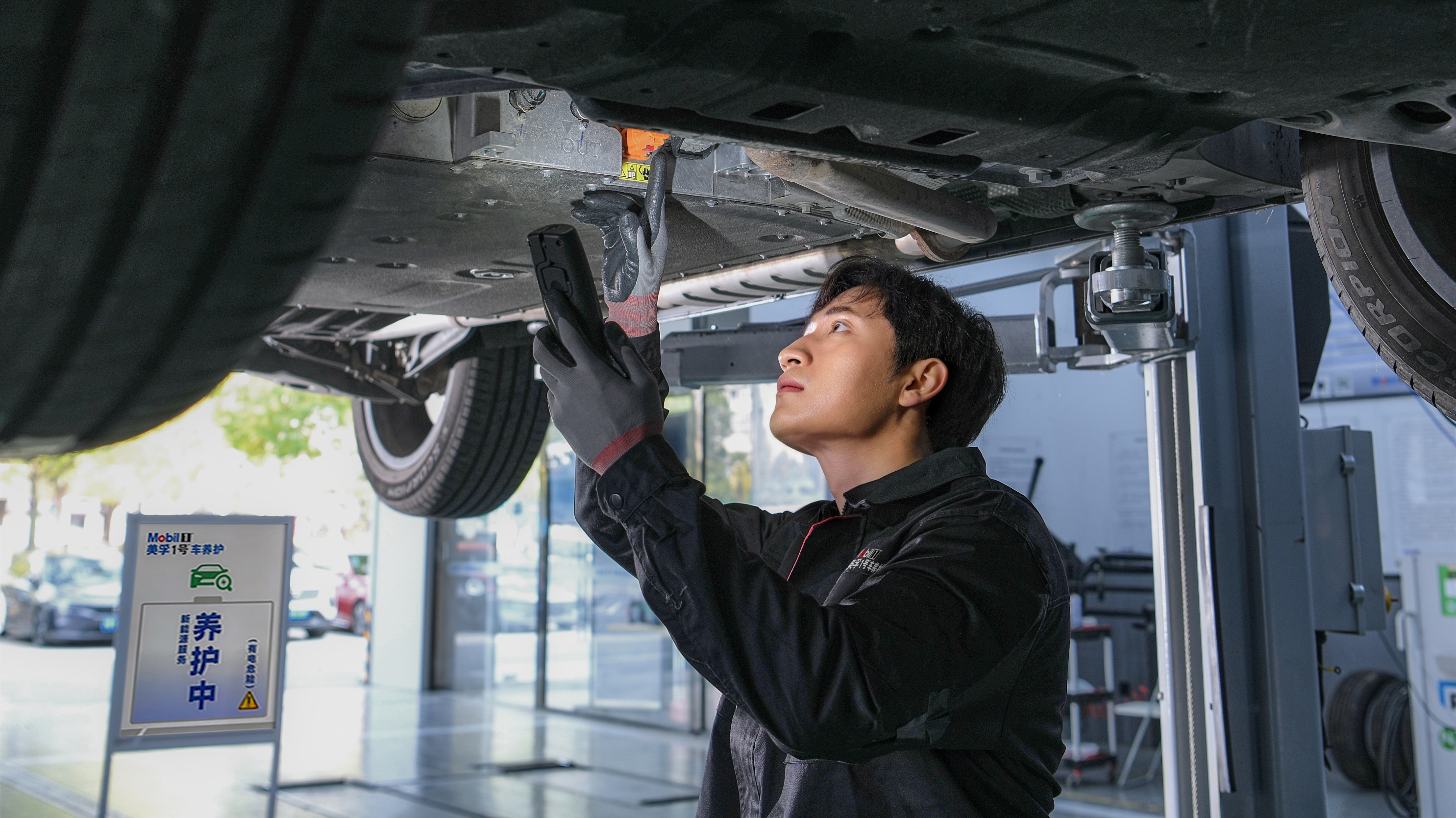
The narrative of AI in the automotive aftermarket is rapidly expanding, and many brands have begun to lay out their strategies. The orientation of Mobil 1 car maintenance on this issue is quite clear: not hype up concepts, only solve real problems in stores.
The application of AI in the maintenance of Mobil 1 vehicles starts with the usage scenarios at the store end, creating exclusive AI intelligent agents for the store, focusing on product dynamics, maintenance and operation SOPs, operation guidelines, marketing guidelines, industry dynamics, and other sections to answer real-time questions from frontline stores.
The second stage extends to more store operation scenarios, such as technicians with strong hands-on ability but not good at speaking, and stores unable to afford specialized sales consultants. These scenarios are empowered and supplemented by intelligent assistants.
It can be seen that the practicality of the layout of the AI system for Mobil 1 vehicle maintenance lies in the fact that each AI action is anchored to a specific efficiency pain point that already exists in a store, rather than having a technical solution first and then finding a scenario.
Combining the two lines of new energy and AI, beautifulThe layout rhythm of the maintenance of the Fu 1 car in 2026 has a common feature: standing in a good position before the window is completely opened, but the way of standing is that the ability is within reach and the store can use it, rather than using strategic slogans to overdraw the ability that is not yet possessed.
In Conclusion
There is no shortage of chain brands in the industry, what is lacking is a system that can integrate business capabilities into the daily operation of each store. The sample value of Mobil 1 car maintenance is not because it provides a replicable answer, but because it puts the problem in the right place: in the stock era, the competitiveness of chain brands ultimately depends not on how many meetings and documents are held at headquarters, but on whether those few lines of numbers look better than the previous year when each franchise store reviews at the end of the year. Longtermism is not a strategic slogan in the automotive aftermarket, but rather the continuous decline of single store management capabilities.