2026-10-02 09:00


Introduction: Differences are the prerequisite for the establishment of symbiosis
To establish the economics of carbon silicon symbiosis, the first task is not to design systems, but to answer a more fundamental question: what is the difference between carbon based intelligence and silicon-based intelligence?
This is not just a casual pen in computer science, nor is it a science popularization in biology. It is the fundamental problem of economics - because all exchange, collaboration, conflict, and governance are rooted in the inherent logical differences between the two intelligences. If the logic of the two is the same, symbiosis is just cooperation between the same species, without the need for a specialized "interface" or "translation". It is precisely because of the complete heterogeneity of logic that carbon silicon symbiosis is both difficult and necessary.
The task of this article is very specific: to break down the two types of intelligence from three dimensions: biological basis, decision-making mode, and economic advantage. The conclusion is given first:Differences themselves are the sole source of collaborative value.
1、 The economic logic of carbon based intelligence
1.1 Limited rationality is not a flaw, it is a survival strategy
Carbon based intelligence is constrained by the physical constraints of the brain. Herbert Simon pointed out seventy years ago that humans pursue "satisfaction" rather than "optimality" because accurately calculating the energy consumption of each option far exceeds the body's supply capacity. This is not laziness, it is an efficiency strategy of biological evolution - the brain only accounts for 2% of body weight, but consumes 20% of energy, it must be used sparingly.
Bounded rationality also manifests as cognitive bias and heuristic thinking. These 'irrationalities' may be shortcuts in simple environments, but they can lead to systemic biases in complex economic systems - people may become overconfident, lose aversion, and reverse their judgments under group pressure. Old economics spent hundreds of years treating these biases as' noise that needs to be corrected '. Change the perspective of carbon silicon symbiotic economics:They are factory settings for carbon based intelligence, and you cannot bypass them. You can only design interfaces to hedge them.
1.2 Emotions are not distractions, they are navigation systems
The most easily misunderstood aspect of carbon based decision-making is treating emotions as enemies of reason. Neuroscience has long concluded that the brain without emotions cannot make any decisions. Fear drives people to avoid irreversible risks, greed drives exploration of new opportunities, empathy facilitates trust building in complex collaboration, and anger maintains a fair bottom line. A completely 'rational' person - stripped of all emotions - will be paralyzed at every fork in the road because no options come with their own weight.
Another characteristic of carbon based is social embeddedness. Every economic behavior is tied to trust networks, cultural norms, and institutional constraints. This makes it warm and resilient, but also makes it difficult to quantify - you can't give a precise confidence score to 'this person is reliable'.
1.3 Three irreplaceable carbon based things
Carbon based intelligence has three capabilities, and currently no silicon-based system truly possesses them:
These three decisions determine: the position of carbon based in the economic system is not 'execution', but rather'Setting the direction' and 'doing the final review'。
2、 The economic logic of silicon-based intelligence
2.1 Exhaustive optimization: finding the global optimum among millions of solutions
The core feature of silicon-based intelligence is to search for the global optimal solution under a given objective function, without being limited by cognitive bandwidth. Humans choose one option from ten that is' almost satisfactory ', while AI evaluates millions of options and prioritizes them at the same moment. This is not a difference in the magnitude of "fast calculation", but a qualitative change in the dimension of decision space - when humans are still using heuristics for approximation, silicon-based has already run the entire map in the parameter space. Its economic advantage is not to "replace people's thoughts", but to liberate people from the "incalculable" labor.
2.2 Zero fatigue and infinite memory
Silicon based materials do not have a circadian rhythm. No need for sleep, no judgment decline due to continuous operation, and no preference change due to emotional fluctuations. The calculation output is monotonically increasing - as long as the power supply and heat dissipation are continuous, the quality remains constant. This enables it to undertake high-intensity, long-term, repetitive cognitive labor that humans simply cannot bear.
Infinite memory is another crushing process: once stored, information never decays and retrieval speed remains constant. Humans cannot remember the change curve of a certain parameter three years ago, while silicon-based memory can - and it can be compared in real-time with the current data.
2.3 Inexpretability: The Source of Efficiency and the Death Hole of Trust
This is the most unsettling feature of silicon-based materials. The reasoning path of a large model is a complex entanglement of billions of parameters, and humans cannot trace 'why this answer was given'. Although carbon based decision-making is influenced by emotions, being able to articulate in language why I chose this way - interpretability itself is a part of carbon based decision-making.
Unexplainability is both a source of efficiency (black box computing is more free and less constrained by human language habits) and a barrier to trust: you cannot audit a collaborator who cannot articulate their thoughts clearly. This is not unsolvable, but the solution lies not in "letting AI explain itself" - the explanations it later compiles are often less reliable than the reasoning itself——The real countermeasure is to embed the carbon based veto power into key process nodesWhen it comes to governance later on, this is the biggest pitfall and will be specifically dismantled.
3、 The conditions and mechanisms of synergistic effects
3.1 Complementary division of labor: It's not about who manages who, it's about each managing their own
The premise of synergistic effect is that the ability structures do not overlap. When overlapping, there is only substitution, no complementarity.
Carbon based responsible for directional breakthroughs - proposing new ideas, goals, and value judgments, making leapfrog decisions in ambiguous areas. Silicon based is responsible for systematic optimization - translating fuzzy ideas into precise executable paths and exhaustively searching for optimal solutions under given constraints. Carbon based answers "where to go", while silicon-based answers "how to get there the fastest". The two are not interchangeable: making the silicon-based "directional" will cause it to deviate - it can receive and disassemble targets, but there is no intrinsic value anchor to answer "whether the target itself is worth pursuing". The faster a system without an anchor runs, the more dangerous it is; Exhausting carbon based would collapse - bandwidth is simply not enough.
3.2 Collaboration is already happening, and the premium is considerable
No need to fabricate data. Just looking at the real industry cross-section is enough: after digitizing the implicit knowledge of "adjusting parameters by hand feel" of old masters in precision manufacturing enterprises, the yield rate has jumped by more than ten points - the old masters have not lost their jobs, but have become "model trainers" and their value has increased. In the design industry, AI exhaustively searches for solutions and humans make the final "look wrong, make some adjustments" - deliverables with human fine-tuning certification, and customers are willing to pay a higher price. Why? Because humans have chosen to make changes in the most confident areas of AI, which is precisely the irreplaceable value signature of carbon based technology.
This is not futurism, it is the pricing reality that is happening.
3.3 Boundaries must be clearly defined: not everything is suitable for collaboration
Collaboration has boundaries. Tasks that heavily rely on tacit knowledge and situational judgment (such as complex personnel decisions, brand tone management, and on-site judgment in crises) are better dominated by carbon based approaches. For tasks that heavily rely on scale data processing and speed (high-frequency risk control, supply chain scheduling, multivariate optimization), silicon-based dominance is more optimal.
The most fatal rule is that the final judgment on carbon based materials must be retained. It's not because carbon based is smarter, but because the ultimate goal of collaboration is carbon based well-being - silicon-based doesn't ask "is this right or wrong," it only asks "is this the goal you asked me to optimize. Once the goal is written incorrectly, the harder it works, the worse it gets.
4、 The Economic Significance of Differential Management
4.1 Differences are not friction, differences are dividends
There is a simple truth in economics: there is only competition between two identical entities, not cooperation. The greater the difference between carbon based and silicon-based materials, the greater the complementary space. The core of management is not to eliminate differences (which is impossible and unnecessary), but to design systems to transform differences into collaborative motivation.
Treating carbon based emotions, biases, and limited bandwidth as' bugs to be fixed 'is the mindset of the industrial age. The thinking of the symbiotic era is: these are the factory configurations of carbon based materials, and you embed them as hard constraints into the objective function of silicon-based materials - silicon-based materials are responsible for running fast, but they will never hit those red lines.
4.2 Differential management requires a three-tier system
4.3 Summarize all relationships in one sentence
The purpose of carbon based provision and the method of silicon based provision; The definition of carbon based is' worth it ', and the optimization of silicon-based is' how'; The source of carbon based conservation significance and the frontier of silicon-based expansion capability. This is not a rhetorical battle, it is the complete operational manual of carbon silicon symbiotic economics.
Conclusion
Two types of intelligence, two sets of logic. Carbon based is limited by bandwidth, but has a sense of purpose and moral intuition; Silicon based materials are not subject to fatigue constraints, but lack the anchor point of 'why do they do it'. Understanding differences is not about distinguishing superiority or inferiority, but about turning them into a driving force for collaboration rather than a source of conflict - one says' where to go ', the other says' how to go the fastest', and only then can a bridge be built.
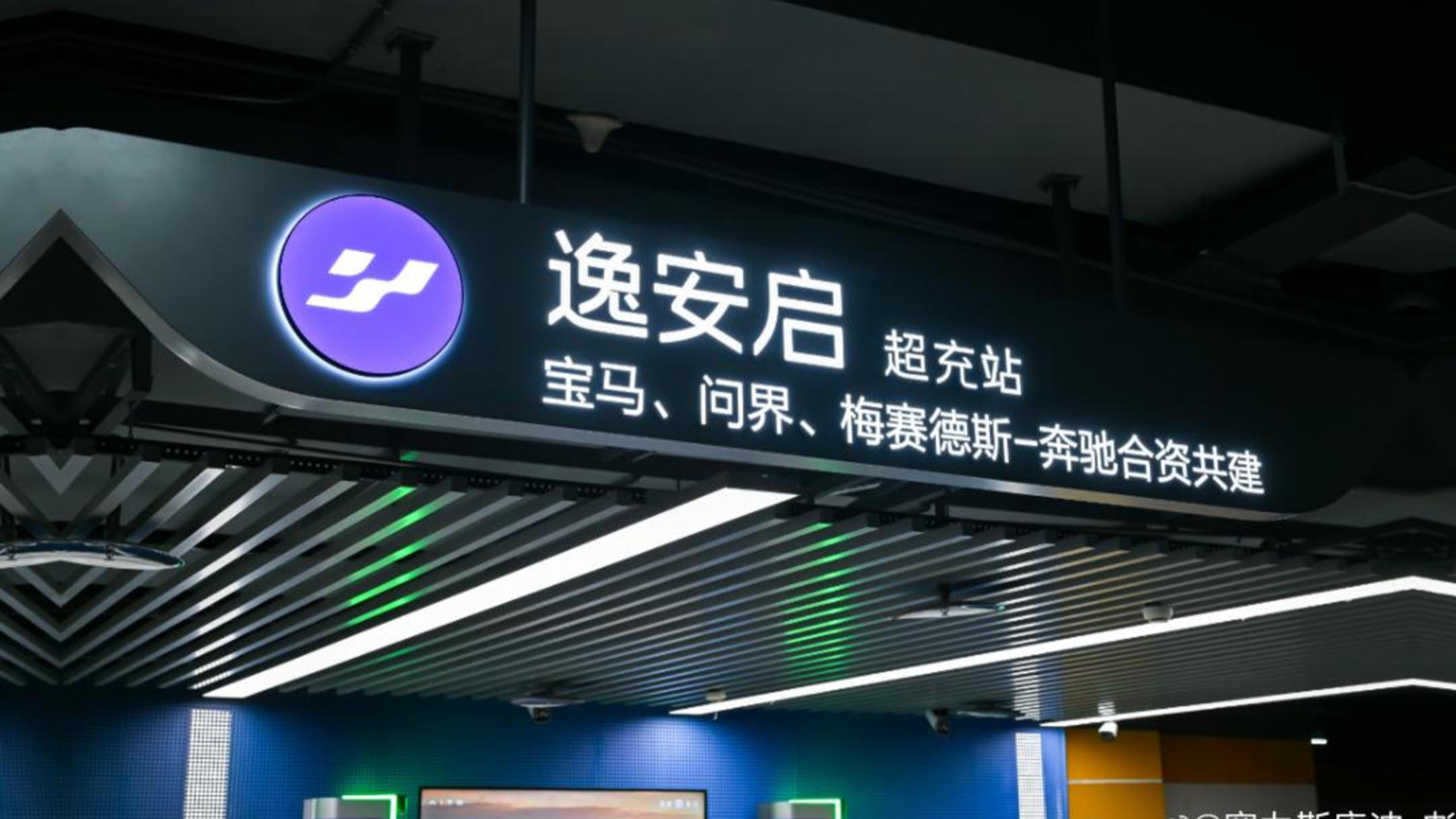
Xilinx officially announced that Wanjie has joined the Mercedes Benz and BMW supercharging camp, with over 600 stations directly connected
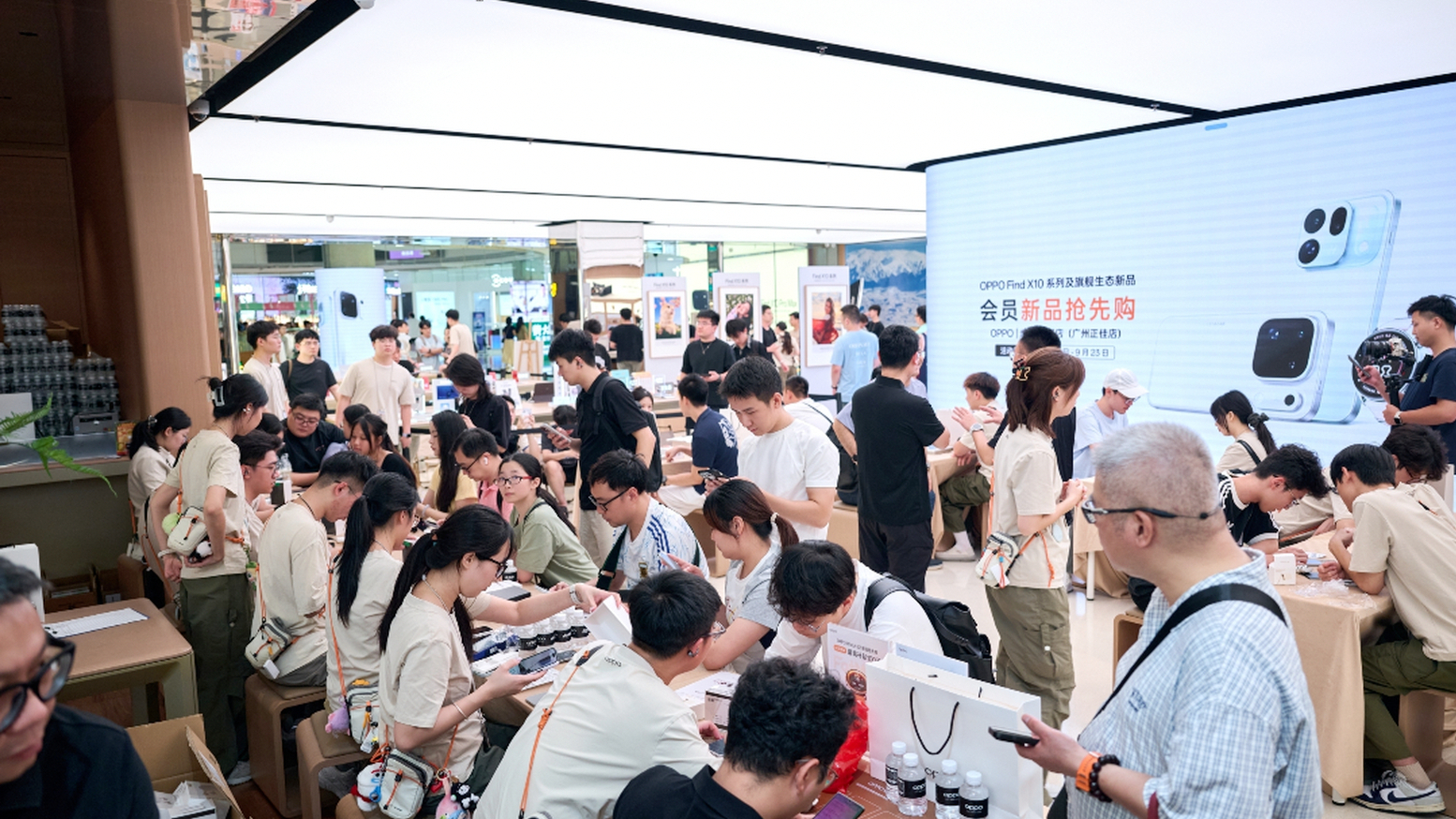
OPPO Find X10 tops sales on the standard version track

Technology Show | iQOO16 is now available for sale, under the name of Standard Edition, to meet the requirements of Pro Max product strength