Economic Observer Follow
2026-08-10 21:07


Economic Observer reporter Ren Xiaoning
When commercial model Seven Seas raised his phone and aimed the camera at his face to shoot a close-up video and uploaded it to the platform, the platform popped up a system prompt: "Suspected AI generated content", requiring the publisher to label the work with AI identification, otherwise it will be handled according to community rules. She has appealed multiple times without success.
As a commercial model with 320000 followers across the internet, Seven Seas has filmed advertisements for brands such as Armani, Tmall, and Ordos, and receives at least three commercial orders per month.
Until the end of March this year, fans told her that in an AI short drama "Peach Blossom Hairpin" with nearly 40 million views, there was a hot tempered cloth shop owner who would slap the female protagonist, curse and even kick dogs, with a 1:1 replica of her face. Even the mole on the corner of the mouth is impeccable. She just realized that her face had been 'stolen' by AI. After initiating rights protection, from April to June, Seven Seas did not receive any business orders.
It has become a difficult task for a living person to prove to an algorithm that they are themselves.
Some celebrities are beginning to agree to sell their 'faces'. On August 6th, Qi Wei opened up AI authorization for her own image, and the AI anime she starred in will also be launched online. Since June, Wu Qihua, You Benchang, Wang Zuxian and others have agreed to grant portrait rights to advertising or AI film and television production companies.
At the same time, an increasing number of "small and medium-sized internet celebrities" and even celebrities with tens of thousands to hundreds of thousands of fans have found themselves stolen by AI short dramas. They gradually joined the anti AI face theft rights movement. They don't want to become a free material library that is harvested in bulk.
If AI can easily strip individuals of their faces, how will victims protect their rights?
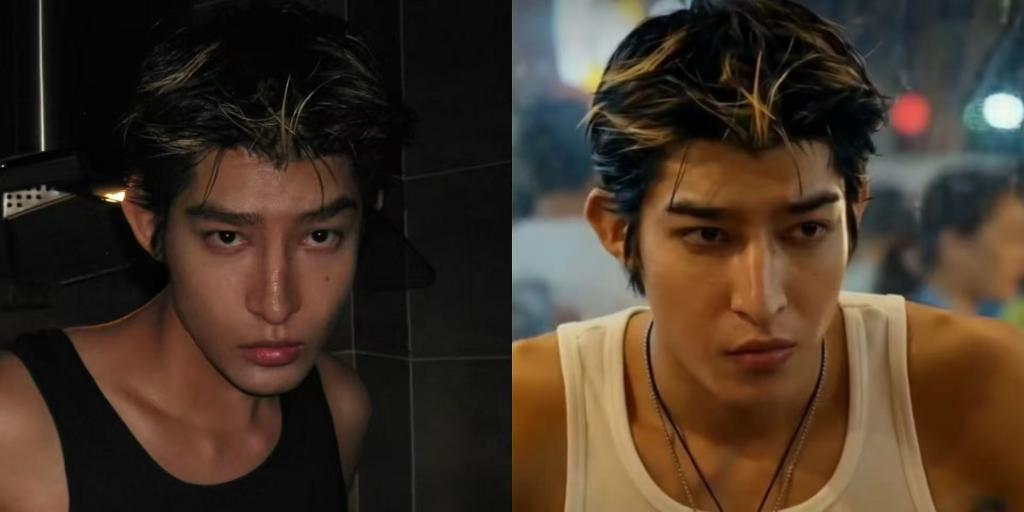
Face replicated 1:1
On the evening of March 30th, Qihai received a message from fans who claimed to have seen a face in the AI short drama "Peach Blossom Hairpin" that looked very similar to her and was suspected of tarnishing her image.
At that time, on the Hongguo APP, "Peach Blossom Hairpin" had nearly 40 million clicks. In episodes 11 to 15, there is a female cloth shop owner character with a slender face and a mole on her mouth. Qihai believes that the face of this character is a 1:1 replica of herself, suspecting that it was generated based on a set of photos taken by her in 2024.
The female shopkeeper in the drama is a hot tempered character who insults the female protagonist, slaps her, and kicks a passing puppy. Such a character stands in front of their own face and has no authorization from themselves. Seven Seas believes that this is tarnishing their own image.
The role of the female shopkeeper husband in 'Peach Blossom Hairpin' has also been publicly questioned for AI face stealing. This is an image of idleness, lust, and restlessness. The Hanfu makeup maker "Baicai" who is suspected of having his face stolen is also seeking legal protection, and the court has filed a case.
Self media blogger EnSerser also belatedly suspected that his face had been stolen by AI. At the end of May this year, a friend forwarded him a short drama video, saying that the male protagonist of the AI short drama looked like him, and he thought that there was an AI creator drawing based on his face. A few days later, after receiving more fans' private letters, he contacted the suspected infringer "A Song's struggle" (Tiktok account), and the other party replied that the hero's face was automatically generated by AI, denying using his face. On June 4th, EnSerser released a video advocating for rights.
On June 13th, suspected infringing legal personnel approached EnSerser and admitted that the male lead in the short drama had borrowed some of his images, and proposed to spend 5000 yuan to purchase a permanent license. EnSerser refused. During this period, EnSerser experienced a large-scale cyberstorm and decided to sue the operators behind 4 suspected infringing short dramas. On August 4th, EnSerser announced that they have submitted a lawsuit to the court and are awaiting its filing.
On August 6th, "Asong's Struggle" replied to the Economic Observer: "Face is a very secondary element in our work, and we have no intention of using anyone's face. After discovering this issue, we immediately changed the face and sent a formal written communication to the other party.
Seven Seas has sued three companies, including Hangzhou Yingqu Ge Short Drama Company (now renamed Hangzhou Yingqu Shiguang Technology Co., Ltd.), the producer of the short drama "Peach Blossom Hairpin" suspected of stealing faces, Chengdu Weima Weila Cultural Communication Co., Ltd., the operator, and Beijing Pen and Ink Liuxiang Technology Co., Ltd., the red fruit short drama platform. The Xihu District Court in Hangzhou accepted this case in May this year.
The reporter has called Hangzhou Yingqu Shiguang Technology Co., Ltd. and Chengdu Weima Weila Cultural Communication Co., Ltd. multiple times, but has not received a response as of press time.
Red Fruit Short Drama replied to the reporter that it has always opposed the illegal use of materials and continues to carry out special governance against this behavior. On April 3rd, Hongguo removed "Peach Blossom Hairpin" due to the 72 hour comprehensive review period, and the producer failed to provide sufficient evidence to the platform to prove the compliant use of the materials.
Dismissed Victims
Both Qihai and EnSerser mentioned that their lives, spirits, and income have been greatly affected by AI face stealing. Meanwhile, these victims have also become despised troublemakers.
Before the interview with the reporter, Qihai had just received a few private messages, some of whom said she wanted to become famous and go crazy. Another short drama practitioner privately messaged her, saying that she stood up for her rights this time and made the platform's review of AI short dramas stricter, which affected their work. In recent months, similar private messages and comments have frequently appeared.
After initiating rights protection, from April to June this year, Seven Seas had no commercial income or demand for model shooting work for three consecutive months. The MCN agency in charge of business reminded her that it was better to cover the rights protection videos on Little Red Book and Tiktok. The brand wanted to have no controversial content. I am a victim, not a perpetrator, yet I was asked to delete the video? "Qihai thought it was absurd.
After unsuccessful negotiations and the release of a rights protection video, EnSerser's response was not an apology, but a widespread online storm, which greatly affected their income. Many businesses feel that I am at the forefront of the storm and do not intend to collaborate with me, fearing that I may cause trouble
Someone commented under EnSerser's video, saying that he has no vision, does not know how to cooperate, is ungrateful, and does not know how to seize opportunities. At its peak, there were over 200 abusive comments about him every two minutes on average. The extreme psychological pressure forced him to wear a mask when going out. Once, he encountered a fan of a suspected infringing short drama on the street, who chased after him and wanted to confirm his face.
Since safeguarding their rights, Seven Seas claims to have spent nearly 40000 yuan. EnSerser stated that he spent nearly 30000 yuan, and his lawyer told him that the case had a high chance of success, but the lead time was longer and may take more than a year.
Cannot Delete Completely
What makes victims even more desperate is the irreversibility of technology. Their faces may have been left as feature parameters in some underlying large model databases.
The 'Peach Blossom Hairpin', which is suspected of using Seven Seas photos, was taken down on April 3 this year, but she is still troubled by the incident. By the end of June, fans could still see AI characters with a similarity of up to 80% to her in multiple newly generated short dramas and advertisements. She can generate a face that is highly similar to her by using some simple prompts, such as' models with moles on their faces'.
At the same time, she posted two close-up videos of her face taken with her phone, and the platform reminded her that "it is suspected to be synthesized by AI". If the AI generated logo is not marked, it will be handled according to community rules.
After multiple tests by Seven Seas, it was found that if the video is entirely a close-up of her face, it will be judged as AI generated, but if a full body video is added, it will not be judged as AI generated. Qihai speculates that her facial data may have been added to the training data pool of certain video models.
Even though EnSerser's face has been replaced in the original drama, some models can still generate faces similar to his using keywords such as' cousin '.
An AI video application founder explained: firstly, the victim's face may have entered the video training data pool; Secondly, some victims have high facial attractiveness and their faces are prone to overlap with the characters generated by AI fusion. An operator of an AI video modeling company believes that their faces may have been marked, and during the inference stage of the model, they may accurately generate faces that are similar to them.
Another AI video modeling company insider said that if the model is trained with certain character features, even if the uploaded or generated content has been deleted, the model will still retain the memory of character features. If someone triggers it with keywords in the future, the model's memory will be triggered and generate content similar to the character's features. If you want to completely avoid being generated by AI, you need to clean the underlying data.
Xiao Zihao, co-founder of Ruilai Wisdom, has been researching AI face swapping technology for many years. He believes that if someone experiences an AI face swapping, existing technological means are difficult to prevent and prevent the victim's face from continuing to be generated by AI.
Who can prove that 'you are you'?
AI face stealing is not a new thing. At the beginning of April, more than ten artists, including Yiyang Qianxi, Deng Wei, Gong Jun, Li Qin, Zhang Jingyi, Tan Jianci, etc., successively issued statements through the studio, asking to be removed from the infringing short play.
In March this year, the Beijing Internet Court announced the case of an actor suing a short play AI for changing faces. The court finally decided that the plaintiff won the case. A company in Hangzhou that produced and released the short play and a company in Fuyang that was authorized to play the short play should bear the responsibility and compensate.
Zhao Qi, a judge of Beijing Internet Court, heard two related cases. She told reporters that compared with traditional portrait rights disputes, AI face swapping cases belong to a new type of case, and the case is more difficult and complex. There are mainly two controversial points: one is the determination of facial recognizability, and the other is the allocation of burden of proof.
Recognizability is a key criterion for determining whether the plaintiff's right to portrait has been infringed upon. In traditional portrait rights disputes, the form of facial theft often involves copying the victim's face, which has high recognizability and is relatively easy to determine infringement facts. However, in the AI face changing case, the roles in the short play were not exactly the same as those of the plaintiff. The defendant listed a lot of evidence at that time to prove the similarity.
After comparison, the judge concluded that the actor's face after the face change had a certain similarity to the plaintiff's appearance, and there were topics on social media such as "a short drama suspected of being an AI face changing plaintiff". A large number of online users discussed and questioned the use of the plaintiff's portrait in the drama. In the end, the judge made a judgment on the defendant's infringement from the perspective of protecting the right of portrait.
The second point of controversy is the allocation of the burden of proof. Generally speaking, civil litigation requires whoever asserts to provide evidence. But for the AI face swapping case, the plaintiff has difficulty grasping the implementation process of the infringement behavior, including the algorithm models, operation instructions, parameter settings, and other data involved. The judge believes that the defendant needs to provide evidence.
In the specific trial process of the case, the defendant argued that the facial features similar to those of the plaintiff in the short drama belonged to "AI accidental face collision". The court required the defendant to prove the creative process. The defendant stated that the account was no longer usable at that time and could not reproduce the generation process. They submitted a text explanation and images generated by AI. But the character's face in the picture looks completely different from the face in the short play. The judge ultimately did not accept the defendant's evidence.
Regarding the compensation amount, the judge mentioned that the court will judge the compensation based on the defendant's income, the plaintiff's economic losses, and other factors, and the amount is not uniform. In the AI face swapping cases she tried, most of the plaintiffs were public figures such as celebrities. She also noticed that news of internet celebrities being replaced by AI has been happening frequently since the beginning of this year.
AI should not become a helper for infringement
AI short drama is a new form of short drama that will emerge by the end of 2025. On July 27th, industry research firm DataEye released the "2026 First Half AI Drama Data Report", which showed that the domestic AI drama market size has reached 22 billion yuan. The institution estimates that the overall market size is expected to exceed 40 billion yuan by 2026.
At the same time, the chaos of face theft caused by AI short dramas has also emerged simultaneously. A practitioner of AI short dramas said that the above-mentioned short dramas suspected of obvious infringement may have been produced by the producers who fed the victim's photos to the AI model, only replacing the entire face without optimization and modification, making them easily recognizable by the victim's relatives, friends, or fans.
In the AI short drama industry, there are generally two ways to reduce the risk of infringement:
One is the original character, which means uploading a real photo of someone and letting AI constantly modify it. For example, sending a photo of a "sweet girl" and having AI optimize it multiple times to generate another "sweet girl" that looks similar but not exactly the same. In this case, the original character may have a 70% similarity to the original character, but their recognition is not high and cannot be verified.
Another way is to merge faces, which involves uploading several or dozens of photos of a person to AI, such as using A's eyebrows and eyes, B's nose and mouth, and C's outline. The final result looks similar to A, B, and C, but A, B, and C cannot prove that this is their own face.
AI short drama practitioners lament that the industry is developing too quickly and the industry constraints are not yet perfect. Some infringers are "betting that you (the infringed party) will not choose to sue".
Xiao Zihao stated that the phenomenon of AI face theft will increase in 2026, and his company's products can determine whether a certain face in an image is generated by AI, mainly serving government departments and large enterprises. Since the beginning of this year, the number of customers and the amount of cooperation have both increased significantly year-on-year. Their company may collaborate with law firms in the future to use technological means to help users identify whether they have been hacked by AI.
The current anti AI face stealing technology is not yet mature, which is also one of the reasons for the increasing phenomenon of AI face stealing. Xiao Zihao said that there is currently no mature technology that can ensure that someone's face is not stolen by AI. There are currently some cutting-edge explorations in academia to prevent AI face theft, such as adding invisible watermarks or tiny noise to photos or videos to interfere with AI models' extraction of facial features. In laboratory environments, this type of defense technology has made positive progress and theoretically can block the risk of "face theft", but there is still a distance from large-scale industrialization. The core bottleneck is that the existing watermark traces are quite obvious, which seriously affects the aesthetics and is difficult to be accepted by the public.
The judge of the Beijing Internet Court mentioned in the judgment that short drama producers should carry out technological innovation and application without infringing on the legitimate rights and interests of others, so that AI technology can become a help rather than a source of risk for short drama creation, and promote the healthy and orderly development of the short drama market.
The judge also suggested that short drama publishers should strictly review the authorization chain, verify the traces of AI creation, review the content generated by AI, and prevent the risk of personality rights infringement.
No one can guarantee that it won't be themselves who will have their face stolen by AI tomorrow. Qihai is still waiting for the hearing of the Xihu District Court in Hangzhou. She is determined to fight the lawsuit to the end, demand an apology from the infringing party, and try to prove through her own case that "the cost of AI face stealing and evil deeds should not be so low



 Subscribe