2026-08-10 19:55


AI is profoundly reshaping the semiconductor industry landscape.
At the recently concluded 2026 World Artificial Intelligence Conference (WAIC), from continuous innovation of underlying large-scale models, to embodied intelligent robots that can stably operate, and to paradigm reconstruction of new generation computing power bases such as Wanka clusters, these highly relevant keywords convey very clear signals that AI is moving from the digital world to the physical world, bringing not only exponential expansion of computing power demand, but also ultra-high electricity demand.
The ultimate gateway to AI computing power is electricity, and only when electricity surges can computing power prosper. This widely circulated judgment in the industry is being repeatedly verified. According to statistics, AI computing power is rapidly doubling every 3.4 months, and global data center electricity consumption continues to rise, expected to account for 7% of global electricity consumption by 2030. In this wave of AI computing collaboration, power semiconductors, as the pumping heart of electricity and the underlying hardware that supports stable operation of computing power, have ushered in a period of high prosperity and upward trend.
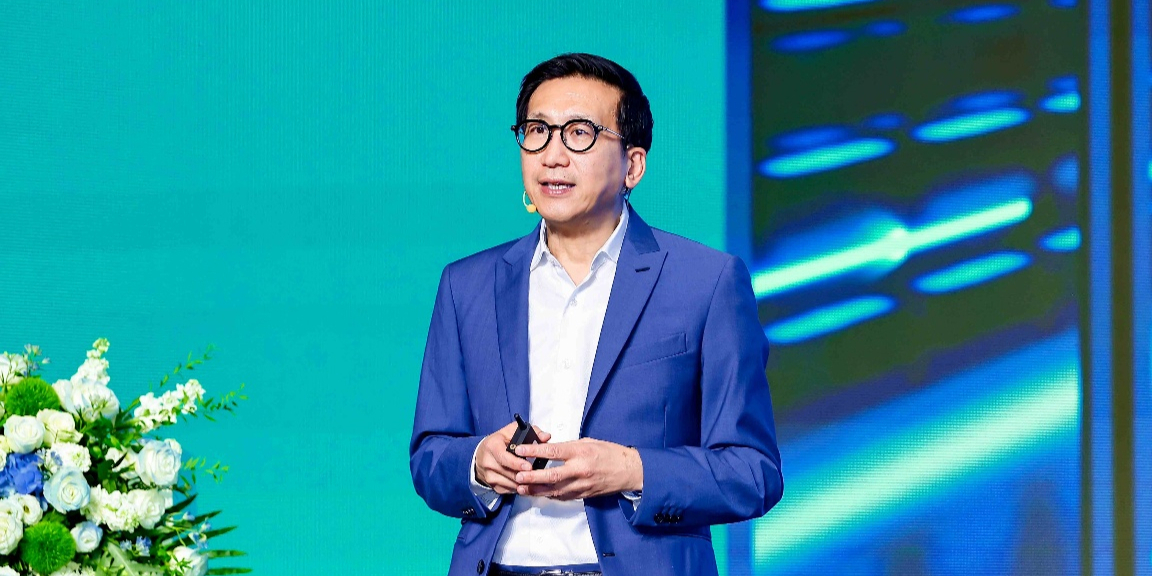
As stated by Pan Dawei, Senior Vice President and President of Greater China at Infineon Technologies, AI is bringing unprecedented development opportunities. As a global leader in the power semiconductor market, Infineon has been ranked first in the global power semiconductor market for 22 consecutive years. It is reported that the revenue of Infineon's AI data center power solution related business is expected to be approximately 1.5 billion euros in the 2026 fiscal year, and will reach approximately 2.5 billion euros in the 2027 fiscal year. The expectation of sustained growth in AI business reflects the semiconductor giant's strategic bet on the AI track.
The power demand for current AI server racks is rapidly increasing: previously, the mainstream configuration in the industry was about 100 to 200 kilowatts, but now the new generation of AI server racks has been upgraded to about 500 kilowatts, and it is expected to further move towards the 1000 kilowatt (1 megawatt) level in the next one to two years. This exponential growth in AI energy consumption demand forces a comprehensive upgrade in power conversion efficiency and power supply stability.
In this context, Infineon has built a full chain power supply solution from the grid to the core, and then to physical AI, with a comprehensive product portfolio covering key power semiconductor materials such as silicon, silicon carbide, and gallium nitride, diversified packaging solutions, leading innovation speed, high-quality assurance, and delivery capabilities. It runs through the complete value chain from power generation, transmission and distribution, energy storage to data center infrastructure, and further extends to physical AI terminal application scenarios such as new energy vehicles and humanoid robots, systematically ensuring the stable, safe, and efficient operation of AI power supply networks and data centers to cope with the surge in computing power and electricity demand brought about by the wave of AI development.
The realization of collaborative computing and the bidirectional communication of watts and bits relies not only on "single point technological breakthroughs", but also on the paradigm evolution of "system level deep integration". The current industry competition is gradually extending towards system capability and ecological synergy, and the competition between enterprises is no longer limited to a single chip, but covers comprehensive capability competition from underlying technology, product portfolio to system level solutions.
In order to better embrace the AI era of collaborative acceleration of computing and electronics, Infineon is comprehensively promoting systematic upgrades from product and application innovation, system level solution design to organizational structure and localization strategy. Especially in the Chinese market, Infineon is making every effort to fully implement the localization strategy of "in China, for China" and accelerate the transformation of technological innovation into deliverable customer value, anchoring high potential markets such as AI computing power and data center infrastructure, new power systems, software defined vehicles, electric mobility, and robots, and continuously empowering local customers to achieve business growth.
China is an important market for Infineon's global business layout, with significant advantages in areas such as electric mobility, software defined vehicles, energy facilities, and robotics. It is also an important market for the development of AI and data centers. Infineon is accelerating the construction of a customer-centric local innovation ecosystem, and working with customers to achieve sustainable development with effective market strategies, customized and diversified system level semiconductor solutions, "said Pan Dawei, senior vice president of Infineon Technology worldwide and president of Greater China.
In order to better serve local industry partners, continuously expand the local ecosystem, and enhance local application innovation capabilities, Infineon announced the establishment of an Infineon Innovation Space at its Greater China headquarters in Shanghai, equipped with dedicated collaboration venues and professional experimental equipment, with functions of innovation exchange, joint development, and industry popularization. This innovation space will rely on a mature innovation system, deepen collaboration with existing customers and industry partners, and attract new partners to accelerate the delivery and value realization of innovation from products to system solutions (P2S).
In addition, Infineon has also made adjustments to its organizational structure, restructuring its four major business units into three: automotive electronics, power systems, and terminal intelligence. The Automotive Electronics Division will focus on covering key application areas such as software defined vehicles and electric mobility; The Power Systems Division will focus on covering application areas such as energy infrastructure and AI data centers; The Terminal Intelligence Division will cover application areas such as robotics, edge AI, and smart homes. The essence of this organizational restructuring is to further optimize the business layout for application scenarios, focus on key applications with a more agile architecture to accelerate system level innovation and improve decision-making efficiency, and create tangible value for customers.
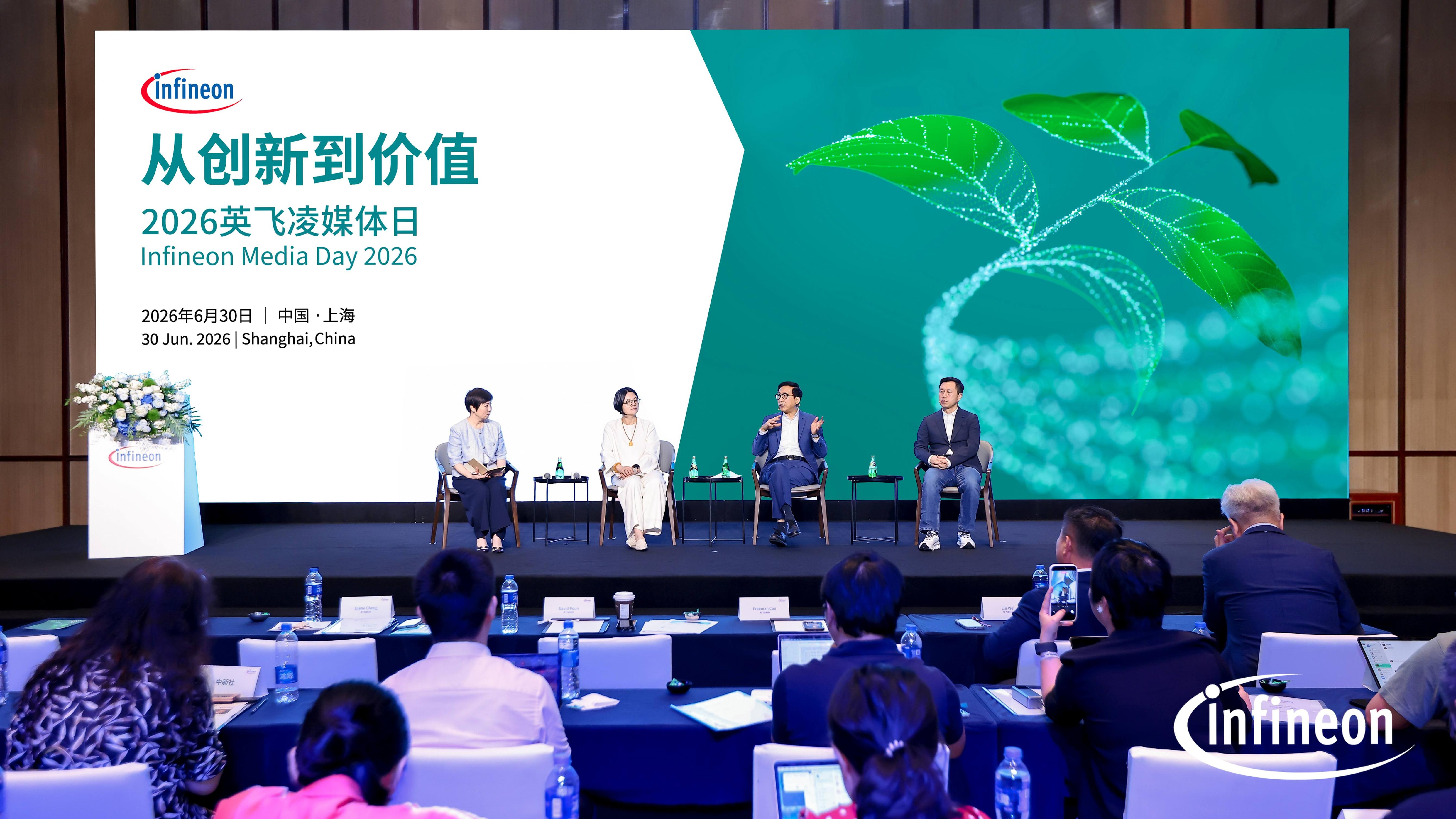
The following dialogue is organized by the editor
Q: Many semiconductor manufacturers have announced price increases. Apart from cost pressures, are there other underlying driving factors behind this? What measures has Infineon taken to address supply challenges and what plans does it have for the future?
Pan Dawei: The current market volatility and supply and demand pattern are influenced by many structural factors in the semiconductor value chain, and the entire industry continues to face significant cost pressures, covering multiple links such as energy, raw materials, transportation, and services. Price increases are a common industry phenomenon.
Faced with strong demand for AI, Infineon has always been committed to enhancing its supply capacity and capacity resilience. In terms of supply assurance, Infineon's Smart Power Fab, located in Dresden with a total investment of 5 billion euros, officially began operation on July 2nd, several months ahead of schedule; In the 2026 fiscal year, Infineon will add an additional 500 million euros to accelerate the expansion of AI related production capacity to support the development of AI applications and meet market demand by expanding production capacity; At the same time, relying on the virtual integrated factory model to coordinate the production capacity between different wafer fabs, achieving flexible allocation across production lines, and dynamically adjusting production capacity according to market demand; The domestic market relies on Wuxi's own manufacturing base and local production and manufacturing partners to further strengthen localized production, thereby meeting customers' demand for safe and stable supply.
Q: Will the rapid growth of AI demand affect the supply to automotive customers? What is the production capacity of gallium nitride?
Pan Dawei: In the field of in car OBC, Infineon has established long-term project cooperation with multiple customers, and the related business is progressing well.
Regarding capacity supply, Infineon has a flexible capacity scheduling mechanism that enables internal allocation of capacity between different applications, while also having support from manufacturing partners or value chain partners. Overall, Infineon will flexibly allocate production capacity based on market demand and continue to invest in it when there is further demand for production capacity.
In terms of gallium nitride production capacity, following the successful development of the world's first 300mm (12 inch) gallium nitride power semiconductor wafer technology in September 2024, Infineon is also actively promoting related work such as large-scale production. The 12 inch gallium nitride is expected to be mass-produced by the end of this year to next year, and the supply capacity will be further improved at that time.
Q: The photovoltaic and energy storage industries are experiencing rapid development. Are solid-state products such as SST also accelerating their market penetration in this field? How to view the application trend of solid-state products such as SST in the optical storage market? Furthermore, regarding the application of silicon carbide in SST, how long is it expected to see large-scale adoption?
Pan Dawei: Solid state transformers (SST) and solid-state circuit breakers (SSCB) are becoming important innovative directions for connecting advanced power electronics technology with AI computing infrastructure.
Solid state transformers (SST) are mainly based on silicon carbide technology and are considered key equipment for the next generation of power distribution systems due to their higher energy efficiency, smaller size, and stronger grid adaptability. The demand for SST in AI data center (AIDC) application scenarios is strong, and it is expected to become one of the fastest markets for SST commercialization. In the next two years, it will usher in a wave of large-scale commercialization.
In the medium to long term, SST will gradually integrate into broader energy infrastructure systems such as smart grids, new energy, and electric vehicle charging networks. Although it will not completely replace traditional transformers, its market penetration rate will continue to increase. At the same time, traditional transformers have been out of stock globally for two consecutive years, coupled with the rise in prices of bulk raw materials such as copper. The cost and selling price of traditional equipment continue to rise, further forcing the industry to accelerate the upgrade to new generation power technologies such as SST.
Q: Previously, it was mentioned that the market demand for Infineon's AI related business far exceeded previous expectations. Can you specifically introduce which manufacturers Infineon has established deep cooperation with in the Chinese domestic market?
Pan Dawei: Infineon has built a full chain solution covering SST (solid-state transformer), BBU (battery backup unit), PSU (power supply unit), IBC (intermediate bus converter) for AI data center customers such as CSP (cloud service provider), and also relies on CoolSiCTM、CoolGaNTM、OptiMOSTMThe combination advantage of the three major series of power devices continues to introduce innovative products such as the new generation of ultra-thin vertical power supply architecture, high-voltage battery backup unit, and high current density voltage regulation module, effectively solving industry pain points such as instantaneous surge loads and high-frequency power conversion in AI servers.
In addition, Infineon adopts a "dual track parallel" business model to deeply collaborate with top customers on the entire AI power supply industry chain. On the one hand, it connects with cloud service providers, understands the computing power and energy efficiency requirements of its next-generation AI data center architecture, and provides complete solutions for the entire chain, achieving a reduction of over 15% in overall energy consumption; On the other hand, ODM partners in the power supply industry are collaborating on innovative solutions for PSU and BBU power modules, as well as supporting power supply solutions for CPUs and GPUs, to jointly seize the growth opportunities brought by AI.