Economic Observer Follow
2026-08-10 11:48


Luo Baiying, Tu Yong/Wen
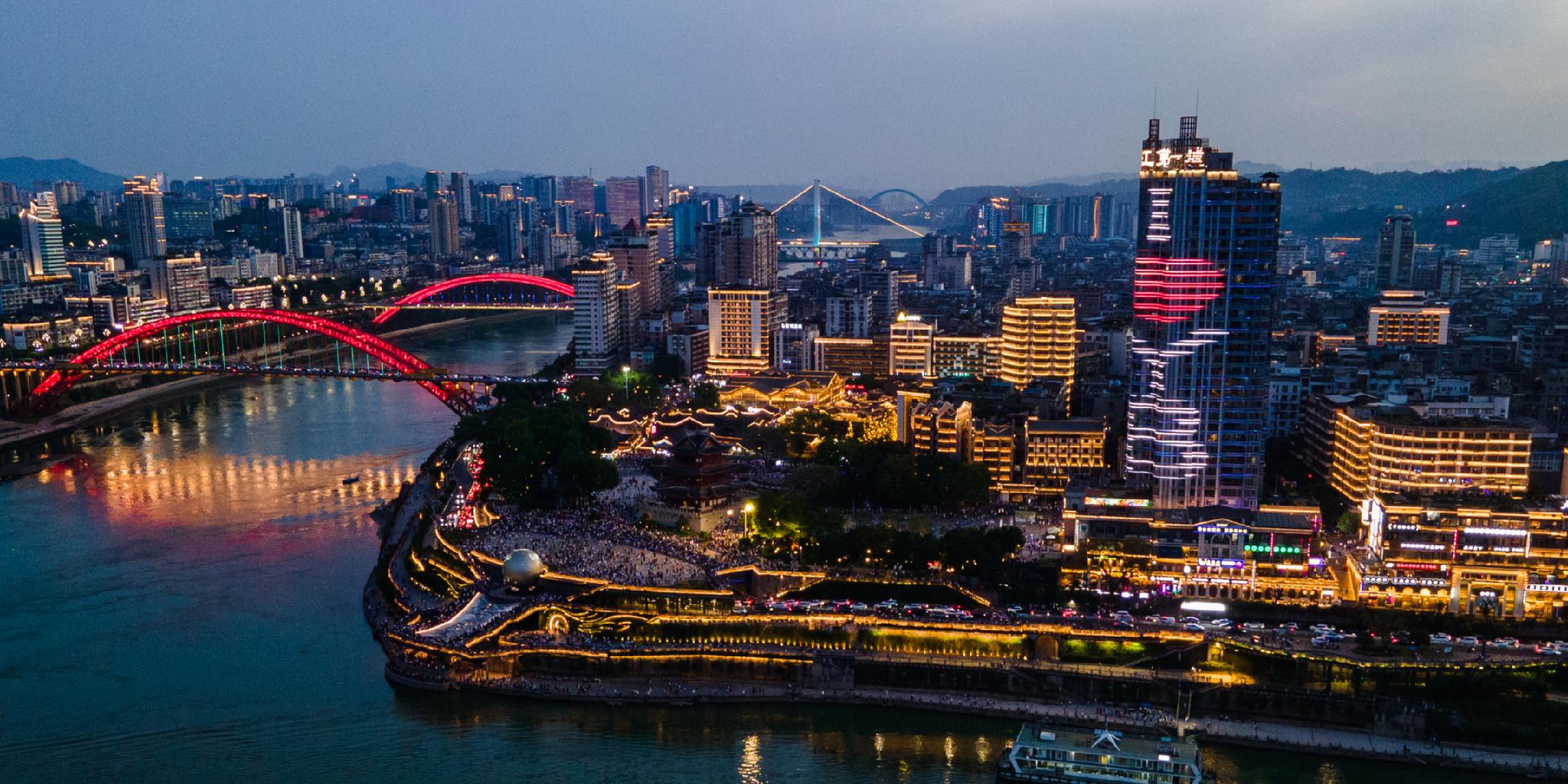
When most cities in Sichuan are trapped in the dilemma of net population outflow and weak growth of traditional industries, Yibin becomes an exception. The permanent population of its central urban area increased from 1.568 million in 2020 to 1.788 million in 2024, with a net increase of 220000 in four years. By 2025, the GDP of Yibin City will reach 413.473 billion yuan, ranking third in Sichuan Province, and the economic growth rate will be higher than the average level of Sichuan Province for several consecutive years. What is more striking is that Yibin frequently appears on the national stage - the 2023 CCTV Autumn Gala, the 2025 Qixi Gala, and the 2026 Spring Gala.
From "one black and one white" to "one blue and one green", from a traditional resource-based industrial city to the "capital of power batteries in China", Yibin has broken the common dilemma of transforming into an inland resource-based city.
The answer lies in the development of new quality productivity with finance as the link, industry as the carrier, and talent as the foundation.
The development logic of Yibin is clear: to solidify the economic foundation through industrial transformation and upgrading, to comprehensively improve the quality and efficiency of talent supply through the construction of university and science and technology cities, and to continuously invest in innovative elements to leverage technological changes. In this process, finance is no longer simply a provider of funds, but has transformed into a core participant in ecological co construction and value co creation.
First stand, then break
The development of new quality productive forces is not about neglecting or abandoning traditional industries. The key is to coordinate and handle the inherent relationship between traditional industries, emerging industries, and future industries.
Since 2015, Yibin has shown unprecedented determination and courage to "establish first and then break through", focusing on building nests and attracting phoenixes in emerging industries, and transforming and upgrading traditional industries. It has successfully transformed its industrial structure from "one black and one white" to "one blue and one green", gradually building and improving the "4+4+N" modern industrial system, and creating eye-catching business cards such as "world-class power battery industry cluster", "national level crystalline silicon photovoltaic industry cluster", and "new highland of China's energy storage industry". The development momentum of emerging industries is strong.
Behind the remarkable achievements of the industry is strong financial support. In the early stage of transformation, like most regions, Yibin used real financial investment and policy tools such as tax reductions and subsidies to "inject blood" into industrial development. With the deepening of transformation, Yibin has timely turned to fiscal and financial synergy, relying on the "Five Great Articles of Finance" to fully leverage the role of finance and mobilize a large amount of social capital to participate in industrial construction.
Expand the industrial fund matrix and achieve iterative upgrading of fund investment promotion. Starting from 2021, Yibin will focus on expanding industrial scale and improving industrial ecology, using fund investment as the main lever for financial empowerment, promoting the upgrade of fund investment from the 1.0 era of project introduction to the 2.0 era of equal emphasis on investment and introduction. In January 2025, Yibin released an industrial investment fund matrix with a total scale of over 60 billion yuan, adhering to the principle of "one industry, one fund", accurately matching the needs of key industries such as new energy, new materials, and digital economy, and allowing funds to directly reach key links in industrial development. Yibin has become one of the regions with the most active and complete industrial fund investment among similar cities in China.
Build a digital financial platform to solve the financing pain points of science and technology innovation enterprises. In response to the common problem of lack of traditional collateral such as factories and land for science and technology innovation enterprises, Yibin has built a digital comprehensive financial service platform called "Yirongtong", covering 520000 market entities in the city and providing financing of over 100 billion yuan for more than 600 projects. The scenario specific exclusive financial products such as "Yichuang Loan", "Intellectual Property Pledge Loan", and "Carbon Account Low Interest Loan" set up as supporting facilities have changed the traditional bank evaluation model that only focuses on fixed assets. They include the number of core patents, R&D team strength, and industrial growth space of enterprises in credit evaluation, achieving market-oriented valuation of intangible assets. Yibin has ranked first in Sichuan Province for four consecutive years in terms of loan balance growth rate for inclusive small and micro enterprises and science and technology innovation enterprises.
Establish a talent science and technology innovation special fund to create a capital circulation loop. Yibin City has set up a 1 billion yuan talent innovation and entrepreneurship fund, with 10% of the funds directed towards early-stage scientific and technological innovation projects in seed and angel rounds. The innovative mechanism of "investment first, stock later" will be implemented - financial funds will support research and development in advance, and after reaching industrialization conditions, they will be converted into equity and market-oriented exit, forming a closed loop of "financial seedling cultivation, fund relay, and capital circulation".
Persist in investing in people
Yibin's industrial upgrading continues to release a large number of high-quality positions in high-end research and development, technological implementation, and industrial management, laying a solid employment foundation for the continuous influx of population. On this basis, Yibin has broken away from the short-term model of "attracting talents with funds" and turned its attention to the longer-term "investing in people".
As one of the first batch of national pilot cities for industry education integration and the only one in Southwest China, Yibin has established a university city, a science and technology city, and a demonstration base for industry education integration. It has also built a multi-level talent cultivation system, introducing universities to cultivate high-end talents such as undergraduate and graduate students, and setting up multiple vocational colleges to accurately cultivate skilled practical talents needed for the manufacturing industry. Over the past decade, a total of 12 universities, 15 industrial research institutes, and 2 academician workstations have gathered, with over 100000 college students enrolled; More than 140 corresponding majors have been established around the leading industries, and over a hundred industry education training bases have been built, forming a dual talent supply system of "high-end talent introduction" and "local talent supply".
This industry demand-oriented talent cultivation model achieves resonance between talent cultivation and industrial development, solves the pain points of difficult employment and high labor costs for landing enterprises, and achieves industry demand and education support.
Talents should be attracted and nurtured, but more importantly, they should be retained. In terms of talent retention, we aim to create a talent service brand that is "suitable for meeting and loving talents like guests". With the actual needs of talents as the core, we focus on key livelihood issues such as affordable housing and children's education, comprehensively optimize the livable urban environment, enable talents to start businesses and live comfortably, and build a virtuous cycle of "talent gathering industry prosperity city prosperity". Under the general trend of population concentration towards mega cities across the country, Yibin has become a preferred city for talent return and youth settlement.
Challenge
The current industrial development in Yibin is characterized by a slowdown in traditional driving forces, insufficient support for emerging driving forces, and the cultivation of future industries. The structural mismatch of financial supply that adapts to innovative development is gradually becoming prominent.
On the one hand, each of the three industries has its own shortcomings in financial adaptation. First, the traditional pillar industries such as Baijiu, energy and chemical industry are green, with large investment in digital transformation and slow return. It is difficult to predict the transformation income, which weakens the willingness of finance to lend in the medium and long term, and blocks the traditional industries from iterating to breed new productivity. Secondly, emerging industries such as power batteries and digital economy have strong growth potential; However, the scale is not yet sufficient to completely replace the contribution of traditional pillar industries, and the urban economy is highly dependent on the new energy track, with a relatively single industrial structure. The localization rate of high value-added research and development and core supporting links is insufficient, and the ability to resist industry cycle fluctuations is weak, exacerbating the risk aversion of financial capital. Thirdly, future industries such as new energy storage, intelligent connected vehicles, and low altitude economy are in line with provincial and municipal development strategies and adapted to local green power resources; However, the industry's technological iteration is fast, the technological route is uncertain, coupled with weak local scientific and technological innovation carriers and the outflow of high-end talents, the willingness of venture capital to intervene is low, and the financial support for the forefront track is still mainly based on local funds.
On the other hand, there are multiple weak links in the local technology finance ecosystem. One is the imbalance in the investment stage of industrial funds. The investment focus of the government industry fund group still leans towards mature industries and mid to late stage projects. Among the total fund size of 60 billion yuan, less than 2% is specifically allocated to support early innovation. The exit path of innovative models such as "invest first, stock later" is still unclear, which restricts the efficiency of capital circulation. The second issue is the insufficient development of multi-level capital markets. Yibin once faced an 11 year blank period for listed companies, with a relatively low proportion of technology companies in the reserve pool of listed companies; There are few local private equity and venture capital institutions with limited managed capital, making it difficult to complete the full cycle incubation and cultivation of science and technology innovation enterprises going public. The third issue is the insufficient supply of direct financing and risk mitigation tools. The issuers of science and technology innovation bonds are mainly concentrated in large state-owned enterprises, and it is difficult for small and medium-sized technology enterprises to participate.Behind this is the lagging construction of the regional credit enhancement system and the lack of market-oriented credit enhancement measures such as credit risk mitigation tools; The development of technology insurance lags behind, with a single type of insurance and a lack of exclusive protection products covering core innovation risks such as research and development, patents, and equipment.
Overall, although Yibin has completed its first transformation from a single resource dependence to a diversified industrial layout, its second upgrade towards innovation driven development is still constrained by multiple bottlenecks such as imbalanced financial supply structure, imperfect innovation ecology, and low efficiency in factor allocation.
Reshaping the Financial Role Positioning
Facing the future, Yibin needs to promote the triple identity transformation of its financial system: upgrading from a single credit fund supplier to a co builder of the entire chain of industrial innovation ecology; From passive risk avoidance to proactive risk pricing and tiered sharing; From a short-term profit driven project investor, to a value investor who accompanies the long-term growth of the enterprise. Based on the existing development foundation, we will make targeted efforts to fill the gaps and optimize the institutional mechanisms, and improve the financial support system for science and technology innovation from five dimensions.
Firstly, establish a full cycle financial policy framework for scientific and technological innovation, and create a leading platform for institutional innovation. Yibin should accelerate the application for provincial-level and even national level science and technology innovation financial reform pilot zones, and strive to obtain pilot authorization in risk compensation, product innovation, cross-border financing, and other aspects. Build a "Science and Technology Innovation Credit Digital Base" that integrates 38 types of cross departmental data, including government affairs, taxation, social security, intellectual property, and enterprise energy consumption, to generate dynamic portraits of corporate innovation capabilities for financial institutions and break down barriers to information asymmetry between banks and enterprises. Introduce the "White List Management Measures for Science and Technology Innovation Enterprises in Yibin City", which includes innovation indicators such as research and development intensity, patent quality, and core talent structure in the evaluation criteria. Regularly promote high-quality science and technology innovation enterprises to banks, guarantees, and insurance institutions, and guide financial resources to actively connect with innovation entities.
Secondly, optimize the mechanism for state-owned capital investment and connect the "first mile" of early innovation. Increase the allocation ratio of fund groups towards seed and start-up stages, and establish angel guidance sub funds and risk compensation sub funds with a scale of no less than 5 billion yuan; Establish a 5-7 year long cycle fund assessment mechanism and fault-tolerant system, and clarify the due diligence exemption rules for investing early, investing small, and investing in hard technology projects. Refine the conversion conditions, pricing standards, and market-oriented exit paths for "investment first, stock later", and establish a "specialized, refined, unique, and new" enterprise exclusive sector based on regional equity markets to provide liquidity exports for early equity investments. Relying on the cash flow and industrial scene advantages of local leading enterprises such as Wuliangye, encourage leading enterprises to set up industrial venture capital funds, create a characteristic investment and financing model of "Baijiu capital enabling emerging industries", and systematically promote and implement it throughout the city.
Thirdly, strengthen the foundation support of bank credit and promote credit evaluation from "cash flow" to "technical flow". Comprehensively promote the "technology flow" credit evaluation system, with the proportion of R&D investment, invention patent reserves, core R&D team qualifications, and depth of industry university research cooperation as core credit indicators, to reduce dependence on traditional collateral such as real estate and land. Guide banks to develop innovative credit products such as "R&D loans", "technology transfer loans", and intellectual property securitization, and collaborate with guarantee institutions to launch bulk "science and technology innovation guarantee" businesses, reducing the guarantee fee rate for single enterprise to below 1%. Actively strive for the central bank's special quota for re lending and rediscounting in science and technology innovation, provide low-cost financial support to financial institutions with outstanding results in science and technology innovation credit, and support local fiscal incentive policies.
Fourth, expand multi-level direct financing channels and improve the local venture capital ecology. Innovatively issuing convertible bonds for scientific and technological innovation, "bonds+warrants" and other stock bond linked financing products, establishing a risk compensation fund pool for scientific and technological innovation bonds, and providing credit enhancement for small and medium-sized technology enterprises issuing bonds. Integrate the reserve pool of sci-tech bonds and the reserve pool of listed companies, implement integrated cultivation services, and provide full process listing guidance for enterprises from dimensions such as intellectual property layout, financial standards, and corporate governance. Introduce domestic leading venture capital institutions such as Shenzhen Venture Capital and Sequoia China to set up branches or cooperative funds in Yibin, encourage local state-owned enterprises to participate in market-oriented master funds, and strive to cultivate more than 20 local venture capital institutions within three years, with an overall management capital scale of more than 20 billion yuan.
Fifth, expand the supply of technology insurance services and establish a diversified collaborative risk sharing mechanism. Guide insurance institutions to establish technology insurance specialized departments, focusing on researching and promoting innovative exclusive insurance types such as research and development interruption insurance, patent infringement execution insurance, first (set) equipment insurance, and core research and development equipment damage insurance. Establish a collaborative mechanism for risk sharing among the government, banks, and insurance, provide 40% -60% financial subsidies for technology insurance premiums, include insurance institutions in the risk sharing chain of science and technology innovation loans, and build a multi-level risk security network of "bank credit injection+guarantee and credit enhancement+technology insurance protection".
From the past where 'one bottle of wine, one piece of coal' held up half the sky, to today where power battery shipments account for 15% of the country's total, photovoltaic production capacity ranks among the top in Sichuan, population continues to flow in, and national level events frequently favor it. The rise of Yibin proves that the new quality productivity of financial services cannot be limited to traditional credit lending. It must complete a fundamental role transition, break away from the simple thinking of fund supply, deeply embed itself in the entire industrial chain, jointly build an industrial ecosystem with innovative entities, break away from the traditional credit logic of mortgage dependence, and achieve full cycle value co creation.
The industrial transformation of Yibin has not yet stopped. From being seen to being longed for, Yibin has taken a crucial step towards transformation; From being longed for to being sustainable, Yibin still needs to rely on its location advantages of the Western Land Sea New Corridor and the southward opening gateway of Sichuan, and leverage the two national strategic winds of the Yangtze River Economic Belt and the Chengdu Chongqing Dual City Economic Circle to continue exploring and achieving long-term success in the reform of financial empowerment, innovation driven, and factor allocation.
(Luo Baiying is a researcher at the Yangtze River Economic Belt Research Institute; Tu Yonghong is the dean of the Yangtze River Economic Belt Research Institute at Renmin University of China and a professor at the School of Finance and Economics)