2026-07-16 12:14


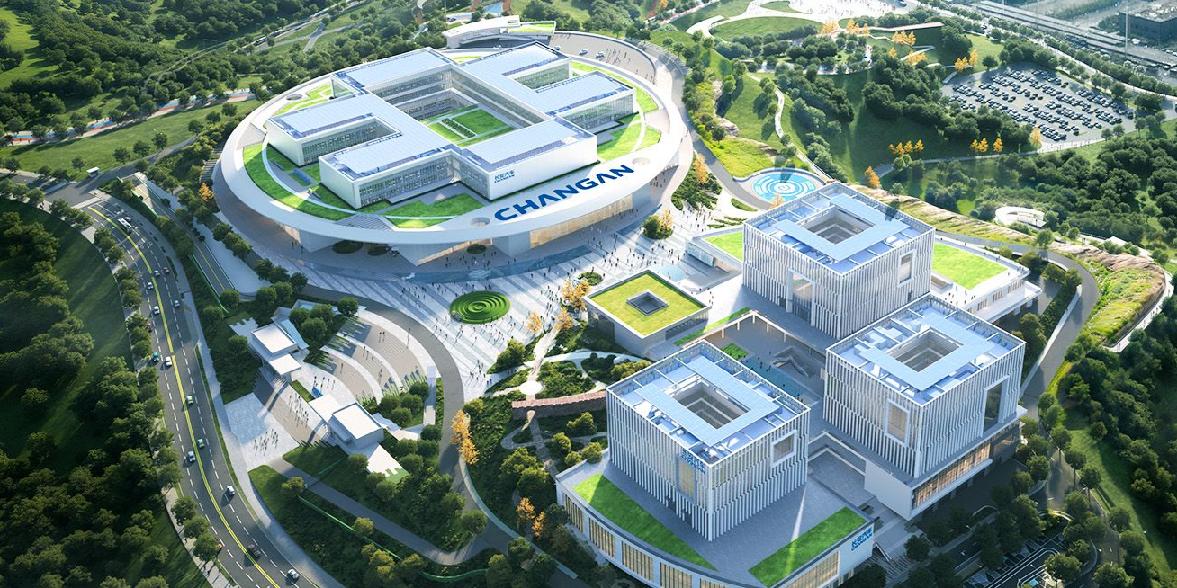
The first half of 2026 will not be easy for the Chinese automotive industry. The coexistence of internal competition and deep adjustment in the industry, the adjustment of the trade in policy for new energy vehicles, the halving of purchase tax policy, the rise of overseas tariffs, and the fluctuation of geopolitical situation are intertwined. The combination of multiple internal and external pressures has led to a year-on-year decline of over 20% in passenger car retail, leaving most car companies in a dilemma between sales and profits.
On this "industry report card", Changan Automobile's data is not the most stunning: 1.1956 million vehicles were delivered in the first half of the year, including 456000 new energy vehicles, a year-on-year increase of 5.2%. This growth rate cannot be described as an "explosion" in the context of the past frequent doubling of new energy.
But what is truly worth examining is not the growth rate itself, but why the new energy sector still achieved counter trend growth in this industry cycle.
Upon closer inspection, several independent yet interrelated events occurred simultaneously: Changan Qiyuan delivered 21137 units of the all-new Q05 globally in June, maintaining its position as the best-selling compact SUV in the market dominated by fuel vehicles for several consecutive months; Deep Blue Auto's overseas cumulative sales in the first half of the year increased by 141% year-on-year; Avita delivered 7459 vehicles in June, and the new flagship store will cover over 20 cities within the year; Golden Bell Cover Battery won the second prize of National Science and Technology Progress Award again; Chang'an's "Tianshu Navigation" has emerged from a 17 year long research and development journey, and its first model equipped with it is about to enter mass production.
What is the commonality of these things? They are not the result of short-term sprints, but the realization of long-term layouts. This is also the value of Changan Automobile as a sample of state-owned enterprises: at the bottom of the industry cycle, it is still doing long-term things.
100000, 200000, 300000: Each of the three major brands holds its own position
To understand where this' long-term layout 'lies, we need to break down Changan Automobile's new energy system - the brand matrix is the backbone, technological barriers are flesh and blood, and product rhythm is the driving force.
Let's talk about the skeleton first. Chang'an's new energy brand matrix did not grow overnight. Three years ago, it was unclear to the outside world where Avita, Shenlan, and Qiyuan were heading. Three years later, the three price bands, three segmented markets, and three strategies have each become clear.
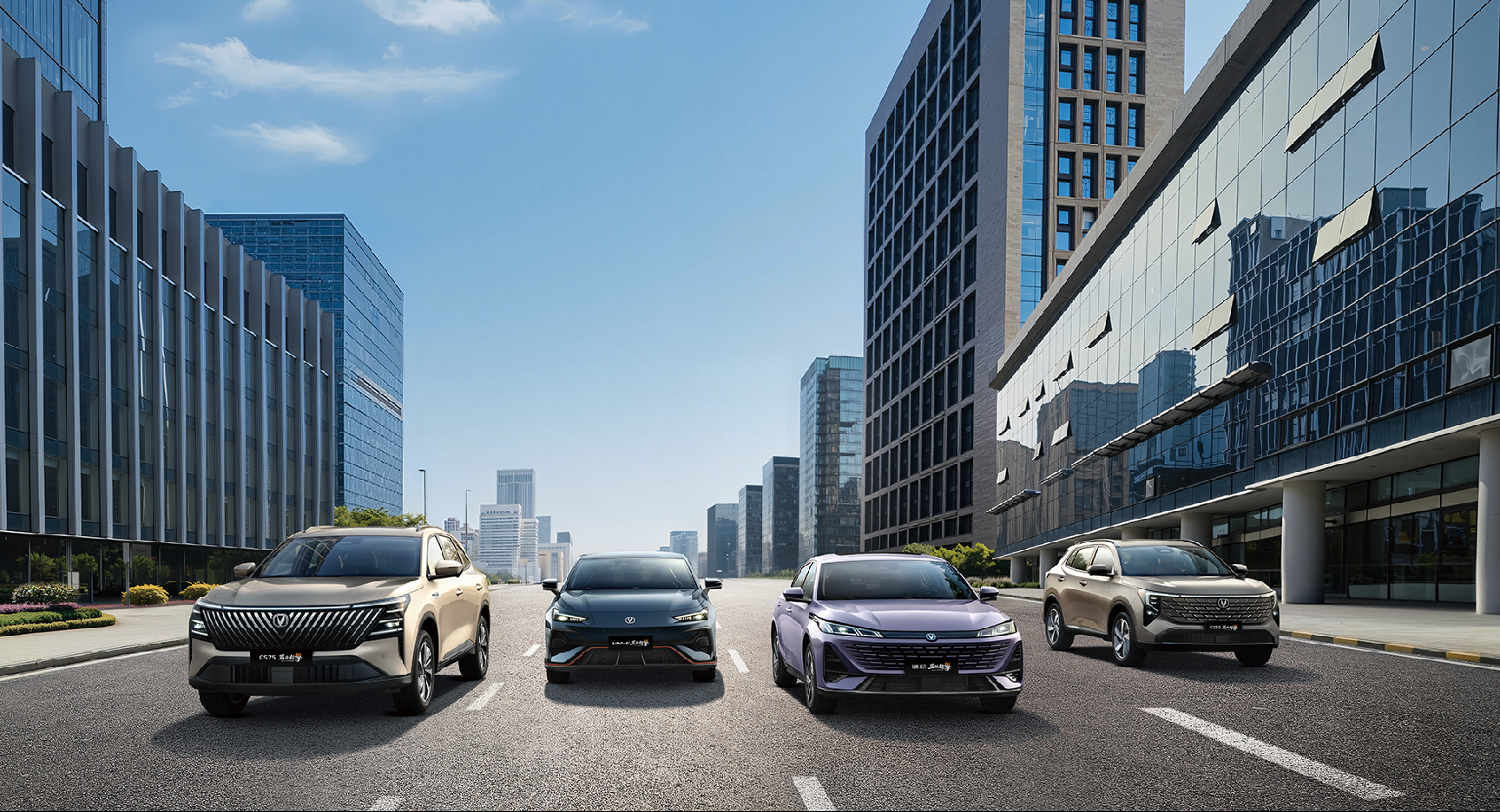
Changan Automobile has made it clear to the public that it will continue to build three major smart new energy brands, Avita, Shenlan Automobile, and Changan Qiyuan, to form a brand matrix that meets different segmented markets.
This kind of 'clarity' does not rely on luck, but on restraint. At the peak of brand expansion, resist the impulse to quickly drive each brand and take the time to clearly define its positioning.
The biggest enemy of multiple brands is not competitors, but their own ambitions. Having multiple brands can easily lead to conflicts, overlapping positioning, channel competition, and confusion in user perception.
The most rare thing about the three major smart new energy brands in Chang'an today is not that they have all grown, but that they have finally stood firm on their own.
What is the stop sign? Check the price band.
Chang'an Qiyuan focuses on the mainstream household market and maintains a volume range of 100000 to 200000 yuan. The all-new Q05 has delivered over 80000 units in half a year, maintaining a leading position in the segment of compact SUVs, which is the most dominant fuel vehicle market. This is not achieved through price reduction, but through the simultaneous implementation of product definition and cost control.
Fuel vehicles have been operating in this range for decades, with the largest user base and the strongest demand for replacement. Whoever can establish a foothold here will have the most crucial entry ticket to the stage of new energy popularization. The all-new Q05 has won the sales championship for several consecutive months, indicating that Changan has the ability to compete positively in the most difficult market.
Deep Blue Automotive is positioned to target young users worldwide, with a focus on the mainstream market of 150000 to 250000 yuan. The role of Deep Blue is to "connect the past and the future": to meet the upgrading and purchasing needs of Qiyuan users, while cultivating a high-end user base for Avita.
In the first half of the year, the global cumulative sales volume was 164156 vehicles, a year-on-year increase of 14.6%, and the overseas market grew by 141%. This growth rate indicates that Deep Blue's product definition has not only stood firm domestically, but also found real demand overseas.
Avita targets the high-end market of over 300000 yuan and aims to become a world-class new luxury intelligent electric vehicle brand. 7459 vehicles were delivered in June, and channel construction is running faster than sales - the new flagship store will cover over 20 cities within the year.
This indicates that Changan's assessment criteria for it are not "how much it sells", but "whether a high-end brand has been established". In the wave of Chinese brands collectively attacking the 300000+market, Avita is the one that has firmly established itself.
Three brands, three price bands, not overlapping with each other. Qiyuan is responsible for 'volume control', Shenlan is responsible for 'attack', and Avita is responsible for 'card placement'. Everyone returns to their respective positions and performs their duties, this is what matrix advantage is all about.
Golden Bell Hood, Blue Whale Superengine, and Celestial Pivot Navigation: Technology Transforms from "Reserve" to "Barrier"
In the first half of this year, the automotive industry was very busy, busy with holding press conferences, promoting new cars, and introducing new technologies. But there is no shortage of "technology conferences" in the industry - battery releases, chip releases, stock prices rise a wave, and then there is no follow-up.
Changan is different: the Golden Bell Cover Battery has won two national awards, the Blue Whale Superengine has achieved industry-leading fuel consumption, and the Tianshu Navigation has been accumulating since 17 years ago - these things are not "showcased" at press conferences, but "used" in user cars. The transformation of technology from "reserves" to "barriers" is happening.
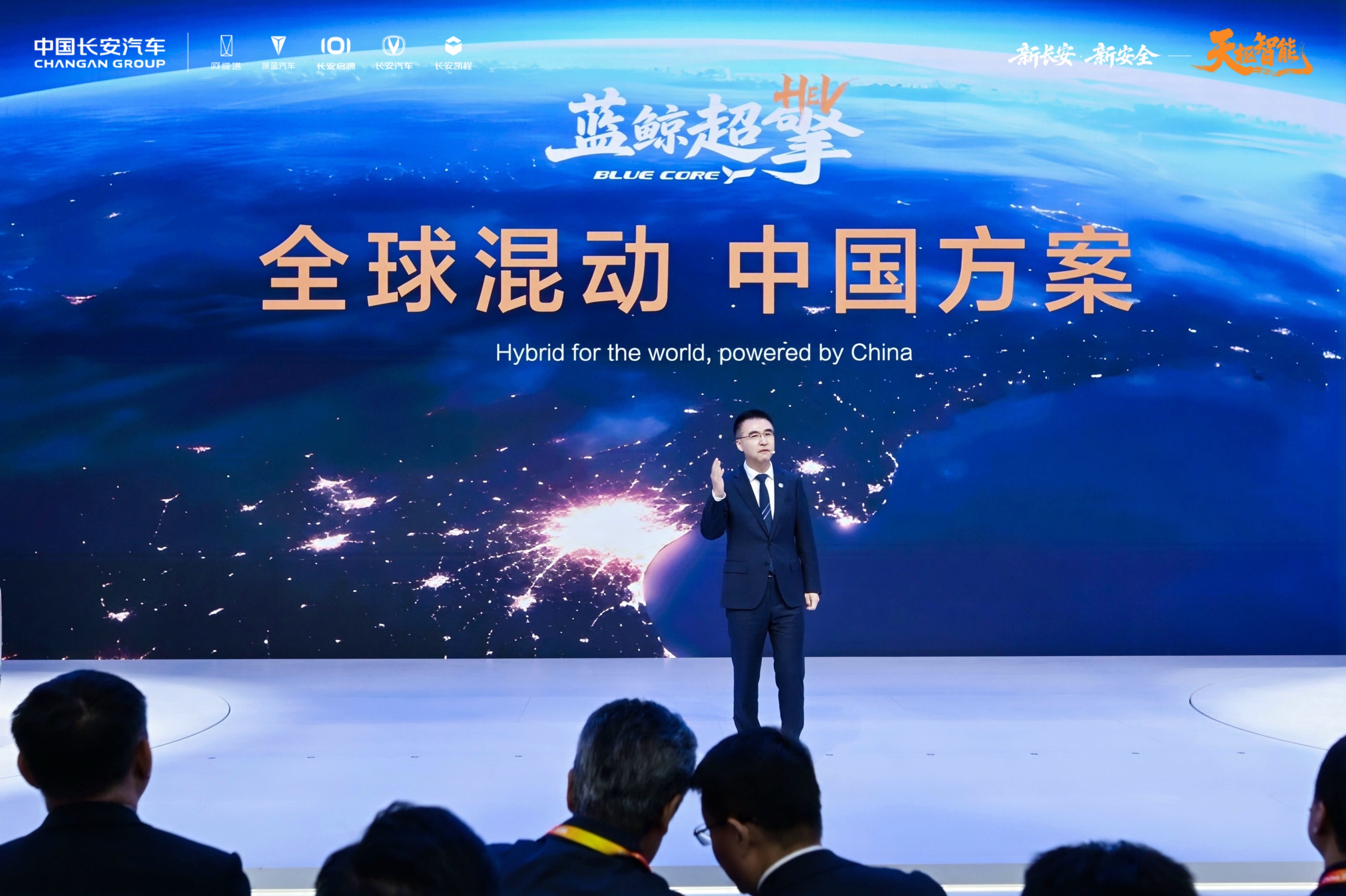
The path of the Golden Bell Cover battery is particularly noteworthy. In 2022, Chang'an anchored its thermal safety design standards to "no fire, no explosion". At that time, the new national standard had not yet been released, and the mainstream industry was still in the comfort zone of "enough is enough". Changan's standards were seen as "excessive design".
In May 2025, the Golden Bell Cover battery passed all the new national standard tests and became one of the first car companies in the industry to complete the new regulation certification. In 2026, we will once again receive the second prize of National Science and Technology Progress Award - a national level technology recognition, not an industry award, not a marketing slogan. Looking back now: Chang'an is not chasing standards, it is the standard itself.
The Blue Whale Hybrid is taking a different path. From 2023 to 2025, the hottest topic in the industry is range extender - with strong topicality, easy storytelling, and low user cognitive costs. But as we enter 2026, the extended range track will take a sharp downturn, with sales of extended range cars decreasing by 13.1% year-on-year in the first half of the year.
This is closely related to the increasingly sound charging network and the improvement of battery energy density. As the practicality of pure electric vehicles continues to increase, consumers are starting to reassess whether range extension is really necessary. In July, a new policy was introduced to cancel the exemption from vehicle and vessel tax for plug-in hybrid range extender electric vehicles starting from 2027, bringing an end to the golden period of range extender.
Changan also followed the extended range track, after all, practicing still requires eating, but it invested its research and development resources in HEV very early on. This road was not sexy enough at that time, but the Blue Whale hybrid technology ultimately reduced the fuel consumption of Blue Label sedans to 2L level and SUVs to 3L level.
Next year, the market will enter a more free competitive state, and the Blue Whale Superengine does not need to change user habits, is not limited by charging facilities, achieves extreme fuel consumption, and has controllable prices, allowing a large number of existing fuel users to "transition painlessly", while Changan Automobile has already been ahead.
The Tianshu Navigation is the most "stupid" investment in Chang'an. In 2009, Chang'an established an intelligent research and development team, which started from scratch and has since grown to over 7500 people, without interruption for 17 years. In 2016, Changan became the first domestic car company to complete a 2000 kilometer autonomous driving test from Chongqing to Beijing.
From then on, we will accumulate knowledge and become one of the first batch of L3 certified car companies in China by 2025, obtaining the first official license plate for L3 level autonomous driving in the country. In June 2026, the globally unified technical regulation (ADS GTR) for auto drive system jointly developed by China, the European Union, the United Kingdom, the United States, Canada and Japan was officially released. Chang'an deeply participated in, provided massive measured data, and supported China to lead the development of global automated driving standards with industrial strength.
Over the course of 5 years, more than 2000 engineers completed over 5 million kilometers of road testing in Chongqing, incorporating the majority of the city's curves and slopes into the system's DNA.
For users, the most direct change is that the first mass-produced model of Tianshu Navigation is the Changan Qiyuan Q06, which is standard across the entire series. The things that took 17 years to grind are not meant to 'show off muscles', but to' sell '.
The 'product rhythm' in the second half of the year looks better than the quantity of new products
In the second half of the year, Changan will launch many new products, but what is truly worth writing about is not "how many new cars there are", but the rhythm and logical consistency behind these new products - it verifies whether the first two parts really "run smoothly".
Qiyuan will add three new products, Q06, A05L, and Lumin plus, while iterating and upgrading four mature products. Among them, the Changan Qiyuan Q06 will be launched in the second half of the year, equipped with the "Tianshu Navigation" throughout the series. This is the first time that Changan has "lowered" its self-developed driving assistance system to the price of Qiyuan.
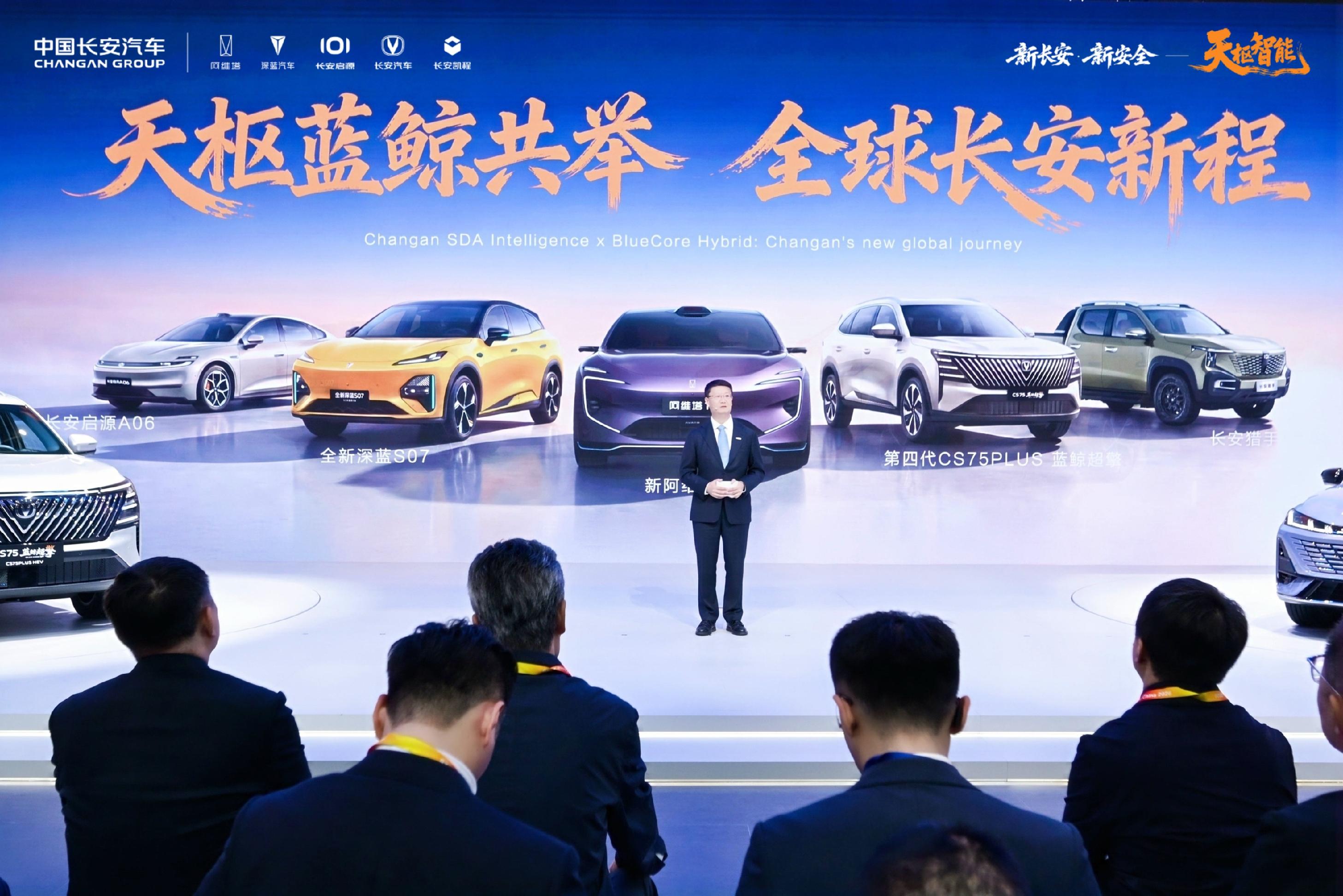
As the first state-owned enterprise to independently develop a one-stage end-to-end intelligent driving assistance system, Tianshu Navigation will be put into mass production in the second half of this year, accelerating the promotion of "universal equality" for urban navigation intelligent driving. Three years ago, assisted driving was still a "ceiling", but three years later Changan turned it into a "standard line".
Avita will launch its second generation of new products, including the Avita 07L, a "Smart Beauty Big Five Seat Luxury SUV". Avita's flagship six seater SUV will also debut, continuing to raise the ceiling of high-end new energy.
Deep Blue Automobile will comprehensively enhance its "intelligent driving" capabilities and upgrade its "three electric" systems for the domestic market. At the same time, Changan will increase its investment in HEV power, continue to build CS75PLUS, CS55PLUS, and Yidong single product IPs, and gradually launch a batch of new power and products.
The pace of the three product lines maintains internal consistency: Avita is exploring upwards, continuing to raise the price ceiling; Deep Blue expands outward, maintains its basic market position in the mainstream market, and continues to expand overseas; Qiyuan delves downwards and strives for excellence and depth in the most mainstream price range.
The rhythm of the trilogy lies in the fact that it is not a solo performance by one brand, but rather the three major brands' staggered attacks and their respective positions. High end has Avita, volume has Qiyuan, and Deep Blue is playing a flexible battle in the middle.
Fuel vehicles have not been abandoned, but are being upgraded. The continuous investment in HEV power indicates that Changan is simultaneously laying out on three technological routes: pure electric, hybrid, and fuel, without betting on a single track, covering the widest user base.
Behind this sense of rhythm is Chang'an's changing understanding of what true growth is. It does not rely on one or two popular products to support the scene, but uses a complete system - brand, technology, and product - to promote simultaneously on three lines. When this system operates smoothly, new products will no longer be "testing the waters", but "launched according to plan".
Returning to the original question: Why can Chang'an draw a different curve during the industry's pressure cycle?
The answer is not in a single data. In the brand matrix, the three price bands of 100000, 200000, and 300000 each hold their respective positions and do not overlap with each other; In terms of technological barriers, the advance layout of the Golden Bell Shield and the 17 year sharpening of Chang'an's "Tianzhu Navigation" have now reached the point of centralized realization; In the second half of the year, the pace of new products is not a scattered "one by one" approach, but a complete and logical centralized release.
This is the value of Chang'an as a sample of state-owned enterprises: it did not rely on a popular product, a wave of price reductions, or a trend to drive growth, but spent several years doing three things right - clarifying the brand, solidifying the technology, and setting the pace.
In the second half of 2026, these three things will reach the moment of "submission" at the same time. According to data from the China Association of Automobile Manufacturers, the penetration rate of new energy vehicles reached a historic high of nearly 63% in June. While the industry is still anxious about what to do in the second half of the year, Changan has already written the answer in its products. When the market shrinks and the knockout stage approaches, the real difference is no longer who runs fast, but who sticks deep.
Want to buy a smart car with a budget of over 100000 yuan? Cannot bypass the Aion N60

Why can the repeatedly banned borderline marketing always get out of the circle smoothly?

The APEC Digital Week city promotion video is officially launched, and Chengdu, the city of innovation and creation, will keep running with the world!


 WeChat registration or login