2026-07-15 19:47


In 2008, the American robotics company Boston Dynamics released a test video.
A four legged machine carrying heavy objects walked over gravel slopes and icy roads, but was kicked hard from the side by someone. It stumbled a few steps, stabilized, and continued walking.
This machine is called 'BigDog'. The embodied intelligence that people are talking about today, which is the technology that allows artificial intelligence to have a body and enter the real environment to perceive and act, many people's first impression of it comes from this video.
Boston Dynamics has long relied on military project funding.
The military version of the "Big Dog" LS3 can carry about 180 kilograms of equipment and follow soldiers across mountains and valleys. The project cost $42 million before and after. At the end of 2015, the US Marine Corps shelved it, citing that the gasoline engine was too noisy and would expose the location of the troops, making it difficult to repair in the wild.
Noise is just the most direct reason.
Robots moving and robots working are two different things. Being able to work requires machines to understand complex tasks, autonomously plan orders, and make decisions on their own in the face of interruptions and unexpected situations. This ability is referred to as the "brain" of robots in the industry. In the most anticipated era of Boston Dynamics, this brain could not be created, and even the most sophisticated machine could only be used for performances.
Running and jumping without receiving real orders.
This company, which was spun off from MIT in 1992, suffered consecutive losses. It was acquired by Google at the end of 2013, sold to SoftBank in 2017, and then to Hyundai Motor Group at the end of 2020, with a transaction valuation of around $1 billion. Established for 28 years and changed ownership three times.
After the release of the large model, this "brain" had the possibility of being created for the first time, and a new generation of robotics companies emerged.
The most influential one is called Figure, founded in Silicon Valley in 2022, OpenAI、 Microsoft, Nvidia, and Bezos are all its investors.
At the beginning of 2024, the valuation of Figure upon completion of financing was $2.6 billion. In February 2025, this company released the Helix system, integrating cognitive and motion control together. Although robots at that time could only operate in fixed positions, their valuation still skyrocketed.
At that time, the official announcement reached 39 billion US dollars, which increased 15 times in just over a year. In late January of this year, Helix 02 was released, which caused a sensation in the industry as the robot was able to perform two handed operations while on the move.
At this moment in 2022, Professor Zhang Wei from Southern University of Science and Technology founded Zhuiji Power in Shenzhen. Starting from the motion control of robots, from hardware to software, full stack self-developed, all the way to the brain system.
In early January of this year, Zhuji Power released the embodied intelligent agent system COSA, bringing the humanoid robot brain system to reality for the first time. The robot completed full body movement operations from cognitive environment, understanding tasks, disassembly planning to autonomous execution of complex tasks, two weeks earlier than Helix 02. Both companies coincidentally embarked on the same technological path.
On July 14th, Zhuji Power announced the completion of nearly $200 million in Pre IPO round financing, with a post investment valuation of RMB 15 billion. It has been established for four years and has announced its valuation to the public for the first time.
Including the $200 million Series B in February this year, within six months, Zhuiji Power has raised about $400 million from the primary market. Public information shows that more than 70% of this round of financing comes from overseas.
On July 15th, the second day of the financing announcement, Zhuji Power released the latest version of this brain system, COSA 0.5. At a media briefing before the official announcement, Zhang Wei said that the current humanoid robots are roughly equivalent to the large models of the GPT-3 era, standing on the eve of a comprehensive industrial explosion.
Models are not brains
Humanoid robots never lack attention. Last year's Spring Festival Gala, more than ten humanoid robots took the stage to dance yangko; Last April, the world's first humanoid robot half marathon started running in Beijing.
Nvidia refers to this industry direction as Physical AI, which means allowing artificial intelligence to step out of the screen and complete perception and action in the real world. The protagonist of each company's press conference is the VLA model (a visual language action model that allows robots to understand the environment, understand commands, and directly output actions). With each advancement of the model, the robot learns an additional skill, such as folding clothes, sorting packages, and brewing coffee. The demonstration videos appear one after another.
The judgment of progressive power is different from the mainstream in the industry: models mean skills, but not brains.
In the past two years, most embodied enterprises have invested their resources in model training, and this company has focused on the intelligent system layer above the model.
A robot that has learned ten skills may not be able to work continuously in a real environment.
What to do next if the task is interrupted halfway through; Both skills require the use of the right hand, which one should be executed first; When a person changes instructions temporarily, the robot is walking on the stairs. Should it respond first or stand firm first. These problems cannot be solved by any single model, no matter how many models are stacked together. What is needed is an intelligent brain system that is responsible for understanding, planning, and scheduling on top of skills.
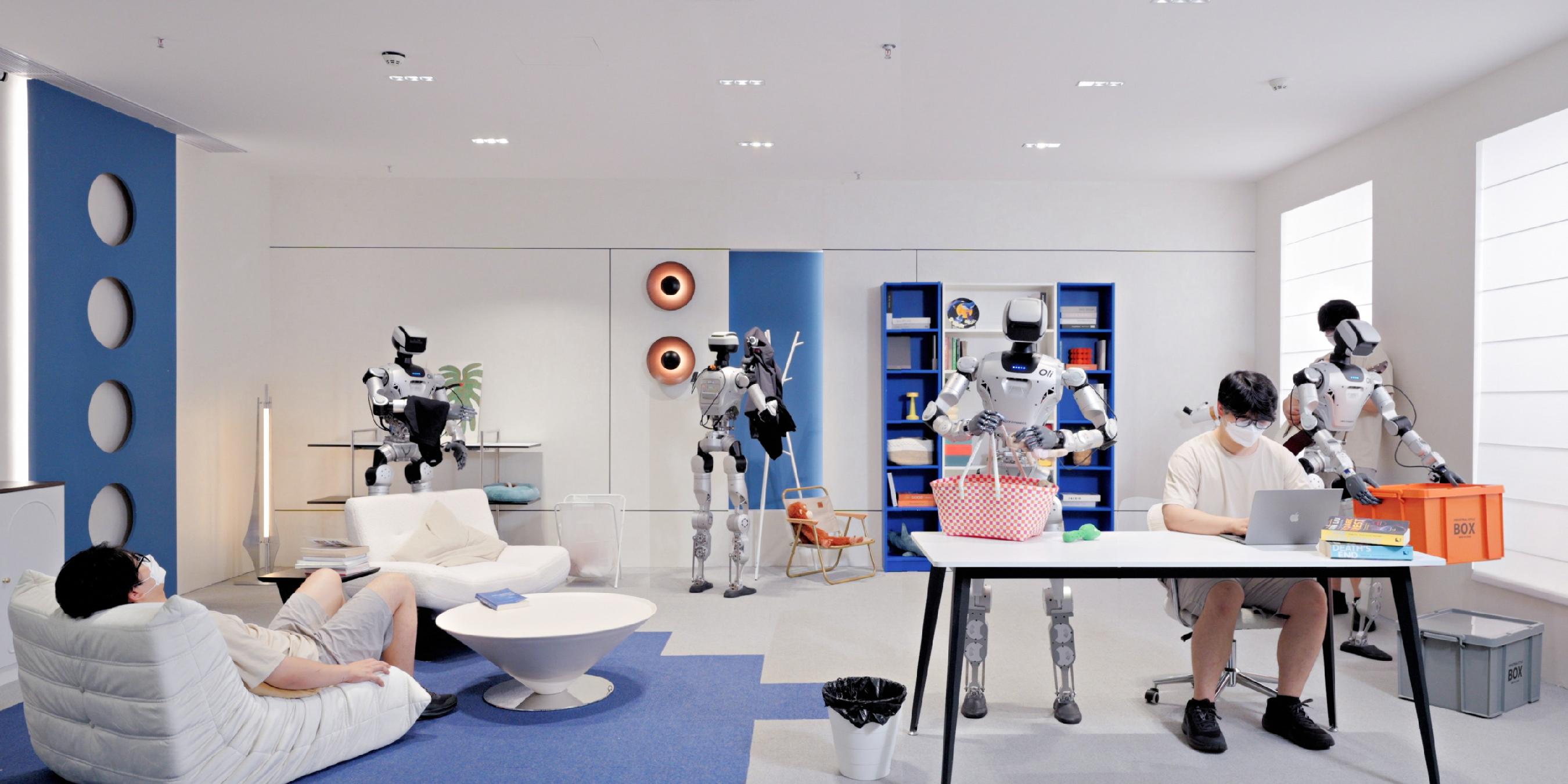
At the beginning of this year, leaders conducted research in Guangdong, and Zhuiji Power was one of the invited companies to participate. They demonstrated the humanoid robot Oli with perception to autonomously climb stairs on site.
On January 12th, less than two weeks later, Zhuji Power officially released LimX COSA (Cognitive OS of Agents), a embodied intelligent agent operating system for the real physical world, based on full body operation control.
COSA divides the capabilities of robots into three layers. The lower level is responsible for overall body movement control, including balance, walking, and power generation. The movements are generated in real time by a self-developed cerebellar basic model for individual dynamics; The top-level is responsible for cognitive decision-making, undertaking understanding, memory, and interaction; The middle layer is responsible for scheduling, breaking down top-level tasks into executable actions at the bottom layer. Navigation, obstacle avoidance, grasping, operation, and going up and down stairs are all combined on this layer.
The robotics industry tends to refer to cognition as the brain and motion control as the cerebellum. The two have different rhythms, with cognition thinking in seconds and motion control correcting in milliseconds, allowing the two systems to operate together without interfering with each other inside the robot. This is the most difficult part of this operating system.
From publicly available information, robots equipped with COSA are capable of thinking, moving, and working while thinking.
In the demonstration of COSA's debut, the package was blocked by debris. Oli first removed the obstruction and then took out the target package. Perception, decision-making, and actions were completed in the system relay without human intervention throughout the entire process. COSA 0.5, released on July 15th, focuses on optimizing the bottom and middle layers, with more stable motion control and the middle layer mastering more complex and comprehensive task execution capabilities.
This route has a comparison across the ocean.
In the demonstration video of Helix 02, the robot is cleaning dishes and turning off the dishwasher in the kitchen without any human intervention throughout the process.
At present, there are only two humanoid robot companies in the world that treat the brain system as their core product and conduct self-developed software and hardware full stack. One is in Silicon Valley and the other is in Shenzhen.
First comes the body, then comes the brain
In 2007, Steve Jobs quoted computer scientist Alan Kay at the first iPhone launch event, saying that those who take software seriously should create their own dedicated hardware.
In the robotics industry, this statement holds true even more thoroughly. Motion control operates in milliseconds, with instructions directly sent to specific joints, motors, and structural components. With a different body, the control system needs to be overturned and restarted. The brain cannot fit into a body made by others. To be a brain company, one must first have their own body.
Zhang Wei has a background in robot motion control and taught at Ohio State University in the United States for many years before returning to China to start a business.
In his opinion, manufacturing the body of a robot is not difficult, easier than building a car, but the real challenge lies in control. Zhuji Power has been established for four years, with self-developed hardware, full body motion control, full body movement operation, and brain system, with over 80% of the research and development personnel.
In December 2023, the humanoid robot CL-1 will be unveiled; In October 2024, the globally leading three in one multi form bipedal robot TRON 1 will be released to the global research market; Last year, the full-size humanoid robot Oli was launched; In December last year, the multi form embodied robot TRON 2 opened for pre order, with a body that can switch between dual arm, bipedal, bipedal, and even humanoid configurations, and is dynamically positioned as a universal base for embodied intelligence; In May of this year, the interactive humanoid robot Luna was released and has been delivered to domestic and overseas customers.
As of now, Zhuiji Power's entire product line has received thousands of orders, with over half coming from overseas. The first few hundred units of each product line have already been shipped.
Global Capital Map
Previously, the financing of embodied intelligence companies mainly relied on domestic investment institutions and industry funds, and the investment structure of companies like Zhuiji Power in this round is quite rare among domestic peers.
On the list of investors, there are two consecutive rounds of investment from United Arab Emirates' Stone Venture, global investment firm IDG Capital, pan European industry and investment groups GGG and Redstone Ventures, global high-tech growth fund Huashan Capital, global AI hardware intelligent manufacturing enterprise Lansi Technology (300433. SZ) and Hefei Binhu Industrial Development Group, Oasis Capital, Cornerstone Capital, Nanshan Zhanxin Investment under Shenzhen Nanshan District Government, Shangqi Capital under SAIC Group (600104. SH), NIO Capital under NIO (09866. HK), and other old shareholders who continue to invest.
In the past four years, three groups of faces have appeared on the shareholder list of Zhuji Power.
The earliest financial investment institutions to enter the market were Fengrui Capital, Mingshi Capital, Oasis Capital, Lenovo Venture Capital, and Kunzhong Capital; Subsequently, industry giants such as Alibaba (09988.HK) and JD.com (09618. HK) entered successively; By the B-round and Pre IPO in February this year, international capital had become the main player on the list.
Overseas institutions enter the market with a focus on already opened overseas businesses. The robots with progressive power have already been sold in overseas markets, with Europe and the Middle East being its key business areas. Leishi Capital comes from the United Arab Emirates and has made two rounds of sales within six months, while GGG and Redstone have rooted themselves in Europe. At the first AI industry summit in Europe, Zhuiji Power participated on the same stage as physical AI giants such as OpenAI and Nvidia, and its robots were jointly exhibited with European customers.
Mass production is another challenge facing all humanoid robot companies. A humanoid robot has about a thousand components, and moving from the trial production pace of producing hundreds of units per year to the industrial pace of producing tens of thousands of units requires a consumer electronics level manufacturing system and quality control experience. Lansi Technology has been providing precision manufacturing services for the Apple industry chain for over 20 years, while also having a global production and customer network, which is directly related to the overseas expansion plan of Zhijian Power.
There are also three institutions with automotive backgrounds on the list. Behind Shangqi Capital is SAIC, NIO Capital comes from a new car manufacturing enterprise, and Zhongding Co., Ltd. is one of the top 100 global automotive parts suppliers. Car companies have both parts supply chains that have been validated by automotive standards and industrial scenes where humanoid robots first entered. In the United States, Figure's robots have been installed with metal plates in BMW's factories.
Zhang Wei said at the media exchange meeting that the company has abundant funds, and the main purpose of this round is not to raise funds or increase valuation, but to introduce important global resources into the company before going public.
As early as March this year, Zhuiji Power completed its shareholding reform, and the listing process was launched accordingly. Another company in the embodied intelligence industry has publicly entered the listing channel.
Between Yangtai Mountain and Tanglang Mountain in Nanshan District, Shenzhen, there is a valley about 10 kilometers long on the Dashahe Innovation Corridor, which gathers thousands of robots and supporting enterprises. It is called the "Robot Valley" of Shenzhen, and the headquarters of Zhuiji Power is located on this corridor.
After the post investment valuation was settled, "Robot Valley" gave birth to a super billion unicorn focused on "humanoid robot brain systems".
In a public interview, Zhang Wei compared the goal of Zhuiji Power to NVIDIA, which is to build an underlying technology platform that is not bound to a single model, allowing developers from different fields to develop applications on it. His mission to the company is to create robots that are easy to implement in the world.
Serve people, not processes. ”Zhang Wei said.


Want to buy a smart car with a budget of over 100000 yuan? Cannot bypass the Aion N60

Why can the repeatedly banned borderline marketing always get out of the circle smoothly?

The APEC Digital Week city promotion video is officially launched, and Chengdu, the city of innovation and creation, will keep running with the world!


 WeChat registration or login


 Subscribe