2026-07-13 20:20


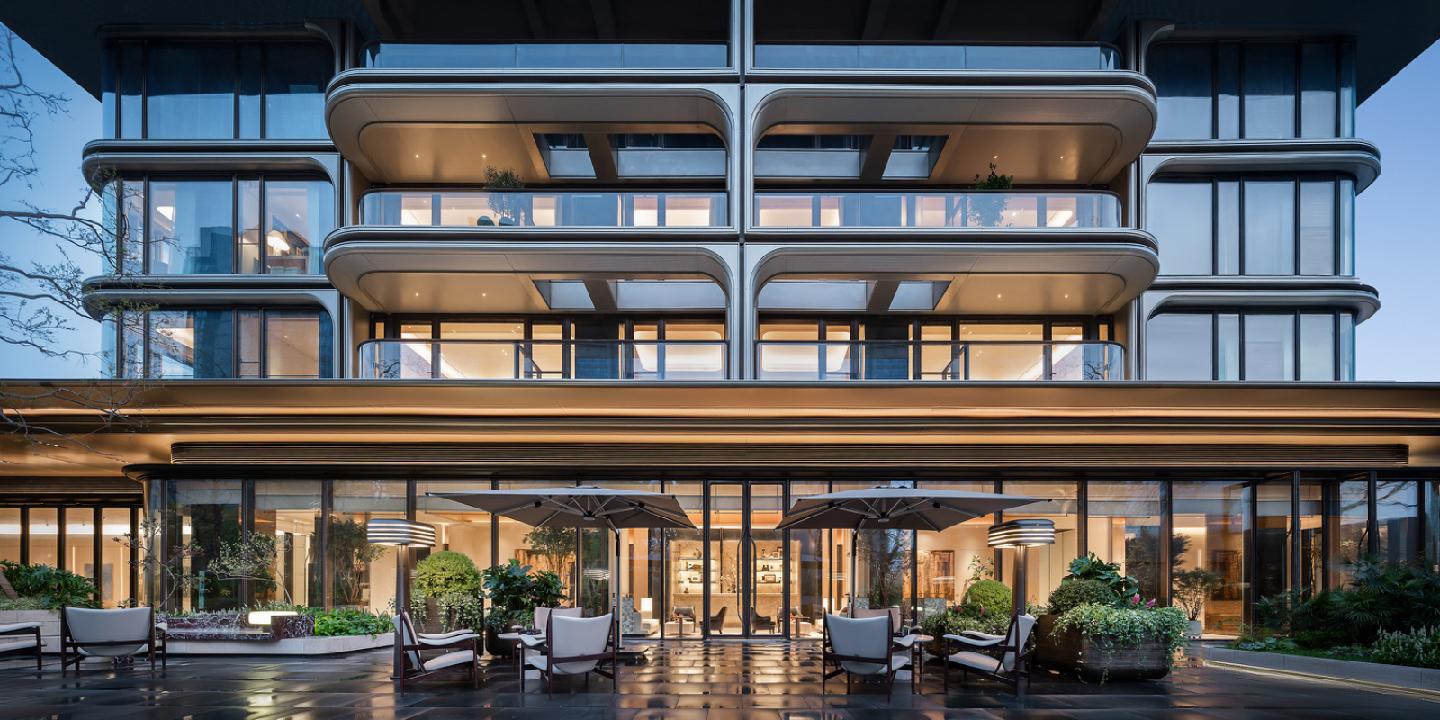
In the summer of 2026, Shanghai's Xuhui Riverside and Hongkou North Bund, two residential projects that have not yet been delivered, welcomed a group of professional visitors.
The tour route ranges from the physical craftsmanship model of the "good house" in the construction area to the full dimensional real-life demonstration area, from full dimensional delivery presentation to life service scene experience, showcasing the construction process of a park from drawings to finished products.
This is the annual "Green Construction Site" internal observation meeting of Greentown. In the real estate industry, it is not a common practice to systematically sort out and centrally benchmark construction standards and techniques, but for Greentown, this is a routine action that has been adhered to for many years. But after the first inclusion of "good houses" in the government work report and the official implementation of the "Residential Project Standards", this observation was given deeper practical significance - it is no longer just a repeated verification of existing standards, but a systematic quality recalibration towards new standards and demands.
For a long time in the past, the real estate industry competed for land, capital, and sales speed. As the market enters the era of stock competition, housing demand is shifting from "whether there is" to "whether it is good or not", and the focus of competition is shifting towards the product side. What truly determines the quality of a house is not the model in the sales office, but whether the design, standards, and technology can be realized as the final delivery on the construction site.
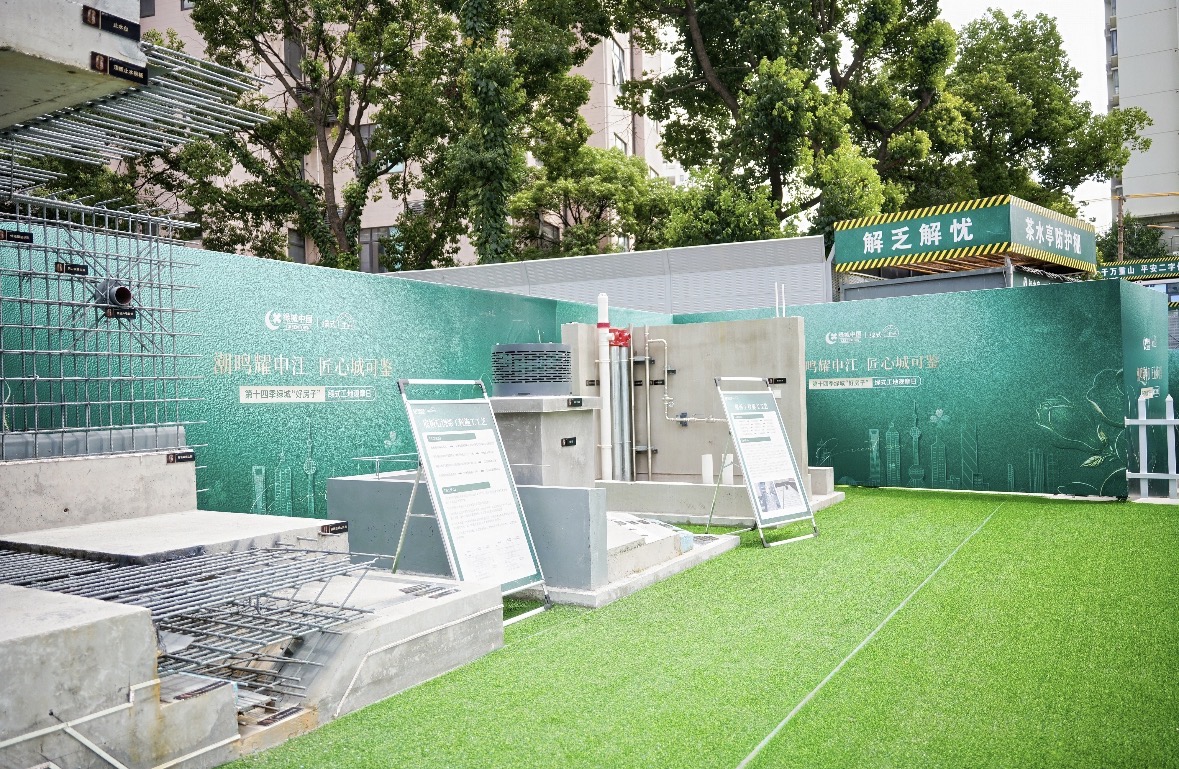
The "Green Construction Site Observation Conference" of Greentown presents the construction status, material selection logic, and process grinding results of high-quality projects, providing a platform for engineering teams to benchmark, identify differences, and improve. It is an internal quality inspection centered around the "good house" standard - in the current era where "good house" has become a new competitive coordinate, whether the product realization ability can withstand the strictest self-examination.
Policy guidance and enterprise standards for "good houses"
'Good house' is not a new concept, but it has truly become an industry keyword in the past two years.
Since 2023, the Ministry of Housing and Urban Rural Development has repeatedly emphasized the promotion of the construction of "good houses". In August 2024, a relevant person in charge of the Ministry of Housing and Urban Rural Development stated at a press conference of the State Council Information Office that "good houses" are not only systematic projects, but also new industries and tracks, and affordable housing should also be built into "good houses". In 2025, "good houses" will be included in the government work report for the first time, clearly proposing the construction of safe, comfortable, green, and smart residential products. Subsequently, the newly revised "Residential Project Specification" was officially implemented, and multiple indicators such as residential floor height, floor sound insulation, elevator configuration, aging resistance, and building insulation were simultaneously improved.
The changes in national standards not only respond to the demand of residents to improve their living quality, but also reflect the deep adjustments that the industry is undergoing: the demand for new housing is slowing down, and improved demand has become an important support for the market; Details that were previously overlooked, such as sound insulation, thermal insulation, air quality, public spaces, and property services, are beginning to affect purchasing decisions. The competition in real estate has shifted from "selling fast" to "living well".
In this context, more and more real estate companies are starting to re-establish product standards.
In 2024, Greentown released the "Greentown China Good House Product Standard 2024", becoming the first real estate company in the industry to form an enterprise level "good house" standard. This standard has a total of 226 technical clauses, of which 190 are higher than national and industry standards, covering multiple dimensions such as building safety, green and low-carbon, smart communities, healthy living, and the entire life cycle. In 2025, Greentown will systematically update this standard and launch the "Greentown China Good House Product Standard 2025", with a total of 45 updates and 38 new additions, ultimately condensing into 270 core guidelines. Compared to the bottom line set by national standards, enterprise standards determine to what extent a company is willing to improve its products.
In recent years, Green City has formed and applied the "Ten Major Technology Systems" around the actual needs of residents, covering high-quality door and window systems, healthy air systems, silent noise reduction systems, home smart systems, composite landscape systems, whole house water purification systems, same floor drainage systems, industrial interior systems, versatile space systems, and convenient living systems, corresponding to specific issues that affect the living experience such as sound insulation, thermal insulation, air quality, and water quality. In order to make abstract standards perceptible, Greentown has also implemented "Good House Laboratories" in multiple projects, breaking down technology into visible, audible, and measurable display content through physical models, interactive installations, and scene experiences.
However, standards and laboratories do not equate to product competitiveness. The industry never lacks standards and concepts. What truly determines the value of a product is whether the standards can be implemented during the construction process and whether the technology can ultimately be transformed into a living experience.
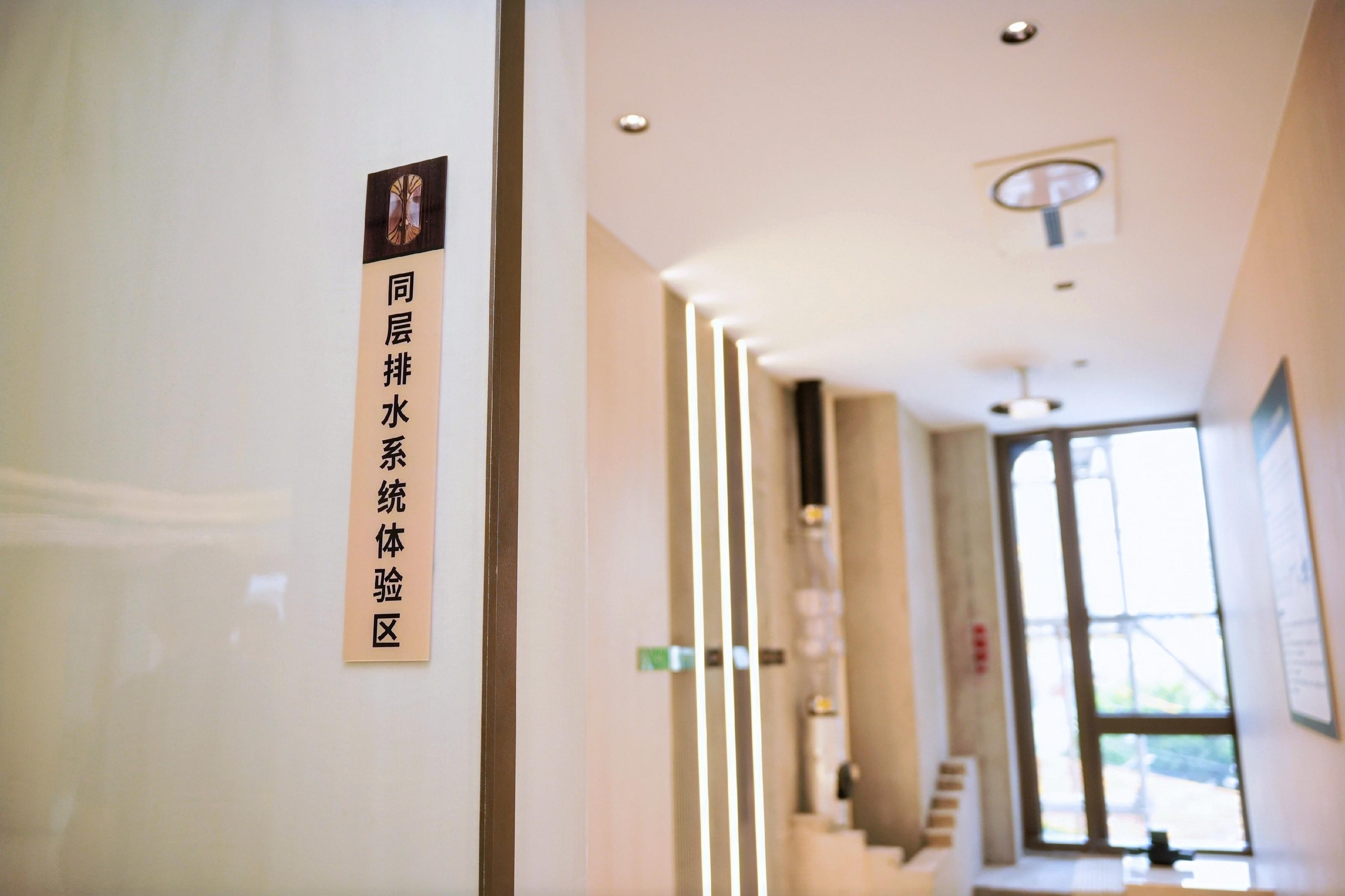
According to Greentown, by 2025, all 25 newly acquired projects in the Zhejiang region have applied the "Good House" related technology system. The two projects, Shanghai Chaoming Oriental and Shanghai Chaoming Bund, which were observed in Shanghai this time, undertake further verification tasks - to test whether enterprise standards can be truly implemented throughout the construction process in the high standard market environment of super first tier cities.
From national policies to enterprise standards, from experimental verification to engineering practice, the construction path of "good houses" is gradually forming a closed loop.
How technology can become a living experience
Compared to model rooms, construction sites can answer another question: how is a "good house" built.
The laboratory can verify the feasibility of a material or process, but cannot fully simulate complex construction environments. From design to delivery, residential projects need to go through the implementation of multiple professional projects such as the main structure, mechanical and electrical installation, doors, windows, curtain walls, waterproofing and insulation, and fine decoration. Any deviation in any detail may affect the final living experience. For real estate companies, the laboratory solves the problem of 'whether it can be done', while the site inspection solves the problem of 'whether it can be done'.
If we break down the quality of residential properties, the real concerns of homebuyers are only a few of the most direct issues: whether the house is quiet enough, whether it is warm in winter and cool in summer, whether the air is fresh, whether drinking water is safe, and whether public spaces are comfortable. These seemingly trivial issues ultimately correspond to each process on the construction site.
The two projects observed by Greentown this time precisely answer the quality questions in two different scenarios.
The core challenge facing Shanghai Chaoming Oriental is how to share more public space with residents in the urban core area where every inch of land is precious? The project is located in the core area of the west bank of Xuhui River, with very limited land conditions. Greentown's response is to adopt a design that combines a 6-meter elevated layer with a 6-meter underground excavation, forming a three-dimensional space with a height difference of about 12 meters and a sunken courtyard of about 3000 square meters. This also means that the construction difficulty of structures, waterproofing, drainage, etc. has greatly increased, but ultimately resulted in the extension of three-dimensional landscapes and public activity spaces. The layout design responds to the changes in the family life cycle: through structural optimization, the main living space reduces the restrictions of load-bearing walls, and when family members change, the layout inside the residence can be more flexibly adjusted without frequent changes in housing.
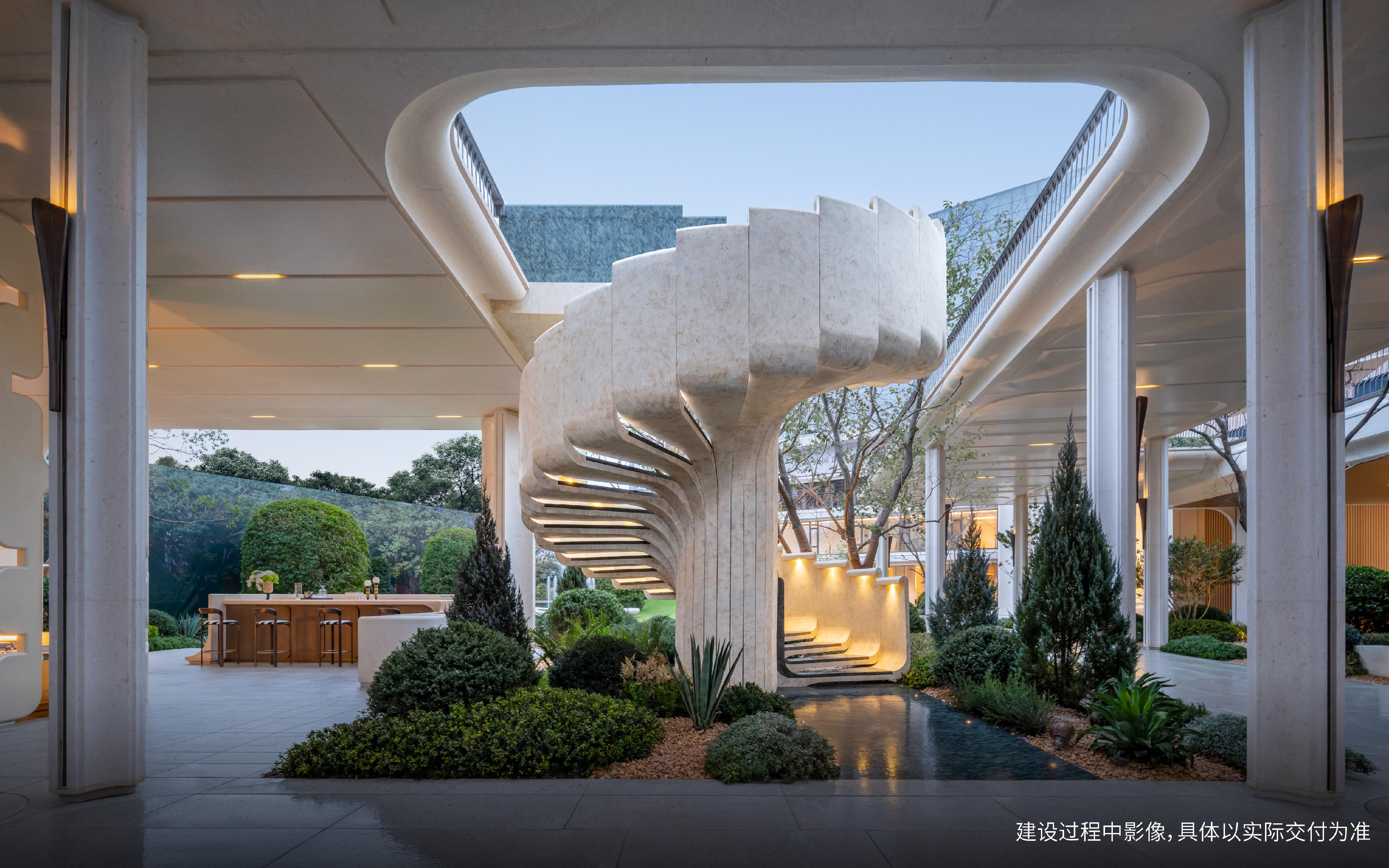
Shanghai Chaoming Bund answers another question: how to maintain tranquility and privacy for residents in extremely prosperous urban environments? The project faces south towards the North Bund Central Park, with a straight-line distance of about 900 meters from the Huangpu River bank, offering a panoramic view of the Lujiazui skyline. In order to maintain quietness in high-density urban environments, the project implements full cycle sound environment control through multiple measures such as high-rise doors and windows, soundproof floor slabs, and silent drainage,
Obtained the gold level certification for peaceful residential properties. For homebuyers, this means that daily disturbances such as footsteps and equipment running from upstairs are systematically reduced, and quietness becomes a perceptible living experience rather than just a detection data.
The same applies to the air environment. The fresh air system has gradually become a standard configuration for improved residential buildings, but what truly affects the living experience is whether different systems can work together. Chaoming Bund adopts a three pipe dual supply air conditioning system, a two-way flow total heat exchange fresh air system, and a humidification system to improve comfort through comprehensive control of temperature, humidity, and air quality - the indoor environment is not stuffy or humid in summer, and it will not be too dry due to long-term use of heating in winter.
In terms of water environment, from municipal water supply to terminal water use such as kitchens and bathrooms, there are multiple links involved, including pipelines, water tanks, and purification equipment. Chaoming Bund adopts a whole house water purification system, establishing a complete management system around household water use to ensure water quality as much as possible.
It is worth noting that this observation did not focus on showcasing new technologies in a flashy manner, but rather on striving to transform complex engineering language into perceptible quality scenarios. Buyers do not care which type of profile is used for doors and windows, nor do they remember how many millimeters the insulation layer is thick; What truly affects the living experience is whether it is still warm near the window in winter, whether it can rest quietly at night, and whether it can be safely consumed by turning on the faucet.
In this sense, the focus of competition for "good houses" is not on technology itself, but on what technology ultimately improves.
Why have construction sites become a new competitive advantage
For the real estate industry, it is not easy to examine the internal management and construction standards of construction sites separately.
Unlike the exquisitely packaged model room, the construction site is not decorated, and every process and node is truly exposed to visitors: whether the waterproofing is standardized, whether the mechanical and electrical installation is neat, and whether the pipeline layout is reasonable, it is almost clear at a glance. That's why construction sites can better reflect a real estate company's ability to create products.
Since 2017, Greentown has selected 1-2 benchmark projects annually to hold internal site observation activities. The premise for continuously organizing such internal observation is that the enterprise has a quality management system that runs through the entire project cycle.
It is reported that around the construction of high-quality residential buildings, Greentown has gradually formed an engineering management mechanism that covers the entire project cycle, including green engineering management, lean engineering planning, green precision standards, third-party quality evaluation, engineering digital platform, and comprehensive real-life demonstration zone. Compared to single technological innovation, this system emphasizes more on standardized management and full process control, with the aim of reducing quality differences between projects and improving the stability of product realization.
This may be more practical than a certain technological innovation. Residential buildings are typical products that combine industrialization and handicrafts. With the same drawings and materials, the quality presented by different levels of construction management may vary greatly. What truly determines product competitiveness is not just how many new technologies are adopted, but whether the technology can be stably implemented in every project through continuous internal learning and systematic control.
In the past, the competition was about who developed faster; Now, we are competing to see who built it better. The observation of "green construction sites" is a normal action for Greentown to cultivate its internal strength, and it is also an aspect of the industry's shift towards the "product side" of competition - the ability to deliver products, which has become a key benchmark for measuring the strength of real estate enterprises.
What will determine market competitiveness in the future may no longer be how luxurious the sales office is or how well promoted it is, but rather the precision of construction site management, the stability of standard implementation, and the ability of products to sustain living quality for ten or twenty years after delivery.
From laboratory validation of technology, to on-site inspection standards, to final product delivery, real estate competition is returning to the building itself.
Want to buy a smart car with a budget of over 100000 yuan? Cannot bypass the Aion N60

Why can the repeatedly banned borderline marketing always get out of the circle smoothly?
The APEC Digital Week city promotion video is officially launched, and Chengdu, the city of innovation and creation, will keep running with the world!


 WeChat registration or login