2026-07-10 17:48


In the past three years, the parameter scale of large models has jumped from billions to trillions, and the demand for computing power from AI has far exceeded the carrying capacity of 10000 card clusters. According to the Stanford University AI Index Report 2026, as of early 2025, the computing power scale in the United States is about 2400 EFLOPS, while in China it is about 1053 EFLOPS, with a gap of more than double. The China Academy of Information and Communications Technology estimates that after the chip ban, the available high-end chips in China are about one eighth of those in the United States.
But in China, there are only a few enterprises capable of building a 100000 card level national AI computing power cluster - this not only requires a sufficient number of domestic chips, but also tests a company's system engineering capabilities in high-speed networks, storage, heat dissipation, cluster scheduling, and other aspects of the entire chain.
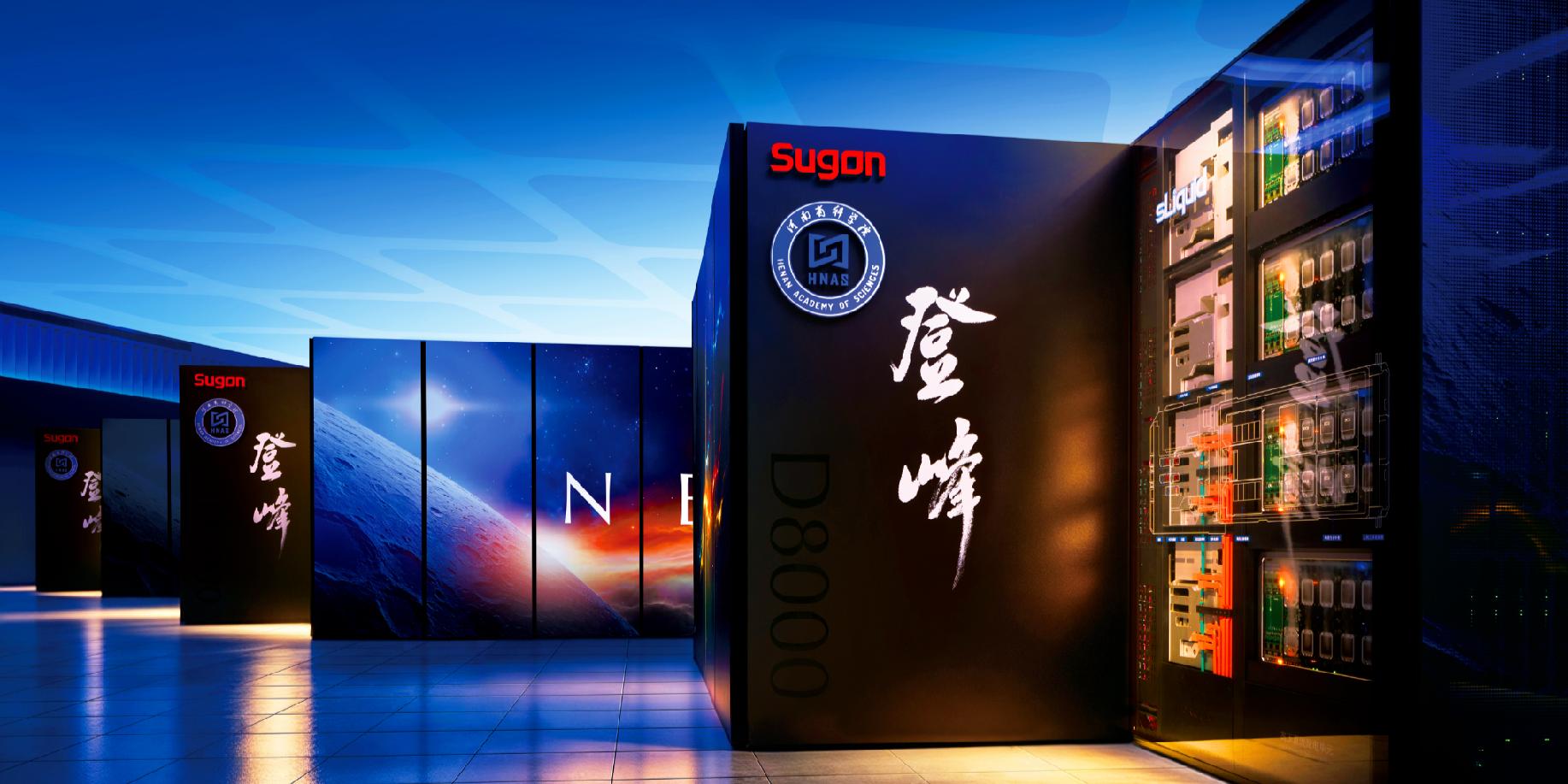
On July 10, China Science Dawning (603019. SH) announced at the 2026 Intelligent Computing Application Conference of the Photosynthetic Organization that Dawning 8000 (Summit), the first nationwide 100000 card AI super cluster in China, was officially completed and synchronously connected to the national supercomputing Internet.
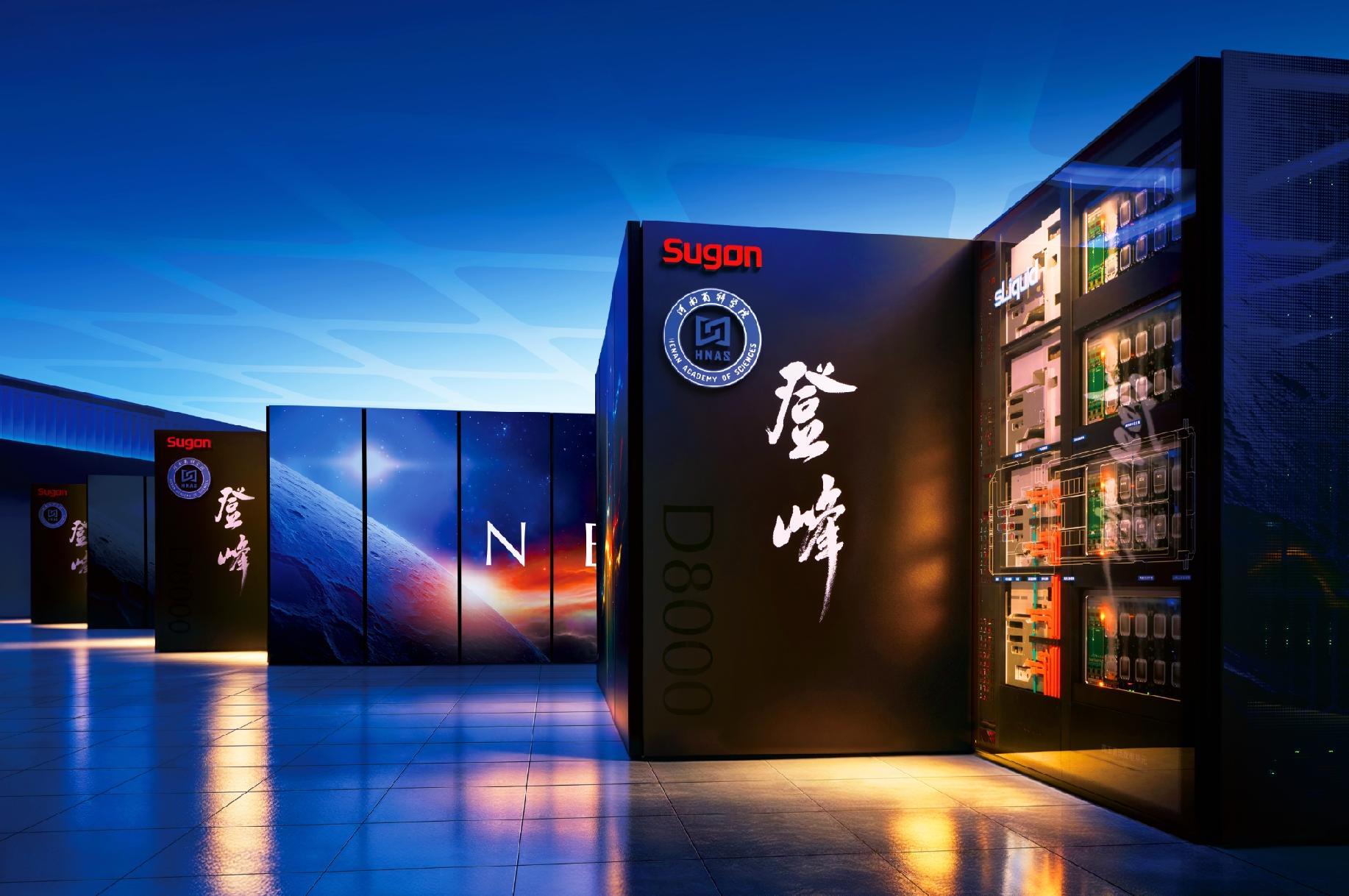
The domestic AI computing power cluster has truly entered the era of 100000 cards. 100000 computing cards working together can theoretically complete scientific simulation tasks that used to take months to complete in one day.
The "Digital China Development Report (2025)" shows that by the end of 2025, 42 intelligent computing clusters with a capacity of 10000 cards have been built nationwide, and there is no precedent for a cluster with a capacity of 100000 cards before this. In August 2025, the State Council issued the "Opinions on Deepening the Implementation of the" Artificial Intelligence+"Action" (Guofa [2025] No. 11), which clearly stated the need to "accelerate breakthroughs in ultra large scale intelligent computing cluster technology and engineering implementation". The Dawn 8000 is the first national production system with a capacity of 100000 calories implemented under this policy direction.
On the same day, Zhongke Shuguang also announced a strategic cooperation with Beijing Institute of Scientific Intelligence to launch the development and construction of the second national 100000 card native super intelligent fusion computing power system.
One system runs two types of computing power
Large scale model training and scientific simulation both rely on large-scale parallel computing, requiring a large number of computing cards to be connected together through high-speed networks to work together. The number of cards determines how large the model can be trained and how complex scientific problems can be simulated. Simply put, training a trillion parameter large model requires far less computing power from a single server. It is necessary to have tens of thousands or even hundreds of thousands of computing cards share the task simultaneously, with each card computing a local area, and then summarizing the results through high-speed networks.
The greater challenge comes from the size of the cluster. Especially at the level of 100000 cards, the real bottleneck is not the number of cards, but in system engineering: data transmission, heat dissipation, storage read/write speed, and task scheduling between 100000 cards. Any weakness in any link will slow down the overall efficiency of the system.
The traditional approach is to separate scientific computing and AI training into two independent systems and deploy them separately. Scientific computing requires high-precision floating-point computing capabilities, while training large models relies on low precision and high-throughput computing resources. The accuracy requirements of the two are different, and in the past, they could only run on different systems separately. Taking drug development as an example, the research team needs to call on supercomputing resources when conducting molecular dynamics simulations, and switch to another AI cluster when training AI prediction models. The data is transferred between the two systems, and the intermediate migration, format conversion, and reconfiguration consume a lot of time. The process is complex and the efficiency is limited.
The Shuguang 8000 adopts a "native hyper intelligence fusion" architecture, which supports full precision computing from FP64 (double precision floating-point operation, used for high-precision scientific computing) to INT8 (low precision integer operation, used for AI inference) in the same system. Scientific computing and large-scale model training are completed within the same system, without the need for cross system scheduling of data. For users who need to use two types of computing power simultaneously, replacing two sets with one system reduces both infrastructure investment and daily operation complexity.
The entire system covers the entire chain of chips, computing, storage, networking, heat dissipation, applications, and services. The core links are all domestically developed and equipped with the self-developed intelligent computing power management platform Gridview, providing unified job scheduling, real-time monitoring and diagnosis, and mixed computing resource management for 100000 card level super large clusters. Domestic chips provide underlying computing support. The scaleFabric high-speed interconnect network adopts IB like native lossless RDMA technology (a communication method that allows direct data transmission between computing cards and bypasses the operating system), which can support stable connections of 100000 card clusters and has millisecond level link failure recovery capability. The recovery speed does not change with the growth of network size. The ParaStor distributed storage system achieved first place in both the production full node and 10 node performance rankings in the 2026 IO500 global ranking. Immersion phase change liquid cooling technology (immersing servers in a special coolant, which absorbs heat and transforms into gas to carry away the heat) can support single cabinet MW level high-power density deployment. It uses domestically developed refrigerants to achieve natural cooling throughout the year, without relying on external refrigeration equipment, and can support data center PUE as low as 1.04- as a reference, the industry average PUE is around 1.3. Ultra high density deployment also significantly reduces the footprint of data centers.
The Dawn 8000 has completed in-depth optimization of over 300 applications, covering more than 20 fields such as large models, robots, automobiles, innovative drugs, new materials, quantum computing, astronomy and meteorology, with over 70 applications achieving a scale expansion of 10000 calories. 80000 calories of computing power to complete the full process simulation of protein folding - protein folding is a key prerequisite step for new drug development. Traditional methods take several years, but large-scale computing power can compress this process into weeks or even days. 90000 calories of computing power were used to complete high-precision simulations of 3.16 trillion atomic DFT (DFT, also known as density functional theory, is the core computational method for simulating atomic behavior in materials science), and 88000 calories of computing power were used to directly simulate 328 trillion grid turbulence. These simulations are crucial for engineering research and development in fields such as aviation engines and ship design. More than 15 applications have reached the computing scale of the Gordon Bell Prize, the highest award in the field of supercomputing. Previously, there was no single system in China that could independently carry this level of computing tasks.
At the software level, Zhongke Shuguang has launched OneScience, a one-stop development platform for scientific models. Researchers describe their requirements in natural language, and the platform can automatically schedule computing power, generate code, and submit computational tasks, compressing the entire process from environment configuration to result output in traditional scientific research into one dialogue interaction. At present, the platform has provided services to more than 20 key research institutions, integrating over 30 industry models and more than 100 AI primitives, covering major disciplines such as materials, biology, and meteorology.
The design margin of the scaleFabric network architecture can support flexible expansion to a scale of one million cards, with 100000 cards being the first scale for the implementation and operation of this system.
National Production Sample
During the conference, Zhongke Shuguang reached a strategic cooperation agreement with Beijing Institute of Scientific Intelligence to launch the development and construction of the second national 100000 card super intelligent fusion computing power system. On the day of completion of the first set, the second cooperation plan was announced, and the new system will focus on meeting the large-scale scientific computing needs in the field of AI for Science.
The Beijing Institute of Scientific Intelligence (AISI) was established in September 2021 and is the world's first new research and development institution dedicated to AI for Science (accelerating scientific research using artificial intelligence methods), positioned as "liberating scientists and empowering new industries". The Bohr Science Space Station, jointly launched by the research institute and DeepTech, is the world's first AI research platform covering the entire process of "reading literature, doing calculations, conducting experiments, and interdisciplinary collaboration", with over 4.5 million global scientist users. The State Council's Opinion on Deepening the Implementation of the "Artificial Intelligence+" Action lists "Artificial Intelligence+Science and Technology" as the top of the six key areas, and explicitly proposes to achieve extensive and deep integration of artificial intelligence and key areas by 2027.Researchers in fields such as materials science, drug development, weather forecasting, and fluid mechanics are rapidly increasing their demand for large-scale computing systems that support multiple computational accuracies simultaneously - this is the basis for the demand for the second 100000 card system to be signed and launched on the same day as the first one is completed.
Dawning 8000 was built to access the national integrated computing network by relying on the national supercomputing Internet. This platform was initiated under the guidance of the Ministry of Science and Technology and will be launched in April 2024. It has been connected to more than 30 national level supercomputing centers and intelligent computing centers in 14 provinces and cities, with over 1 million registered users and more than 7200 computing power products launched. It has processed nearly 200 million jobs in total. After the 100000 card cluster is connected, the computing power will be open to universities, research institutions, and enterprises through the national integrated computing power network.
In April 2026, the core nodes will further launch the "Super Scientific Computing Intelligent Agent" strategy. Researchers will describe requirements through natural language, and the system will automatically complete task decomposition, model calling, and computing power scheduling. Currently, it has covered nearly a hundred high-frequency scientific research scenarios, with a peak daily processing of over 1.03 million tasks. For university research groups that were previously limited by computing power, accessing 100000 card level computing power means that their research conditions in cutting-edge fields such as protein structure prediction, new material screening, and meteorological modeling are approaching the level of top research institutions. For industrial users who are laying out AI applications, a fully accurate computing power system that supports both scientific computing and AI training reasoning can reduce redundant construction and overall cost of computing power procurement.
The completion of a 100000 card AI super cluster not only validates the engineering capabilities of Zhongke Shuguang, a company. Domestic chips, high-speed interconnect networks, distributed storage, liquid cooled cooling equipment, and scheduling software have all completed practical operational tests at the 100000 card level in this system for manufacturers along the entire supply chain.
For upstream chip manufacturers, there are measured data on the long-term stability of their products at extreme scales; For network and storage providers, the technical solution has been fully validated in a large-scale cluster. This kind of full chain engineering verification has no precedent in China before, which means that when constructing computing power clusters of the same scale in the future, there is already a set of validated reference schemes for technology selection, supplier combination, and engineering processes, and there is no need to explore from scratch.
In the field of computing infrastructure, the first vendor to deliver a complete solution at a new scale often becomes the default option for subsequent similar projects - all technical selections and engineering processes have been tested, and the trial and error costs of later vendors are the lowest. According to data from the Ministry of Industry and Information Technology, more than 50 10000 card clusters are planned to be implemented nationwide by 2026, with a year-on-year increase of 233% in the number of 30000 card clusters. The scale of computing infrastructure is still rapidly increasing.
When more construction parties start planning 100000 card level clusters, the full chain technology solution, supply chain combination, and measured data of more than 300 applications provided by Shuguang 8000 are currently the only national production samples that can be referenced.

Want to buy a smart car with a budget of over 100000 yuan? Cannot bypass the Aion N60

Why can the repeatedly banned borderline marketing always get out of the circle smoothly?

The APEC Digital Week city promotion video is officially launched, and Chengdu, the city of innovation and creation, will keep running with the world!


 WeChat registration or login