2026-11-10 22:06

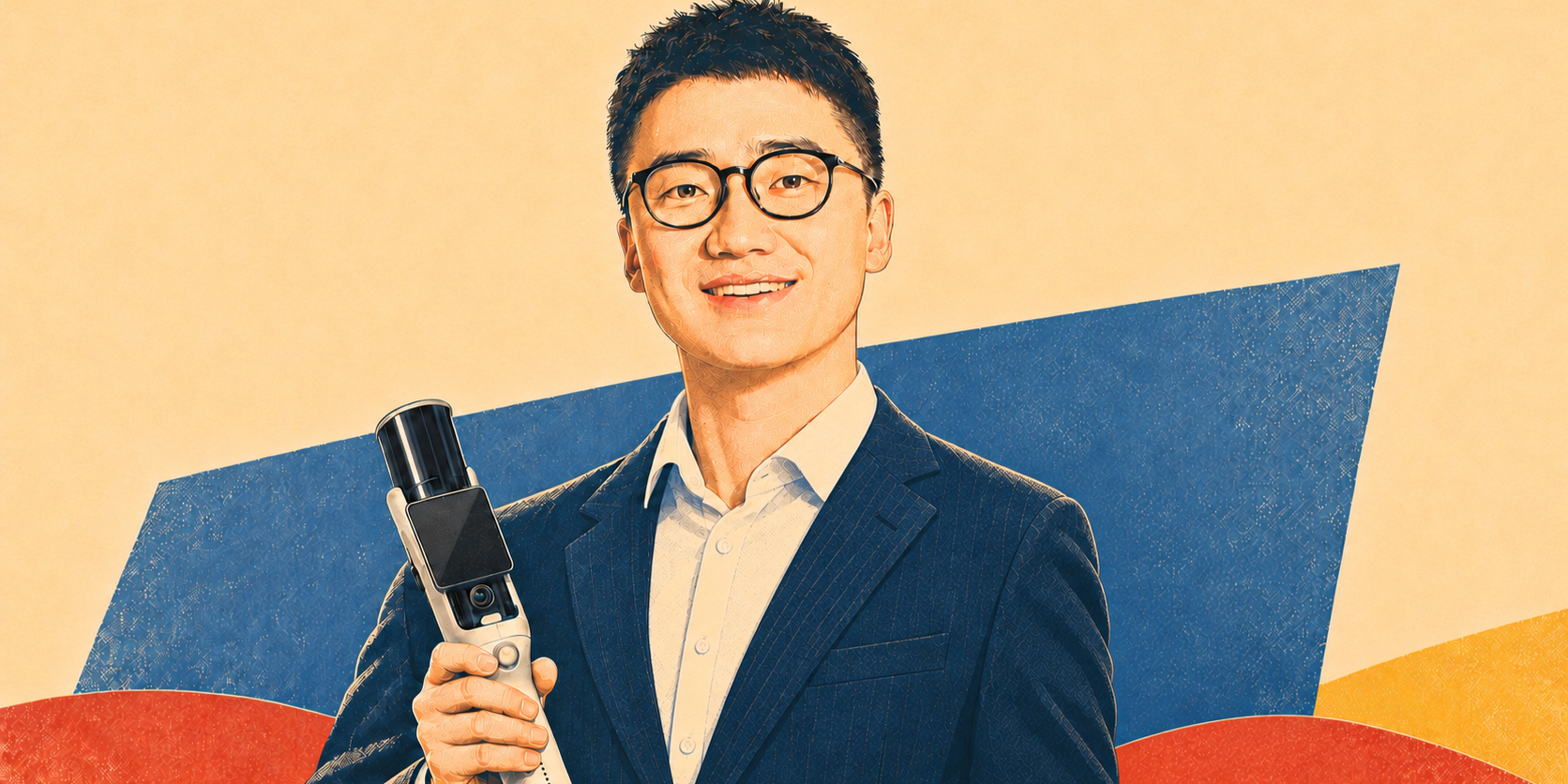
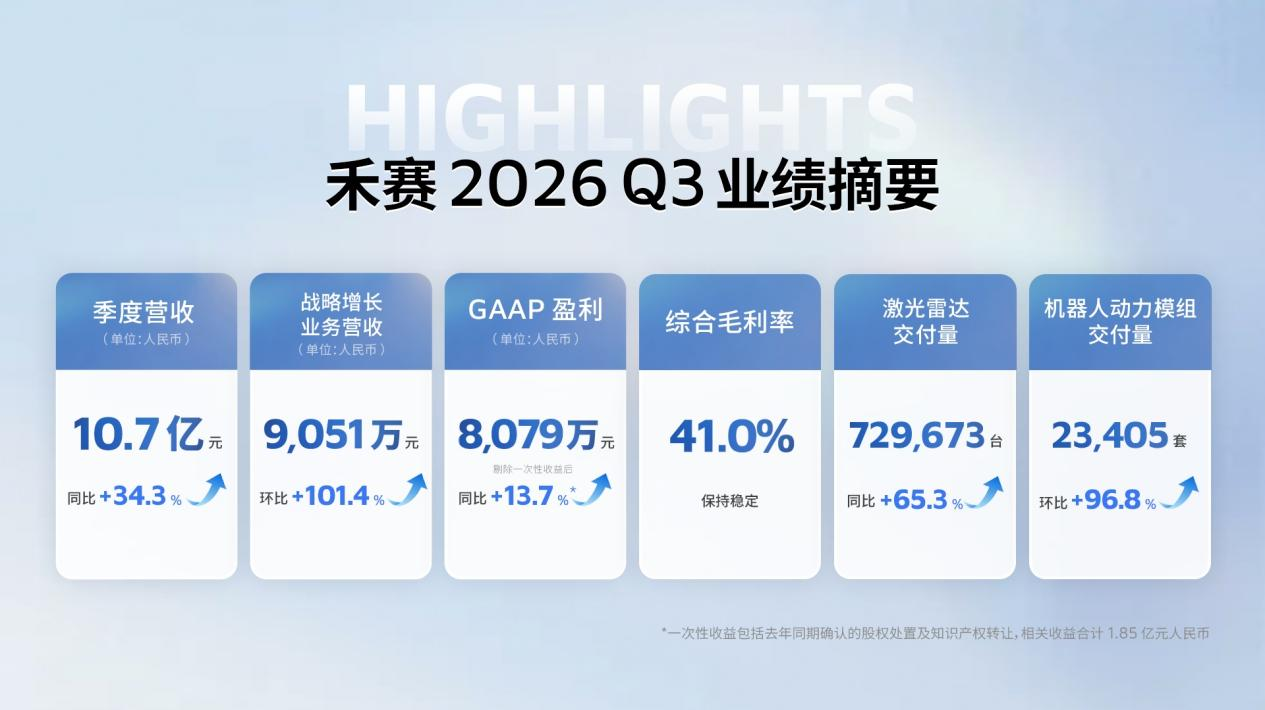
On November 10th, laser radar leader Hesai Technology released its third quarter financial report. The data shows that its revenue was 1.07 billion yuan, a year-on-year increase of 34.3%; GAAP net profit reached RMB 80.79 million. After excluding the equity disposal and intellectual property transfer proceeds confirmed in the same period last year (totaling RMB 185 million), the non GAAP profit for this quarter still increased by 13.7% year-on-year, achieving GAAP profitability for six consecutive quarters. The overall financial data is very stable.
Currently, the price war for complete vehicles is fierce, and there is great pressure to reduce costs in the automotive supply chain. It is not easy for Hesai to maintain such a stable financial foundation. Looking at the entire automotive sensing hardware track, it is also one of the few players who can withstand the wave of price reductions and stabilize profit expectations.
What is more noteworthy than the financial figures is a structural mutation hidden in the financial report: the revenue of Hesai Strategic Growth Business (SGI) reached 90.51 million yuan, a month on month increase of 101.4%, which has doubled. The revenue in the first three quarters has exceeded the original annual target of 100 million yuan.At the Q3 earnings conference call, the management of Hesai stated that "robot related revenue in the third quarter has exceeded 50% (including LiDAR, data, and joints).
Over the past decade, the market's perception of Hesai has been that it is a supplier of in vehicle LiDAR. Its business logic is to achieve economies of scale through selling hardware, in line with the increasing penetration rate of smart cars. But as the narrative dividend of digital AI gradually peaks, physical AI becomes the industry consensus.
The underlying logic of Hesai is also undergoing displacement. In the plan of Hesai CEO Li Yifan, in order for AI to move from the digital world to the real world, it must rely on two major infrastructures: a 3D data engine that understands the world, and a motion engine that drives robot actions.
The strategic growth business data in the Q3 financial report marks the official transition of Hesai's "two engines" from the R&D investment period to the performance realization period,Hesai's physics AI layout has been successfully implemented, becoming a super dark horse in the robotics fieldHesai is trying to answer a bigger question: how a hardware company that makes automotive sensors can break the ceiling and become the underlying infrastructure platform of the physical AI era.
Power module accelerates and increases volume, seizing the value pool of embodied intelligent hardware
In the vast landscape of physical AI, embodied intelligence, especially humanoid robots, is considered the most explosive potential terminal. In the hardware composition of robots, the power module is the core that determines their motion ability and accuracy.
Taking humanoid robots as an example, the number of driving joints for a single device is close to a hundred, and the power module accounts for over 50% of the total material cost (BOM) of the machine. This is a massive and irreplaceable market. For any enterprise that wants to get a share of the robot era, this is the 'maximum value pool' that must be captured.
In the robotics industry, the collaborative design of motors, reducers, and control algorithms is highly challenging. The entry path of Hesai is to leverage its strengths and reconstruct robot joints based on the reuse of underlying technologies in optomechatronics integration over the past decade, using automotive grade high reliability standards.
In terms of specific product evolution, Hesai has adopted a strategy of gradually covering from difficult to easy. They first used the highly precise and miniaturized "dexterous hand module" to break through the market gap, and after the technology was fully validated, they extended their capabilities to the "full body joint module" that can carry greater force.
The reuse of this underlying technology directly translates into highly competitive product metrics. Compared to similar products in the market, Hesai's agile manual power module has reduced its volume by 37% and weight by 42%, but its power density has increased threefold. The characteristics of "small, light, fast, strong, and precise" directly determine whether robots can complete high-speed movements and fine operations.
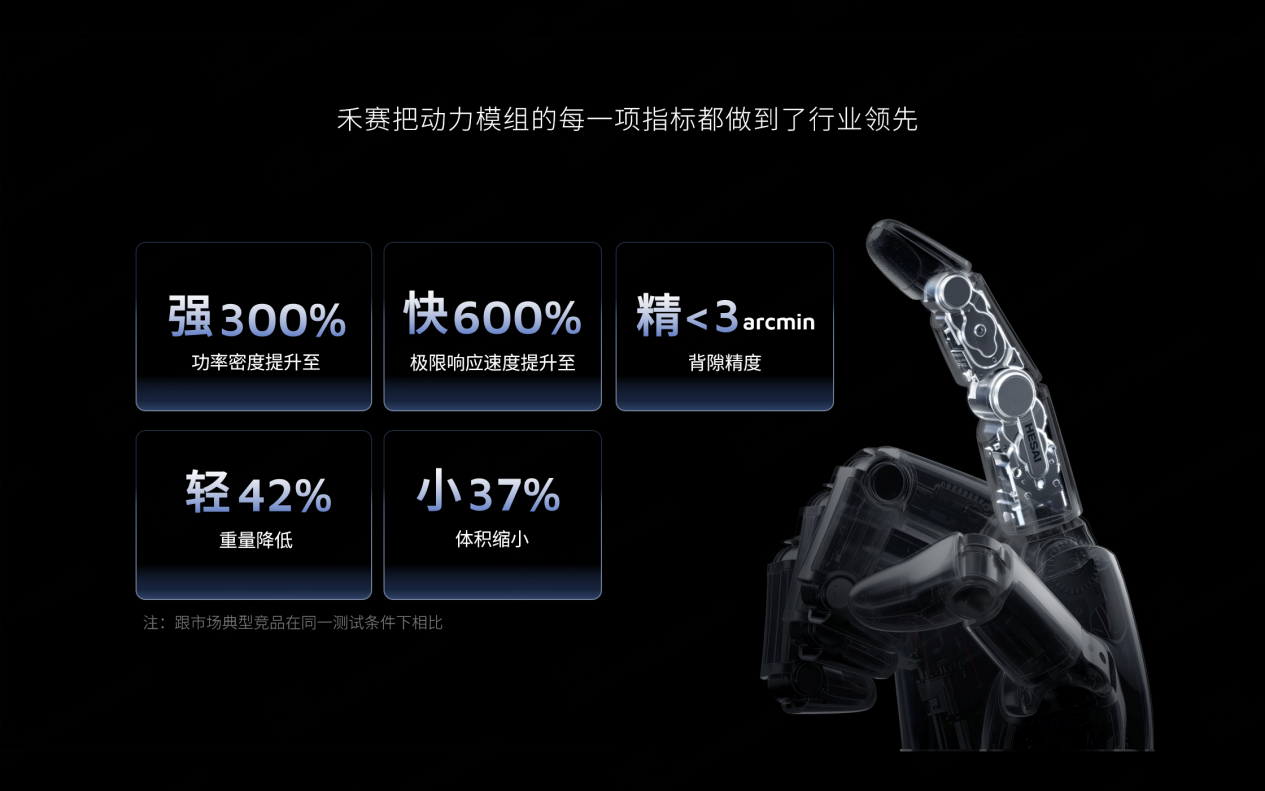
After verifying its technical strength on the dexterous hand module, Hesai quickly extended its ability to the "full body joint module" that can carry greater force. At present, the full body joint module of Hesai has officially entered the mass production stage.
Its technological strength has been validated on flagship products of core customers. Sharpa, an AI robotics company, has launched its first flagship tactile dexterous hand Wave (W01), which is based on the Hesai power module and has 22 active degrees of freedom, achieving a 1:1 isomorphism with the human hand. This product has not only been adopted by NVIDIA's Isaac GR00T humanoid robot reference solution, but also by top universities around the world such as Berkeley and Stanford.
The improvement of the product line and high recognition from customers directly translate into a rapid increase in shipment volume. CFO Fan Peng of Hesai stated in the financial report that in the third quarter, the overall delivery volume of Hesai robot power modules reached 23405 sets, a month on month increase of 96.8%, and the monthly production capacity has rapidly increased to 10000 sets; As of the end of September, the cumulative shipment of this product has exceeded 35295 sets. It is expected that the annual shipment volume in 2027 will reach six digits.
Kosmo is released and implemented, reshaping the embodied intelligent 'data engine'
The power module solves the hardware problem of how robots execute, while data determines how they think. The current physics AI industry is facing an awkward reality: model evolution is ahead of schedule, but the supply of high-quality 3D data is seriously lagging behind. There is a huge Sim to Real gap in pure simulation data, which leads to frequent errors by robots in reality.
Li Yifan judged during the earnings conference call that each humanoid robot company needs 100000 high-quality data spaces for simulation training. This provides a more specific scenario requirement for the 3D spatial data market that Kosmo is targeting.
At the same time as releasing its financial report, Hesai also released the "Space Intelligence White Paper" to the world. The white paper pointed out that what the industry needs is not a single point of collection tool, but a platform player who can standardize production data and connect upstream and downstream. The launch of Kosmo is aimed at filling this infrastructure gap.
In October of this year, Hesai officially released the 3D world data engine Kosmo, as well as the world's first 8K ultra high definition AI space camera Kosmo One and cloud platform Kosmo World.
Kosmo One integrates ultra-high spatial resolution lidar, 8K ultra high definition imaging, and high-precision IMU, and can complete high fidelity scanning of 100 square meters of space in about 15 minutes in ordinary indoor scenes. More importantly, it has implemented the industry's first instant scanning, intelligent guidance, and one click follow-up scanning functions, significantly reducing the professional threshold for space collection.
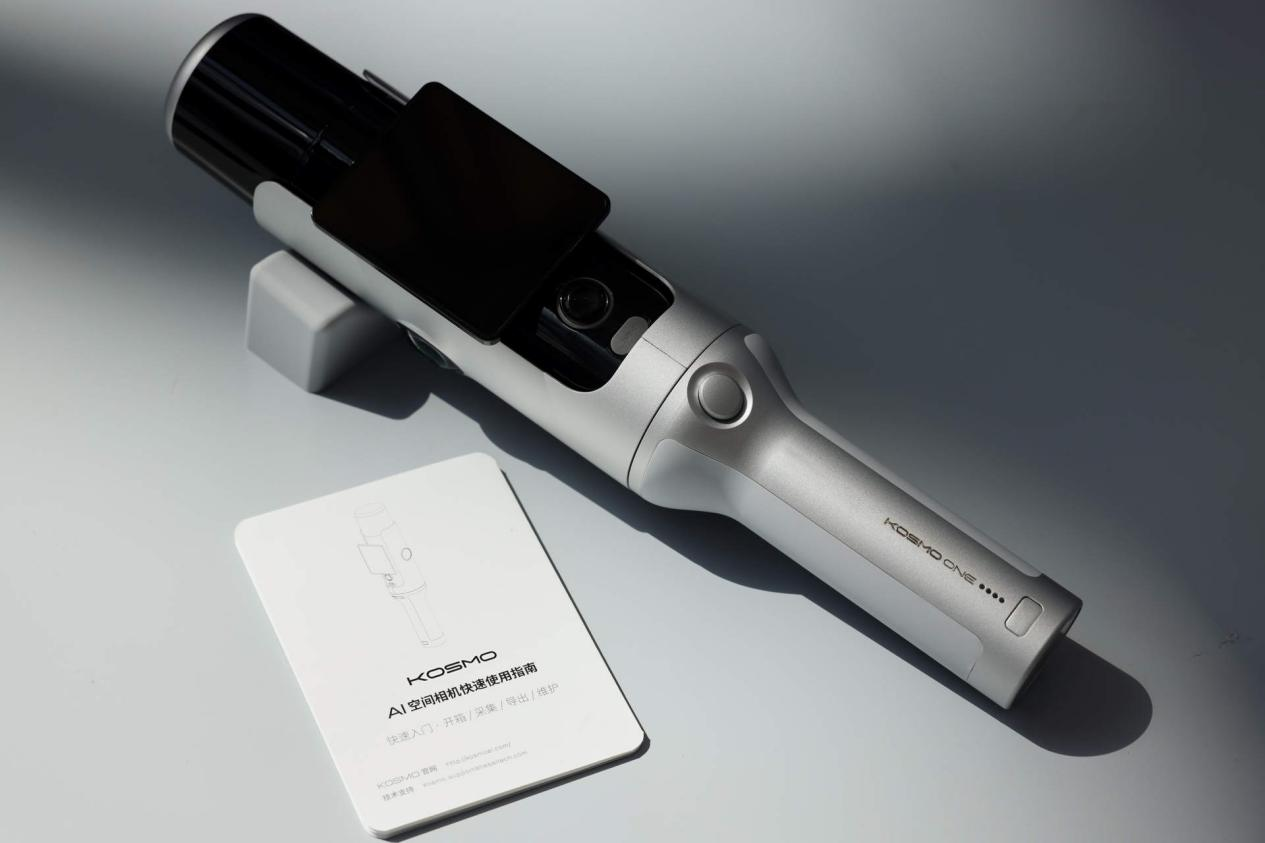
Kosmo World, a one-stop 3D content creation and management platform, is responsible for transforming collected data into AI understandable, interactive, and trainable intelligent spaces. Its underlying system is the Kosmo Spatial Core (KSC), a native 3D space reconstruction and understanding system developed by Hesai AIKosmo Spatial Core (KSC) can synchronously generate 3D data in three forms: 3DGS, mesh, and depth in one reconstruction: 3DGS delicately restores the appearance and lighting of the scene, solving the problem of "false image"; Mesh accelerates the splitting and modeling of interactive objects, solving the problem of "interaction artifacts"; Depth provides real spatial distance information, solving the problem of "spatial inaccuracy".
These three types of data come from the same scene and are perfectly aligned in space, allowing the robot to see, capture, and measure the same world. This form of data directly addresses the three major pain points of robot training, providing high-quality Sim ready data for cutting-edge breakthroughs in embodied intelligence.
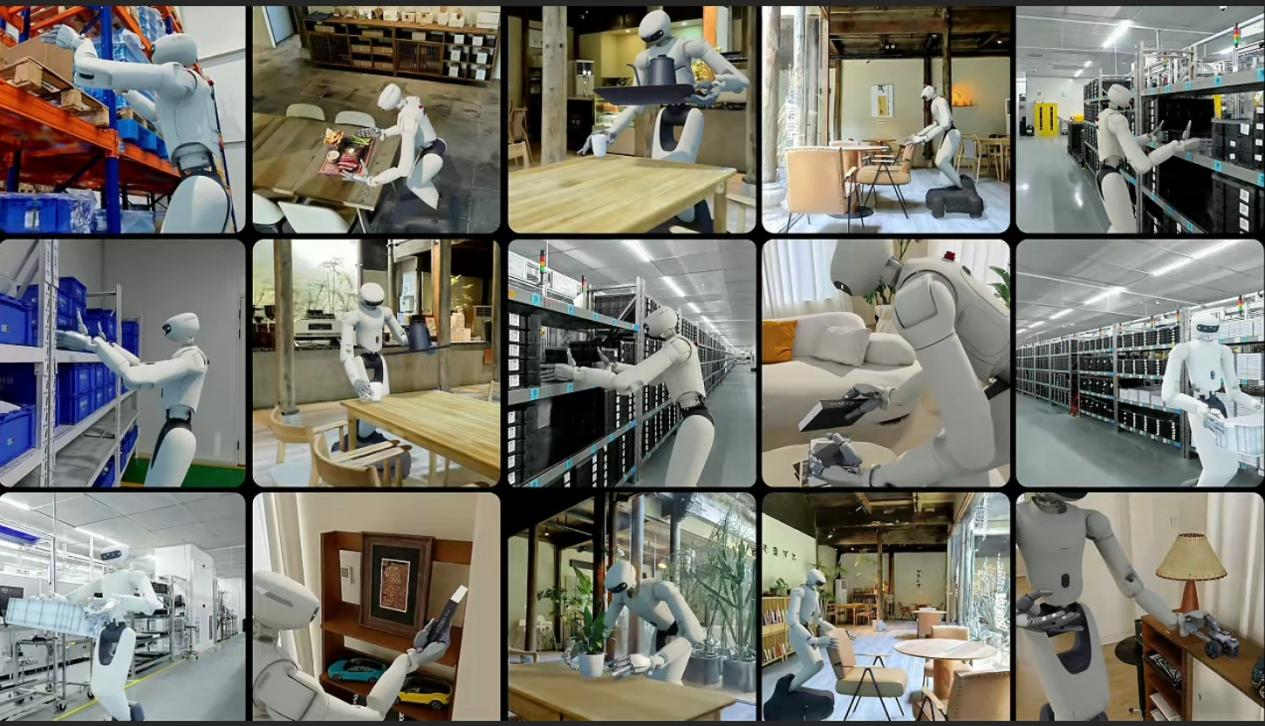
The commercialization speed of Kosmo is very fast and has exceeded market expectations. In the field of embodied intelligence, Kosmo has reached a strategic cooperation with Galaxy General Robot and Force Spirit Machine to empower the training and deployment of robots; In the field of film and entertainment, Hollywood's top Pixar industrial renderer, RenderMan, has partnered with Kosmo to integrate its reconstructed real-world data into the rendering pipeline and make it an official tutorial for global open source.
In the field of space commerce, the first achievements of Kosmo's cooperation with Gaode have been launched on the Gaode Street Sweeping List "Flying Street View". The scenes such as the Heavy Art Museum and the Pianfeng Gallery, which were reconstructed in 3D by Kosmo, have been transformed into freely browseable 3D spaces, enabling 3D data to reach nearly 1 billion monthly active national level applications.
In the field of cultural tourism and cutting-edge modeling, Hesai has partnered with leading 3D native world modeling company Yingsu Technology to jointly promote the "Large scale Space Intelligent 3D Data Open Plan" and connect the entire process from real scene reconstruction to dynamic world modeling.
Since the first batch of prototype shipments in July, Kosmo has started to contribute actual revenue. The real-world digital assets it brings have opened up new revenue space for Hesai's software and data services, indicating that Hesai is transitioning from selling hardware to selling data assets, and its business model is undergoing a qualitative leap.
Lidar stabilizes the fundamentals and supports' physical AI 'to complete strategic shifts
The explosive shipment volume of power modules and the commercialization of Kosmo indicate that Hesai's second curve of physical AI is accelerating its realization. However, any forward-looking strategic transformation cannot be achieved without the infusion of fundamental principles. Without the strong cash flow provided by the core automotive business, grand narratives about physical AI would be castles in the air.
The basic disk of LiDAR is the confidence of Hesai. In the third quarter, the operating profit of Hesai's core LiDAR business reached 145 million yuan, a significant increase of 88% year-on-year. The total delivery quantity of LiDAR reached 729673 units.
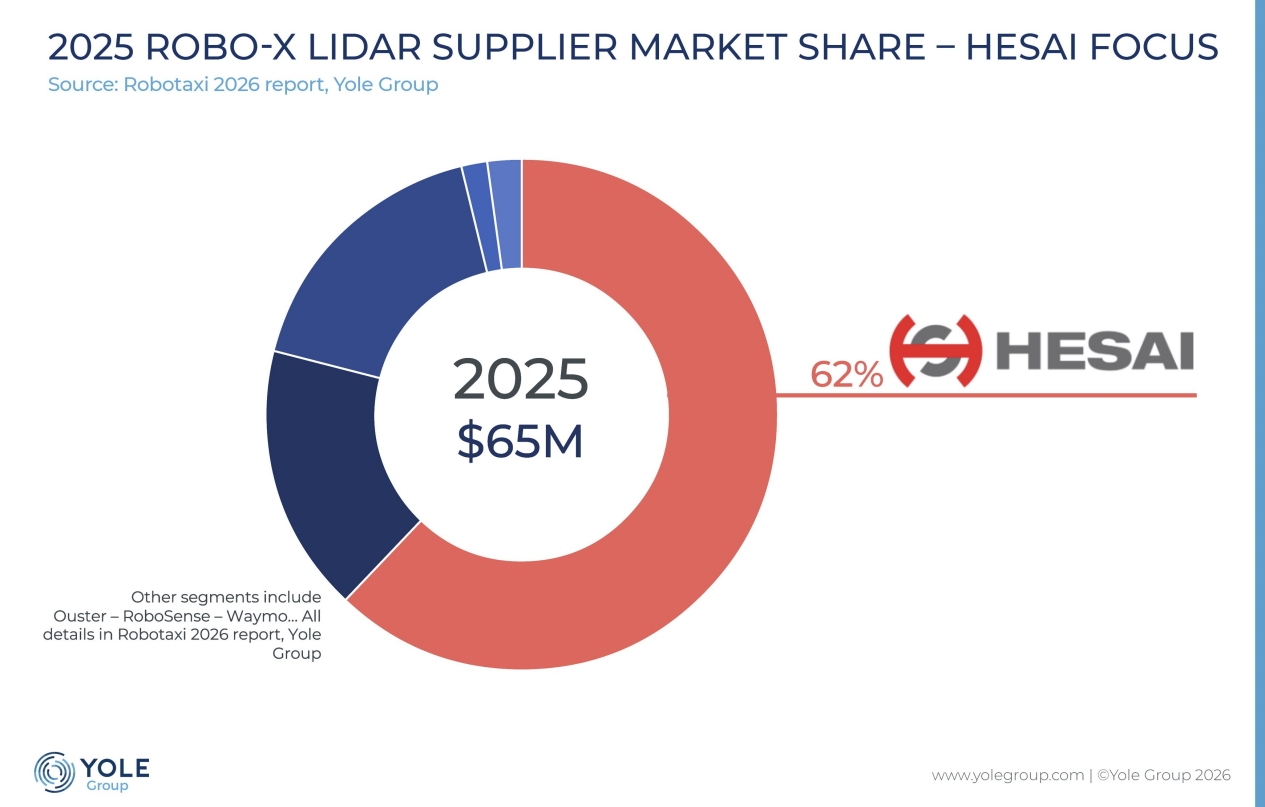
In terms of market share, Hesai's leading advantage remains solid. According to data from Gaishi Automotive Research Institute, in September, Hesai's market share in China's automotive main LiDAR reached 43%, maintaining its leading position in the industry. In the field of Robotaxi with extremely high technological barriers, Yole Group's report shows that Hesai will firmly hold the global lead with a market share of 62% by 2025.
At the front mounting point of advanced intelligent driving, Hesai is also unstoppable. Over a thousand lines of ETX LiDAR have been newly designated by 5 global leading car companies, including a top European car company, Cadillac, Geely, Great Wall Motors, and a leading new energy vehicle company, with over 1 million orders in hand. FTX blind laser radar has been newly designated by Zero Run Automobile and a top European car company; The updated version of ATX has won the Wuling, further penetrating into high sales Volkswagen models and export markets.
The dominance of Hesai is extending towards higher-level perception architectures. The four laser radar configurations of Hesai (one ATL-P+three FTX) are now standard on the Ideal L9 Livis, L8 Livis, and MEGA. The new generation Ideal L6 and all-new Ideal i9 can also achieve four laser radar configurations through the optional dual Mach intelligent package.
This not only brings about a doubling of the value of bicycles, but also has a deeper significance in that intelligent cars, as the largest "embodied intelligent terminals", are crazily diluting the cost of high-precision 3D perception hardware through large-scale front-end installation.
This ultimate cost-effectiveness and reliability polished on the automotive side provides a strong supply chain foundation for Hesai's subsequent large-scale supply of robots and unmanned vehicles, continuously delivering ammunition and cash flow for physical AI strategies.
It is worth noting that the basic disk and SGI's new business are not isolated, and a synergistic effect has been formed in the underlying hardware and mass production supply chain. In September, Hesai reached a new strategic cooperation with retail giant JD.com, empowering JD's unmanned logistics vehicle and robot business with perception technologies such as 6D full-color LiDAR.
It is worth noting JD's huge landing plan: in the next 5 years, JD plans to purchase 3 million robots, 1 million unmanned vehicles, and 100000 drones to support its efforts to build the world's largest physical world operation center.
In terms of specific business implementation, from the sixth generation intelligent delivery vehicle equipped with the AT series to the JT series robot radar providing a 360 ° zero blind spot field of view, the HeSai vehicle standard and million level production cost have significantly reduced the hardware cost of unmanned vehicles and robots. At the same time, the perception ability accumulated in the in vehicle business is also solving the pain points of robots.
Conclusion
Overall, the Q3 financial report of Hesai conveys a signal that the company's "physical AI second curve" is no longer just a vision on paper, but is accelerating the realization of tangible revenue.
Under the "dual engine" strategy, LiDAR serves as a ballast stone to provide stable cash flow, providing ample ammunition for the research and mass production of power modules and Kosmo data engines; The explosion of SGI in the fields of robotics and physical AI has completely reshaped the company's valuation logic.
From allowing machines to "see" the world, to allowing robots to "understand" and "change" the world, Hesai is about to surpass the stage of a single hardware company that relies solely on the fluctuations of the automotive cycle. It is transforming from a "sensor supplier" to an indispensable infrastructure platform in the era of physical AI, and has also becomeThe super dark horse of the robot race track。