2026-08-29 13:44


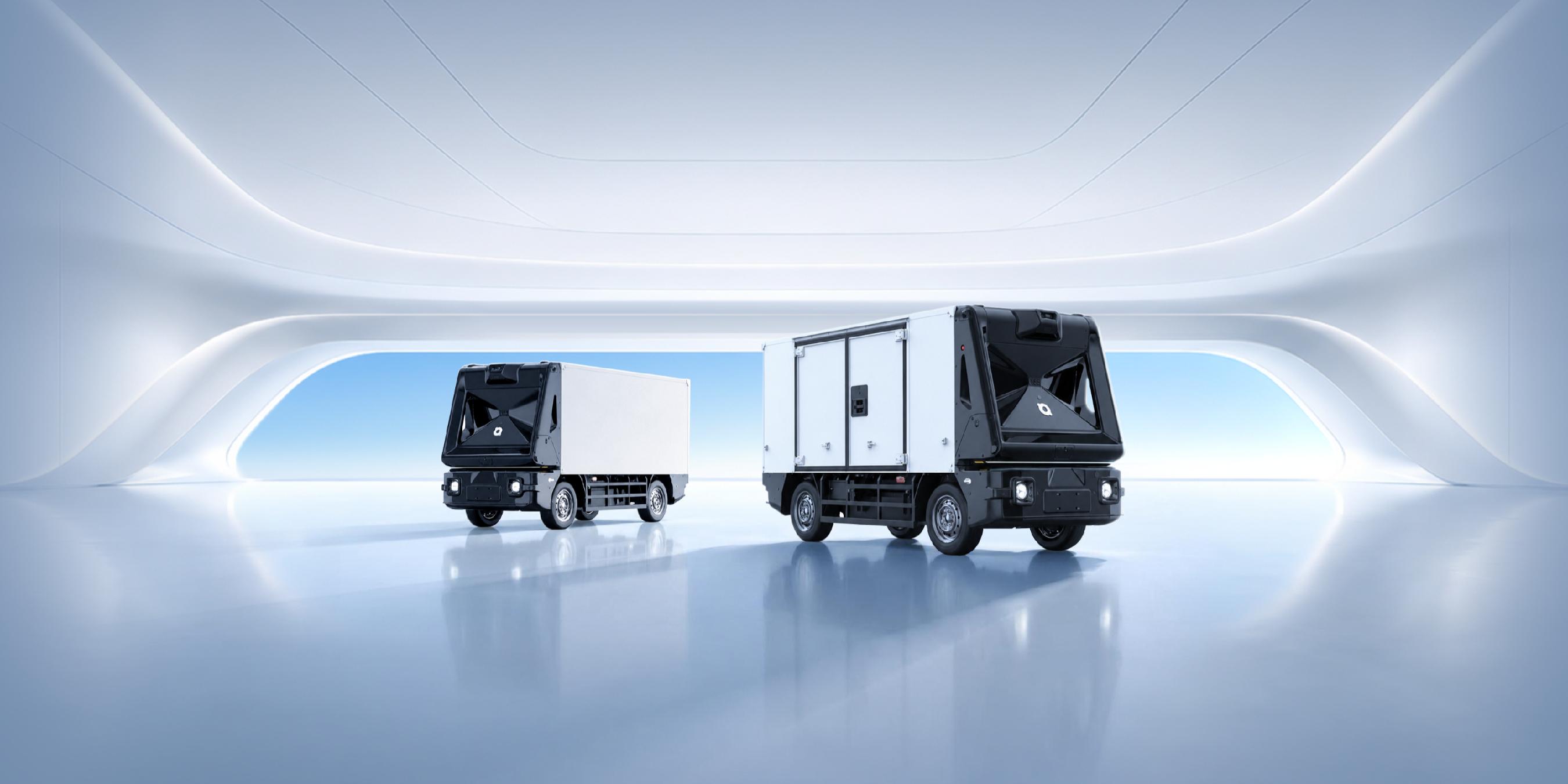
There is a general consensus in the unmanned delivery industry that a delivery volume of 10000 units is the watershed from a "pilot project" to "sustainable commercialization". Crossing this threshold means that the cost structure, mass production capacity, and business model have simultaneously reached a critical point.
On July 1, 2026, the first industry standard covering all categories of unmanned delivery vehicles in China was officially implemented, and road rights management moved from "one city, one policy" to national unity. As the policy window opens, everyone is more concerned about who runs the fastest and who has more potential? Neolithic and Nine Sense Intelligence were the first to break through 10000 vehicles, and the industry landscape was once considered "settled".
However, the original market pattern has long changed. Since the second half of last year, the Xiaozhu unmanned flow car under Youjia Innovation (02431. HK) has won over 8000 cumulative orders through the "no picture" route. In the field of unmanned logistics, Neolithic, Jiushi Intelligence, and Xiaozhu are forming a top three pattern of "New Nine Bamboo".
What is more noteworthy is that it took 7 and 4 years respectively for Neolithic and Nine Sense Intelligence to reach the level of 10000 units. The later ones may not have been slow, but the key is, as a new brand of intelligent driving company that has crossed over into the field of unmanned vehicles, what is the basis for Xiaozhu?
The 'time difference' of graph free technology
In the past few years, unmanned delivery has heavily relied on high-precision maps. After entering a new city, customers usually have to wait for about a month to officially put unmanned vehicles into operation. The CEO of a leading unmanned delivery company once admitted in a public speech, "Our cars are great, but every time we drive a city, we have to wait for a map for a month, and this pace is simply not fast enough
The cost accounting in the graphical mode is clear: the mapping cost per kilometer is several hundred yuan, and continuous updates and maintenance are required after road changes. This model essentially turns unmanned delivery into a "customized integration" business, rather than standardized products, and the ceiling of economies of scale is locked in from the beginning.
In 2026, the industry recognized turning point of "de graphing" has arrived. At the Beijing Auto Show in April 2026, Youjia Innovation launched China's first "no picture" L4 unmanned flow car, the Xiaozhu T5 Pro. Compared with mainstream solutions in the industry, T5 Pro adopts a pure visual and multi-sensor fusion solution, completely eliminating the dependence on high-precision maps, compressing deployment cycles from weeks to hours, and approaching zero mapping costs.
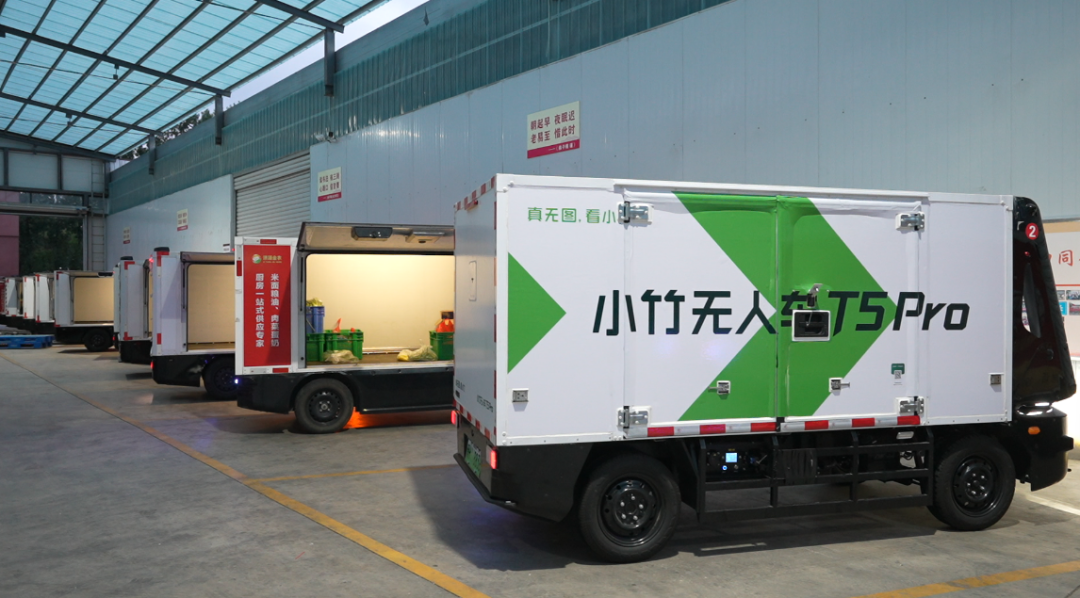
The transition period of technological routes is often the best window for latecomers to catch up with pioneers. When competitors began to follow the no map route, T5 Pro had already completed the closed-loop from product release to bulk delivery. At the end of July this year, the Xiaozhu T5 Pro completed mass delivery in Jiyuan, Henan, marking the commercial landing of the first batch of "no picture" unmanned delivery vehicles in China.
This batch of vehicles serves enterprises such as Shuanghui, covering three major scenarios: fresh food cold chain, cooked food transportation, and auto parts replenishment. According to project operation data, bicycles travel an average of 120 kilometers per day, with a delivery punctuality rate of over 95% and a comprehensive delivery cost reduction of nearly 50%. These data provide a preliminary answer to the core industry question of whether autonomous vehicles can be cheaper than manual labor.
On August 28th, Youjia Innovation released its first half financial report. During the reporting period, the company achieved a revenue of 450 million yuan, a year-on-year increase of 30.1%; The gross profit was 80.53 million yuan, a year-on-year increase of 55.6%, and the gross profit margin increased from 15.0% in the same period last year to 17.9%; The loss during the period was 160 million yuan, slightly narrowing compared to the same period last year's 162 million yuan. Research and development expenses increased to 127 million yuan, a year-on-year increase of about 33%.
The most noteworthy point in this report card is that the revenue from autonomous vehicles and operational services reached 52.64 million yuan, a year-on-year increase of 423.4%, leading the growth rate of the entire business line, marking the acceleration of the second growth curve of Youjia Innovation. According to performance guidelines, Youjia Innovation plans to deliver 10000 unmanned vehicles by 2026. In the transition from pilot to replication of unmanned delivery, the first mover advantage of implementing the "true no picture" solution is being translated into market share.
Why did the latecomers chase so quickly?
The unmanned delivery track has long been dominated by Neolithic and Nine Sense Intelligence. By 2025, the two companies will jointly hold approximately 84% of the market share. As a latecomer, Youjia Innovation's catch-up speed is changing the industry's expectations of a "fixed pattern".
According to public information, in the first half of 2026, the pace of orders for the Xiaozhu series was intense: 200 units were ordered in Danyang High tech Zone in May, which was the first batch order since the launch of the Zhenwutu unmanned vehicle; 500 units from a certain enterprise in Henan in June; In June, a company in Wuxi placed an order for 1000 full range vehicle models, covering the main product matrix such as T5, T8, T5 Pro, etc.
As of now, Xiaozhu unmanned vehicles have landed in over 20 cities across the country, with a cumulative order volume exceeding 8000 units. As a latecomer, Xiaozhu achieved such a result in just about a year, which also led to the widespread mention of the tripartite concept of "New Nine Bamboo (Neolithic, Nine Sense Intelligence, Xiaozhu)" in the industry.
The support point for this speed cannot be simply summarized by the narrative of "catching up from behind". Unlike self driving car startups that started from scratch, Youjia Innovation has 12 years of accumulated experience in the field of intelligent driving for passenger cars, with 42 vehicle manufacturers producing it in bulk. The direct value accumulated from mass production of passenger cars is supply chain reuse.
Industry research reports show that the core components of Xiaozhu unmanned vehicles can be reused in the passenger car supply chain at a cost about 23% lower than the industry. The perception algorithm, domain control hardware, and front-end engineering capabilities have been shifted to the unmanned vehicle track, and the marginal benefits of R&D investment have been increased. In the stage of unmanned delivery industry shifting from "technology validation" to "scale delivery", supply chain costs and capacity ramp up capability are becoming key variables determining competitive ranking.
More importantly, Youjia Innovation's passenger car business itself is continuously expanding. In the first half of this year, the revenue from intelligent components and solutions was 382 million yuan, a year-on-year increase of 30.7%, accounting for about 84.8% of the total revenue. The revenue from intelligent cockpit solutions was 125 million yuan, a year-on-year increase of 105.9%, which has doubled.
Since 2026, Youjia Innovation has densely landed key projects on the passenger car side: for the first time, it has been designated as a high-level intelligent driving platform project by a leading automotive industry leader, with orders exceeding 1.3 billion yuan throughout its entire lifecycle; In August, it was once again designated as a platform level joint venture brand by a globally renowned car company.
The expansion of intelligent cockpit business is also accelerating. Its DMS system is installed in the entire Audi E7X series and has been designated by a globally renowned high-performance sports car brand; Obtained a designated spot for a leading domestic and international domestic brand's main vehicle models, covering both domestic and EU markets.
These cross brand, cross market, and high-value designated locations not only provide a more stable supply chain foundation for the reuse of components in the unmanned vehicle business, but also provide strong financial support for the expansion of Xiaozhu, forming a positive cycle of passenger car maintenance technology and unmanned vehicle amplification.
From selling cars to selling transportation capacity: the underlying reconstruction of business models
The real difference of Youjia Innovation in the field of autonomous vehicles is not only in technology, but also in business models. The unmanned delivery industry is evolving from hardware sales to the RaaS (Robovan-as-a-Service) model. The China Federation of Logistics and Purchasing pointed out that the competitive advantage of top enterprises has shifted from "technological leadership" to a composite barrier of "scale, data, and ecology".
This road has already been verified. The daily order volume of RaaS service for Neolithic in Qingdao has exceeded 6500, and has provided over 1.5 million delivery services. The cost of single ticket delivery for unmanned delivery vehicles is 25% to 35% lower than that of pure manual labor.
Youjia Innovation's layout on this line is clearer than most competitors.
In May of this year, the company acquired 50% equity of Xi'an Tongtu Technology, a wholly-owned subsidiary of Zhongtong Express, for a total consideration of 25 million yuan, to be paid in the form of shares and cash. The special feature of this transaction is that it is not a simple supply and procurement relationship, but a deep binding at the equity level.
In the past, the cooperation between intelligent driving companies and logistics enterprises mostly remained in the mode of "technology companies selling cars, logistics companies purchasing", with each party operating independently after delivery. Youjia Innovation has become a direct part of the Zhongtong ecosystem through equity, which means that both parties share operational risks and cost reduction benefits.
The scenario value of Zhongtong is specific. Zhongtong has over 30000 terminal branches nationwide, with an average daily business volume of over 100 million items. The continuous shortage of end delivery personnel and rising costs are the core pain points of the express delivery industry. The no picture solution of Youjia Innovation compresses the deployment cycle to the hour level, which eliminates the biggest obstacle to large-scale implementation for Zhongtong, which needs to be quickly deployed in hundreds of cities across the country.
In July, Youjia Innovation signed a strategic cooperation agreement with Didi Chuxing. Youjia Innovation provides L4 level unmanned delivery vehicles for the Xiaozhu series. Didi Delivery has opened its app and mini program for ordering, and uses an intelligent scheduling engine to connect unmanned vehicles to the local freight network. The project has landed in Foshan first, and users can place orders with just one click through the Didi delivery app.
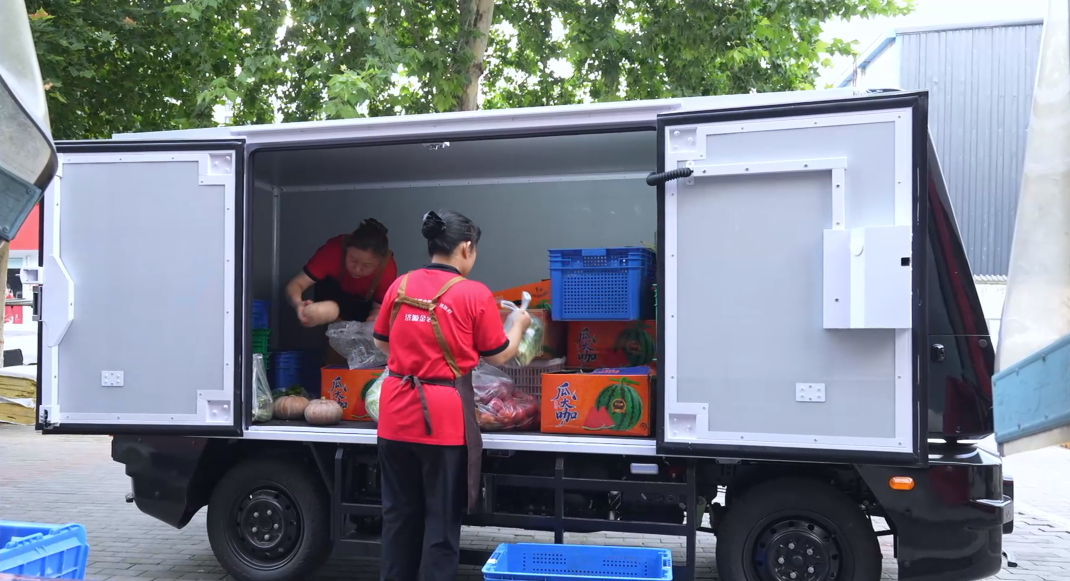
This cooperation framework is fundamentally different from the pure hardware sales business model, which means that the revenue of Youjia Innovation is no longer limited to one-time gains from vehicle sales, but is obtained through capacity sharing and operational support to generate sustained service revenue.
The core logic of the two transactions is consistent: occupying the scene and controlling the transportation capacity, rather than simply selling cars. Zhongtong provides an entrance to the express delivery terminal network, while Didi Chuxing provides an entrance to the same city freight dispatch platform. The difference is that Zhongtong's cooperation is a community of shared interests at the equity level, while Didi's cooperation is a platform access based transportation service relationship, and the two models complement each other.
Physical AI: The 'Second Layer' of Technology Reuse
If autonomous vehicles are the first growth pole of Youjia Innovation's "translation" of passenger car technology, then physical AI and embodied intelligence are the second layer layout "reused" with the same set of technological capabilities.
Autonomous driving and embodied intelligence overlap highly at the technological level. The core modules of perception, decision-making, planning, and control are almost identical. The end-to-end big model and data closed-loop capabilities accumulated by Youjia Innovation in both passenger cars and unmanned vehicles can be naturally transferred to product lines such as quadruped robots and inspection robots. During the reporting period, the R&D investment of Youjia Innovation increased by 33% year-on-year to 127 million yuan, with a focus on cutting-edge fields such as autonomous driving and embodied intelligence.
In mid June, Youjia Innovation signed a strategic cooperation agreement with Ledong Robotics to collaborate on co creating physical AI technology and implementing it in all scenarios. At the end of June, the joint venture between Youjia Innovation and neueHCT, "Yao Action Power," completed registration, focusing on full scene physics AI and embodied intelligence.
The announcement shows that Yao Action Power focuses on the research and development of physical AI technology, building a unified cross scenario physical AI technology base that is suitable for indoor, park, urban, and open road scenarios.
In July, Youjia Innovation released the Combo full link solution, which consists of a small bamboo unmanned vehicle and a four-wheel legged robot. The maximum load of the quadruped robot is 30 kilograms, and it can continuously pass through 30 centimeter stairs, climb up to 80 centimeter single step stairs, and stably pass through 45 degree slopes. Autonomous vehicles solve the 'last mile', while quadruped robots solve the 'last meter'.
Against the backdrop of continuously increasing R&D investment, reusing technological capabilities to more product lines means that the output ratio of unit R&D investment is improving - not burning money, but using the same set of technological foundations to leverage more scenarios.
The unmanned delivery track in 2026 is moving from a "duopoly monopoly" to a "multi strong competition". Momenta、 New players such as Qingzhou Zhihang and Xiaoma Zhixing will enter the game intensively in 2026. When the industry moves from joint financing to joint delivery, the companies that first run through the commercial closed loop have the opportunity to stay on the table.
The combination of four elements - the first landing of image free technology, the accumulation of supply chain capabilities in passenger car mass production, the transformation of business models from selling cars to selling transportation capacity, and the forward-looking layout of physical AI - has supported not only a newcomer approaching the critical point of 10000 vehicles, but also the infinite imagination it brings to performance.
Whether Youjia Innovation can occupy a place in the changing industry landscape depends on the speed of delivery in the next year. Youjia Innovation is not the earliest to enter the market, but at least from the current perspective, the efficiency of latecomers is becoming a variable that is rewriting the pattern, and its path also provides a valuable reference sample for the industry.

From resistance to embrace, takeaway has become a rare highlight in the catering industry in the first half of the year

You can get a license anywhere, but young people don't get married because it's inconvenient
Low altitude track differentiation: rapid development of industrial drones, temporary slowdown in commercialization of eVTOL