2026-08-28 21:17


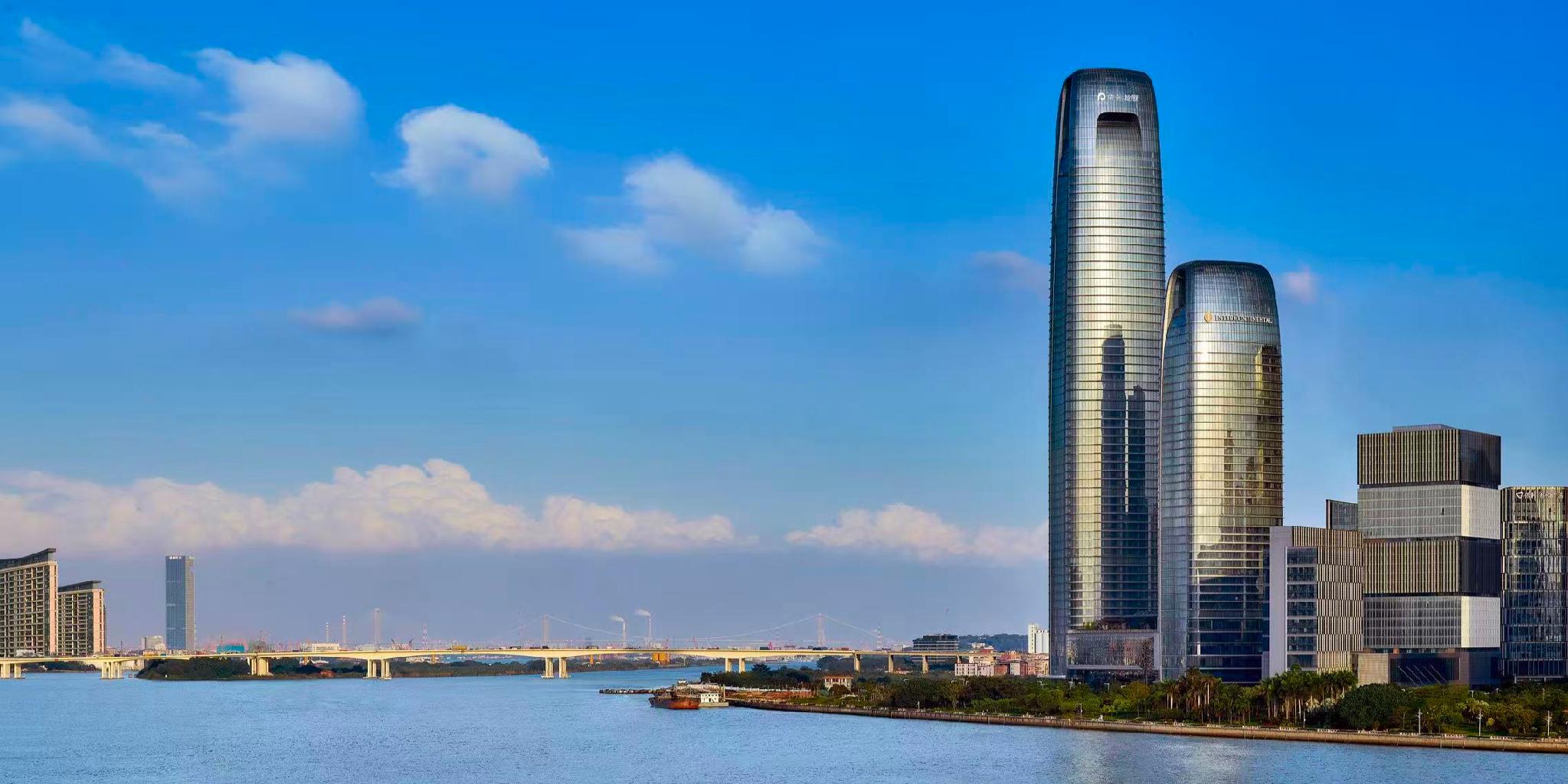
On August 27th, Poly Developments disclosed its 2026 interim report, achieving a revenue of 102.86 billion yuan in the first half of the year and a net profit attributable to shareholders of the listed company of 1.959 billion yuan; During the same period, Poly Developments achieved a contracted amount of 135.106 billion yuan and maintained its industry-leading sales scale.
There is a significant time lag in real estate operations, and the revenue and profits recognized today mostly come from land and projects from two to three years ago or even earlier; The house sold today is the result of previous investment and product decisions; The land acquired this year will be gradually sold and carried over in the coming years.
When the industry is growing rapidly, this time difference is easily obscured by the expanding market. After entering the adjustment period, every land acquisition, every product, and every investment will ultimately show results in a few years.
Poly Developments' operations in the first half of the year can also be observed along this timeline. 95% of the 135.1 billion yuan in sales revenue comes from core cities; All newly added investments will enter the core cities defined by the company, with the five cities of Beijing, Shanghai, Guangzhou, Shenzhen, and Hangzhou accounting for 82% of the newly added investment amount; The newly acquired project equity ratio has reached 98%. On the product side, customer research is further advanced to the investment stage, and residential properties are divided into four categories: first-time homebuyers, functional improvements, quality improvements, and high-end improvements.
Investment, sales, and products are not three independent things. Where money is invested determines what goods will be available in the future; Whether the goods can be sold or not determines whether the funds can be recovered; Whether the product can continue to gain customer recognition will also affect the next round of investment.
In the fifth year of industry adjustment, the so-called long-term value ultimately needs to be proven by these specific business choices: where to invest money, which assets need to be exited, what kind of houses are worth continuing to build, and how to turn the previous investment into the capital of the next investment.
Invest money in areas where there is still demand
In the first half of 2026, Poly Developments will add 21 new expansion projects with a total construction area of 1.66 million square meters, an expansion amount of 38.4 billion yuan, and an equity ratio of 98% for the expansion amount.
More noteworthy is where this 38.4 billion yuan went. 1、 Second tier cities account for over 94% of the total land price of new investments, while core cities account for 100%, with a total of 82% in Beijing, Shanghai, Guangzhou, Shenzhen, and Hangzhou. The company strategically entered Shenzhen in the first half of the year.
The major non equity investment projects disclosed in the semi annual report are more intuitive. The equity investment for the east side of Wanhangdu Road in Changning District, Shanghai this year is 5.923 billion yuan, Hangzhou Poly Canal Yaoyuan is 3.348 billion yuan, Guangzhou Poly Haiyun is 2.491 billion yuan, the east side of Taipingqiao Road in Fengtai, Beijing is 2.077 billion yuan, and the north side of Haitian Road in Bao'an, Shenzhen is 1.056 billion yuan. Large amounts of funds continue to be concentrated in high-energy cities.
This is significantly different from the land acquisition logic of the previous round of real estate expansion. In the past, national layout, land reserve scale, and the number of newly entered cities were all growth indicators. As long as the overall market goes up, the differences between different cities and projects can often be absorbed by the rise in housing prices. Nowadays, there may be significant differentiation in sales performance between cities, different sectors within the same city, and even between adjacent projects.
Poly Developments has further broken down investment research to the population and customer levels. The semi annual report shows that the company's investment decisions are based on "urban development - industrial structure - population structure - income expectations - willingness to buy a house - housing demand", while analyzing the occupation, family structure, income, and consumption concepts of different consumer groups, and then judging whether a piece of land is worth entering and what products should be matched.
In the past, when acquiring land, the land price and selling price were first calculated. Now, more fundamental questions need to be answered: who will stay here in the future, how much payment ability they have, and what kind of products they are willing to pay for.
Core cities do not necessarily mean low risk. Since 2026, competition for high-quality land parcels in some first tier and strong second tier cities has intensified, and land prices have not decreased in sync with residential sales. As resources become increasingly concentrated in a few cities, if there is a misjudgment of the sector, customer base, or product, the investment in a single project will be greater, and the cost of error correction will also be higher.
98% investment equity also means heavier responsibility. High equity can retain more project profits, but it also means that more capital investment and project risks are borne by the enterprise. Today's investment competition is no longer simply about "acquiring more land", but about making more accurate judgments on fewer cities and projects.
Poly Developments still has the confidence to continue investing, which is related to its financial situation. At the end of June, the company's monetary funds were 133.8 billion yuan, and the net cash flow from operating activities was 24.552 billion yuan, maintaining a positive trend for nine consecutive years; Interest bearing liabilities decreased by 8.6 billion yuan compared to the beginning of the year, and the comprehensive financing cost decreased to 2.61%.
The significance of low-cost funds is not just about paying less interest. During the differentiation of the land market, it allows enterprises to retain the space to sell, wait, and adjust.
But land is just the starting point. Whether the 38.4 billion yuan new investment can become a high-quality commodity value in the next two to three years still needs to go through two tests: product and sales.
Selling tests past investments
The sales side shows the same concentration trend as the investment side. In the first half of the year, 95% of Poly Developments' sales came from core cities, and this proportion has remained at around 90% for the fourth consecutive year. First tier cities contribute 42%, while second tier cities contribute 44%. Guangzhou, Shanghai, Beijing, Foshan, and Sanya rank among the top five in terms of sales revenue, with individual sales exceeding 3 billion yuan for five projects, totaling approximately 21 billion yuan.
In the past, real estate companies talked about "nationalization" and valued how many cities to enter; Now, what is more important is which cities can sustain effective sales. Cities with stronger population inflows, industries, and income foundations still have improvement needs, but customers have also become more discerning. A project selling well cannot be solely attributed to the city, but also needs to be further divided into sectors, total price, layout, products, and delivery.
95% of Poly's core city sales are the result of adjusting its investment structure over the past few years; In the first half of the year, 100% of the new investment entered core cities, and it is also determining the supply structure for the next few years.
According to the semi annual report, after the industry entered a deep adjustment in 2021, Poly Developments began to promote "destocking and structural adjustment"; In 2023, it is proposed that real estate enter the "quality era of high-quality development"; By 2025, the three major businesses of real estate investment and development, real estate operation, and real estate services will be further elevated to the strategic level.
The most difficult part of "restructuring" is not to stop acquiring land in low-level cities, but to deal with the already formed land and inventory.
In the first half of the year, Poly Developments achieved a contract signing of 45.5 billion yuan for finished products through showcase revitalization, product optimization, and rental sales promotion; Through methods such as returns, exchanges, and asset transfers, approximately 7.6 billion yuan of land assets have been revitalized; Another approximately 8.9 billion yuan of funds will be recovered through methods such as transferring operations.
Putting these numbers together with new investments can provide a clearer view of the current asset adjustment of real estate companies. While continuing to invest funds in cities such as Shanghai, Beijing, Shenzhen, and Hangzhou, we are also dealing with inefficient land and existing products that have been formed in the past.
Long term operation does not mean that all assets need to be held for a long time. The original investment logic of a piece of land has become invalid, and continuing to invest funds and time will not automatically generate value. Exiting, exchanging, selling at a reduced price, or converting into operating assets is sometimes precisely protecting surplus capital. Only when old money can be recovered can new investments continue to occur.
This is also the reason why the structure of real estate sales is more worthy of attention than just the scale when observing them today. The sales revenue of 135.1 billion yuan is still important, with 95% of core cities, 84% of equity sales, and 111 billion yuan in receipts, which more directly reflect the quality of operations.
The income statement still shows the other side of adjustment. The land and products reconfigured today will not immediately change the profit performance. The adjustment of real estate can only be completed in one batch of projects and one piece of land.
The significance of sales lies in both dealing with the past and verifying the future.
The product is the longest account
If land determines where real estate companies will do business in the next few years, the product determines whether customers are willing to pay for this land. After entering the buyer's market, this issue was further magnified.
During periods of land scarcity, the supply of new houses in the same sector is limited, and developers obtaining land itself means obtaining certain sales opportunities. After the change in supply and demand, customers can choose between new houses, second-hand houses, or even rentals, and there may be multiple new housing projects available in the same area at the same time. The value of land is still important, but it is difficult to cover the differences between products separately.
The product system of Poly Developments is also being adjusted accordingly. In 2026, the company further proposes the product concept of "real demand x strong performance x long-term operation", and reconstructs the high-quality construction system with "fixed chassis, plug-in, and flag". According to customer needs and payment ability, residential properties are divided into four categories: first-time home purchase, functional improvement, quality improvement, and high-end improvement.
This method borrows some ideas from the manufacturing industry. The chassis ensures the lower limits of safety, functionality, construction, and basic quality of the product; Plugin "solves the differentiated needs of different cities and customer groups; Flag "is used to establish product recognition for a few projects. Product standards, costs, supply chain, and services are considered within the same project cycle, rather than separately seeking product solutions after acquiring land.
This is connected to the customer research on the investment side before and after. In the investment phase, research is conducted on the industry, population, income, and household structure of a city. In the product phase, it is necessary to answer how large houses these people need, why they are willing to pay for their functions, and which cost inputs can truly be converted into customer value. The product is not just a design issue, but also a question of whether the investment can be realized.
In the first half of the year, Poly Developments completed 31 project film delivery and 7 transparent construction site pilot projects. All projects were arranged for owners' open days, and 11 projects were open for full dimensional real scene display, of which 9 projects achieved high-quality opening.
The purpose of these actions is not complicated. In the past, many quality issues were concentrated and exposed during delivery, with repairs, complaints, and brand damage occurring at the backend of the project. Opening up the construction site, samples, and delivery process to customers in advance means putting problems as early as possible and resolving them before delivery.
A house is also a commodity with a long service life. When developers receive most of the house payments, the products are often not fully delivered, and customers may use a house for decades. This determines that the credit cycle of residential products is much longer than that of general consumer goods.
Poly Developments has further extended its products to "Good Life" and is also based on this logic. By 2025, the company will establish a "three good" system of "good products, good services, and good life"; In 2026, we will further connect our products, property services, and community life through a good living system and community co creation.
For real estate companies, this is not just about increasing service offerings. In the era of incremental development, a customer completes the purchase of a house, and the transaction is basically completed; Entering the era of stock, after the delivery of a property, property services, community operations, and owner reputation may still affect the developer's next sales.
The operating cycle of the real estate industry has also been further extended as a result. When acquiring land, the enterprise is already assessing the market several years later; After the opening, the client begins to verify this investment; After the delivery of the house, the products and services will affect the next round of customer choices.
The semi annual report records six months, but the impact of land acquisition, products, and delivery will continue for several years. 135.1 billion yuan in sales is the result of past investment choices; The 38.4 billion yuan increase in investment and the product adjustments made today will be answered by the market in the coming years.
From resistance to embrace, takeaway has become a rare highlight in the catering industry in the first half of the year
You can get a license anywhere, but young people don't get married because it's inconvenient

Low altitude track differentiation: rapid development of industrial drones, temporary slowdown in commercialization of eVTOL