2026-08-28 21:07


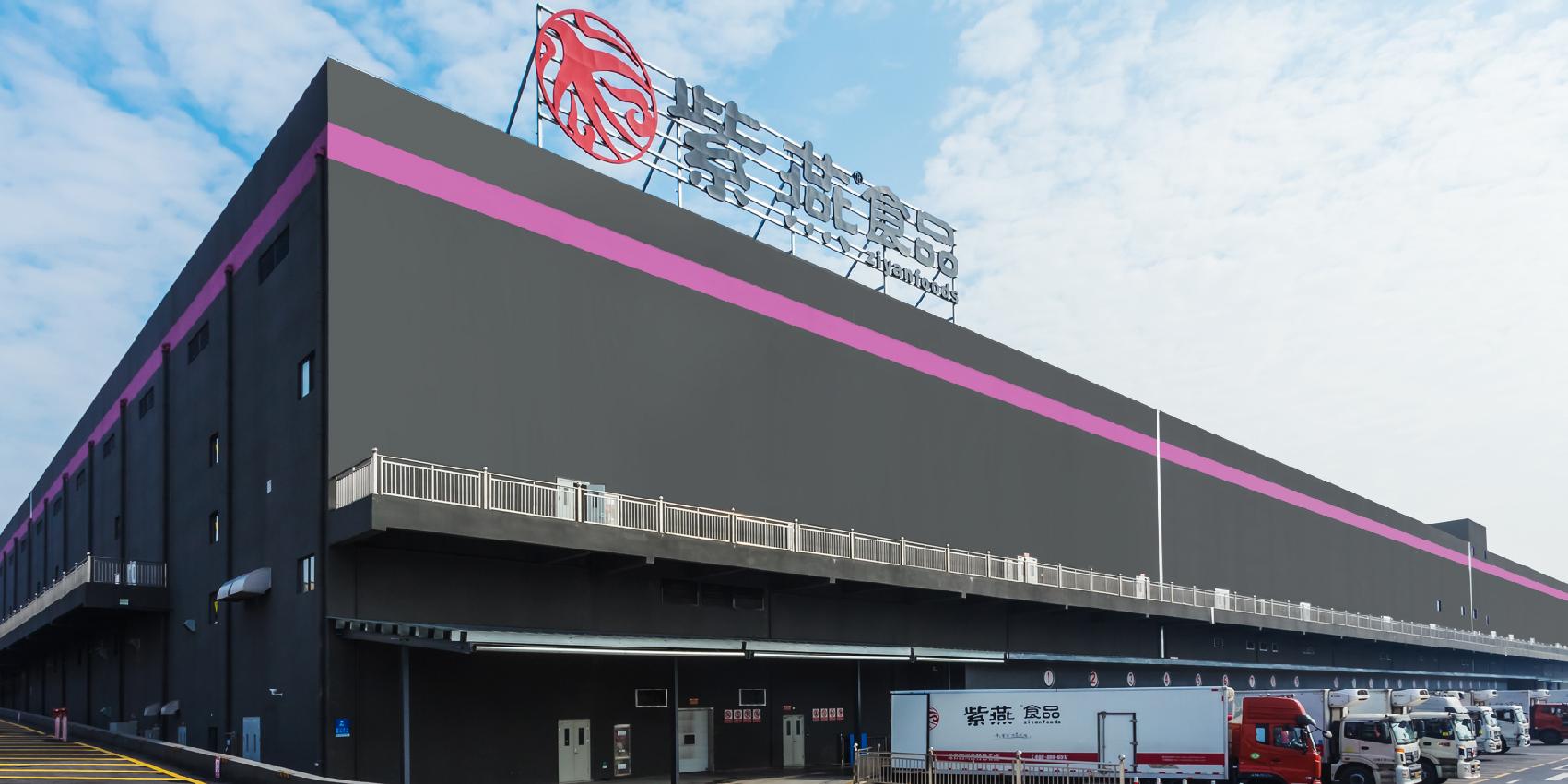
On August 27th, Ziyan Food Group Co., Ltd. (hereinafter referred to as "Ziyan Food", 603057. SH) released its 2026 interim report. According to the financial report, in the first half of 2026, Ziyan Food achieved a revenue of 1.663 billion yuan, a year-on-year increase of 12.94%; The net profit attributable to the parent company was 66.993 million yuan. Among them, the overseas business performed outstandingly, with revenue reaching 10.215 million yuan, a year-on-year increase of 53.21%.
Cost pressure, intensified competition, and growth anxiety seem to be the key words for the development trend of most braised food enterprises in recent years, but this is not just a problem of the braised food industry itself, but a microcosm of the overall catering consumption environment. According to data from the National Bureau of Statistics, in the first half of 2026, the national catering revenue was 2825.5 billion yuan, a year-on-year increase of 2.8%. However, the catering revenue above designated size only increased by 1.8%, and the growth of large-scale catering enterprises was weaker than that of the overall market. The white paper released by the China Chain Store Association shows that by the end of 2025, there will be approximately 7.47 million operating catering merchants nationwide, and 3.39 million merchants marked as closed for the whole year, an increase of 9.4% year-on-year, with intensified elimination.
The catering industry has already entered the era of fierce competition in the red ocean, which particularly tests the ability of catering brands, especially chain brands, to cultivate meticulously and respond promptly to consumer demand shifts. Against such a difficult backdrop, Ziyan Food's revenue still achieved double-digit growth, which is not easy in itself.
Through the semi annual report of Ziyan Food, it can be found that on the one hand, revenue growth demonstrates the resilience of its business fundamentals. On the other hand, multiple continuously improving business performances also indicate the foreseeable direction of Ziyan Food's future growth, such as overseas market expansion, exploration of new business models, and efficiency improvement under the digital upgrade of the supply chain.
Accelerate the landing of overseas markets
The overseas market is a bright growth pole for Ziyan Food in the first half of 2026. In the first half of the year, Ziyan Food's overseas business grew by as much as 53.21% year-on-year, showing a significant growth trend. As of the end of the reporting period, the total number of overseas stores has reached 12, covering New York, New Jersey in the United States, and Melbourne in Australia, and the global layout has entered an accelerated landing period.
The strategy of Ziyan Food entering the overseas market is moderate, not blindly laying out direct stores on a large scale from the beginning, but precise layout through channel combination.
For example, in the North American market, Ziyan Food has partnered with Dahua, the largest Chinese chain supermarket in North America, and its products have entered 64 Dahua stores in 11 states across the United States. The advantage of this channel layout lies in leveraging the mature channels in the local area to test the market, establish brand awareness, accumulate consumer data, and provide reference and basis for opening brand stores.
Ziyan's brand stores are also simultaneously being laid out to present a more complete brand image to overseas consumers.
The expansion of overseas stores has entered a deterministic track. This year, Ziyan Food made its debut at the Malaysia International Franchise Exhibition, simultaneously launching investment promotion in Southeast Asian markets such as Singapore, Malaysia, Thailand, and Indonesia.
Against the backdrop of competition in the domestic braised food market, the overseas market has provided a new frontier. With the trend of Chinese cuisine going global, the chain braised food industry represented by Ziyan Food is a more standardized and replicable category compared to traditional dine in Chinese cuisine. It does not rely on chefs or dine in scenes, and naturally has technological advantages for expanding overseas.
In overseas markets, whoever runs the model first and establishes supply chain barriers first will have the first mover advantage and be the first to reap the dividends of braised food going global.
Supply chain expansion and upgrading solidify the foundation
If the expansion of stores is the construction of channels that consumers can perceive, then the supply chain level is the internal strength that Ziyan Food is silently cultivating.
According to the semi annual report, the construction of Ziyan Food's Nepal production and processing base is accelerating, with a total investment of 800 million yuan. It is expected to be completed and put into operation by the end of 2026. After the completion of the project, it will rely on local high-quality water buffalo resources to extend the industrial chain upstream, effectively hedge the risk of domestic raw material price fluctuations, and provide stable support for the supply of raw materials in overseas markets.
Eight billion is not a small amount. Why did Ziyan spend this money? The answer is raw materials.
The core products of Ziyan, namely "Fuqi Feipian (Sliced Beef and Ox Tongue in Chilli Sauce)" and "Whole Poultry", are mainly beef, pig ears, chicken feet, etc. The prices of these raw materials are greatly affected by the domestic pig and poultry cycle. Nepal has high-quality water buffalo resources, with stable prices and cost advantages compared to domestic beef. Building a production base in Nepal is equivalent to directly locking in the supply and pricing rights of core raw materials from the source, which will effectively help Ziyan Food build the ability to resist the risk of raw material price fluctuations.
In addition to emerging overseas markets, Ziyan's supply chain layout has not stopped in the domestic basic market.
In the first quarter of this year, Ziyan's Hainan production base was officially put into operation. The Hainan base is a benchmark project for Ziyan Food's digital intelligence strategy, driven by the dual wheel drive of "intelligence+greenness". The entire line introduces automation equipment and AI intelligent recognition systems, with intelligent robotic arms covering the entire process from raw material processing to sorting and packaging. Unmanned AGV vehicles cooperate with central intelligent scheduling to significantly improve warehouse management efficiency.
This base has filled the production capacity gap in the southern region of China and also raised the efficiency of Ziyan's production capacity collaboration nationwide.
It is worth noting that the Hainan base can also serve as a "gateway to the Southeast Asian market" in the future, providing nearby production capacity support and logistics transfer capabilities for Ziyan's business expansion in countries such as Thailand, Singapore, Malaysia, and Indonesia, and achieving supply chain linkage between domestic bases and overseas supply.
As of now, Ziyan Food has established six major production bases in China, including Jinan in Shandong, Wuhan in Hubei, Lianyungang in Jiangsu, Ningguo in Anhui, Chongqing, and Haikou in Hainan, forming a nationwide production capacity network covering core regions such as East China, Central China, Southwest China, and South China. The six major bases are all located and arranged according to the "optimal cold chain distribution radius", effectively ensuring the efficient and fresh supply of fresh products in stores across the country.
Franchise empowerment and exploration of new business models
The focus on the construction of the supply chain is only one aspect of ensuring the standardized operation of Ziyan Food. More importantly, how to rely on a strong supply chain system to establish a complete, unified, and deterministic brand image in the front-end. It is necessary to mention the franchise empowerment system that Ziyan Food has been polishing for many years.
Ziyan has built a two-tier sales network consisting of "company dealer terminal franchise store consumer", with the middle layer of "dealers" serving as both regional market operators and extensions of brand management capabilities.
This mode greatly shortens the management radius, ensuring the flexibility of the terminal without weakening the headquarters' control over the terminal. This system has been repeatedly validated in the operation of thousands of stores in China. After this system is implemented, it will have the ability to export overseas.
But to support the scale replication of synchronous expansion both domestically and internationally, relying solely on management architecture is not enough. The continuous investment of Ziyan Food in the informatization base has truly made this management system more visual. A series of systems such as SAP-ERP, sales center, OA, TMS, WMS, etc. within Ziyan Food have been launched successively, integrating procurement, production, warehousing, cold chain distribution, and terminal sales into a digital system.
The value of this system lies in making management visible and evidence-based. Clear and accurate data on the sales, inventory, and operational status of each terminal can be obtained in the background. This is precisely the core barrier built by Ziyan through years of chain operation.
In addition to the overall direction, Ziyan Food is also exploring more flexibly in an attempt to expand its boundaries.
In March of this year, Ziyan Food opened an innovative restaurant at its Shanghai headquarters, attempting the "braised and dine in" model. In April, the first braised food supermarket in China opened in Wuhu, Anhui, and the second one followed suit in July. It can be observed that Ziyan is breaking consumers' inherent impression of it and penetrating into more diverse consumption scenarios.
In addition, Ziyan Food is also expanding industrial cooperation. In March of this year, Ziyan Food and Angel Yeast established a joint venture to expand their business in compound seasonings and meat products; In April, Ziyan Food collaborated with Fenniu Catering to incubate several thousand store chain catering brands within three to five years.
Whether extending upwards to the core ingredient chain of compound seasoning or entering the incubation track of catering brands downwards, it demonstrates Ziyan's strategic intention to extend into related fields based on supply chain, research and development, and brand capabilities.
At the same time, Ziyan Food is also upgrading its brand towards youthfulness. In response to the trend of Generation Z gradually becoming the main consumer force, Ziyan Food has launched innovative categories such as tea braised and smoked braised, which are more fresh and have a fresher taste; Targeting young consumer scenarios such as living alone, binge watching TV shows, afternoon tea, camping, etc., we have launched various specifications such as single person food small packages and portable sharing packages, extending braised food from dining tables to various daily leisure scenes. At the same time, different specifications of home and gift box packaging are laid out to cover diverse scenarios such as daily meal preparation and holiday gift giving, enhancing the product's adaptability to different scenarios.
From these real investments and diversified explorations, it can be found that even in the context of intensified industry competition, consumer pressure, most brands preparing for the winter, and cautious expansion, Ziyan Food has not given up on trying and breaking through externally. It has deeply cultivated its supply chain, polished its products, and accurately selected channels for expansion, insisting on finding new directions for development in the headwinds. This undoubtedly conveys the company's management's confidence in future development and determination to adhere to long-term investment.


From resistance to embrace, takeaway has become a rare highlight in the catering industry in the first half of the year

You can get a license anywhere, but young people don't get married because it's inconvenient

Low altitude track differentiation: rapid development of industrial drones, temporary slowdown in commercialization of eVTOL



 Subscribe