2026-08-17 10:00


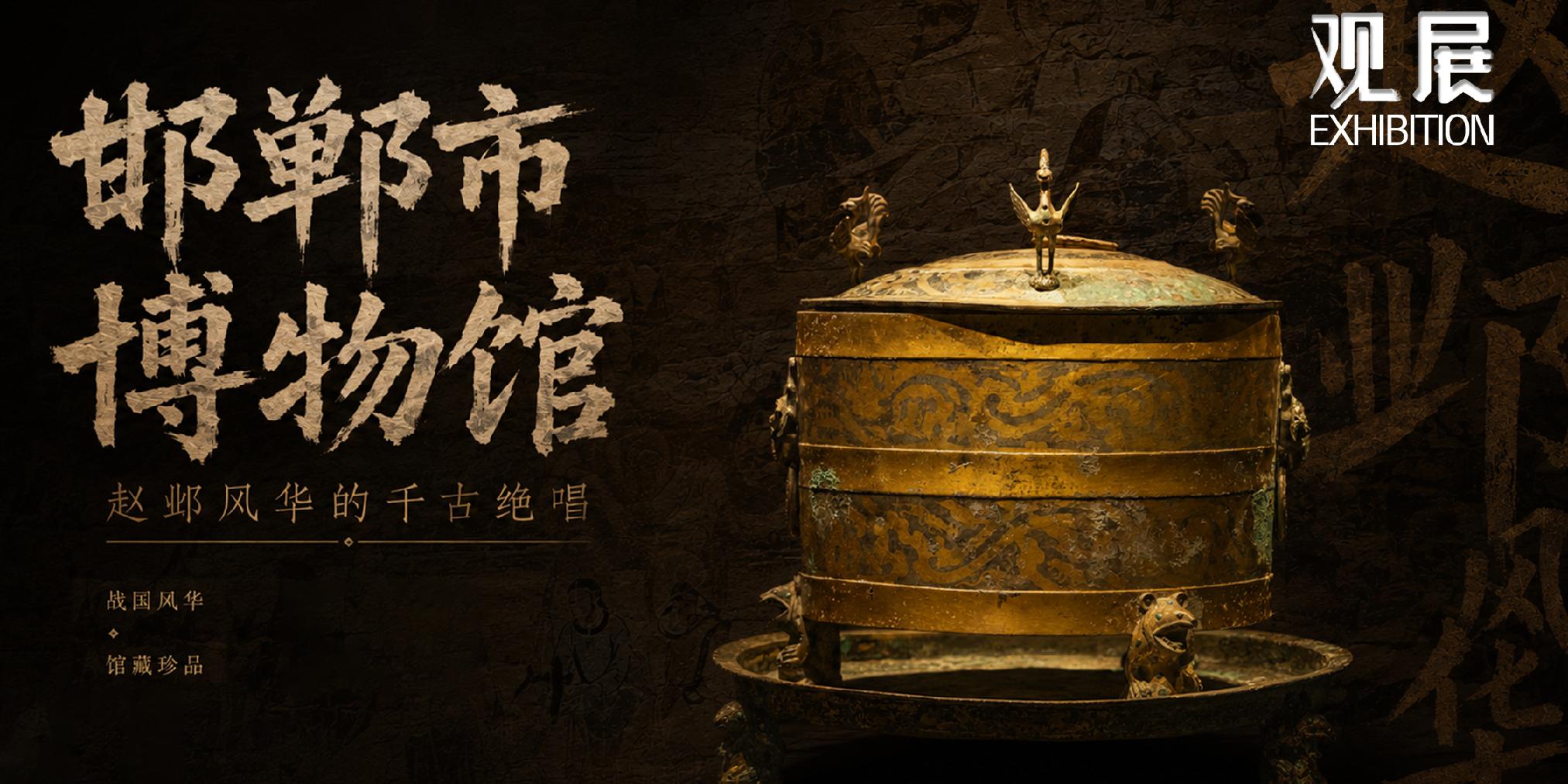
Author of Wenbo Time and Space, Jiang Liuye The Handan Museum is a city that carries the echoes of three thousand years of history. This is not only a space for displaying cultural relics, but also an empirical history book for exploring the rise and fall of ancient Chinese urban civilization. Starting from the ancient Hejian region, Handan, with its unique strategic location, became a renowned "capital of Zhao" during the Warring States period, witnessing the power struggle of various feudal lords and the early accumulation of ritual and music civilization.
If we talk about its glorious moments in history, the medieval "Ye City" cannot be bypassed no matter what. As the political and cultural center of the Han, Wei, and even Northern Dynasties periods, the prosperity there once shone brightly on the banks of the Zhang River, gathering the top art and ideas in Chinese history, and building a city peak with a strong sense of historical beauty. However, the wheels of history often come with pains. The great fire ignited by Yang Jian completely turned this towering city, which had been managed for several dynasties, into ashes. The sense of historical tragedy at that moment can still be felt today in the remnants and deeply buried ashes.
Entering a museum is like entering a time and space dialogue spanning thousands of years. Here, Handan is narrated in a panoramic manner, from the majestic and martial style of the Zhao Kingdom, to the exquisite and unparalleled elegance of Ye City, and finally to the turbulent trajectory of returning to peace in the midst of war, using objects as carriers. Every silent display repeatedly tells a proposition: cities not only have prosperity, but also an end, and a new life. The Handan Museum, using the auspicious feathers of history as a medium, restores the fate of this city that has been constantly changing between high songs and ruins, and inspires the future of this land.
Warring States period carved dragon pattern gold medal decoration
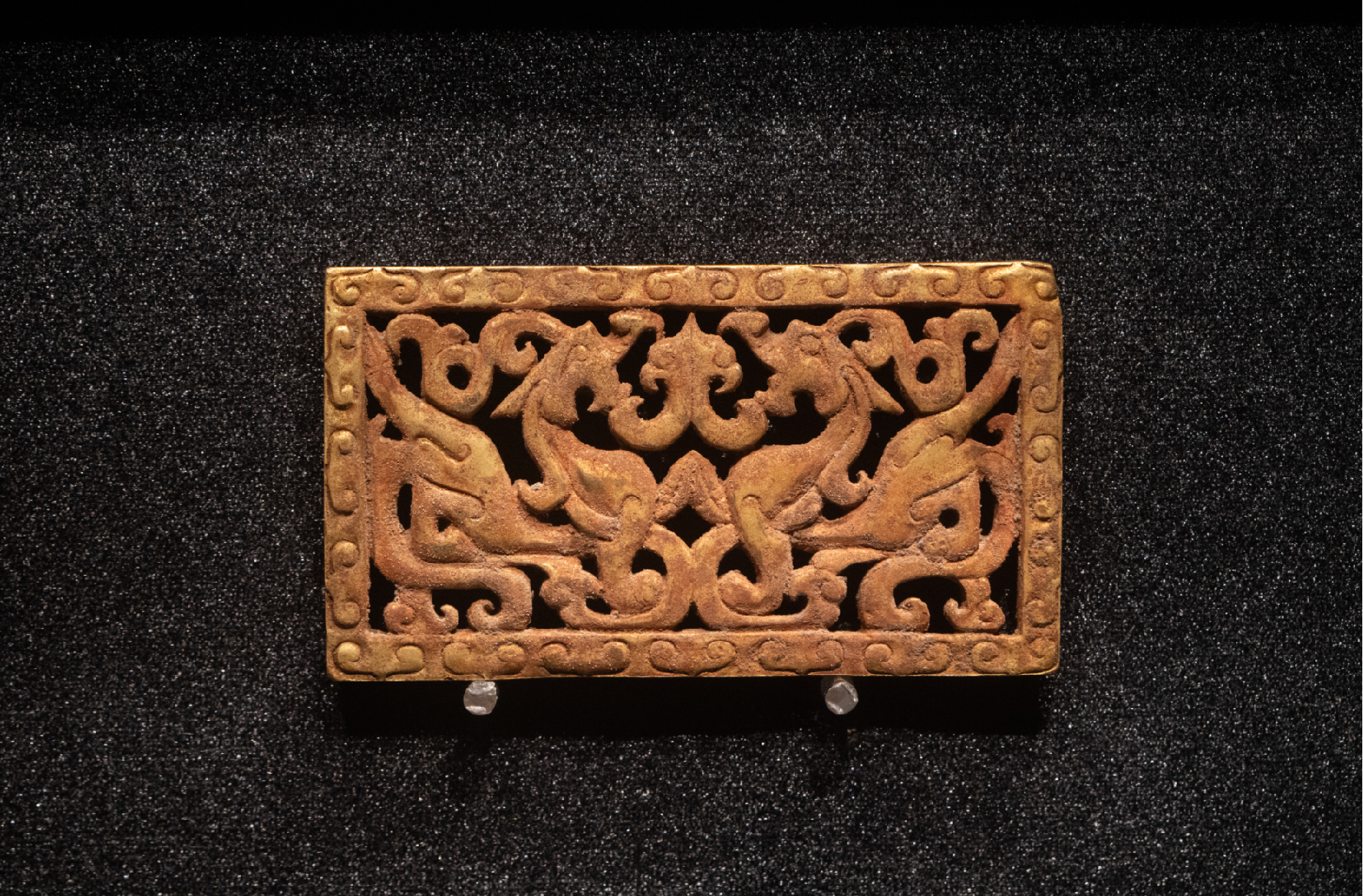
This gold medal ornament with carved Chi and Dragon patterns unearthed from the second tomb of King Zhao is not only a national first-class cultural relic, but also the most direct physical witness to King Wuling of Zhao's implementation of the "Hu Fu Riding and Shooting" reform. The card decoration is rectangular in shape and made of gold copper alloy casting. The surrounding borders are decorated with cloud patterns, and the card surface is exquisitely carved and hollowed out, outlining two Kui dragons facing each other and holding their heads high, ready to soar. There is a belt shaped nose on its back, which clearly points to its practical function of connecting with the leather belt stitching. The most thought-provoking thing is that the plaque presents a typical northern grassland "Ordos style" in form, while its decorative subject follows the sacred dragon pattern in traditional Central Plains culture.
This duality in composition deeply reflects the unique temperament of Zhao as the forefront of the collision between agricultural civilization and nomadic civilization. In the chaotic situation of the feudal lords' disputes during the Warring States period, King Wuling of Zhao took "Hu's clothing, horseback, and archery" as a breakthrough point, advocating "embracing all rivers by sea". By actively absorbing the clothing and cavalry combat skills of nomadic tribes, he completely changed the mobility and combat effectiveness of the Zhao army. This measure is not only a reform of clothing, but also an openness and inclusiveness of cultural concepts, injecting strong nomadic elements into Chinese civilization.Experts speculate that this plaque may even have been worn by King Wuling of Zhao during his lifetime. It witnesses how a monarch, while maintaining the ritual system of the Central Plains, boldly carried out ethnic integration and military reconstruction, elevating Zhao Guoyue to the strongest force in the north and possessing high historical and artistic value.
Warring States Bronze Horse
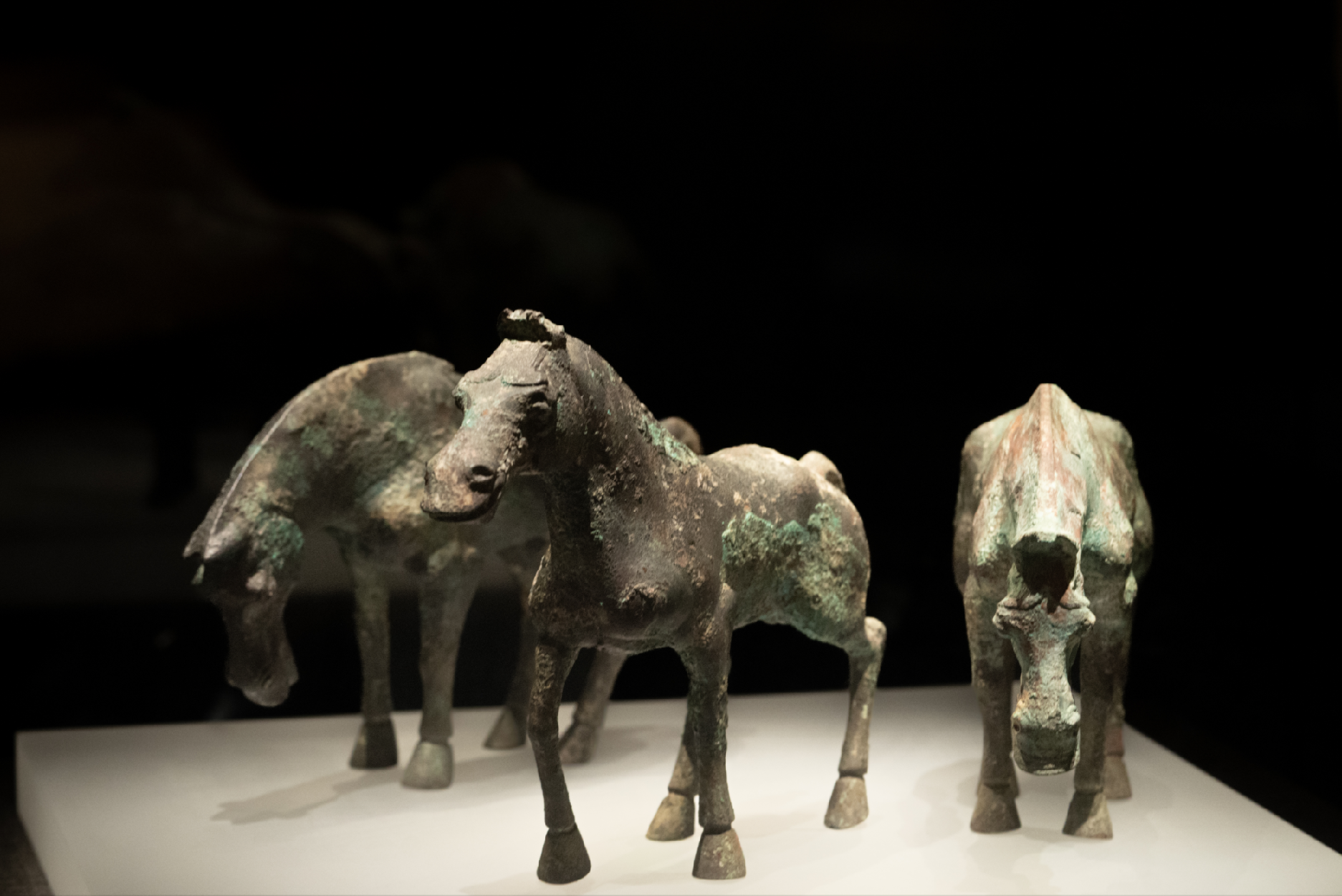
These three bronze horses, with their distinct forms, are not only physical archives of Zhao Guoqiang's military expedition to Xingguo, but also national treasures of milestone significance in the history of Chinese art. The three horses present the dynamic of walking with their heads up, standing with their heads down, and foraging with their heads down. Their tendons are bulging, their limbs are well-developed, their backs are plump, and their buttocks are strong. Every detail accurately replicates the strong characteristics of an adult Mongolian warhorse. Based on this, experts infer that this is exactly the style of a good stallion vigorously cultivated by King Wuling of Zhao during his "Hu Fu Riding and Shooting" reform. They were not only nearly 400 years earlier than the famous "horse treading on a flying swallow" of the Han Dynasty, but also refreshed people's understanding of the pre Qin bronze sculpture ability with extremely realistic artistic expression.
At that time, warhorses were an absolute hard indicator of a country's military strength. Zhao was located in a buffer zone for nomadic tribes heading south, and was well aware of the power of cavalry warfare. The excavation of these three bronze horses vividly reproduces the powerful scale of the cavalry of the State of Zhao. From the details of knotting at the tail to the powerful lines of the horse's neck, every aspect reflects the Zhao people's appreciation for the strategic resource of "horse" during that era. This is not only a simple realistic art, but also a symbol of the era spirit of Zhao's advocacy of military preparedness and active reform. They stand silently, yet seem to be able to take people back to the battlefield of the Warring States period with waves of galloping iron cavalry. As representatives of Zhao culture, these three bronze horses have established the lofty position of Zhao culture in ancient Chinese military civilization with their extremely high artistic value and historical information.
Warring States copper gilded inlaid with jade three dragon shaped decoration
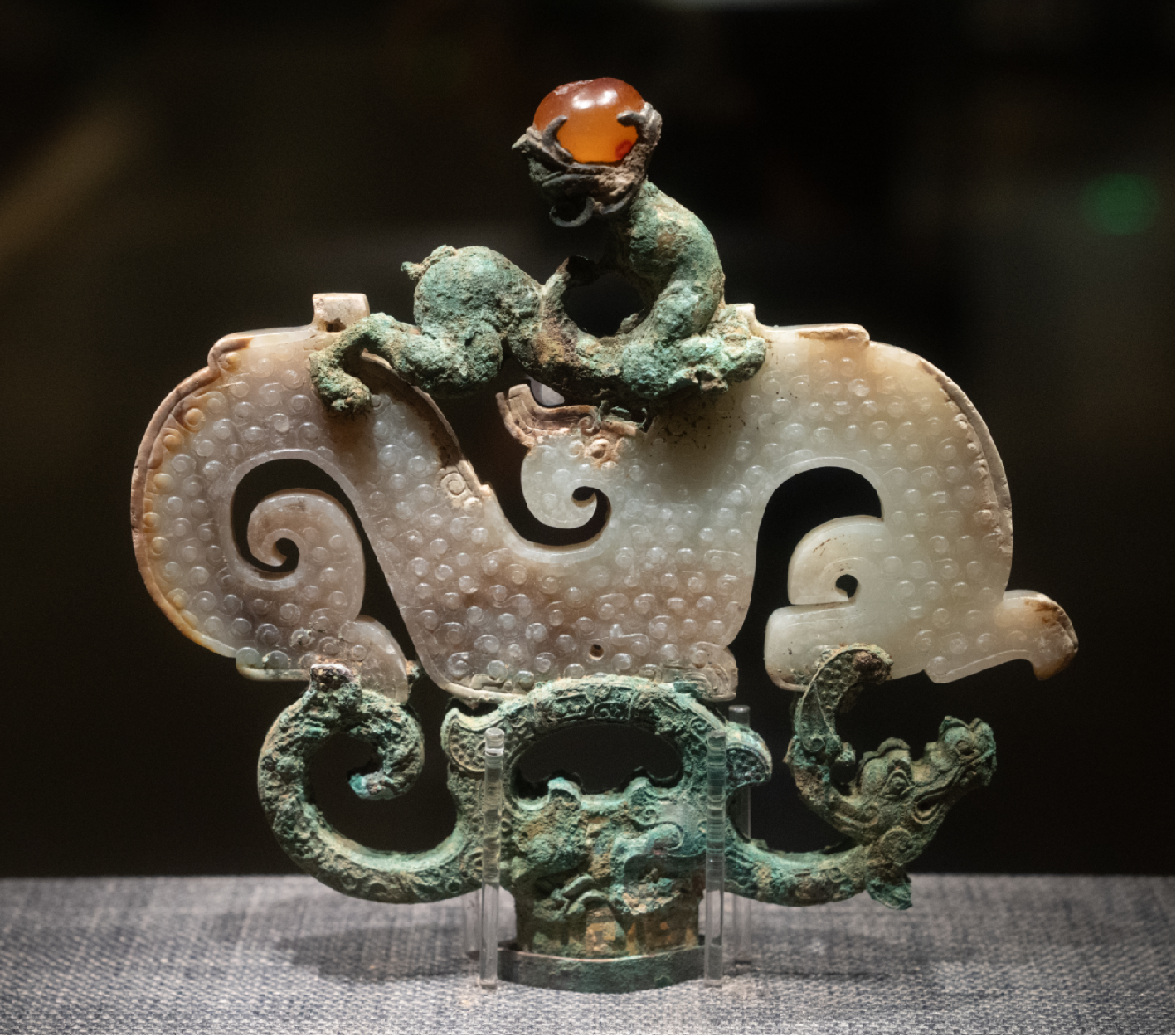
This gilded golden dragon tiger inlaid jade dragon copper ornament is not only an exquisite weapon decoration, but also the pinnacle of Zhao's advanced metallurgy and jade handicraft industry during the Warring States period. The artifact is ingeniously composed of three parts: gilded copper dragon, tiger, and green jade dragon. The bottom copper dragon held its head high and curved its neck, decorated with delicate cloud patterns on its surface; The mid-level green jade dragon has a warm texture that complements the copper patterns, with a surface decorated with typical grain patterns from the Warring States period; The top copper tiger has a highly dynamic shape, with red agate beads in its mouth, a hunched back and a hanging belly, and limbs stretched out, as if it is in a moment of hunting. The whole device perfectly combines various materials such as gold, copper, jade, agate, etc. The exquisite design and complex craftsmanship are breathtaking.
As a decorative piece embedded at the top of the sword hilt, this ornament is not only a functional component of the weapon, but also a symbol of power and rank. Zhao Kingdom is located in the land of Yan and Zhao's passionate and sorrowful songs, with a strong emphasis on martial arts and an extreme pursuit of weapon aesthetics. This tool not only showcases the gilding and engraving techniques used in bronze casting, but also demonstrates a precise grasp of complex patterns such as "grain patterns" in jade processing. This artwork, which combines multiple manufacturing techniques and aesthetic intentions from different regions, deeply reflects how Zhao State gathered various skilled craftsmen in the context of an open culture, constantly challenging the boundaries of craftsmanship, and ultimately creating Warring States art treasures that have both Central Plains cultural heritage and regional flavor.
Warring States Red Agate Hook
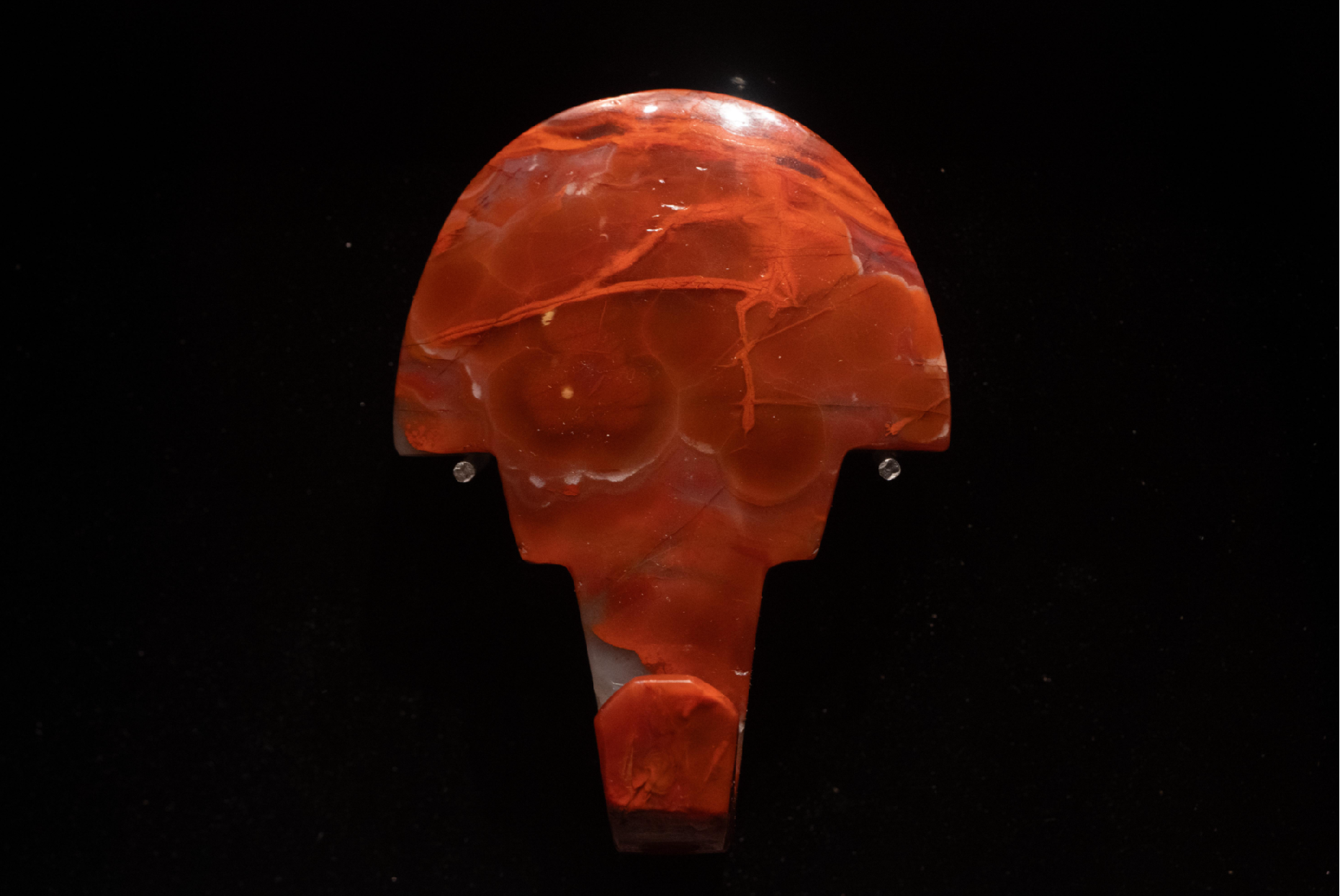
This Warring States period hook, carved from a whole piece of natural red agate, became the pinnacle masterpiece of ceremonial utensils for nobles at that time due to its huge shape and rare texture. The belt hook, formerly known as "Xibi", was not only a key component for fixing belts during the Warring States period, but also an explicit symbol of identity and rank. This vessel is interwoven with deep red and green jade, presenting a natural texture of speckled, branched, and wavy patterns on the surface. The internal flocculent structure is faintly visible, showcasing the natural charm of precious stone. Its hooked head resembles a duckbill, with a short neck and distinct layers on both shoulders; The abdomen is semi-circular, slightly bulging on the surface, flat on the back, and has a round handle shaped button in the center.
Such a large size and weight indicate that it is not a clothing clip used for daily wear, but more likely a decoration for special ceremonial occasions such as major sacrifices, court meetings, or expeditions. In Zhao, a country that pursues strong military and martial arts, even the hooks used for waist binding are endowed with a high artistic appeal. Agate itself is a foreign or valuable imported material, and the extensive use and carving of this object reflect the logistics advantage of Zhao as a hub connecting the Central Plains and the northwest border. Craftsmen utilize the natural color zoning of agate and use polishing and grinding techniques to transform hard minerals into warm artworks. It not only reflects the luxurious taste of the nobility of Zhao in material life, but also embodies the mastery of complex shapes and exquisite skills in the jade handicraft industry during the Warring States period. It is a well deserved treasure of ritual system.
Eastern Han Dynasty gold and silver coating, wide flat edge, three bear foot bearing plate
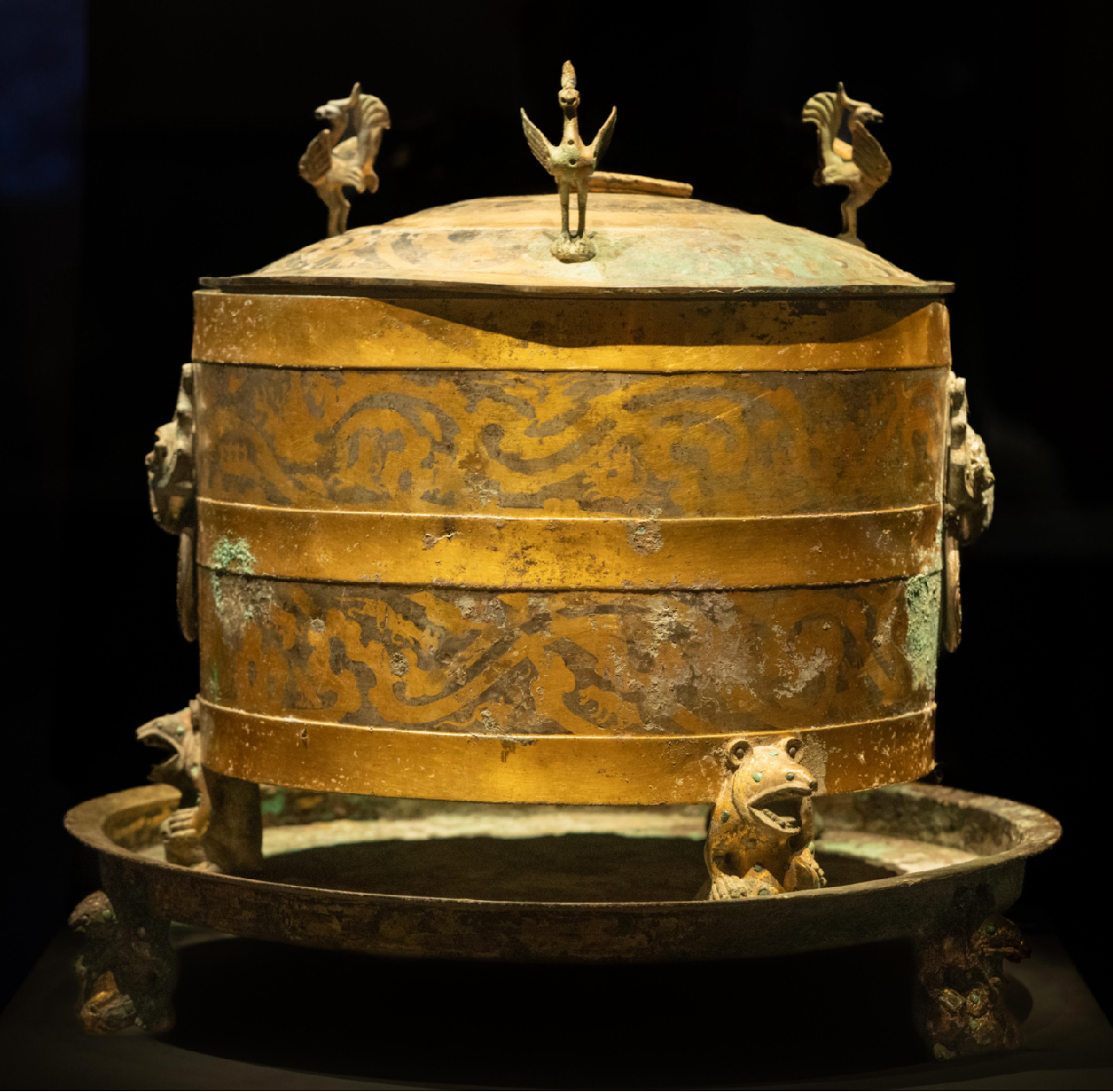
This bowl and wine bottle unearthed from the Zhangzhuangqiao Han Tomb in the Wangling District of Handan represent the ultimate level of official craftsmanship during the Eastern Han Dynasty. The bottom of the plate is engraved with detailed inscriptions, describing that it was specially manufactured by the "Shu County West Worker" for the royal family in the 23rd year of Jianwu. It is an extremely rare "Chengyu" heavy vessel with clear chronology, origin, and specifications. The entire body of the tray and wine bottle is gilded, with gilded patterns and a combination of gold and silver, creating an extremely luxurious atmosphere. On top of the wine bottle, three Vermilion sparrows spread their wings to fly, and the bottle wall is intricately carved to create a divine realm scene that includes the Queen Mother of the West, Running Deer, Feathered Man, and exotic flowers and plants.
The design of the artifact is exquisite, with three bears pulling out the mountains at the bottom as supports. The bear body and the head are also inlaid with agate, turquoise, and crystal, creating a captivating and dazzling display under the light and shadow. This wine bottle is not only a material manifestation of Han Dynasty banquet culture, but also a powerful evidence of Shu County's craftsmanship being exported to the north. As a royal utensil, it not only showcases the skilled use of metal casting and gemstone inlay techniques by Han Dynasty craftsmen, but also reflects the fervent pursuit of the ruling class for the belief in "longevity" at that time.
Eastern Han Dynasty Tianlu Frame Copper Iron
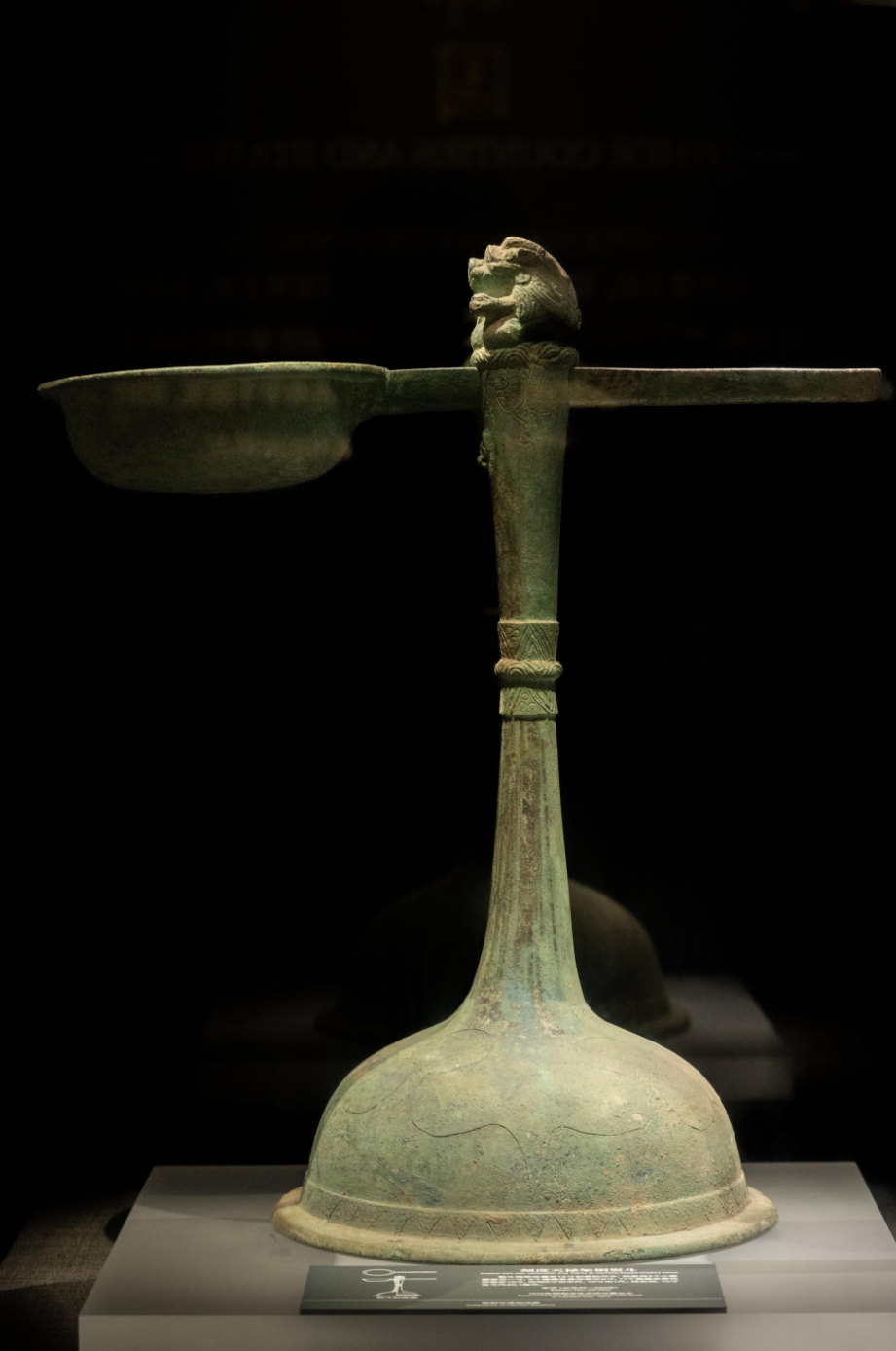
This copper iron is not only a high-end living utensil of the Eastern Han Dynasty, but also a rare composite object that combines practicality, measurement, and ritual symbolism. It is composed of a tall auspicious beast "Tianlu" bracket and an iron body, weighing a total of nine kilograms, presenting a green color accumulated over time. The Tianlu shape on the top of the bracket is charmingly simple, using various techniques such as round carving, relief carving, and line carving, symbolizing "heavenly blessings and wealth". The most stunning feature is the twelve inch standard scale engraved on the surface of its handle, which uses a combination of circles, diamonds, and diamond shapes to mark units, making it an accurate measuring tool when idle.
For this tomb owner with the rank of a prince (a Zhao king in the 5th to 7th generations of the Eastern Han Dynasty), this iron clearly goes beyond the scope of daily home furnishings. The long handle with a scale is often interpreted by experts as a metaphor for "holding power to iron the world", symbolizing both the authority of governing the country and the respect of the tomb owner for order and precision. In the high-level funeral decorations of the Han Dynasty, such measuring instruments often implied the nobility of the tomb owner's authority during their lifetime. It not only witnessed how the bronze craftsmanship of the Han Dynasty deeply involved in daily life, but also demonstrated the profound foundation of Han civilization in social governance and standardized production through this precise measurement function.
Northern Qi Shield Warrior Terracotta Warriors
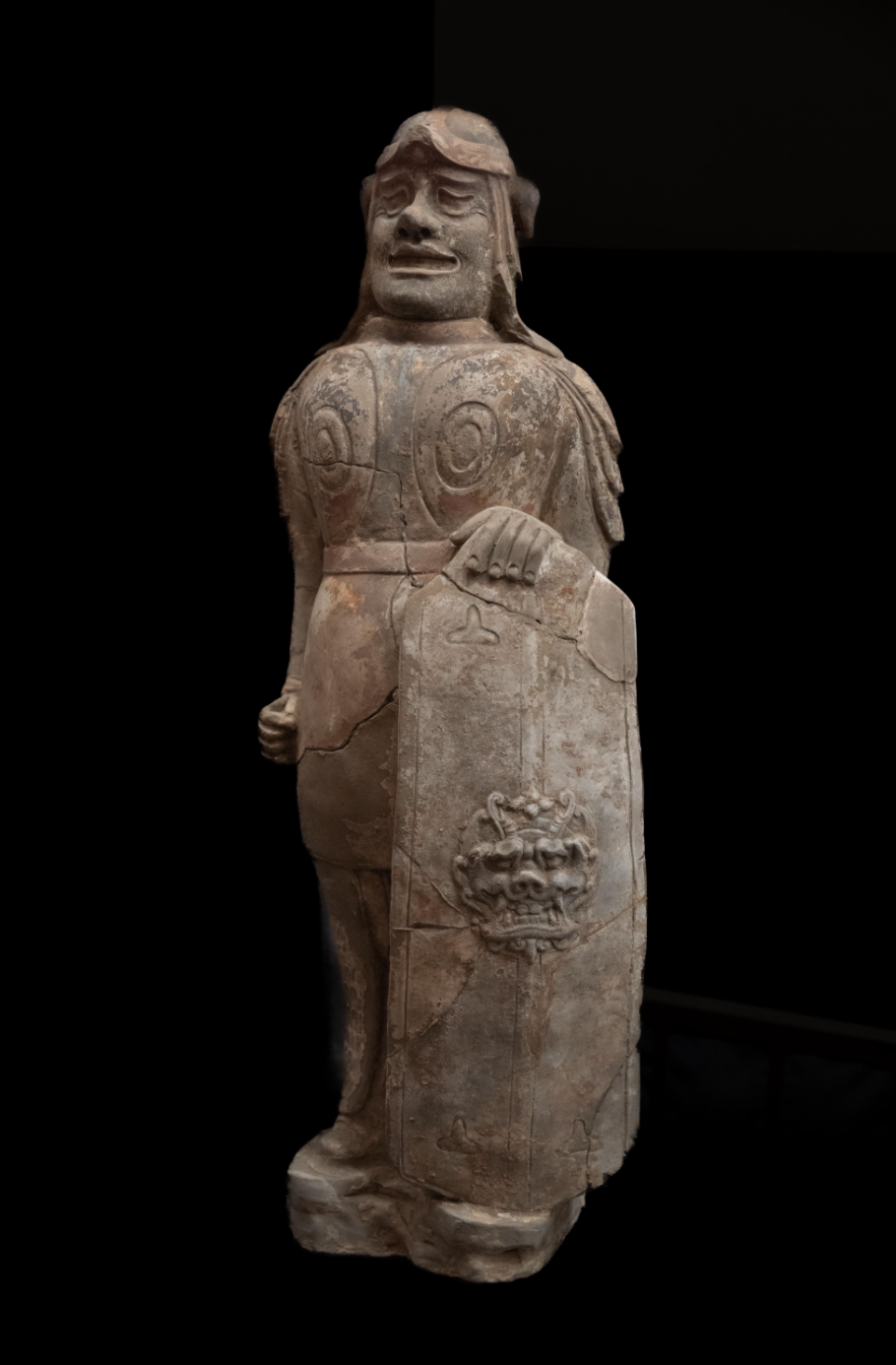
This Northern Qi shield warrior figurine is not only an exquisite burial object, but also an important physical object for studying the military etiquette of Northern Qi. The warrior wears a hood, has a serious expression, is dressed in armor, presses the shield with his left hand, and has a straight posture, showing a fierce and imposing aura. By shaping the details of warrior costumes and protective gear, this terracotta warrior accurately captures the military appearance of that era of frequent wars and a flourishing martial arts culture. Its concise yet powerful lines reflect the artistic characteristics of the Northern Qi period's pursuit of spiritual temperament in sculpture craftsmanship.
Tang Dynasty stone carving statue of attendant Bodhisattva
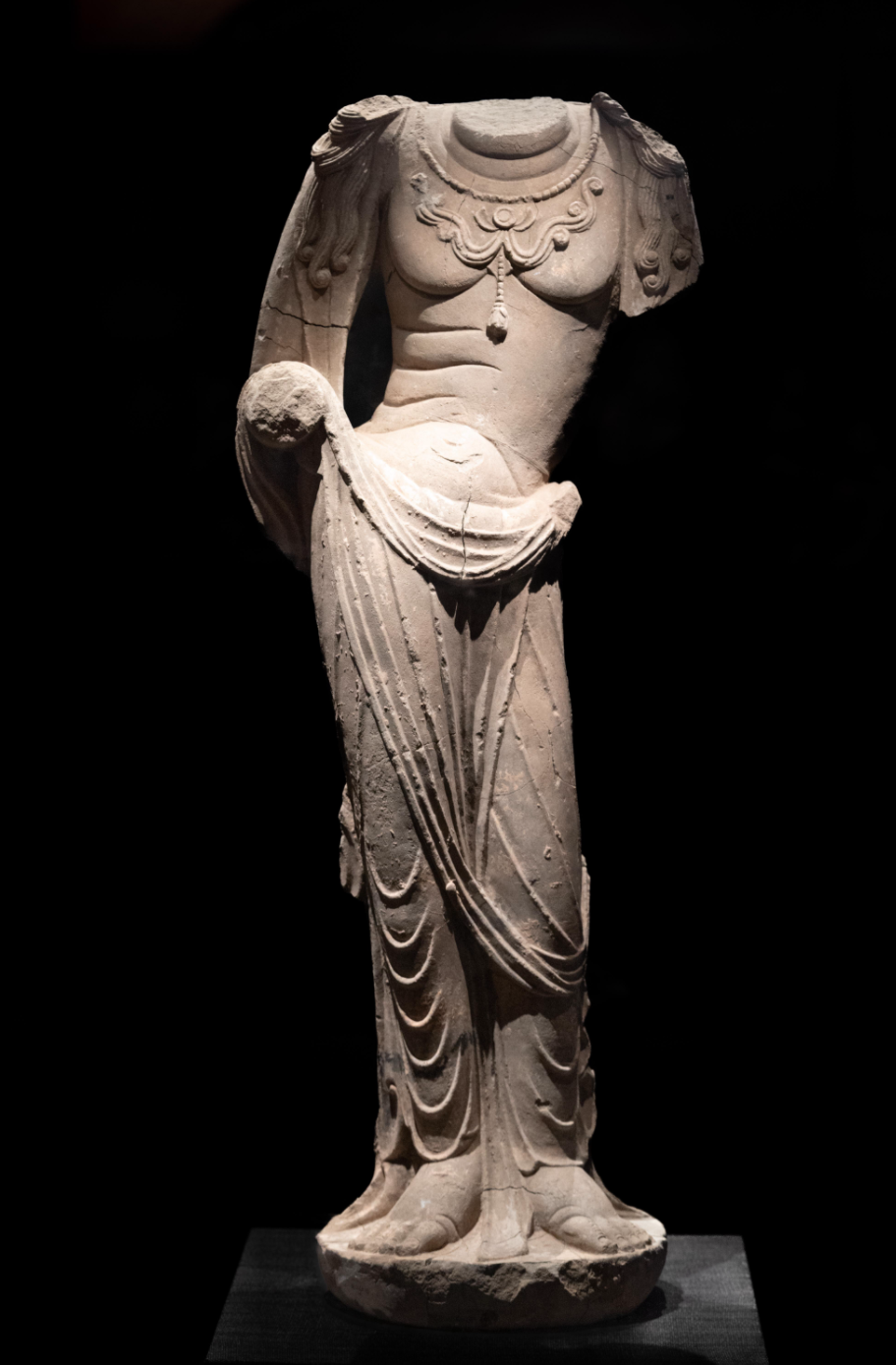
This Tang Dynasty Bodhisattva statue unearthed from the temple site in Nanjie Village, Cheng'an is known as the most graceful Buddhist artwork in the museum. The Bodhisattva has an elegant posture, with a slightly left leaning upper body, a slender waist, and a slightly bulging abdomen, showcasing the unique softness and rhythm of Tang Dynasty statues. He wears exquisite pendants on his neck and chest, standing barefoot on the lotus throne with a peaceful and solemn expression. The lines of the stone carvings are refined and smooth, perfectly blending the solemnity of religion with the softness of the human body, vividly reflecting the artistic spirit of Tang Dynasty Buddhist statues in pursuing nature, fullness, and grace in aesthetic expression.
Image | Du Guanglei
Layout | Wang Wulong
Design | Yin Lisha