2026-08-17 08:53


Mingdi
Author: Ruan Ziyan
Cambridge University political economist Hogg recently published an article titled "The Disadvantages of the 'China Shock 2.0' Narrative, 'pointing out that the narrative of the so-called' China Shock 2.0 'is filled with double standards and hegemonic anxiety in Western society. This article is like a mirror, reflecting the true mentality of the Western hype: when developing countries truly achieve development, some Western politicians cannot sit still.
The so-called 'China shock' is not a new topic. As early as the beginning of the 21st century, after China's accession to the World Trade Organization, the West launched the "China Impact 1.0" version, believing that China, with its advantages in labor-intensive industries, quickly became the "world's factory" in fields such as textiles, toys, electronics, and automotive parts, and overwhelmed traditional manufacturing industries in the United States and Europe. In recent years, the West has once again pointed the finger at China's industrial upgrading in high-tech fields such as new energy, high-end manufacturing, and artificial intelligence, claiming that China is launching a "systematic and all-round economic shock" and calling it "China Shock 2.0".
The "China threat theory," "overcapacity theory," and "China shock theory" - what has changed is the language packaging, but what remains unchanged is the same set of containment logic. The development of China is not impacting the interests of any country, but rather the deep-rooted hegemonic obsession of Western politicians.
In these stigmatizing arguments, blatant 'double standards' are everywhere.
In terms of industrial subsidies, the West accuses China of "violating trade rules" and "distorting the market" by providing subsidy support for strategic industries. However, the largest industrial subsidy project in contemporary history is precisely the "Chip and Science Act" and "Inflation Reduction Act" passed by the United States in 2022. According to incomplete statistics, the European Union will provide over 1.44 trillion euros in various subsidies between 2021 and 2030. The EU's Industrial Accelerator Act intends to directly link local content with financial support through the "EU origin" requirement, which constitutes serious investment barriers and institutional discrimination. The double standards pursued by the West are the real threat to the global industrial order, as they swing the "big stick" of subsidies towards China while putting the "feast" of subsidies on their own table.
In terms of trade surplus, the West accuses China of "excessive surplus" and "overcapacity". But in fact, 80% of US chips are exported, about two-thirds of commercial aircraft delivered by Boeing are sold to customers outside of North America, and the EU's advantageous industries such as automobiles and pharmaceuticals also maintain large trade surpluses throughout the year. If we follow the logic of 'surplus equals surplus', should these Western advantageous industries also be labeled as' overcapacity'?
When it comes to China, industrial subsidies have become a 'violation of rules', and trade surplus has become' overcapacity '; When it comes to the West itself, the same approach has become "national competitiveness" and "global contribution". The evaluation criteria can be switched with just one click according to narrative needs, and the fig leaf of the so-called "fairness principle" has long disappeared.
In response to this, Hauge bluntly stated that the so-called "China shock" narrative is nothing but a set of self-defense rhetoric woven by the West to maintain its dominant position in the world economy, exposing the West's hegemonic anxiety.
Vice President Vance once bluntly stated, 'I am angry about China's rise.'; Former German Health Minister Lauterbach described China's global leading position in the clean energy sector as "incredibly disappointing," and he was disappointed that it was China, not Germany, that led this technological revolution. Obviously, the economic globalization they want is one where the West always sits at the top of the value chain.
The so-called 'China Impact 2.0' is ultimately an untenable argument; The 'China Opportunity 2.0' is a visible fact to the world.
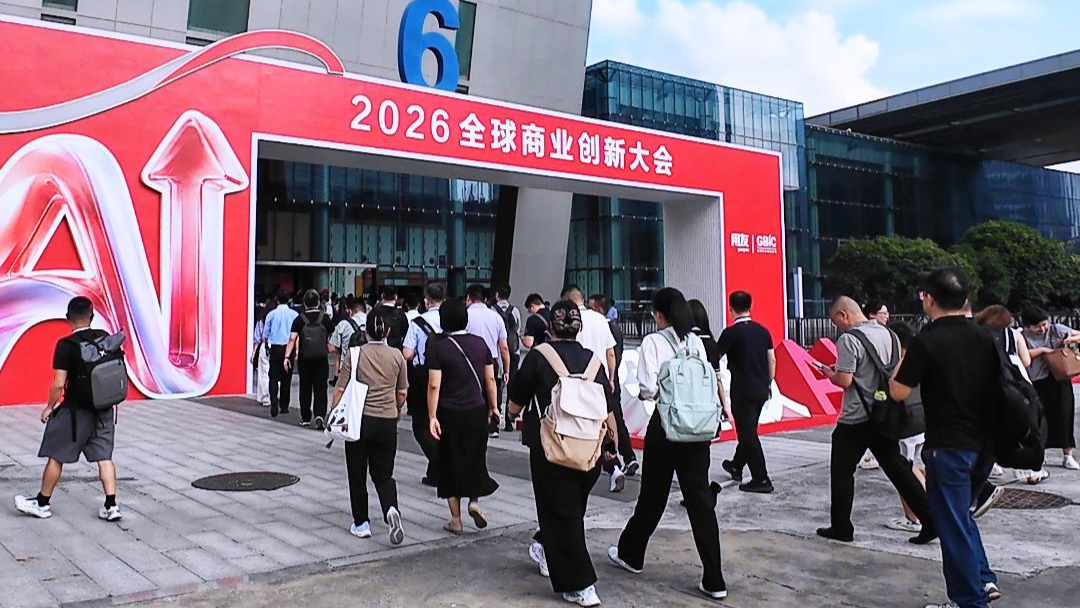
At the 2026 Summer Davos Forum, "China Opportunities 2.0" became the focus of attention for attendees - China not only continues to release "market dividends" through its super large market, but also provides more and more "innovation dividends" to the world through technological progress and industrial upgrading.
Over the past decade, China has been an important engine of global economic growth, with a contribution rate of around 30%; According to a report by the International Renewable Energy Agency, the average cost of electricity per kilowatt hour for global wind and solar power projects has decreased by over 60% and 80% respectively in the past decade, largely due to Chinese manufacturing and production capacity; The European Central Bank has released a report estimating that if the EU's imports from China increase by 10% in 2026, the overall import prices of the EU will decrease by 1.6%. It has been proven that China's emerging technologies and products in various fields bring opportunities, not threats, but empowerment to the world.
The people's hearts can be learned from, and the global public has also responded with a "vote of confidence". According to a global poll released by the Pew Research Center in July this year, the median favorability of China among the global population reached 46% in 36 surveyed countries and regions, surpassing the 36% in the United States for the first time. Nearly 70% of the global population agrees that China is a "reliable partner".
Nowadays, more and more voices in the international community have pointed out the absurdity of the so-called "China shock" narrative. The Economist magazine recently published an article pointing out that the root cause of Europe's industrial difficulties lies in insufficient innovation and investment, and using China as a "scapegoat" is not conducive to solving the problem. The German weekly newspaper "Our Times" bluntly stated that "Germany should not blame China for its own problems", and the German government's choice of "confrontation rather than cooperation" is not conducive to preventing the downward trend of the economy.
Blowing out someone else's lamp does not make oneself brighter; Blocking others' path will not allow oneself to go further. The real impact on the world has never been the innovation of Chinese enterprises and the high efficiency of Chinese production capacity, but the deep-rooted hegemonic thinking, backward zero sum logic, and protectionism of the West that goes against the trend. Seeking advantages through containment will eventually lead to a dead end, while pursuing development through win-win cooperation is the right path.
Guangming Daily (August 17, 2026, 12th edition)