Economic Observer Follow
2026-04-25 11:40



Wang Chi, the founder of Dadi Quantum, represents some power trading stations in Guangdong. Since the beginning of this month, his strategy has been to allow more electricity to be cleared through spot trading. Wang Chi said that thermal power units are the most beneficial power source among the rising spot prices of Guangdong electricity. Because thermal power can flexibly change its output curve, generating more electricity in the spot market can make a profit.
The spot price of Guangdong electricity remained at a high level for a long time from March to April. On March 31st, the weighted price curve of power generation in the province (for gas turbines) exceeded 900 yuan/MWh (megawatt hours) at some nodes, and on April 14th at 19:00, it exceeded 1000 yuan/MWh, which means more than 1 yuan per kilowatt hour of electricity. Guangzhou, Shenzhen, Dongguan and other electricity consuming nodes have long been above 800 yuan/MWh. On the average price, the weighted average electricity price for power generation in the province on April 14th was about 0.678 yuan/kWh, compared to about 0.308 yuan/kWh (kilowatt hour) in the same period last year, an increase of over 120% year-on-year.
After the spot electricity price in Guangdong was first raised to 1 yuan, different entities faced different choices: the electricity consumption side was mainly supplied by medium and long-term agreements and had not been greatly affected, but the electricity sales companies that mainly participated in market transactions faced significant challenges.
Wang Chi's judgment is that the difference between long-term electricity prices and spot prices mainly comes from the expectation difference. If everyone predicts that electricity prices will rise in summer, the price difference between long-term and spot prices will narrow.
Chen Dipeng, General Manager of Yuanjing Energy's Electricity Market and Asset Management, believes that the rise in spot electricity prices in Guangdong Province has its own characteristics. However, with the advancement of spot market construction, electricity prices no longer only follow the original linear logic of "stability with decline", but will increasingly reflect the degree of supply and demand tension, fuel costs, and scarcity of system flexibility.
Why go up?
Chen Dipeng analyzed that the current increase in spot electricity prices in Guangdong is essentially the result of the combined effect of short-term tight supply and demand and rising primary energy costs.
According to him, in terms of short-term supply and demand, Guangdong's load has grown rapidly recently, mainly due to the significant increase in air conditioning cooling load caused by high temperatures and the recovery of industrial production after the year. On the supply side, there have been incidents such as spring maintenance, local power transmission restrictions, and weak water supply in many parts of Guangdong, resulting in an overall decrease in supply.
In early April this year, the average temperature in most parts of Guangdong was 2-4 ? higher than the same period in previous years, with some areas such as Qingyuan, Zhaoqing, Yunfu, and Foshan being 4-6 ? higher. The average monthly temperature in Shenzhen in March has reached 21 ?, and it has already entered summer, about one month earlier than the usual average. On April 14th, Guangdong Province entered summer.
Chen Dipeng said that gas and electricity account for a relatively high proportion in the power structure of Guangdong. When supply and demand are tight, high cost units are needed for power generation, and gas power generation becomes a marginal pricing power source. The price of natural gas directly affects the spot price of electricity in Guangdong.
Since the US Israel Iran conflict, international natural gas prices, especially LNG prices, have risen rapidly. The TTF price in Europe has been consistently above 40 euros/MWh for a long time.
Chen Dipeng stated that the surge in spot electricity prices in Guangdong does not necessarily mean that there will be a surge in spot electricity prices nationwide in the future. He believes that the "uniqueness" of Guangdong lies in its high load capacity, obvious outward oriented economic characteristics, high proportion of gas and electricity, and stronger influence from the West East power transmission and regional resource allocation. Prices are more sensitive to changes in fuel, weather, and supply and demand.
But he also stated that if there is a nationwide sustained high temperature, insufficient water supply, insufficient wind and solar power, and a resurgence in primary energy prices in the future, it is entirely possible for there to be a phased increase in electricity prices nationwide.
He reminded that there is a substitution relationship between gas and coal, and the rise in international gas prices not only affects gas and electricity provinces, but may also be transmitted to a wider region through coal prices in the future.
Market Game
The head of a power sales company with an annual contracted volume of hundreds of millions of kilowatt hours in Guangdong told the Economic Observer that many power sales companies are losing money in this market. But they will 'respect market price fluctuations and adopt various strategies within their controllable range to cope with such extreme price changes'.
Another Guangdong electricity sales company stated that it is considering how to transmit the increase in spot electricity prices to users. According to the regulations of Guangdong Electric Power Trading Center, in the electricity retail contracts signed between power sales companies and power users this year, at least 8% of the electricity price is linked to the spot price, and 2% of the electricity price is linked to the monthly price. Up to 90% of the electricity can be priced at a fixed price.
On April 16th, Guangdong Electric Power Trading Center issued a "Risk Warning for Retail Trading in Guangdong Electric Power Market", stating that some power selling companies have recently requested users to cooperate in completing relevant operations on the grounds that spot prices continue to rise and settlement prices for guaranteed power selling users can be lower. The Guangdong Electric Power Trading Center stated that the guaranteed sales companies do not have annual medium to long term contracts, and the settlement prices of guaranteed sales users are strongly related to the trend of spot prices. The settlement prices of electricity users who become guaranteed sales users have significant uncertainty.
Zhuo Yunkai, Marketing Director of Suzhou Shengli New Energy Technology Co., Ltd., told the Economic Observer that the current supply-demand relationship in the electricity spot market is mainly affected by the amount of electricity that has not been covered by medium and long-term transactions, as well as the gap between medium and long-term electricity and actual electricity generation and consumption load. If the monthly medium and long-term electricity held by the power sales company is higher than the actual electricity consumption of its agent users, the excess can be cleared in the spot market; If the medium and long-term electricity held by it is insufficient, it needs to purchase the corresponding electricity in the spot market to make up for the gap.
Therefore, when spot prices rise, power selling companies with lower coverage of medium to long term electricity need to purchase electricity at spot prices higher than the medium to long term prices, while power generation companies can profit by selling electricity in the spot market at prices higher than the medium to long term prices.
In April 2026, the monthly comprehensive price of medium and long-term transactions in the Guangdong electricity market was about 0.372 yuan/kWh, far lower than the average spot price in April.
Chen Dipeng told the Economic Observer that many electricity sales companies do not know the true wholesale electricity purchase costs in the future when signing retail contracts with customers. In a sense, signing a fixed price or weakly linked retail contract is essentially shorting future electricity prices. If wholesale costs remain stable in the future, the electricity sales company can make money; But once wholesale prices rise sharply and it lacks effective hedging measures, it will be very passive.
When will it fall back?
According to data from the Guangdong Electric Power Trading Center, the spot price of electricity in Guangdong is declining. From April 20th to 23rd, the daily weighted average electricity prices on the power generation side in the province were 589.02 yuan/MWh, 525.99 yuan/MWh, 635.86 yuan/MWh, and 549.47 yuan/MWh, respectively. Guangzhou, Shenzhen, Dongguan and other places all maintain a price of over 800 yuan/MWh.
Chen Dipeng introduced that with the gradual withdrawal of the spring maintenance peak, the available capacity of the unit will gradually recover; In the future, the water supply to the southwest region is expected to improve, the available hydropower is expected to increase, and the ability to transmit electricity from the west to the east will gradually increase; The increase in cross provincial and cross regional support for electricity can also alleviate the local supply-demand tension. In addition, cross provincial and cross regional power transfer is an important supplement to the electricity market. In addition to the West East power transmission, with the gradual improvement of regional spot and cross operational trading mechanisms, external resources can participate in the supplement more quickly.
In the first quarter of this year, China Southern Power Grid completed a total of 41.5 billion kWh of electricity transmission from west to east, which is 4.7 billion kWh more than planned.
At the sending end, at the beginning of this year, the hydropower storage capacity of the entire Southern Power Grid was at its best level in the same period in history. Combined with the overall better water inflow from the four major river basins (Hongshui River, Wujiang River, Lancang River, Jinsha River) than last year, the hydropower generation of the entire grid increased by 22.6% year-on-year in the first quarter.
At the receiving end, the electricity consumption in the five southern provinces and regions showed a rapid growth trend in the first quarter of this year. In the first quarter, the total power generation and reception of the entire network system was 372.68 billion kilowatt hours, a year-on-year increase of 6.2%. Among them, the demand for electricity in Guangdong and Hainan grew rapidly, with year-on-year increases of 7.8% and 10.9%, respectively.
If the country is also tight at the same time, such as prolonged high temperatures throughout the summer, weak water supply, and insufficient wind and solar power, external electricity will also become expensive, and transmission channels may become scarce resources. Cross regional power transfer can alleviate local tension, but it cannot replace local power structure optimization and system flexibility construction.
Chen Dipeng predicts that spot prices in Guangdong will fall in the short term, but in the medium to long term, high volatility will become the norm rather than the exception. The electricity spot market is not a "low price market" but the market with the most direct risk exposure. When supply and demand are loose, spot prices may be lower, but once they encounter events such as high temperatures, water shortages, fuel price increases, and insufficient system flexibility, spot prices will quickly reflect the degree of tension and cost pressure. Power generation companies, electricity sales companies, and electricity users all need to re-establish their understanding of electricity price fluctuations in the future.
Chen Dipeng said, "The surge in spot electricity prices in Guangdong this round essentially reflects that the electricity market is shifting from being dominated by 'low price expectations' to being dominated by' risk pricing '.
Chen Dipeng said that if the policy only emphasizes lowering electricity prices and compressing the profits of power sales companies in the long run, but does not allow market entities to reasonably reflect risks and losses, it will ultimately be difficult to form a healthy and sustainable market ecology. A truly mature market is not just about making money and not allowing losses, but about matching price signals, risk-taking, and risk control tools.

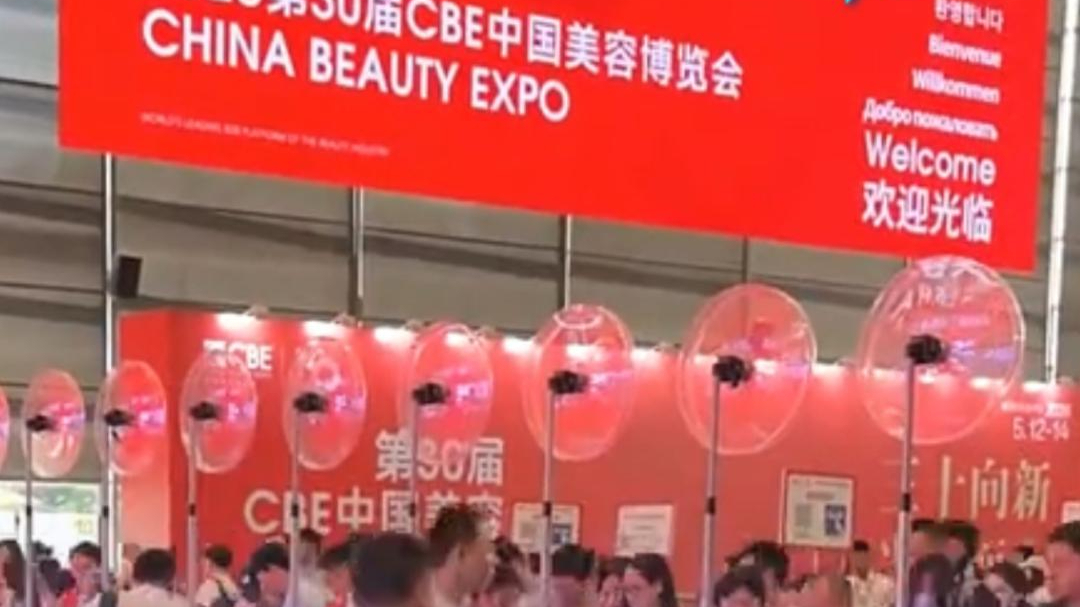
The Shanghai Beauty Expo opened today, with AI beauty and precision skincare becoming the strongest trends

Duan Jianjun seamlessly transitions from Mercedes Benz to Volvo

Tech Show | The Science and Technology Expo has come to an end, with various districts in Beijing showcasing their 'black technologies'


 WeChat registration or login


 Subscribe